

MADE IN THE USA
with American products
w/ American products


Choosing the best location for a freestanding pergola often comes down to two competing possibilities: a convenient spot beside your existing patio or a more picturesque location farther into the backyard. Both might look beautiful, but the right freestanding pergola placement depends on how you'll actually use the space, how easily you'll reach it, what you'll see from inside and beneath the structure, and whether the site is practical for permanent installation.
Before deciding where to put a pergola in your backyard, compare your candidate locations using the five considerations below. The goal is to identify a location that functions as a natural extension of your outdoor living space rather than simply looking attractive in a photograph.
The best location for a freestanding pergola is usually the backyard zone where its intended activity will happen most naturally. Start by deciding what the space should accomplish. Are you creating an outdoor dining room, a separate relaxation area, or a gathering spot near the pool?
Different activities favor different locations, even within the same backyard. Choosing the activity first prevents you from selecting an attractive location that ultimately makes the space less convenient to use.
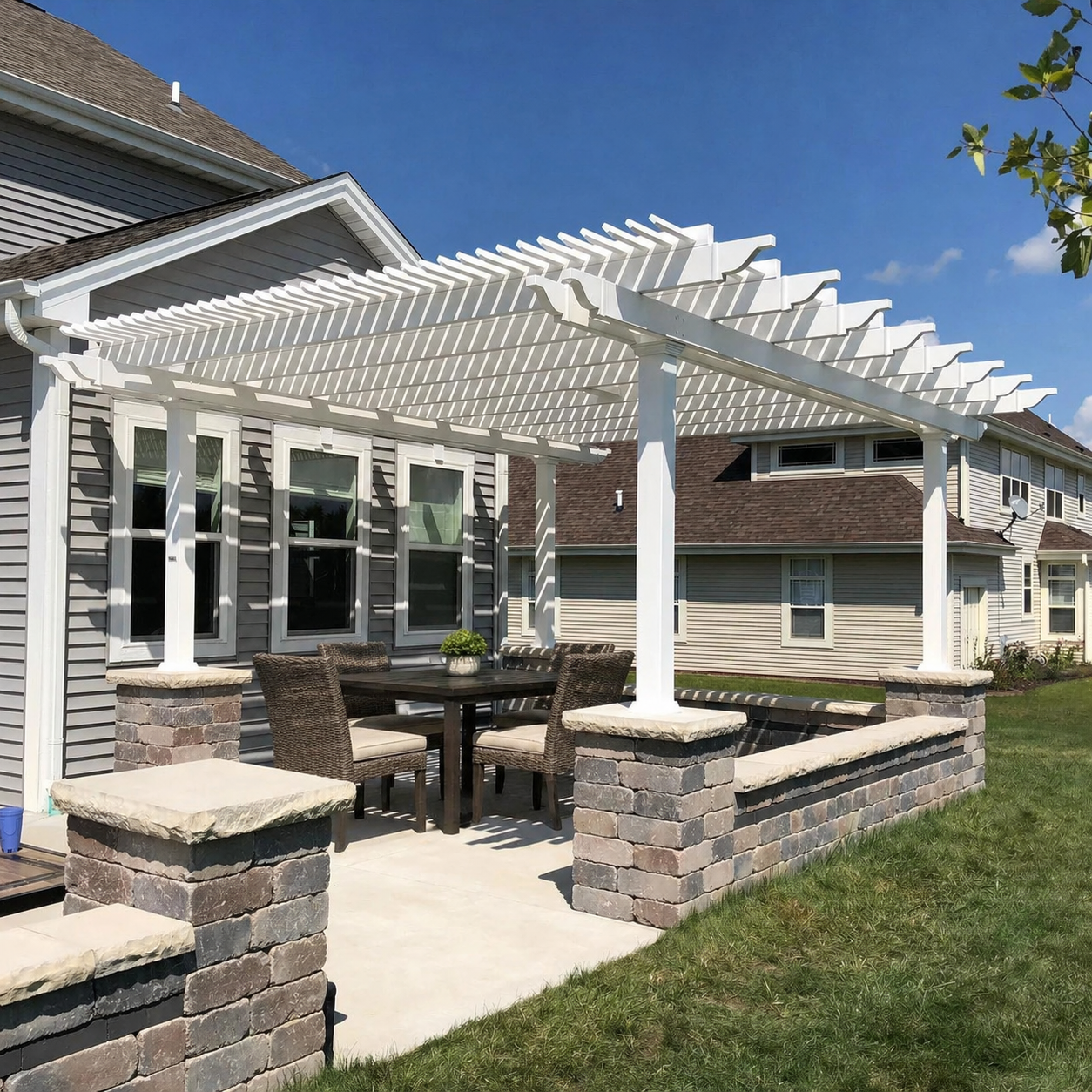 If your pergola will shelter an outdoor dining area, a location with convenient access to the kitchen or main entertaining patio is often the strongest choice.
Think about how meals will actually unfold. Someone will carry food outside, return for forgotten items, clear dishes, and move between indoor and outdoor seating. A dining location that looks spectacular at the far end of the yard may become frustrating when every meal involves repeated trips across the lawn.
A freestanding pergola near an existing patio can create a distinct outdoor dining room without requiring the structure to attach to the house. The important consideration at this stage is the convenience of the location, not the exact distance between the pergola and the building.
For a quiet seating area, a location farther from the house may be preferable. A pergola positioned beside a garden, overlooking a landscaped feature, or occupying a peaceful corner of the yard can establish a destination separate from the main entertaining area.
This arrangement works particularly well when the goal is to create a retreat rather than extend an existing patio.
However, separation should feel intentional. A lounge that requires an awkward walk around landscaping or across an inconvenient stretch of lawn may receive less use than expected.
Consider whether the proposed location offers enough privacy and visual interest to justify the additional distance from the house.
For a backyard with a swimming pool, placing a detached pergola near the pool deck can create a dedicated gathering area for conversation, relaxation, and entertaining.
The strongest location is generally one that connects naturally with existing poolside activity without interrupting circulation around the pool.
Consider where people already gather, where they enter and leave the pool area, and whether the pergola would complement existing seating zones.
A location that appears ideal from the house might prove inconvenient if it interrupts a commonly used route between the pool, patio, and outdoor kitchen.
When comparing backyard pergola location ideas, use the intended activity as your first filter:
If two locations are equally attractive, the one that better supports your primary activity should generally receive priority.
Once you've identified the activity zone, evaluate how people will move to and around each proposed pergola location. A good location should fit naturally into your backyard's existing traffic patterns rather than forcing people to navigate around the structure.
Don't evaluate access solely by looking at a landscape plan. Physically walk the routes you expect to use.
Begin at the door that provides the most natural access to the intended activity. Walk from that doorway to each candidate location.
Notice whether the route feels direct and intuitive. Does it require walking around a garden bed, crossing a large section of lawn, or navigating around existing furniture?
For a dining area, repeat the walk while imagining carrying a tray of food. For a lounge, consider whether the walk feels like a pleasant transition or an unnecessary inconvenience.
A location near the house may be convenient, but that doesn't automatically make it the best choice. The relevant question is whether the pergola is conveniently connected to the activity it serves.
If you're considering a location close to the house, the precise separation between the structure and the building should be evaluated separately from this initial location decision.
Many upscale backyards contain several distinct outdoor spaces: a main patio, pool, outdoor kitchen, lawn, garden, or fire feature.
Your pergola should complement the movement between these spaces.
For example, a pergola positioned between an outdoor kitchen and poolside lounge might become a natural gathering point. The same structure placed directly across the most convenient walking route could create an obstacle.
Walk between your existing activity areas and imagine the pergola occupying each proposed footprint.
Ask whether people would naturally move toward the pergola or repeatedly need to walk around it.
A pergola doesn't need to sit directly on a walkway to be accessible. In many cases, positioning the structure beside an established path creates a more comfortable outdoor room while preserving circulation through the yard.
This can be particularly effective when a path connects the house to a pool, garden, or secondary patio.
Instead of forcing foot traffic through the seating area, the pergola can become a destination just off the main route.
Practical test: If a proposed location requires changing several existing walking routes, compare it carefully against a location that works with the backyard's current layout.
A freestanding pergola becomes a permanent visual feature of your landscape. Its location should therefore work from two perspectives: how the structure looks from the house and what people will see while sitting beneath it.
These perspectives don't always favor the same location.
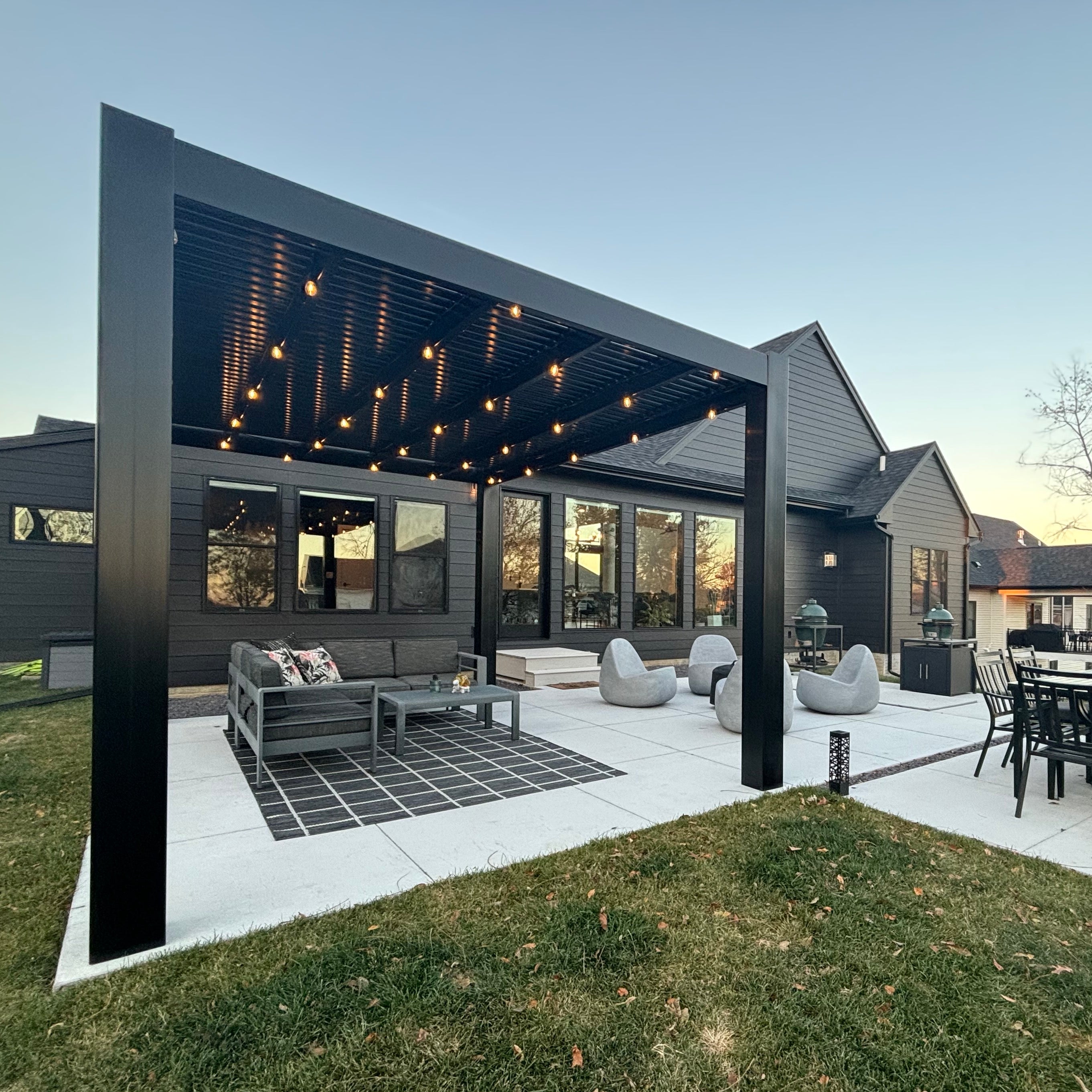 Stand at the windows and doors overlooking your backyard. Pay particular attention to rooms where you spend significant time, such as the kitchen, living room, and dining room.
Imagine the pergola occupying each candidate location.
Would it frame the landscaping, create an attractive architectural focal point, or visually organize an otherwise open backyard?
Alternatively, would it interrupt a valued view of the garden, pool, distant landscape, or another outdoor feature?
A pergola can enhance the appearance of a backyard without occupying its most visually prominent location. Sometimes positioning it slightly to one side preserves an important sightline while still creating an attractive destination.
Next, stand where the seating area would be located and look outward.
Think about the experience of spending time there. Would you face attractive landscaping, a pool, an outdoor fireplace, or a pleasant open view?
Would the location instead direct attention toward a fence, utility area, or the back of another structure?
The most visually appealing position when viewed from the house isn't necessarily the most enjoyable place to sit.
For example, a pergola centered on a large lawn might look impressive from an upstairs window. Yet a location near the edge of the lawn could offer better views of the garden while preserving more usable open space.
Before committing to a location, mark the proposed pergola footprint using stakes, string, or another temporary method appropriate for the surface.
Then evaluate the marked area from several viewpoints:
A simple overhead sketch can also help identify how the proposed footprint relates to the house, pool, landscaping, and existing walkways.
Keep in mind that ground markings represent only the footprint. The actual posts, beams, rafters, and roof structure will have a greater visual presence.
For additional perspective, browse the pergola photo gallery to see how different freestanding structures appear within finished outdoor spaces.
Even a location that performs well for activities, access, and appearance may have site conditions that make installation more complicated.
Before selecting a preferred location, identify visible obstacles and unresolved site concerns that could affect whether a permanent pergola can be installed there.
This initial screening isn't a substitute for a detailed site assessment. Its purpose is to identify problems early enough that you can compare alternatives intelligently.
Walk each proposed location and observe the ground conditions.
Look for noticeable slopes, uneven surfaces, low spots, and areas where water collects after rainfall or irrigation.
A location with relatively straightforward site conditions may be easier to develop than one requiring substantial preparation.
However, don't automatically reject every sloped location. Some may still be practical with appropriate site planning and construction.
The important distinction is between a location with known, manageable conditions and one with unresolved problems that could materially change the project.
If water routinely accumulates in a candidate area, investigate the cause before treating that location as suitable.
 Existing trees and landscaping can make a pergola location especially attractive, but they can also complicate placement.
Consider whether nearby branches, trunks, root systems, or mature landscaping could interfere with the proposed structure or its installation.
Look for visible overhead wires, utility equipment, irrigation components, and other existing features that might conflict with the footprint.
Remember that underground utilities and concealed obstacles may not be apparent during a visual inspection.
Any suspected conflicts should be investigated through appropriate utility-location services and qualified professionals before excavation or construction begins.
A location that depends on removing valuable landscaping or resolving uncertain utility conflicts may deserve a lower ranking than a comparable site without those complications.
Consider how the installation area can be reached and whether existing improvements might interfere with the work.
For example, a location behind a narrow side yard, surrounded by established landscaping, or separated from accessible areas by other structures may require additional coordination.
Also note existing patios, retaining walls, irrigation systems, and other improvements that could affect site preparation.
These concerns don't necessarily eliminate a candidate location. They indicate where additional evaluation may be needed before making a final decision.
During this screening, distinguish between three types of findings:
Don't treat an unresolved question as evidence that a location is suitable. Record it so you can investigate before committing to the project.
After evaluating the activity, walking routes, views, and practical obstacles, you should have a clearer picture of which backyard location deserves priority.
Rather than making the final decision based on appearance alone, compare the strongest candidates using a simple location worksheet.
For each candidate location, assign a rating of Excellent, Good, Fair, or Poor for the first three criteria. Record site concerns separately instead of assuming that an attractive location has no practical problems.
| Evaluation Criteria | Location A: Near Main Patio | Location B: Garden Area | Location C: Poolside |
|---|---|---|---|
| Fit for primary activity | Excellent | Good | Good |
| Convenience of access | Excellent | Fair | Good |
| Views and visual appeal | Good | Excellent | Excellent |
| Site concerns | None obvious | Tree roots to investigate | Drainage to investigate |
| Overall assessment | Strong candidate | Possible alternative | Needs further assessment |
This is an illustrative comparison. Your actual ratings will depend on your backyard, intended use, and observed site conditions.
Notice that the location with the most attractive view doesn't automatically win.
If the pergola will primarily serve outdoor dining, the patio location may be the strongest choice because of its convenient access and excellent activity fit.
If the pergola will instead serve as a quiet retreat, the garden location could rank higher despite its less convenient access, provided the tree-related concerns can be resolved.
The point is to give the factors that matter most to your intended use appropriate weight.
Once you've compared the candidates, identify your preferred location and at least one reasonable alternative.
Having a backup is useful because final site verification may reveal conditions that weren't apparent during the initial evaluation.
For example, you might prefer a garden location but retain the patio location as an alternative if underground utilities or existing roots create significant installation challenges.
Record the reasons for your preference rather than relying on memory. This will make it easier to revisit the decision if new information becomes available.
With a preferred location identified, the next step is to determine what type and size of freestanding structure will fit the space.
Sunset Pergola Kits offers traditional and modern freestanding pergolas with aluminum-reinforced structural components and premium extruded vinyl exteriors.
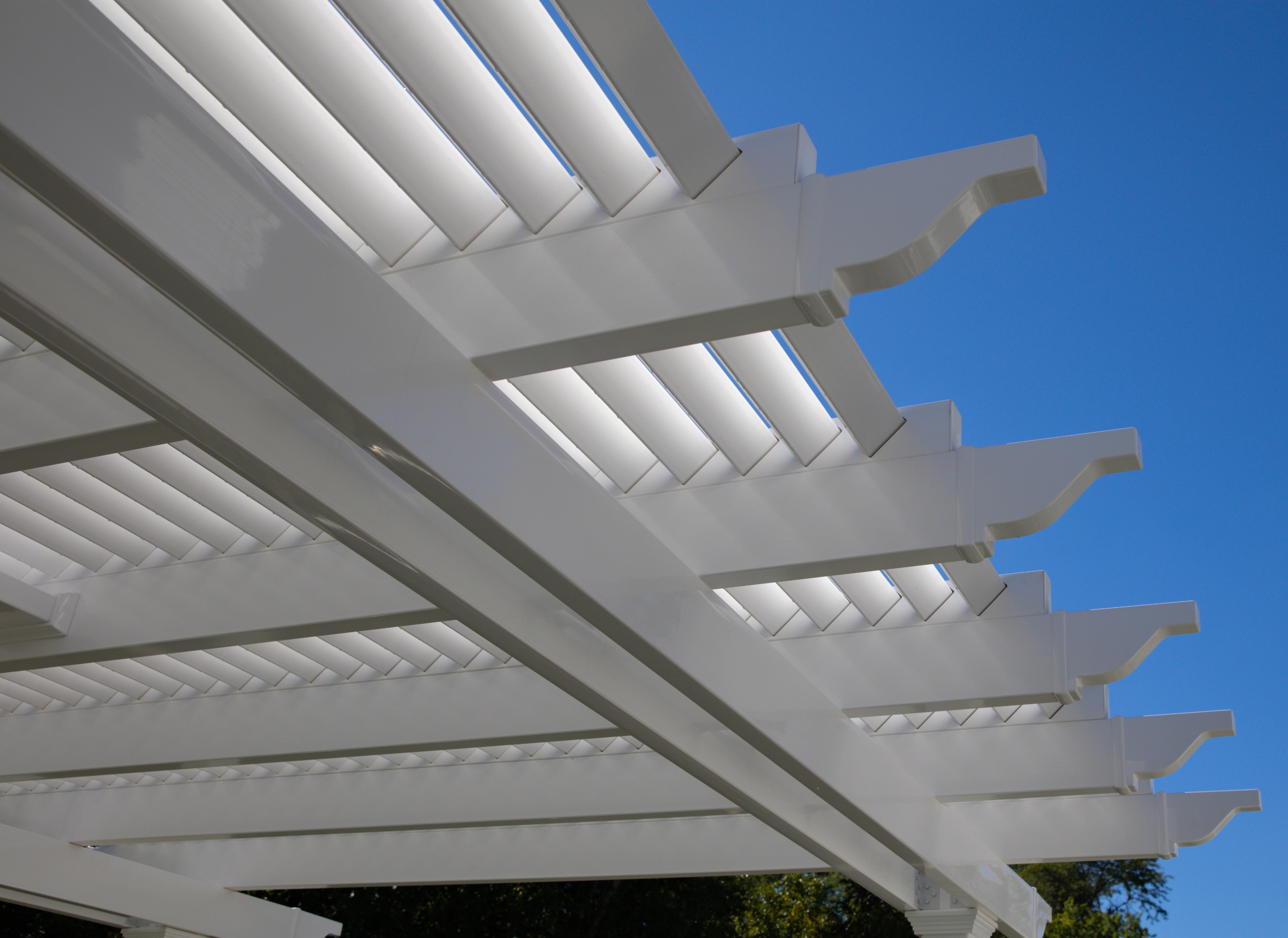
Traditional pergolas can incorporate decorative beam and rafter overhangs, while modern pergolas feature clean, flush corners without overhangs.
This distinction matters when evaluating a marked footprint. Two structures with similar nominal dimensions can have different visual profiles and post-placement arrangements.
Traditional configurations can accommodate inset posts within their available limits, while modern configurations place posts at the corners.
As a result, the best configuration may depend partly on how the structure relates to nearby paths, landscaping, and other outdoor features.
Review the available freestanding pergola configurations and compare their dimensions, styles, and post arrangements against your proposed location.
You can also use the pergola size directory to explore dimensions that may suit your available outdoor space.
Choosing the best backyard location is an important milestone, but it isn't the final installation decision.
Before ordering or beginning construction, confirm that the selected pergola configuration is compatible with the site and that unresolved conditions have been evaluated.
Your final review should include:
Shade orientation and local approvals are separate planning decisions that should be addressed before treating the preferred location as final.
If you're planning to assemble the structure yourself or coordinate with a contractor, the pergola assembly information can help you understand the installation process.
The best freestanding pergola placement is the location that supports how you'll actually use your backyard, connects naturally with existing outdoor spaces, preserves important views, and offers workable site conditions.
Start with the intended activity, walk the daily routes, evaluate the views, and screen for practical obstacles. Then rank your strongest candidates and keep a backup location until outstanding site questions are resolved.
Once you've identified a preferred location, bring your marked footprint and site notes to the available freestanding pergola options. Comparing actual configurations against your chosen space will help you select a permanent outdoor structure that feels like a natural part of your backyard.
Yes. A freestanding pergola can create a separate outdoor living area elsewhere in the backyard. Locations near gardens, pools, or landscaped features can work particularly well for relaxation and entertaining. The main consideration is whether the location remains convenient for its intended use.
Yes. A freestanding pergola becomes a permanent visual feature of your backyard. Evaluate how it looks from important windows and doors, then consider the views from the proposed seating area. The best location should complement the home's appearance while creating an enjoyable outdoor setting.
Yes. Positioning a pergola beside an existing walkway can preserve convenient circulation while creating a distinct seating or dining area. This arrangement often works better than routing regular foot traffic directly through the space beneath the pergola.
No. A centrally located pergola may create an attractive focal point, but it can also interrupt open lawn space, existing views, or walking routes. A location near the edge of the yard, beside a patio, or within a landscaped area may provide better functionality and visual balance.
Mark the proposed footprint using stakes, string, or temporary surface markings. Walk between the house and the location, evaluate views from important windows, and imagine using the space for its intended activity. Compare the marked footprint with actual pergola dimensions and post arrangements before committing.
Yes. If you plan to expand an existing patio or add another outdoor living area, consider how the pergola will connect with that future layout. A location that works well today could become inconvenient if it blocks a planned walkway, seating area, or patio extension. Include reasonably defined future improvements in your location comparison.


