

MADE IN THE USA
with American products
w/ American products


A freestanding pergola can become a comfortable outdoor living area with lighting, a ceiling fan, and conveniently placed outlets—but getting electricity to a detached structure requires planning before the patio and foundations are finished. Freestanding pergola electrical planning involves more than choosing fixtures: you need to determine where power will originate, how it will reach the structure, and whether the selected pergola can accommodate the intended equipment. This guide explains the decisions to coordinate with your electrician and pergola installer before construction closes off your options.
Start by identifying how you'll actually use the pergola. A detached dining area may need overhead lighting and a fan, while an outdoor lounge might benefit from adjustable lighting and outlets near seating. The goal is to design electrical access around the activities taking place beneath the pergola rather than allowing the nearest available power source to dictate the layout.
Before discussing circuits or wiring routes, make a preliminary list of the electrical features you want:
Also distinguish between equipment you intend to install immediately and features you may want later. Future additions can affect the electrician's supply and routing recommendations, even when those devices aren't part of the initial installation.
 A simple overhead sketch is one of the most useful tools for planning electricity to a freestanding pergola. Draw the approximate pergola footprint, post locations, furniture arrangement, and nearby pathways. Then mark each proposed electrical device and control.
For example, a pergola covering an outdoor dining table might have a fan centered over the dining area, lighting positioned to illuminate the tabletop, and an outlet located away from the main walking path. A lounge arrangement could call for different fixture locations and separate lighting controls.
Consider how the layout will function after dark. A switch that looks conveniently located on a drawing may be awkward if someone must walk across the patio to reach it. Likewise, an outlet positioned behind a permanent sofa or outdoor kitchen component may be difficult to use.
Planning tip: Mark desired device locations separately from proposed wiring routes. Your electrician and pergola manufacturer may need to adjust the route or mounting positions without changing the overall functionality you want.
Once you know which devices you want, a qualified electrician can evaluate how to supply them safely. Do not assume an existing outdoor receptacle can power every planned feature. Its circuit may already serve other equipment, and the proposed electrical load may require a different supply arrangement.
The electrician should review the intended equipment, existing electrical system, and applicable local requirements before determining the appropriate electrical design.
Important questions include:
These decisions depend on the equipment, installation conditions, and locally adopted electrical rules. There is no single circuit size or wiring arrangement that should be assumed suitable for every freestanding pergola.
For a detached pergola, the electrical supply must travel from its source to the structure. Underground routing is often worth evaluating because it can preserve the clean appearance of a finished outdoor living space.
However, the most direct route may not be practical. Existing concrete, landscaping, buried utilities, retaining walls, and other site features can affect the route's feasibility.
Ask your electrician to compare:
The electrician must determine permitted wiring methods, installation details, and required protection. Burial depths, conductor specifications, and circuit requirements should never be selected solely from a generic pergola guide.
Decision point: If the patio is still being designed, compare routing options before finalizing hardscape materials and construction details. A route that is straightforward during site preparation may become significantly more disruptive after the surrounding surfaces are completed.
 Running electricity to a freestanding pergola is partly an electrical design problem and partly a site-coordination problem. The planned power route must work around structural foundations, buried services, and the finished landscape.
Electrical planning should therefore happen alongside the pergola's structural layout—not after post locations and patio construction have already been finalized.
Provide the electrician with the proposed pergola dimensions and post locations, along with available foundation information. These details help identify potential conflicts between the electrical route and structural work.
Before excavation, the appropriate parties should identify and locate underground services. Depending on the property, these may include electrical lines, gas, water, irrigation, drainage, and communications infrastructure. Public utility locating services may not identify every privately installed line, so additional investigation may be necessary.
Potential conflicts worth identifying early include:
A route should not be approved simply because it looks clear on a surface-level drawing. The electrician and excavation contractor need reliable information about buried conditions before work begins.
The most important timing issue is ensuring that necessary electrical pathways and access provisions are resolved before permanent surfaces conceal them.
For example, if a pergola will stand on a new concrete patio, the electrician and concrete contractor should coordinate any required electrical provisions before the slab is poured. If the pergola will occupy an existing finished patio, the team must determine how the approved route can reach the structure without creating unacceptable disruption.
Do not assume that electrical conduit can be routed through a pergola post or foundation without confirmation. The manufacturer must approve any proposed interaction with structural components, and the electrician must verify the electrical installation method.
Electrical and structural work often involve different contractors. Clarify who will handle utility locating, electrical design, excavation, required access provisions, inspections, and restoration of disturbed surfaces.
This coordination is particularly important when the pergola is part of a larger backyard renovation involving a pool, outdoor kitchen, new patio, or landscaping.
Practical recommendation: Have the electrician and pergola installer review the same site drawing before either contractor begins work that could restrict the other's access.
Once the supply route is understood, confirm that the intended fixtures can be safely installed in the selected pergola configuration. This requires separate consideration of weather exposure, structural support, and electrical routing.
Not every outdoor electrical fixture is suitable for every outdoor location. The required equipment rating depends on actual exposure to rain, moisture, and other environmental conditions.
A slatted pergola roof does not provide rain protection. Even beneath a solid-roof patio cover, fixture locations may experience different moisture exposure depending on their placement and the surrounding conditions.
Have the electrician confirm whether each proposed fixture requires a damp-location or wet-location rating based on the actual installation environment and applicable requirements.
Pay particular attention to overhead lighting, ceiling fans, outlets, switches, and any electrical accessories positioned near the pergola's perimeter.
Sunset Pergola Kits offers optional fan mounts for its traditional and modern freestanding pergolas and freestanding rainproof patio covers. However, an optional fan mount is not the same as an electrical wiring package or a guarantee that every ceiling fan will fit.
Before purchasing a fan, confirm the following with the pergola manufacturer and electrician:
Do not drill, cut, or modify aluminum-reinforced structural components to accommodate wiring or fixtures without explicit manufacturer approval.
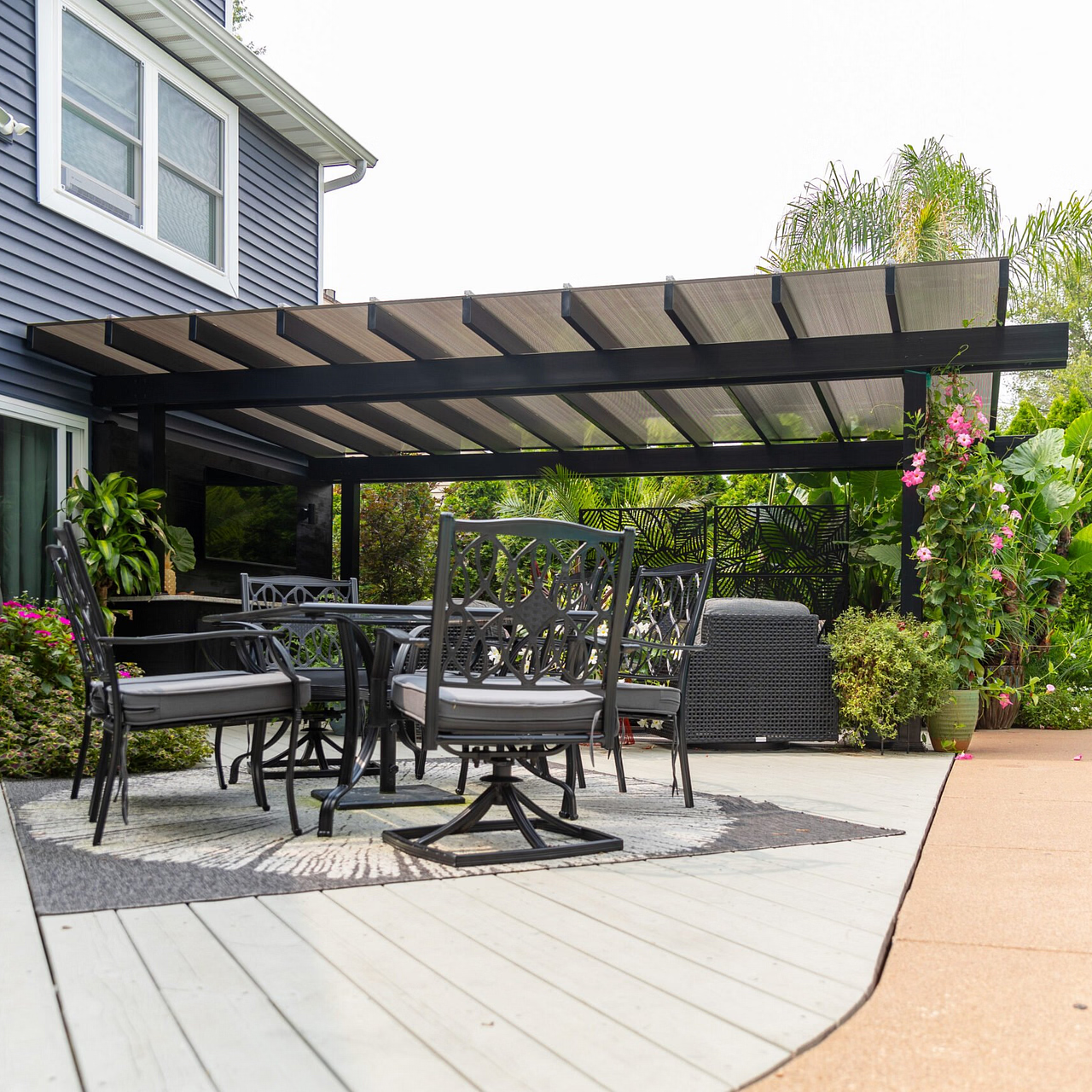 Getting power to the pergola is only part of the project. The electrician must also determine how electricity will be distributed from the supply entry point to individual fans, lights, outlets, and controls.
For a traditional or modern freestanding pergola, the open slatted roof makes fixture placement and visible wiring especially important aesthetic considerations. A freestanding patio cover has a solid polycarbonate roof, but that does not establish an approved internal wiring pathway or eliminate the need to evaluate fixture exposure.
Discuss these details before selecting the final structure:
Sunset Pergola Kits' traditional and modern pergolas feature aluminum-reinforced structural components with premium extruded vinyl exteriors. Those construction details should be considered when discussing routing and attachment methods, but they do not establish that the components contain approved wiring channels.
Before ordering: Obtain confirmation of the intended mounting and routing approach rather than assuming that a particular post, beam, or rafter can accommodate electrical equipment.
The electrical plan should be settled before construction reaches a point where foundations, concrete, decking, or landscaping would make changes difficult. This does not mean every electrical component must be installed before the pergola is assembled. It means the responsible professionals must agree on the necessary provisions and their timing.
Prepare one coordinated drawing that identifies the pergola footprint, posts, foundations, furniture, electrical devices, controls, supply route, and relevant site obstacles.
The drawing does not need to replace the electrician's technical documentation. Its purpose is to ensure that the homeowner, electrician, pergola manufacturer, and installer are working from consistent assumptions.
Before approving the work, confirm the following:
Electrical permits and inspections may be required independently of any approvals associated with the pergola structure itself. Ask the electrician and local authority having jurisdiction what applies to the proposed installation.
Do not assume that approval of the pergola's structural design automatically approves the electrical work. The two may involve different requirements, documentation, and inspections.
If the pergola is part of a larger outdoor renovation, identify which construction activities could prevent access to the planned electrical route.
For example, the electrician may need to coordinate with the contractor installing the patio surface, the crew preparing foundations, or the landscaper completing surrounding improvements. The correct sequence depends on the approved electrical design and the site's construction requirements.
Before the relevant work area is closed, verify that required electrical provisions have been completed, inspected where necessary, and documented for the remaining installation work.
Taking photographs of approved underground routes and concealed provisions before they are covered can also provide a useful reference for future maintenance or improvements.
Successful freestanding pergola electrical planning connects three decisions: a verified power supply, a practical site route, and compatible electrical devices positioned where people will use them. Resolving those details before foundations and finished surfaces are completed can prevent avoidable conflicts and help preserve the appearance of your outdoor living space.
Once your electrician has reviewed the proposed supply and routing plan, explore freestanding pergola configurations from Sunset Pergola Kits. Compare the available structures against your intended fixture locations, then confirm the necessary fan-mount and electrical-routing details before finalizing your selection.
No. Sunset Pergola Kits offers optional fan mounts for its freestanding pergolas, but the fan-mount option should not be assumed to include wiring, electrical components, or a ceiling fan. Confirm the mounting provisions with the manufacturer and arrange the electrical installation separately with a qualified electrician.
No. Fan compatibility depends on the specific mounting arrangement, fan requirements, and applicable installation conditions. Confirm the proposed fan and mounting method with the pergola manufacturer and electrician before purchasing equipment.
Yes. Identify preferred switch and control locations while planning the furniture layout and electrical routes. Final placement should be reviewed by your electrician before construction makes access or changes difficult.
No. An existing outlet does not establish that its circuit has sufficient capacity or is suitable for supplying the proposed pergola equipment. A qualified electrician should evaluate the electrical loads, available capacity, protection requirements, and appropriate supply arrangement.
Yes. An appropriately designed exposed conduit route may be an option where underground routing is impractical. The electrician must confirm that the proposed method is permitted, properly protected, and suitable for the location. Any attachment to pergola components also requires manufacturer approval.
No. Required fixture ratings depend on actual moisture exposure and installation conditions. Your electrician should determine whether each location requires equipment rated for damp or wet conditions. A slatted pergola roof should not be treated as rain protection.
Yes. A shared drawing helps coordinate electrical entry points, posts, foundations, fixture locations, and approved routing methods. Both professionals should review the layout before work begins that could conceal electrical pathways or restrict access.


