

MADE IN THE USA
with American products
w/ American products


Can you put a fire pit under a freestanding pergola? If you're planning a permanent backyard pergola with a fire feature beneath it, the answer depends on the exact fire pit, the pergola's construction, and the conditions at your property. Before committing to a layout, you need to determine whether that particular combination is permitted and whether all required clearances can be maintained during operation.
The fire pit's installation and operating instructions are the starting point for determining whether it can be used beneath a freestanding pergola. A clearance that works for one appliance cannot automatically be applied to another, even when the two fire pits look similar or use the same fuel.
Before evaluating pergola dimensions, locate the current installation manual for the exact fire pit model you intend to use. Look specifically for requirements concerning overhead structures, covered outdoor areas, combustible materials, and ventilation.
Important questions include:
If the instructions prohibit overhead structures, do not place the operating fire pit beneath the pergola. If they permit overhead installation only under specified conditions, every applicable condition must be satisfied.
If the manual does not address pergolas or overhead structures, that silence should not be interpreted as permission. Contact the appliance manufacturer for clarification before treating the location as acceptable.
Fire pits vary in construction, fuel delivery, burner design, flame characteristics, and intended installation conditions. A freestanding gas fire bowl, a built-in gas fire table, and a wood-burning fire pit may have substantially different placement requirements.
Even two gas fire pits from the same manufacturer may have different clearance instructions.
For this reason, avoid relying on generic online recommendations about how many feet should separate a fire pit from a pergola roof. There is no universal overhead clearance that establishes safe placement for every fire pit and pergola combination.
If you haven't purchased the appliance yet, selecting a model with clearly documented outdoor installation requirements can make planning easier. You can then evaluate pergola configurations against known restrictions rather than trying to accommodate an appliance after the structure is installed.
The entire pergola assembly matters, not just the material used for its structural reinforcement. Before positioning a fire pit beneath a permanent pergola, identify the actual materials and components that could be exposed to rising heat, flames, smoke, or embers.
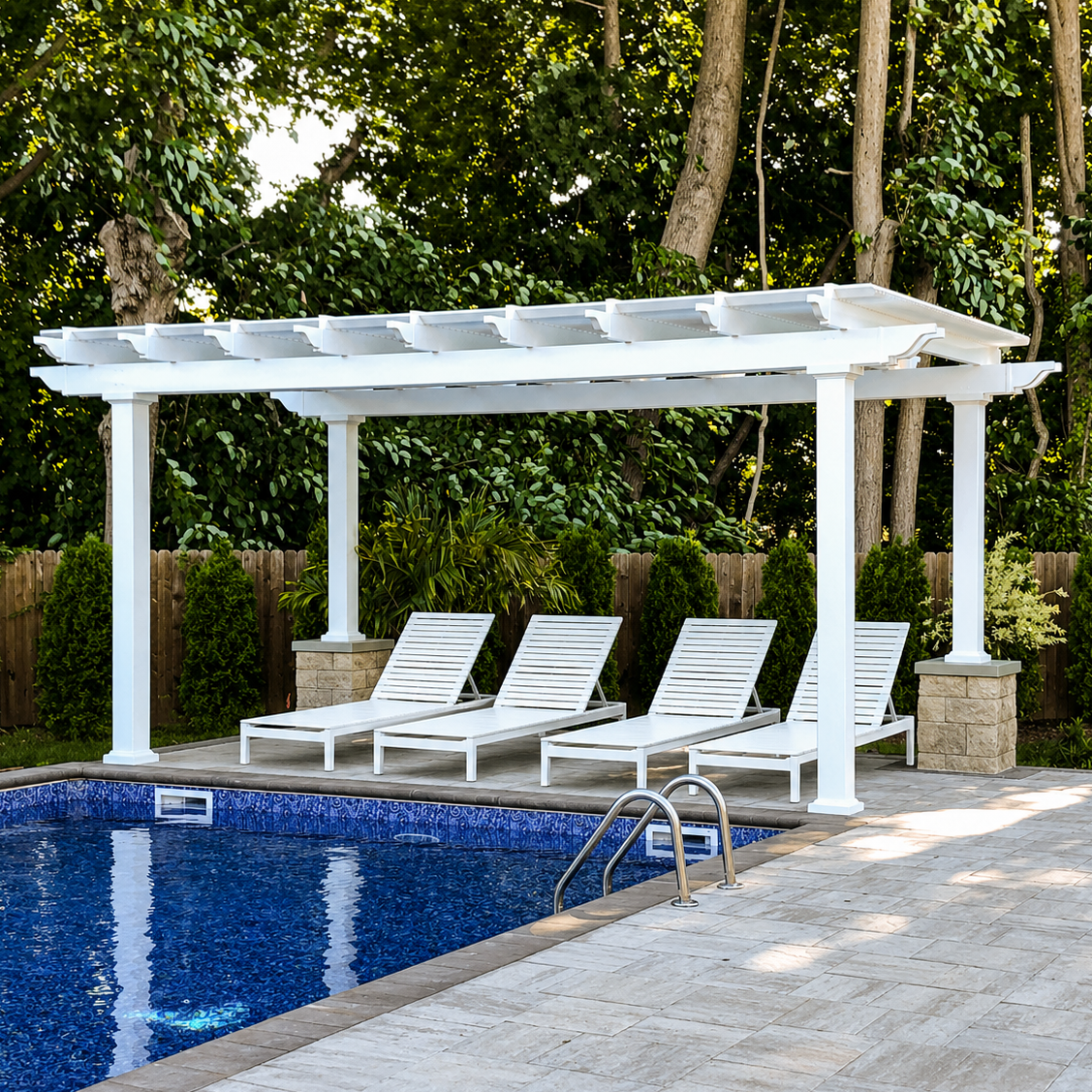 Sunset Pergola Kits offers permanent pergolas constructed with aluminum-reinforced structural components and premium extruded vinyl exteriors. The aluminum reinforcement provides structural strength, while the vinyl forms the exposed exterior surfaces.
That distinction is important when evaluating a fire pit under a freestanding pergola.
Aluminum reinforcement does not mean the entire structure is metal, noncombustible, or suitable for exposure to fire-pit heat. Vinyl surfaces must also be considered because elevated temperatures can damage or deform vinyl materials.
For example, a fire pit positioned near the center of a pergola may expose overhead shade slats and rafters to rising heat. Moving the appliance toward an edge may change which components are exposed, but it can also introduce concerns involving perimeter beams, posts, and roof overhangs.
Neither arrangement should be considered acceptable without checking the applicable requirements.
Traditional and modern pergolas from Sunset Pergola Kits feature fixed, angled shade slats. Available configurations provide approximately 50%, 75%, or 90% shade coverage.
Although these roofs contain openings, those openings do not establish that a fire pit can safely operate underneath.
Heat can rise toward structural components even when air can move between the slats. Flames, smoke, and airborne embers may also interact with the roof assembly.
The amount of open space in a roof is therefore not a substitute for the appliance manufacturer's overhead-clearance and ventilation requirements.
Sunset Pergola Kits also offers freestanding rainproof patio covers with solid polycarbonate roofing.
A solid roof introduces a different overhead configuration from a slatted pergola. The roof panels, vinyl-covered framing, and ventilation conditions all need to be considered.
Do not assume that a rainproof roof is suitable for fire-pit use simply because it provides outdoor shelter. Unless the exact appliance instructions, structure manufacturer's guidance, and applicable rules establish that the arrangement is permitted, overhead fire-pit use should remain unapproved.
For any pergola style, obtain guidance specific to the proposed structure and its complete assembly rather than relying on general descriptions such as "aluminum frame" or "open roof."
Gas and wood-burning fire pits introduce different operating considerations, but neither fuel type automatically makes placement beneath a pergola acceptable. The relevant question is whether the specific appliance can operate in the proposed location while satisfying every applicable requirement.
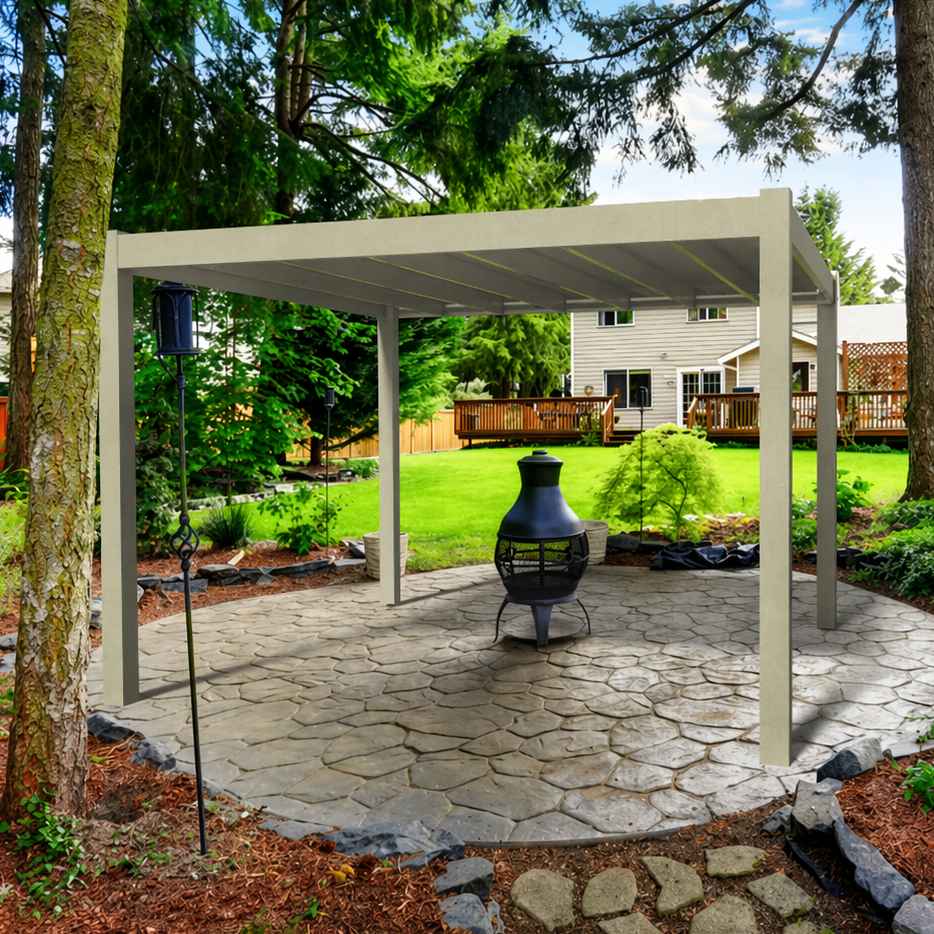 Gas fire pits are often attractive for outdoor lounge areas because they provide a controlled fuel supply and do not require burning logs. However, a gas flame still produces substantial heat and combustion products.
Before considering a gas fire pit under a pergola, verify:
A gas appliance described as suitable for outdoor use is not necessarily approved for operation beneath a pergola. Outdoor approval and overhead-installation approval are different considerations.
Wood-burning fire pits introduce additional concerns because burning logs can produce sparks, airborne embers, and smoke that may travel beyond the immediate flame area.
These exposures matter even when the fire pit is not directly beneath a beam or shade slat.
For example, smoke and embers can move toward overhead components or nearby furnishings depending on wind conditions. A location that appears clear when the fire is unlit may become unsuitable during operation.
Check the manufacturer's instructions and applicable fire regulations before considering a wood-burning appliance near a pergola. If overhead use is prohibited or cannot be verified as permissible, select another location.
Fire-pit clearance under a pergola involves more than measuring the distance from the flame to the roof.
The proposed location must satisfy all applicable separation and operating requirements together.
| Requirement | What to Verify | Why It Matters |
|---|---|---|
| Overhead clearance | Required separation from roof slats, rafters, beams, and other overhead components | Rising heat and flames may affect materials above the appliance. |
| Lateral clearance | Required distance from posts, furniture, walls, and nearby objects | Heat exposure is not limited to the space directly above the fire. |
| Ventilation | Whether the proposed roof and surrounding layout satisfy the appliance's ventilation instructions | Outdoor combustion appliances may have restrictions on partially enclosed locations. |
| Combustible materials | Required separation from combustible furnishings, decking, vegetation, and structural surfaces | Nearby materials may be exposed to heat, sparks, or embers. |
| Operating conditions | Restrictions involving flame characteristics, fuel, wind, and appliance operation | A location must remain acceptable while the appliance is being used, not merely when it is off. |
A layout that satisfies the vertical clearance but violates a horizontal clearance is not an acceptable installation.
Likewise, moving a fire pit farther from the roof does not resolve an appliance's prohibition against overhead structures.
Manufacturer approval alone does not establish that a fire-pit location is permitted at your property. Local fire regulations, temporary restrictions, and the surrounding environment must also be considered.
Before finalizing the layout, contact the local fire authority or other applicable building and fire-code officials to confirm the requirements for your proposed appliance and installation.
Depending on the jurisdiction, relevant rules may distinguish between gas and solid-fuel appliances or address proximity to structures and combustible materials.
Ask specifically whether the intended appliance can operate beneath or beside a permanent freestanding pergola at your property.
Also verify whether temporary fire restrictions affect the proposed fuel type or operating conditions. Rules that apply when a project is planned may not necessarily be the same restrictions in effect when the appliance is used.
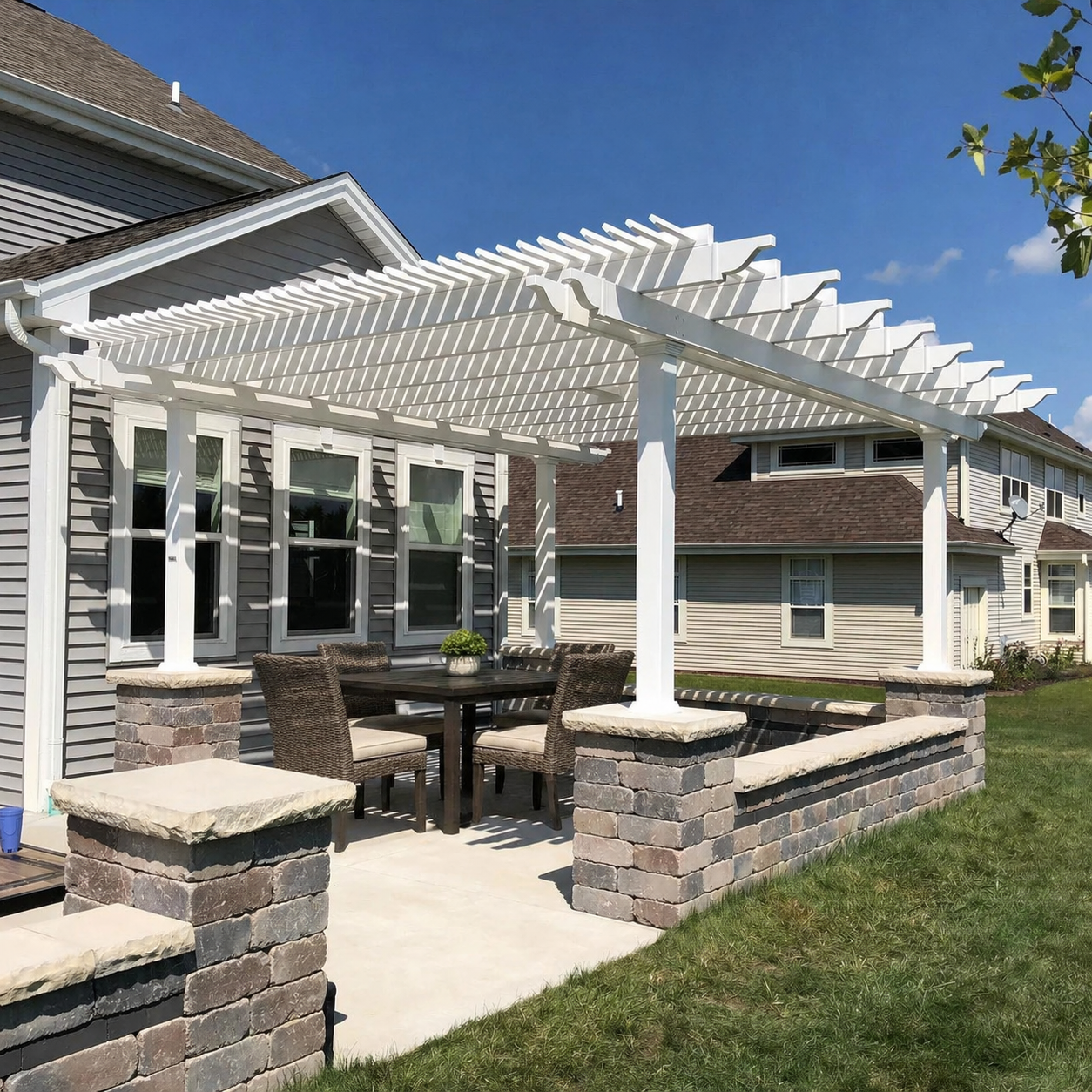 The surrounding environment can affect whether an otherwise promising location is practical.
Review the proposed position in relation to:
Wind conditions deserve particular attention because a fire pit's operating environment can change throughout the day. Follow the appliance manufacturer's wind-related operating restrictions rather than assuming a location is acceptable under every condition.
If branches or other overhead obstacles complicate the proposed location, resolve those conflicts before committing to the pergola footprint.
Once you understand the appliance's requirements and the pergola's construction, you can determine whether the fire pit belongs beneath the roof, beside the structure, or somewhere else on the property.
The correct location is the one that satisfies all applicable requirements—not necessarily the location that looks best in the initial design.
Placing a fire pit beneath a freestanding pergola should remain an option only when the proposed combination has been specifically verified.
Use the following checklist before proceeding:
If any item remains unresolved, obtain clarification before approving the location. An attractive layout is not a reason to overlook missing manufacturer guidance.
Positioning the fire pit outside the pergola's roof footprint may be a more practical solution when overhead installation is prohibited or cannot be confirmed.
This arrangement can preserve the pergola as a shaded seating or dining area while locating the fire feature in a separate part of the outdoor space.
However, outside the roof footprint does not automatically mean outside the required clearance area.
For example, a traditional pergola may have beams and rafters that extend beyond its posts. Sunset Pergola Kits traditional freestanding pergolas offer optional beam and rafter overhangs, so the actual roof perimeter may extend beyond the post layout.
A fire pit placed just outside a row of posts could still be beneath an overhanging component or too close to the structure.
Modern freestanding pergolas have flush corners without beam or rafter overhangs. This creates a different roof geometry, but it does not establish a safe fire-pit distance.
In either case, measure the proposed separation from the relevant structural components and surrounding materials, not merely from the nearest post.
A different location may be necessary when the available patio area cannot accommodate all required clearances or when the intended appliance is incompatible with the proposed surroundings.
Examples include:
In these situations, relocating the appliance, choosing a different appliance with suitable documented installation requirements, or revising the overall arrangement may be necessary.
Once a permissible fire-pit location has been established, evaluate the pergola's dimensions, post positions, and roof geometry against the confirmed clearance requirements.
Sunset Pergola Kits offers several freestanding pergola configurations, including traditional designs with optional overhangs and modern designs with flush corners.
For example, a traditional pergola may provide flexibility in post positioning and roof overhangs, while a modern pergola offers a more defined perimeter with corner posts and no overhangs.
These are layout differences, not fire-safety certifications. Neither design should be assumed suitable for overhead fire-pit operation without specific confirmation.
Compare the actual roof and post dimensions of the proposed model against the appliance's verified requirements before selecting a structure.
After confirming where the fire pit can be located, you can arrange the remaining outdoor space around dining, lounging, and circulation needs without compromising the required separation areas.
A fire pit can be considered beneath a freestanding pergola only when the exact appliance instructions, complete pergola construction, required clearances, ventilation conditions, and local rules support that installation. A slatted roof or aluminum-reinforced frame does not establish compatibility on its own.
If overhead placement cannot be verified, evaluate a location beside or away from the pergola while maintaining every applicable clearance. Once you have a confirmed arrangement, explore freestanding pergola options to find a configuration whose actual dimensions and roof geometry fit your plans.
No. Openings between pergola slats do not automatically provide adequate overhead clearance or ventilation. The specific fire appliance must permit the proposed installation, and the pergola's roof components must be suitable for the expected exposure.
No. Even when the appliance itself is constructed from noncombustible materials, its flames and heat can affect nearby surfaces. Manufacturer instructions, overhead and lateral clearances, ventilation requirements, and local regulations still apply.
No. Sunset Pergola Kits pergolas have aluminum-reinforced structural components with premium vinyl exteriors. Aluminum reinforcement does not establish that the vinyl surfaces, shade slats, or other components can safely withstand fire-pit heat.
No. Clearance requirements are specific to the appliance and its approved installation conditions. Always consult the current instructions for the exact fire-pit model rather than transferring requirements from a different appliance.
No. Overhead clearance is only one requirement. You must also verify horizontal separation from posts, furniture, vegetation, and other materials, along with ventilation and applicable operating restrictions.
Yes. A fire pit may physically fit beneath or beside a pergola while still being unsuitable for operation because of flame exposure, rising heat, smoke, embers, or ventilation restrictions. Evaluate the location under the appliance's actual operating conditions.
Do not assume overhead installation is permitted. Contact the appliance manufacturer for clarification. If permission and applicable requirements cannot be established, choose another location rather than relying on a guessed clearance.


