

MADE IN THE USA
with American products
w/ American products


Good attached pergola electrical planning starts before the structure is ordered. You may already envision a ceiling fan circulating air above your outdoor dining table, comfortable lighting for evenings, and convenient outlets for occasional equipment. But those features need coordinated locations, suitable mounting provisions, power access, and controls. Planning them together helps you avoid discovering during installation that a preferred fixture location conflicts with the structure or that the electrical route is more complicated than expected.
Start with what you actually want to do beneath your attached pergola. Electrical planning becomes much easier when every proposed feature has a specific purpose and location rather than being added from a generic accessory checklist.
Think about how the space will function during a typical afternoon, evening, and weekend gathering. A dining area may benefit from overhead illumination and air movement, while a separate seating area may call for softer lighting and a conveniently located outlet.
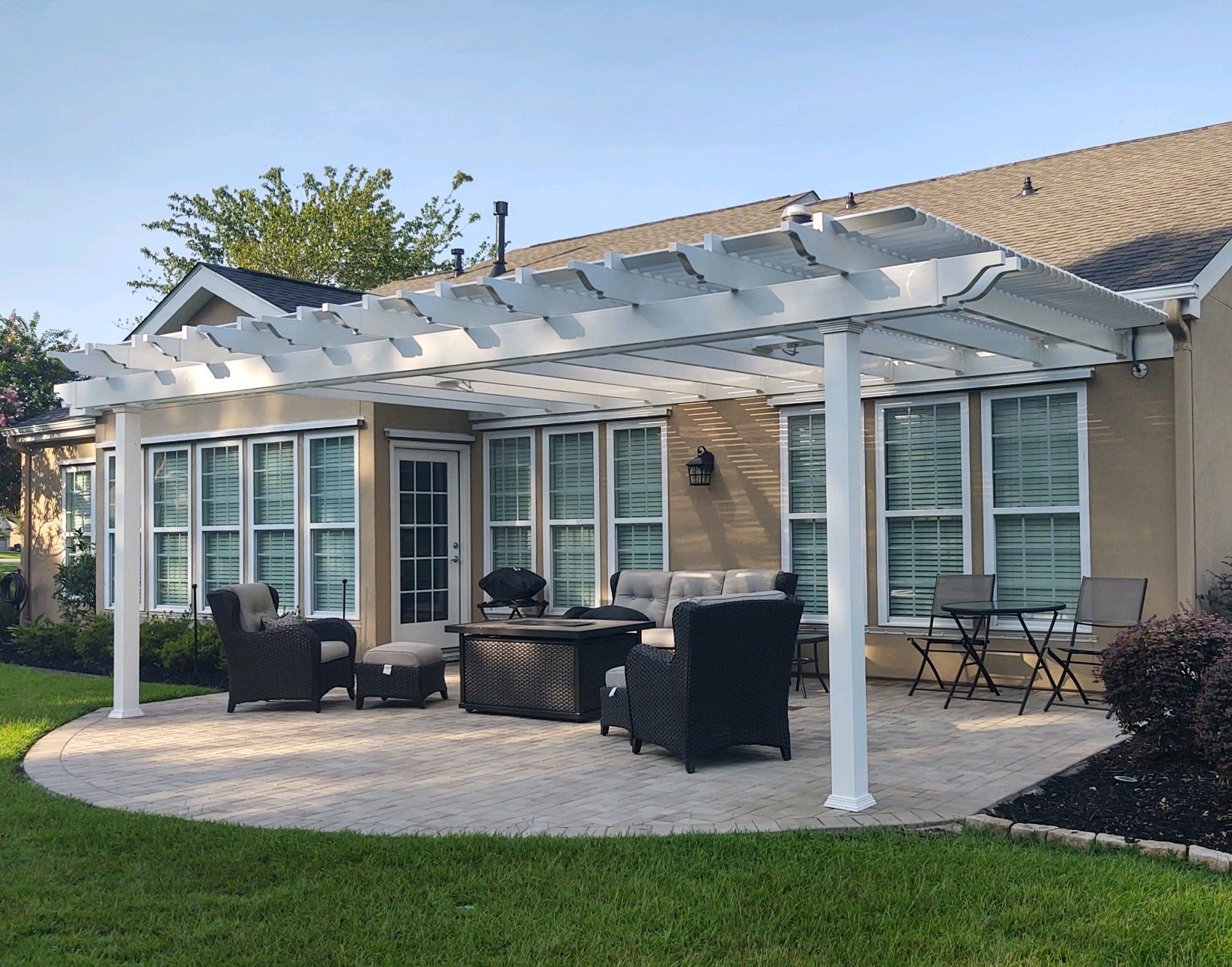 Create a simple feature schedule that connects each intended activity with its electrical requirements.
| Outdoor Activity | Features to Consider | Planning Decision |
|---|---|---|
| Outdoor dining | Overhead lighting, optional ceiling fan | Identify the table location, desired light coverage, fan position, and nearby control access. |
| Evening lounging | Ambient lighting, fan, occasional-use outlet | Determine whether seating-area lighting should operate independently from dining-area lighting. |
| Reading or detailed activities | Localized task lighting | Identify where stronger illumination is needed without unnecessarily brightening the entire patio. |
| Seasonal entertaining | Convenient power access, flexible lighting controls | Plan accessible outlet locations and determine which features will be used only occasionally. |
| Future upgrades | Potential fan, additional lighting, or outlet | Record possible future locations and ask whether compatible mounting or electrical provisions should be arranged now. |
The purpose is not to install every possible feature. It is to distinguish what you need immediately from what you may reasonably want later.
Divide your feature schedule into three categories:
For example, you might install dining-area lighting immediately while reserving the possibility of adding a fan above an adjacent seating area later. Recording that future fan location allows you to investigate mounting compatibility and electrical feasibility before ordering rather than assuming the addition will be straightforward afterward.
A single switch controlling every light may be adequate for a small, single-purpose patio. A larger attached pergola serving multiple activities often benefits from independently controlled lighting groups.
Consider whether you want to illuminate the dining area without lighting the lounge, operate a fan without turning on the lights, or control the patio from more than one convenient location.
These decisions influence the electrical brief your electrician will use. They should be established before detailed wiring design begins.
Choosing where a fan or light should go is not the same as confirming that the pergola can support it. Every proposed fixture location needs separate consideration of mounting compatibility, supported weight, movement, and required clearances.
Sunset Pergola Kits offers optional fan mounts for its Traditional pergolas, Modern pergolas, and rainproof patio covers. These mounting provisions should be evaluated when selecting an attached structure that may support a ceiling fan.
However, the availability of an optional fan mount does not establish compatibility with every fan or every proposed location.
Before ordering, confirm:
These details should be verified against the specific kit and fan documentation. Do not assume that an optional mounting provision includes the fan, an electrical box, wiring, or a complete electrical installation.
A ceiling fan introduces considerations that do not apply to a stationary light fixture. Its blades move, and its installation must satisfy the fan manufacturer's mounting and clearance requirements.
Review the proposed fan position in relation to:
The appropriate fan location depends on the actual pergola configuration, mounting elevation, and selected fan. Avoid choosing a fan solely because its appearance complements the structure.
Where available vertical space is limited, resolve the overall pergola elevation and fixture-clearance requirements together before committing to a particular fan.
Stationary lighting fixtures also require approved mounting arrangements. A fixture's relatively modest weight does not automatically make an arbitrary attachment point acceptable.
Confirm the fixture's mounting requirements, the intended attachment location, and any restrictions in the pergola manufacturer's installation instructions.
In particular, do not assume that the vinyl exterior or aluminum-reinforced structural components can be drilled, modified, or used as mounting surfaces without specific approval.
For homeowners comparing attached pergola configurations, this is an important reason to finalize the intended fan and lighting locations before selecting the structure.
The most useful time to investigate electrical supply and routing is before the attached pergola is installed. At that stage, the electrician and installer can evaluate possible routes without assuming that finished structural components can be opened or modified later.
Begin by identifying what electrical supply is currently available near the intended installation area.
A nearby exterior receptacle may appear convenient, but its presence does not establish that the existing circuit can support the planned combination of lighting, fans, and other equipment.
Ask a qualified electrician to review:
The electrician should determine the appropriate electrical design using the actual equipment specifications and locally applicable requirements.
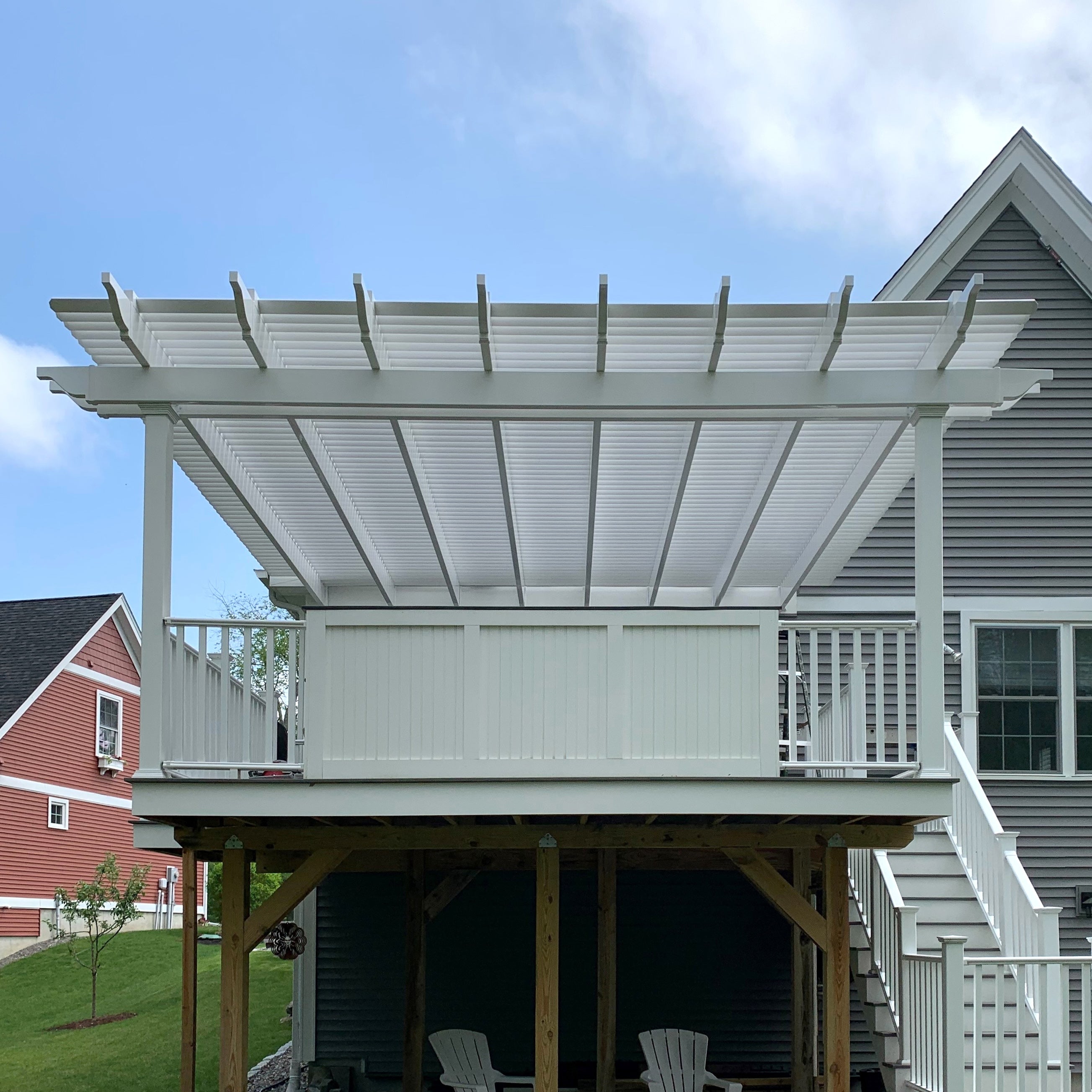 Because an attached pergola connects directly to the house, the wall-to-pergola transition deserves particular attention.
The electrician may need to evaluate possible routes from the home's electrical system to the intended fixture locations. Those routes must be coordinated with the pergola's attachment details, the building envelope, and any existing exterior equipment.
Before work begins, establish:
A power-entry location that seems convenient on a drawing may conflict with the actual attachment hardware or existing building conditions. Reviewing these details together can prevent unnecessary changes during installation.
Sunset Pergola Kits structures use aluminum-reinforced structural components with premium extruded vinyl exteriors. That construction does not, by itself, establish that the components are approved electrical raceways or that wiring may be routed through their interiors.
Concealed wiring inside structural components should never be assumed permissible.
Any proposed internal routing, penetration, or modification must be reviewed against the specific kit instructions and approved by the appropriate parties before work proceeds.
Where concealed routing is unavailable or unsuitable, the electrician may recommend an approved external routing arrangement. Its visibility, placement, weather suitability, and accessibility should be considered before the pergola is assembled.
For a premium outdoor installation, the objective is not simply to hide every electrical component. It is to develop a safe, serviceable arrangement that integrates cleanly with the finished structure.
Electrical planning should also account for future inspection, maintenance, and replacement.
Ask the electrician to identify connections, devices, and other components that must remain accessible under the applicable requirements. Coordinate those locations with the pergola installer so they are not unintentionally obstructed or concealed during assembly.
Do not finalize decorative coverings or concealment details until the responsible trades have confirmed that the arrangement is permitted and serviceable.
Outdoor electrical equipment must be selected for the conditions it will actually experience. The presence of a pergola roof does not automatically establish that a location is suitable for indoor-rated fixtures.
Traditional and Modern Sunset Pergola Kits use fixed slatted shade roofs. Their shade purlins provide selectable shade coverage, but the roof is not rainproof.
Consequently, fixtures beneath these structures must be evaluated with the possibility of direct weather exposure in mind.
Sunset Pergola Kits also offers rainproof patio covers with solid polycarbonate roofing. A solid roof changes the exposure conditions beneath the structure, but it does not necessarily eliminate wind-driven rain, moisture, condensation, or other outdoor environmental factors.
The electrician and fixture manufacturer must determine whether each specific installation location requires equipment rated for damp or wet conditions.
Equipment suitability is not limited to the visible fan or light fixture.
Depending on the installation, the electrical plan may need to address the ratings and requirements of:
Outdoor suitability should be established using the manufacturer's installation instructions, equipment listings, and applicable electrical requirements rather than appearance or marketing descriptions alone.
For example, a decorative light intended for a protected indoor room should not be assumed suitable for an exposed pergola merely because it fits the desired design.
Exposure can vary within the same attached outdoor space.
A fixture near the outer edge of a covered area may experience different conditions than one located closer to the house. A wall-mounted control may also experience different weather exposure than a fixture positioned overhead.
Have the electrician evaluate each proposed location rather than assigning one general exposure classification to the entire patio.
This location-specific review is especially important when selecting fixtures before the pergola has been installed.
Once the intended features and their installation requirements are established, consider how you will operate them. A technically workable electrical installation can still be inconvenient if switches, outlets, and controls are poorly positioned.
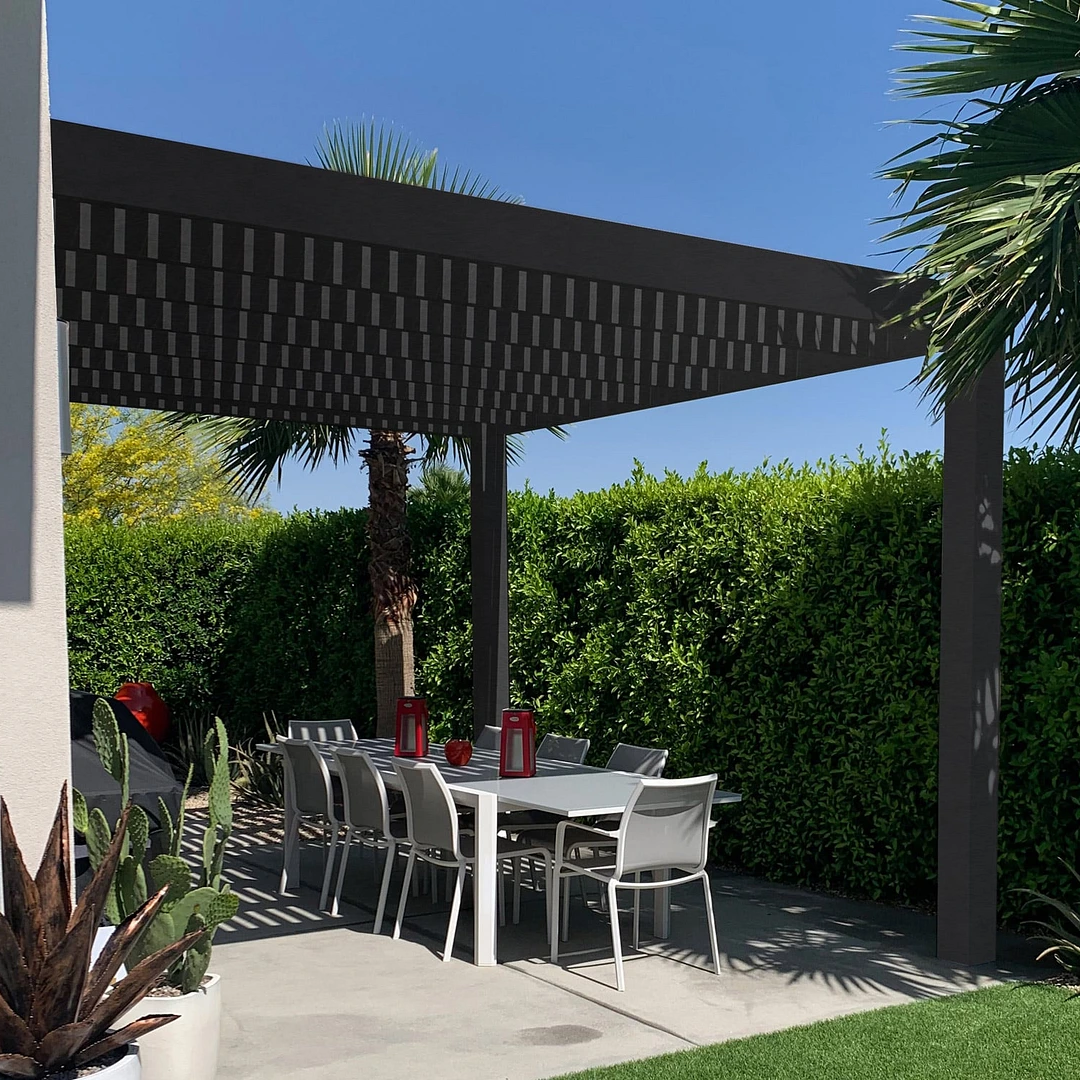 The transition between the house and patio is a logical starting point for control planning.
Think about where someone will be standing when they first step outside, when they return indoors, and when they want to adjust lighting or air movement while seated.
Useful questions include:
The appropriate arrangement depends on the actual fixtures, available control systems, and electrical design.
Consider an attached pergola with an outdoor dining table near the house and a lounge area farther from the doorway.
During dinner, you may want clear illumination above the table while keeping the lounge softly lit. Later, you may prefer to turn off the dining lights without darkening the entire patio.
Separately controlled lighting zones can accommodate those different uses.
However, multiple zones are not automatically necessary. A compact patio used primarily for one activity may be better served by a simpler arrangement.
The important decision is whether independent control would provide a meaningful benefit in your particular space.
Outlet planning should begin with the equipment you expect to use and where that equipment will be located.
Consider occasional outdoor devices, seasonal lighting, and other appropriate electrical uses without assuming that every possible activity requires a permanent receptacle.
When reviewing proposed locations, account for:
A conveniently located outlet should reduce unnecessary cord routing without creating an obstruction or compromising electrical safety.
Smart switches, compatible fan controllers, and remote-control systems may offer additional convenience, but their suitability depends on the selected equipment and installation environment.
Confirm whether the proposed controls are compatible with the fixtures, appropriate for their mounting locations, and accessible when service or replacement is necessary.
Do not assume that a controller designed for indoor use can be mounted outdoors without appropriate protection or manufacturer approval.
Likewise, wireless convenience should not replace verification of the underlying electrical and mounting requirements.
Before finalizing control locations or electrical entry points, inspect the surrounding wall for existing equipment and building features.
Gutters, downspouts, exterior utilities, and other obstructions may affect where components can be positioned or where electrical routes can enter the outdoor area.
Coordinate these conditions with the installer and electrician rather than treating the electrical plan as independent of the home's existing exterior.
The final planning step is to turn your preferences into one coordinated document that the electrician, pergola supplier, and installer can review.
This does not need to be a complicated technical drawing. A marked-up patio plan, fixture schedule, and short list of unresolved questions can provide a useful starting point.
Use the following checklist before the structure is ordered or electrical work begins.
| Planning Item | Information to Record | Primary Verification |
|---|---|---|
| Fans | Quantity, intended locations, selected models, and control preferences | Mount compatibility, load capacity, supplied hardware, and required clearances |
| Lighting | Fixture locations, lighting functions, and independent control zones | Approved mounting arrangements, equipment suitability, and electrical design |
| Outlets | Intended uses, preferred positions, and access requirements | Supply suitability, protective devices, and exposure requirements |
| Electrical supply | Known existing supply information and anticipated equipment | Electrician's assessment of circuit and installation requirements |
| Wiring routes | Potential entry points, wall penetrations, visible routes, and concealment preferences | Approved routing methods, structural restrictions, and weatherproofing coordination |
| Controls | Switch locations, fan controls, lighting groups, and smart-control preferences | Compatibility, accessibility, and environmental suitability |
| Future additions | Possible future fans, lights, outlets, or controls | Feasibility of reserving suitable mounting or electrical provisions |
| Approvals | Responsible trades, outstanding decisions, and required electrical inspections | Applicable local electrical requirements and necessary approvals |
Before ordering the pergola: Verify that the selected structure can accommodate the proposed fixture locations and any optional fan mounts. Resolve structural compatibility questions before committing to a configuration.
Before assembly: Have the electrician and installer agree on electrical entry points, routing arrangements, mounting locations, and the responsibilities of each trade. Confirm that the proposed work follows the kit instructions and applicable electrical requirements.
Before concealing completed work: Confirm that required inspections or approvals have been addressed and that electrical connections and service points remain accessible as required.
These checkpoints help prevent one trade from making an installation decision that creates problems for another.
With your feature schedule established, you can evaluate a structure based on more than its appearance and dimensions.
For example, if a ceiling fan is central to your intended use, optional fan-mount compatibility becomes a purchasing requirement rather than a detail to investigate after delivery.
Sunset Pergola Kits offers Traditional pergolas, Modern pergolas, and solid-roof patio covers in attached configurations. Each family offers optional fan mounts, subject to verification for the specific configuration and intended installation.
Bring your proposed fixture locations and mounting questions into the product-selection process. That makes it easier to identify a suitable structure and coordinate the remaining electrical decisions with your electrician.
Successful attached pergola electrical planning connects four decisions: what you want to power, where fixtures can be properly supported, how electricity will reach them, and how the finished space will be controlled. Addressing those questions before ordering and installation helps create an outdoor area that is comfortable, convenient, and easier to maintain.
Start with a simple feature brief, review it with a qualified electrician, and verify mounting compatibility with the pergola supplier. Then explore Sunset Pergola Kits' attached pergolas to identify a structure that fits your outdoor-living plans and any confirmed optional fan-mount requirements.
No. An optional fan mount is a mounting provision, not a complete fan or electrical installation. Sunset Pergola Kits offers optional fan mounts for its Traditional, Modern, and patio-cover families. Confirm compatibility, supported loads, supplied hardware, and any separately required electrical components before ordering.
No. A solid roof provides rain protection but does not automatically make the area suitable for indoor-rated equipment. Wind-driven moisture and other outdoor conditions may still affect fixtures. Equipment must be selected for its actual exposure and the manufacturer's installation requirements.
Separate lighting zones are useful when an attached pergola serves different activities, such as dining and lounging. They allow one area to be illuminated without necessarily lighting the entire patio. A smaller, single-purpose space may work well with simpler controls.
No. An existing outlet does not establish that its circuit can support additional fans, lighting, or other equipment. A qualified electrician should assess the available supply, anticipated electrical loads, and applicable installation requirements before determining whether additional electrical work is needed.
Yes. Recording future fixture locations allows the pergola supplier and electrician to evaluate mounting compatibility, electrical access, and possible provisions before assembly. This does not guarantee that future installation will be possible, but it helps identify potential limitations early.
No. Aluminum-reinforced pergola components should not be assumed suitable for concealed wiring or use as electrical raceways. Any proposed internal routing or structural modification must be specifically approved and comply with the applicable kit instructions and electrical requirements.
Yes. Smart switches and controllers must be compatible with the connected equipment and suitable for their actual installation environment. Their locations should also allow required access for operation, maintenance, and replacement. An electrician should verify the proposed arrangement.


