

MADE IN THE USA
with American products
w/ American products


Home ▸ Vinyl Pergolas ▸ By Location ▸ Miami, Florida
Miami homeowners ask more from a permanent outdoor structure than shade alone. Strong sun, frequent tropical rain, humidity, coastal exposure, and the possibility of hurricane-force winds all influence whether a slatted pergola or fully covered patio is the better fit. Around pools, waterfront terraces, outdoor kitchens, and contemporary South Florida homes, an aluminum-reinforced vinyl structure offers a practical low-maintenance approach, while a solid-roof patio cover becomes especially useful when dependable rain protection matters.
Choosing a pergola in Miami starts with a different set of priorities than choosing one for a dry inland climate. Shade matters, but so do sudden rain, persistent moisture, coastal exposure, and serious wind planning. The right structure therefore depends not only on how a patio looks, but on when the homeowner expects to use it and what kind of overhead protection the space actually needs.
In Miami, overhead shade is less of a seasonal accessory and more of a basic patio-planning decision. Pool decks, paved terraces, outdoor dining areas, and west-facing spaces can become uncomfortable when they are exposed to direct sun for long periods. That makes the amount of shade—and not simply the presence of a pergola—important.
A homeowner who wants a bright, open structure may be satisfied with filtered slatted shade. Someone creating an outdoor dining room or afternoon lounge area will often benefit from denser shade. The key is to choose coverage based on how the space is used and when it receives direct sun.
Miami's rain is one reason homeowners should make a clear distinction between a pergola and a patio cover. A fixed slatted pergola can provide substantial shade, but its 50%, 75%, or 90% roof is not rainproof. If the goal is to keep an outdoor dining table, cooking area, or lounge space usable during rainfall, a solid-roof patio cover is the more appropriate starting point.
This distinction is easy to overlook because both structures provide overhead coverage. Think about the problem you actually want the roof to solve: if it is primarily sun, slats preserve a more open pergola experience; if it is sun plus dependable overhead rain protection, the solid polycarbonate roof is the relevant option.
Properties close to Miami Beach, Key Biscayne, Biscayne Bay, and other waterfront settings add another consideration: the combination of moisture and salt exposure. Material selection becomes particularly important when the homeowner wants a permanent structure without adopting a recurring refinishing project.
That does not make wood or other premium materials inherently unsuitable. It does make maintenance expectations worth comparing before buying. For homeowners who would rather not routinely paint, stain, sand, or seal their structure, an extruded-vinyl exterior over rust-proof aluminum reinforcement has an obvious practical advantage.
Miami homeowners should treat wind planning as a first-stage project requirement, not an accessory decision made after selecting the pergola. Structure type, attachment method, anchoring, foundation conditions, engineering requirements, and the exact project location all matter.
This is also one Miami-specific reason the distinction between SPK's product families matters. Optional hurricane brackets are available for traditional pergolas and solid-roof patio covers and are recommended by Sunset Pergola Kits where an area ever experiences winds of 80 MPH or higher. They are not available for modern pergolas. Proper anchoring, engineering, permitting, and site-specific code compliance remain separate requirements.
The useful comparison in Miami is not simply “vinyl versus aluminum.” Sunset Pergola Kits combines the two materials: premium extruded vinyl forms the exterior, while aluminum inserts reinforce the weight-bearing posts, beams, and rafters of traditional pergolas, modern pergolas, and patio covers. That construction addresses both ownership and structural priorities.
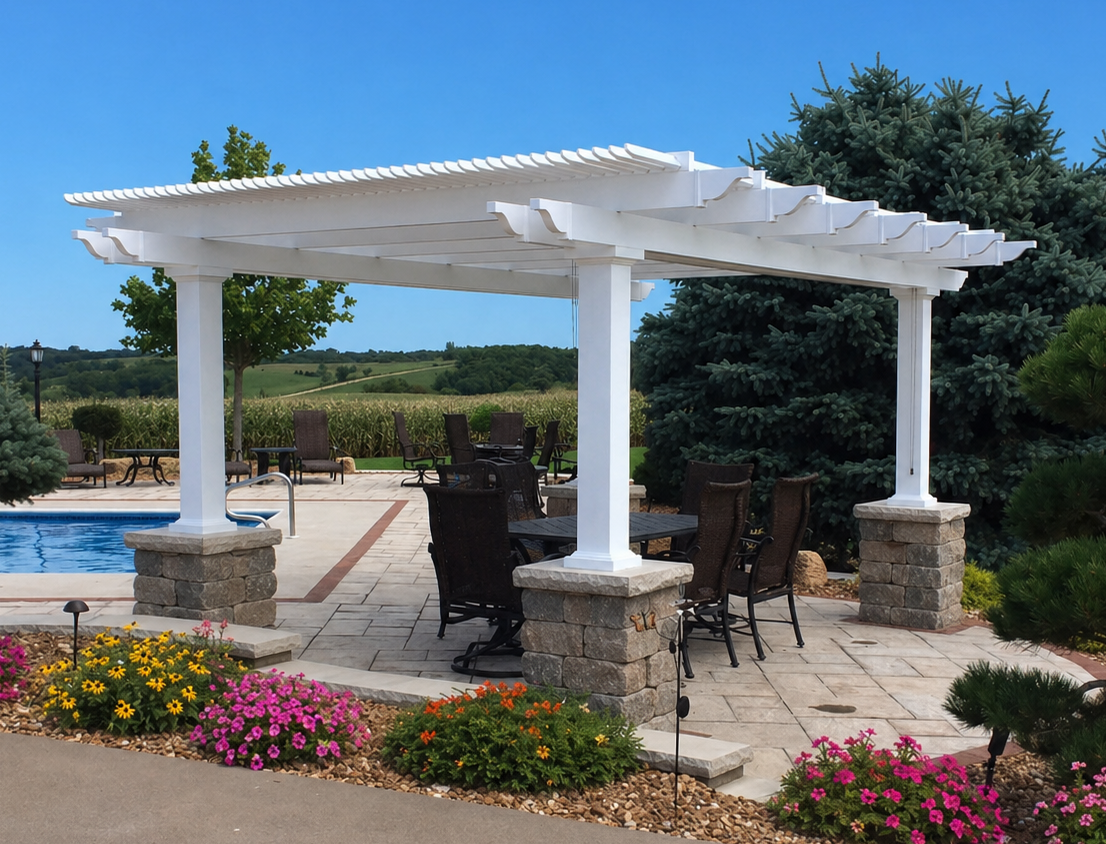 A permanent Miami pergola should be evaluated from the inside out. A clean vinyl exterior tells you something about maintenance, but it does not tell you how the structure carries loads. SPK uses heavy-duty aluminum reinforcement inside all weight-bearing structural components on its full-size traditional, modern, and patio-cover systems.
The aluminum is rust-proof and provides strength while allowing longer spans between posts. That can be especially useful around pool decks and large terraces, where every unnecessary post can interfere with circulation, furniture placement, or views.
Premium extruded vinyl is colored throughout rather than painted. It does not require the routine painting, staining, sanding, or sealing associated with maintaining a finished wood surface. In a climate where outdoor structures experience sun, moisture, and long periods of outdoor use, reducing recurring finish work can materially change the ownership experience.
That does not mean a Miami pergola should never be cleaned. Salt residue, airborne dirt, organic debris, and normal outdoor buildup can still collect on exterior surfaces. The difference is that cleaning is not the same recurring task as stripping and refinishing a painted or stained structure.
There is a meaningful difference between buying shade for a few seasons and planning a permanent outdoor room. Fabric canopies and lightweight retail structures may make sense when low initial cost or portability is the priority. A professionally planned aluminum-reinforced structure is aimed at a different homeowner: someone incorporating the pergola into a pool terrace, outdoor kitchen, dining patio, or long-term landscape plan.
Sunset Pergola Kits structures are made in the USA with American-sourced materials and carry a lifetime frame warranty. They also avoid motors, movable louvers, and retractable roof mechanisms. For homeowners who specifically want adjustable shade, that makes SPK the wrong product category; for those who prefer a fixed permanent structure with fewer moving components to service, it can be an advantage.
One of the most useful rules for Miami projects is this: do not let “weather-resistant material” substitute for structural planning. A low-maintenance exterior does not determine whether a particular structure, footing, anchor, attachment, or installation satisfies the requirements for a specific property. In South Florida, product construction and site engineering should be evaluated as related but separate decisions.
| Miami Condition or Need | Why Aluminum-Reinforced Vinyl Performs Well |
|---|---|
| Strong sun exposure | Extruded vinyl is colored throughout rather than relying on a painted exterior finish. |
| Humidity and moisture | Rust-proof aluminum reinforcement and vinyl avoid routine wood refinishing. |
| Coastal environments | Low-maintenance exterior construction is practical where salt and moisture increase upkeep concerns. |
| Permanent outdoor rooms | Aluminum reinforces the weight-bearing posts, beams, and rafters of full-size structures. |
| Pool and terrace layouts | Strong aluminum construction allows longer spans that can reduce unnecessary post interruptions. |
| High-wind planning | Traditional pergolas and patio covers can be ordered with optional hurricane brackets. |
| Low-maintenance ownership | No routine painting, staining, sanding, or sealing of the vinyl exterior. |
For many Miami projects, roof selection is the most consequential comfort decision. SPK offers three fixed slatted shade levels—50%, 75%, and 90%—plus a separate solid polycarbonate patio-cover roof. The right choice depends on whether the homeowner primarily wants shade, filtered light, or dependable rain protection.
At 50% shade, fixed angled slats are spaced 6 inches on center. This is the lightest of SPK's three slatted configurations and makes sense when the homeowner wants a visually open pergola, filtered sunlight, and noticeable shade without turning the structure into a heavily covered-feeling space.
In Miami, this option deserves more careful placement than it might in a milder northern climate. It can work well over garden seating, morning-use patios, or locations that already receive some protection from the house or surrounding landscape. For a highly exposed afternoon patio, many homeowners will want more shade.
At 75%, the fixed angled slats are spaced 4 inches on center. For Miami, this is a sensible general-purpose starting point because it creates substantially more overhead shade while retaining the character of a slatted pergola.
It fits spaces where people want to dine, gather, or relax beneath real shade but still prefer filtered light to a fully covered roof. Homeowners should remember that the openings remain openings: a 75% pergola is not designed to keep rainfall off the patio.
At 90%, the fixed slats are spaced 3 inches on center. This configuration is worth considering for highly exposed pool decks, afternoon lounge areas, and outdoor dining spaces where reducing direct overhead sunlight takes priority over maximizing filtered light.
The tradeoff is intentional: denser slats produce more shade and a more sheltered visual experience. They still do not convert the pergola into a rainproof structure. That distinction matters considerably in Miami.
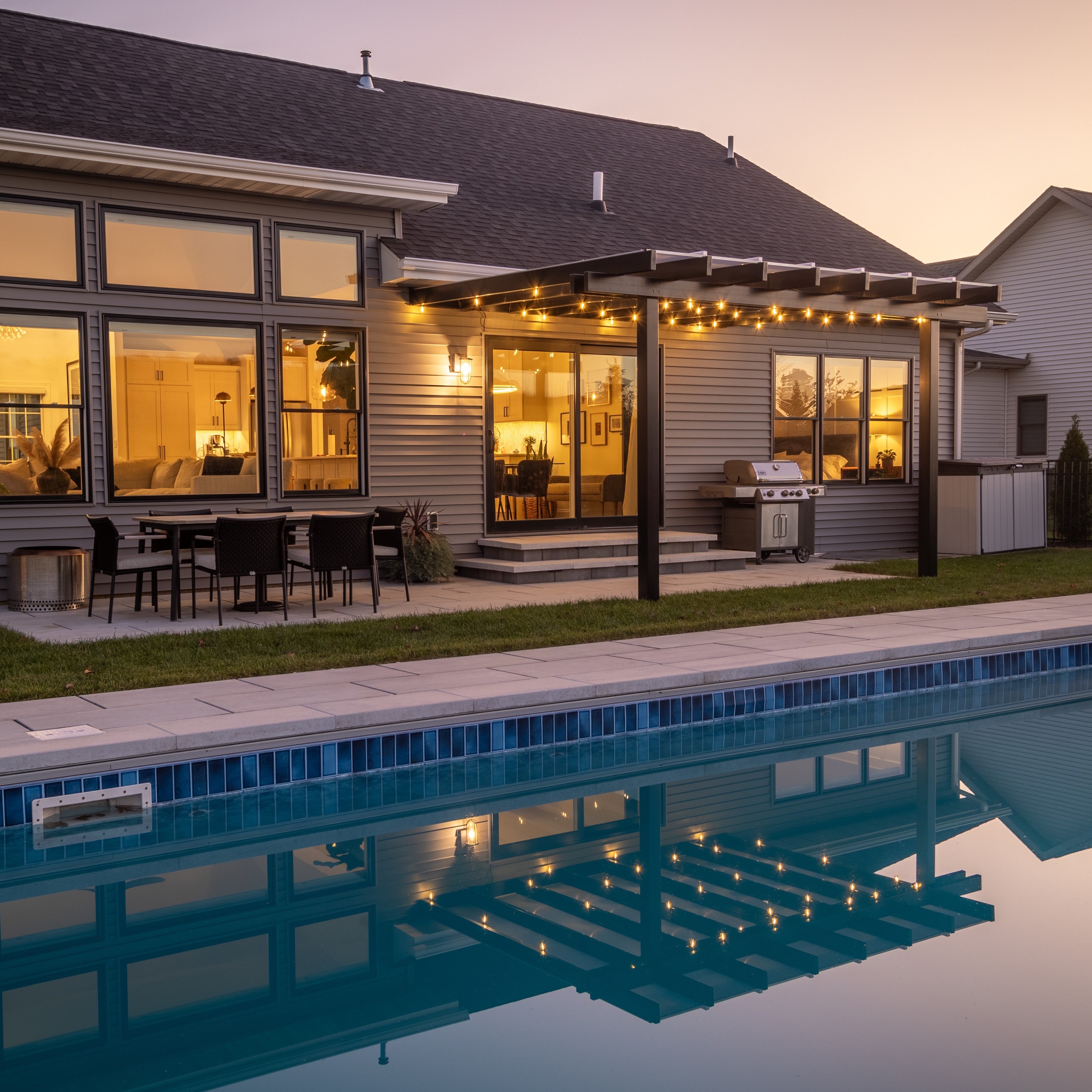 For a homeowner who wants to walk outside during a rain shower and continue using the covered area, the solid polycarbonate patio cover is the appropriate product category. Its roof is rainproof, provides 100% UV protection, and can make the patio beneath it up to 15 degrees cooler.
White or bronze polycarbonate panels are available. The choice is primarily a design decision rather than a choice between 50%, 75%, and 90% shade; those percentages apply only to slatted pergolas.
In Miami, the solid roof is particularly compelling over outdoor kitchens, dining areas, and everyday patios directly outside the home. Conversely, homeowners who primarily want to soften intense sunshine around a pool while maintaining the classic open-pergola character may prefer slats. The best question is not “Which roof offers the most coverage?” but “How often will rain actually stop us from using this space?”
Miami homeowners can narrow the options quickly by deciding what the roof must accomplish and where the structure will sit. Start with slatted-roof pergolas when filtered shade and an open-air appearance are the priorities; start with rainproof patio covers when weather protection matters. From there, choose between traditional pergolas for greater decorative and post-placement flexibility and modern pergolas for a flush-corner contemporary profile, then decide whether an attached or freestanding layout best fits the patio.
Miami's long outdoor season makes the structure itself part of how a home functions. The most successful projects usually begin with an activity zone—not an arbitrary pergola dimension—and then size and position the structure around the people, furniture, cooking equipment, circulation, and views that belong there.
A pool pergola has two jobs: make the deck more comfortable and define a place where people actually want to remain between swims. For a detached lounge zone, a freestanding structure often makes more sense than forcing an attachment to the house. The structure can be positioned around seating and sightlines rather than around the home's exterior wall.
Think beyond the pool itself. The most valuable shade is often where people sit, eat, supervise children, or transition between the house and water. Preserving clear walking paths around wet pool decking should influence post placement from the beginning.
Miami's combination of sun and sudden rain makes outdoor kitchens a different design problem from simple lounge areas. If a homeowner wants to keep dining or using the space when rain arrives, a solid-roof patio cover has a functional advantage over even a 90% slatted pergola.
An attached configuration can be especially logical when the outdoor kitchen or dining area sits directly outside the indoor kitchen. It creates a defined transition from indoors to outdoors and can reduce the number of posts needed on the house side, subject to the feasibility of the attachment.
Waterfront properties often introduce competing priorities: shade is valuable, but so is the view. This is where structure sizing and post location can matter as much as roof coverage. Instead of simply maximizing square footage, identify the principal view corridors first and design the activity zone around them.
Traditional structures offer inset-post flexibility where appropriate, while aluminum reinforcement allows longer spans between posts. Both can help keep structural elements from becoming the dominant feature of an otherwise open terrace.
A permanent pergola does not need to serve a special event to justify its footprint. Many of the best layouts simply make a frequently used patio more comfortable for coffee, meals, conversation, reading, or evening gatherings. Optional fan mounts can also be incorporated where desired.
For second homes and vacation properties, low-maintenance materials can be especially appealing because the structure does not depend on a recurring painting or staining schedule to maintain its exterior finish.
Once the roof decision is made, the next question is how the structure should relate to the house, pool, landscape, and architecture. Miami has enough variety—from compact courtyards to broad waterfront terraces—that there is no single ideal configuration.
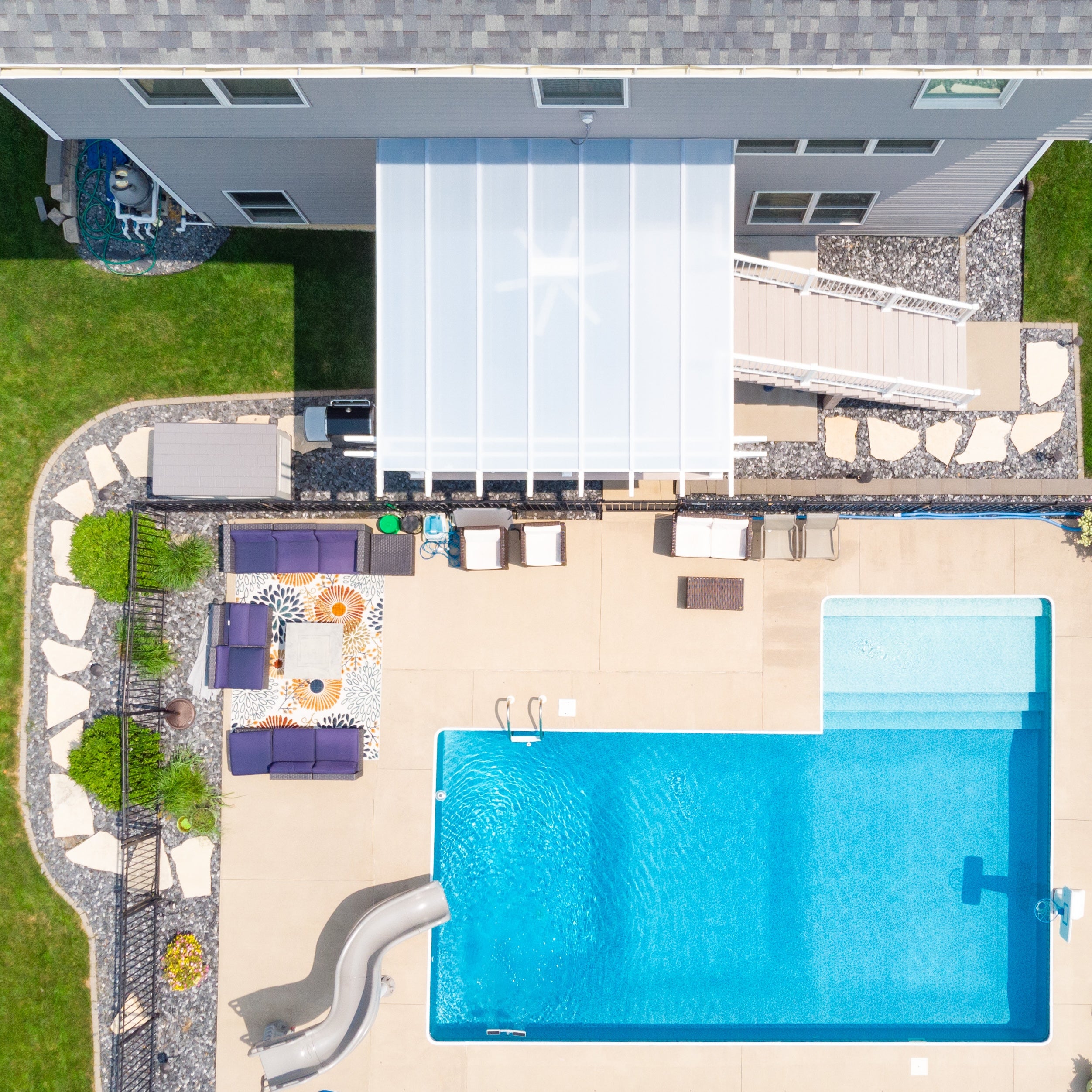 For patios immediately outside the house, an attached structure can create a natural extension of the indoor living area. In Miami, an attached solid-roof patio cover is particularly useful when homeowners want a dependable outdoor dining, cooking, or conversation zone despite rain.
Patio covers are available attached or freestanding, with overhangs from 0 to 24 inches and posts in the corners or inset up to 24 inches. That flexibility can help coordinate the structure with doors, windows, circulation paths, and furniture placement.
For a lounge area separated from the house, a freestanding pergola lets the structure follow the pool and landscape rather than the building. This can work well at the far end of a pool, beside a conversation area, or over a detached dining zone.
Traditional freestanding models offer substantial sizing flexibility and can use corner or inset posts. Modern freestanding models use corner posts only and are particularly suited to projects where a crisp rectangular footprint complements the pool geometry.
Traditional pergolas are the more configurable choice. They can use 0- to 36-inch beam and rafter overhangs, corner or up-to-36-inch inset posts, several post styles, and scrolled, beveled, or flat end caps. That makes them useful when the structure needs to adapt visually or physically to an established property.
Modern pergolas intentionally remove those details. Their beams and rafters end at flush square corners, posts remain in the corners, and there are no decorative end caps. This restrained geometry can pair naturally with Miami's contemporary homes, rectilinear pools, minimalist landscaping, and newer renovations.
There is one important Miami-specific planning tradeoff: modern pergolas do not offer the optional hurricane-bracket package. Homeowners for whom that option is important should factor it into the product-family decision before becoming committed to a particular aesthetic.
A common temptation is to measure the entire paved area and assume that is the required pergola size. A better approach is to measure the actual outdoor room. Start with the dining table or seating group, add the space needed to pull out chairs and walk comfortably, account for grills or counters, and only then determine the structural footprint.
This approach is particularly useful on large Miami pool decks. Covering every square foot can unnecessarily dominate the landscape, while a carefully positioned structure can create a comfortable destination and leave the pool terrace visually open.
Miami's residential architecture ranges from Mediterranean-influenced estates and tropical homes to streamlined contemporary residences and high-end waterfront renovations. The pergola should respond to that architecture rather than compete with it. Profile, color, posts, overhangs, and roof appearance can do more to integrate a structure than decorative accessories added later.
For clean-lined architecture, a modern pergola can echo the geometry of flat planes, rectangular pools, large openings, and simplified landscaping. White can keep the structure visually light; black can create a stronger architectural frame. Black modern pergolas use 8-inch square posts rather than the 7-inch posts used with the other modern colors.
Because modern structures have flush corners, no beam or rafter overhangs, and no decorative end caps, they work best when that simplicity is intentional. Trying to add traditional detailing defeats the point of the design.
Traditional pergolas provide more ways to coordinate with homes that have deeper architectural detailing. White or tan vinyl, optional beam and rafter overhangs, scrolled or beveled end caps, and a choice of square or 10-inch round posts can give the structure more visual presence.
The objective should not be to mimic every architectural detail on the house. Matching the pergola's visual weight and degree of ornamentation is usually more effective than trying to create an exact replica of the building's trim.
On a resort-style backyard, the pergola is often most successful when it frames one destination without blocking the relationship among the house, pool, lawn, and landscape. Post locations should be considered alongside furniture plans and walking paths, not decided independently.
White tends to recede against bright South Florida exteriors and light paving, while black can intentionally outline an outdoor room. Tan can coordinate with warmer masonry and exterior palettes. The best choice is the one that connects to permanent elements of the property rather than a temporary furniture color.
Patio covers use a traditional-style frame and white or bronze polycarbonate roof panels. Because the roof becomes a more visually continuous surface than pergola slats, homeowners should consider how it will look from upstairs windows, neighboring sightlines, and other areas of the property as well as from beneath it.
For smaller architectural accents rather than full patio coverage, eyebrow pergolas can be used above garages, entries, or windows. They are attached-only, shallow structures and should not be treated as substitutes for full-size patio shade.
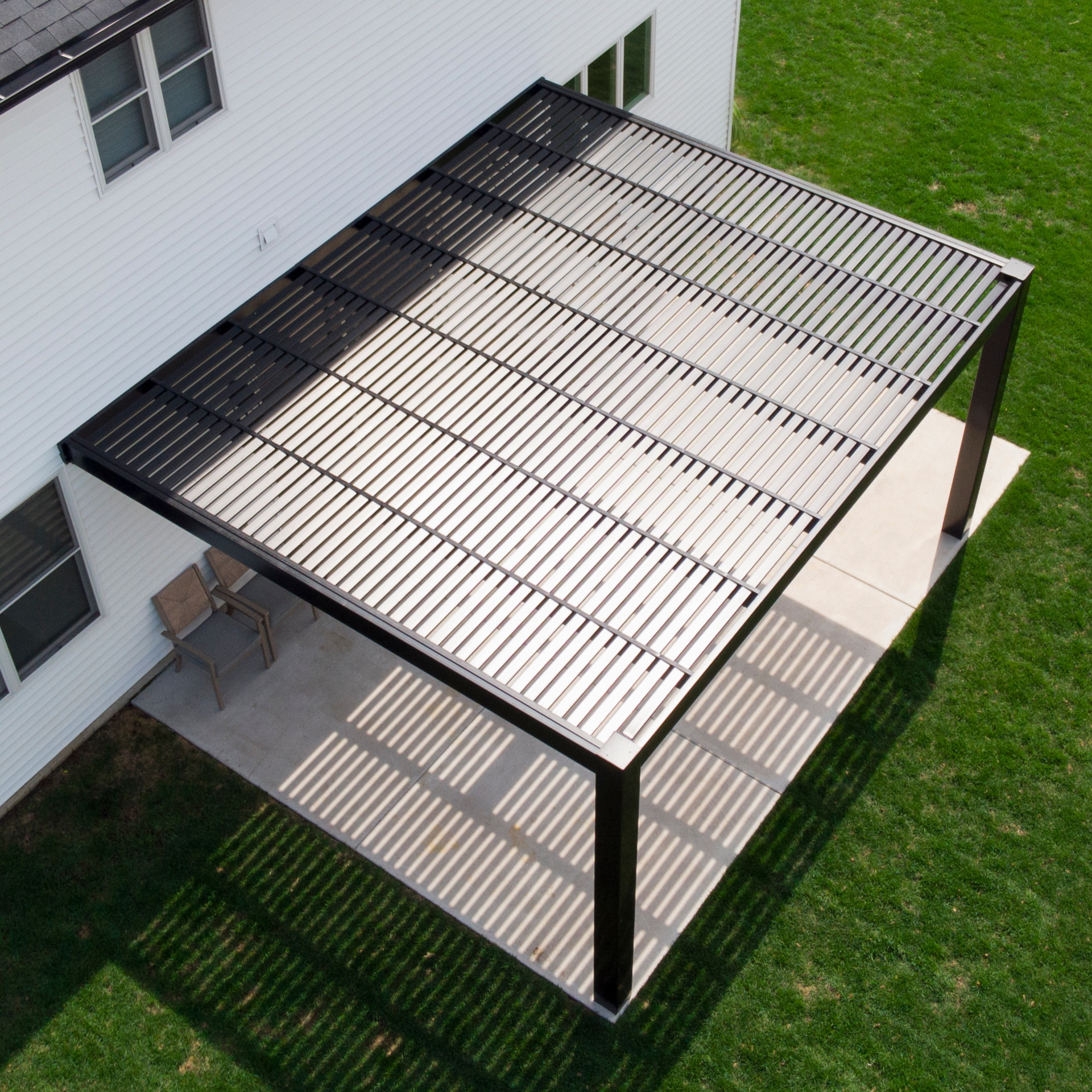 The most expensive pergola mistakes are often planning mistakes rather than product defects. Miami adds several issues that should be resolved before the homeowner becomes committed to a particular style or footprint.
A 90% shade pergola sounds nearly covered, but it remains a slatted structure. Rain can pass through it. Homeowners expecting to protect an outdoor dining area, television area, or kitchen from overhead rainfall should begin with a solid polycarbonate patio cover rather than trying to make a slatted pergola perform a job it was not designed to perform.
Miami homeowners can easily fall in love with a clean modern profile before considering the structural options they want. SPK's optional hurricane brackets are offered on traditional pergolas and patio covers but not modern pergolas. Because the bracket package is recommended where an area ever experiences 80 MPH or higher winds, this difference should be considered early in a Miami project.
Hurricane brackets do not replace proper anchoring, engineering, permitting, or code compliance. Their availability is simply one factor in choosing the product family.
A pergola can be correctly sized and still disappoint if it shades the wrong place at the time the patio is actually used. Before choosing 50%, 75%, or 90% coverage, observe where direct sun reaches the seating area during the hours that matter most.
This is especially important for west-facing outdoor spaces. Denser overhead coverage can help with high-angle sun, but roof percentage alone cannot solve every low-angle exposure. Orientation and placement belong in the same conversation as shade percentage.
Oversizing can make a structure dominate a carefully landscaped pool area; undersizing can leave dining chairs or lounge seating outside the useful shade zone. Measure the furniture layout in its in-use position, including chair movement and circulation, rather than using the furniture's compact footprint.
On pool and waterfront properties, a poorly positioned post can interrupt a major view or create an awkward pinch point. Traditional pergolas allow posts to be inset as much as 36 inches, while patio-cover posts can be inset up to 24 inches. Modern posts remain in the corners. Understanding that difference before selecting a style can prevent compromises later.
An attached pergola can be an excellent solution outside a kitchen or living room, but the desired location still has to work with the home's construction, doors, windows, eaves, rooflines, drainage, and applicable structural requirements. Do not choose attached solely because it uses fewer yard-side posts. Evaluate the building connection first.
For a permanent Miami structure, product configuration and site planning should happen together. The goal is not merely to make the kit fit the available rectangle; it is to make the structure work with the home while satisfying the requirements that apply to the actual site.
Measure more than the empty space. Record the usable patio, furniture footprint, doors and windows, eave heights, pool edge, grill or outdoor-kitchen position, major landscaping, and circulation routes. For an attached project, the proposed connection area deserves particular attention.
For a solid-roof structure, also consider where water will go after it reaches the roof. Rain protection overhead does not eliminate the need to think about drainage around the patio and surrounding property.
Miami is not a location where wind planning should be deferred until installation. Homeowners should verify the requirements that apply to their exact project, including anchoring, foundations, structural design criteria, and any required engineering.
SPK offers optional hurricane brackets for traditional pergolas and solid-roof patio covers and recommends them where an area ever experiences winds of 80 MPH or higher. Adding the brackets includes a lifetime wind-damage warranty. The brackets are not available on modern pergolas and do not eliminate the need for appropriate anchoring or compliance with applicable requirements.
Permitting, structural review, setbacks, easements, attachment requirements, HOA restrictions, and other rules can vary according to the exact property and project. Miami-area homeowners should verify current requirements with the authorities and associations responsible for their address before installation rather than relying on a general city guide.
This is particularly important when comparing an attached structure with a freestanding one or changing the size, roof type, or placement during design. A product that physically fits a patio is not automatically approved for that location.
Sunset Pergola Kits are designed to be DIY-friendly, and homeowners can review the assembly information and videos before deciding how they want to handle installation. A contractor may be useful for larger structures, attached projects, challenging foundations, or situations involving complex local approval or inspection requirements.
The right choice depends on experience and site complexity. A capable DIY homeowner may be comfortable assembling the kit, while another homeowner may prefer to have a local professional manage the physical installation.
Routine ownership is relatively simple. The vinyl exterior does not require painting, staining, sanding, or sealing. Periodic cleaning can remove salt residue, dirt, pollen, and organic buildup, and solid polycarbonate roof panels should be kept free of accumulated debris using appropriate care methods.
It is also sensible to periodically observe anchors, fasteners, and the surrounding installation for visible issues, particularly after significant weather. Follow the applicable product care and installation guidance and avoid unnecessarily harsh or abrasive cleaning methods.
One benefit of SPK's fixed-roof approach is what owners do not have to maintain: there are no motors, movable louvers, or retractable roof mechanisms. For homeowners who want changing roof positions, that is a limitation; for those who prefer a permanent fixed structure, it simplifies the system.
The right Miami structure begins with a few practical choices: filtered shade or rain protection, attached or freestanding, traditional or modern, and a footprint designed around the way the patio is actually used. Once those decisions are clear, explore the configurations that fit your home, pool, outdoor kitchen, or entertaining space and build the project around the conditions of your specific property.
There is no single best configuration for every Miami property. For primarily shaded outdoor living, a fixed slatted pergola can work well; for dependable overhead rain protection, a solid polycarbonate patio cover is the appropriate option. Wind planning, architecture, sun exposure, and whether the structure is attached or freestanding should also influence the decision.
For many Miami patios, 75% shade is a useful starting point because it provides substantial shade while retaining filtered light and an open pergola character. Highly exposed afternoon dining or lounge areas may benefit from 90% shade, while 50% can suit spaces where openness and lighter filtered shade are more important.
No. The 50%, 75%, and 90% roofs use fixed angled slats and are not rainproof. If keeping rain off the patio is a primary requirement, choose a solid polycarbonate patio cover instead.
It can be especially useful for outdoor kitchens, dining areas, and frequently used patios where rain would otherwise interrupt use. SPK's solid polycarbonate roof is rainproof, provides 100% UV protection, and can make the patio up to 15 degrees cooler. White and bronze roof panels are available.
Sunset Pergola Kits recommends its optional hurricane brackets when the customer's area ever experiences winds of 80 MPH or higher. They are available for traditional pergolas and solid-roof patio covers, and adding them includes a lifetime wind-damage warranty. They are not offered for modern pergolas. Proper anchoring, applicable engineering, and local code compliance are still required considerations.
Modern pergolas can provide the same 50%, 75%, or 90% fixed slatted shade choices as traditional models and use aluminum reinforcement in their weight-bearing structural components. However, SPK does not offer hurricane brackets for modern pergolas, so Miami homeowners should consider their site-specific wind and structural requirements when choosing between modern and traditional designs.
An attached pergola often makes sense over a patio immediately outside the home, particularly near an indoor kitchen or living area. A freestanding pergola can be better for detached pool lounges, garden areas, or spaces where attaching to the house is impractical or undesirable. Site conditions and applicable structural requirements should ultimately guide the choice.
Homeowners should consider both structural construction and maintenance. SPK uses rust-proof aluminum reinforcement inside the weight-bearing components of its full-size structures and premium extruded vinyl on the exterior. The vinyl does not require routine painting, staining, sanding, or sealing, although normal cleaning may still be appropriate in coastal environments.
Requirements can depend on the exact address, jurisdiction, structure, size, attachment method, foundation, wind-design criteria, setbacks, easements, and other project details. Verify current requirements for your specific property with the applicable local building authority and review any HOA rules before installation.
Size the structure around the activity zone rather than automatically covering the entire pool deck. Measure the seating or dining arrangement in use, allow room for chairs and circulation, preserve safe movement around the pool, and consider where posts will affect views. The pergola size guide can help narrow the available configurations.


