

MADE IN THE USA
with American products
w/ American products


Home ▸ Vinyl Pergolas ▸ By Location ▸ Houston, Texas
In Houston, pergola planning is less about creating a decorative frame and more about deciding when the patio needs shade, when it needs a true roof, and how the structure will be prepared for severe weather. The combination of strong sun, humid air, frequent rainfall, thunderstorms, and tropical-weather risk makes material selection and installation planning unusually important.
A lightly shaded structure may look appropriate in photographs yet provide too little relief during a Houston afternoon. Western exposures are especially demanding because low afternoon sun can reach beneath the roofline even when overhead coverage is substantial. Before choosing a roof, identify when the patio will be used and which direction receives the most difficult sun.
For a poolside lounge used throughout the day, dense slatted shade often offers a useful balance of relief and openness. A breakfast patio with an eastern exposure may need less coverage. A west-facing dining area intended for evening use may benefit from 90% overhead shade, although the structure's orientation and surrounding walls still influence comfort.
Houston rain makes the distinction between a pergola and a patio cover particularly important. Fixed angled slats provide shade but retain openings between them. Even at 90% shade, a slatted pergola is not rainproof and should not be selected on the assumption that cushions, cooking areas, or electronics will remain dry.
A solid polycarbonate roof is the practical choice when the goal is dependable overhead rain protection. This can be especially valuable for outdoor kitchens, dining tables used for planned gatherings, and patios that function as an extension of the interior living space. Roof runoff and drainage must then become part of the site plan rather than an afterthought.
Heat and moisture do not merely affect comfort; they influence ownership. Wood can be an attractive premium option, particularly when its natural character is central to the design, but homeowners should enter that choice prepared for its finishing and maintenance requirements. A premium extruded-vinyl exterior avoids routine painting, staining, sanding, and sealing.
Houston's pollen, leaf debris, and damp organic residue can still collect on any outdoor structure. Low maintenance does not mean no cleaning. It means occasional surface cleaning replaces a recurring refinishing schedule.
The Houston metro spans sheltered suburban lots, wooded properties, open developments, and areas closer to Galveston Bay. Those sites do not experience wind in exactly the same way. A structure near the house may have different exposure than one standing beyond the pool, and an open corner lot deserves different scrutiny than a protected courtyard.
Permanent structures require proper anchoring, installation, and evaluation of local design criteria. Traditional pergolas and solid-roof patio covers can be ordered with optional hurricane brackets, which Sunset Pergola Kits recommends wherever winds may reach 80 MPH or higher. Those brackets do not replace address-specific code review, suitable foundations, or correct installation.
The most useful material question is not simply “vinyl or aluminum?” Sunset Pergola Kits combines both: heavy-duty aluminum inserts reinforce the posts, beams, and rafters of its full-size structures, while premium extruded vinyl forms the exterior. That division of labor matters in Houston, where homeowners often want substantial shade coverage without accepting a constant refinishing project.
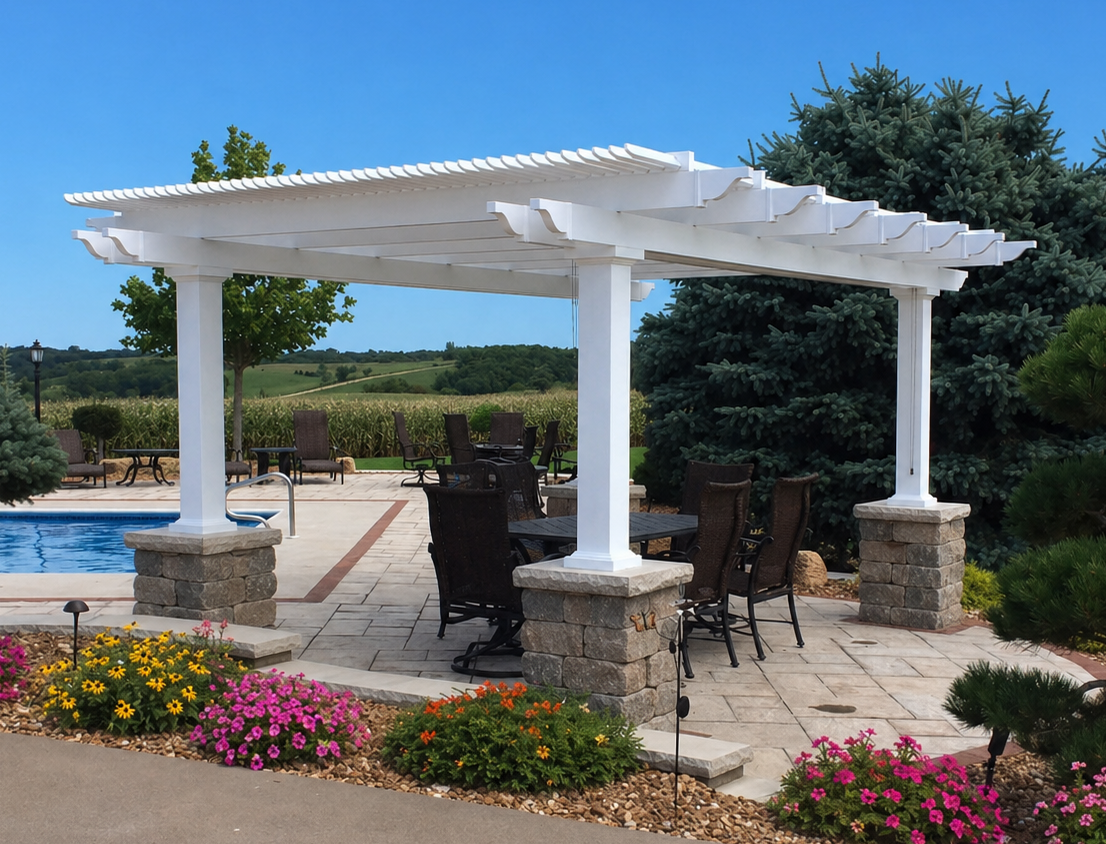 These are not hollow vinyl structures relying on the exterior material alone. Aluminum reinforcement inside the weight-bearing components supplies the structural frame. The aluminum is rust-proof, strong without unnecessary weight, and capable of supporting longer spans between posts than a lightly built decorative kit.
Longer spans can be valuable on Houston patios because every post affects circulation. Fewer obstructions around a dining table, grill route, or pool deck can make the space function more naturally. Final dimensions, anchoring, and post locations still need to follow the selected design and installation requirements.
The extruded vinyl is colored throughout rather than surface-painted. It does not require routine painting, staining, sanding, or sealing, and it resists rot and insect damage. That is a meaningful ownership advantage in a humid region where exposed outdoor materials regularly encounter sun, moisture, pollen, and organic debris.
The realistic maintenance expectation is occasional cleaning. Dirt and residue remain more noticeable on some colors than others, and shaded areas near trees may need attention more often. Homeowners who appreciate the appearance and craft of wood may still reasonably choose it, but vinyl is usually the more practical fit when minimizing recurring finish work is a priority. Homeowners can explore the complete range of aluminum-reinforced vinyl pergolas to compare configurations.
Sunset Pergola Kits uses fixed slatted roofs or solid polycarbonate panels rather than motors, movable louvers, canvas, or retractable mechanisms. This is a deliberate tradeoff. A fixed roof cannot change position during the day, but it also has no motorized roof components to service or replace.
For homeowners who want adjustable sunlight at the touch of a button, a louvered system may be the better category. For those prioritizing permanent shade, straightforward operation, and fewer moving parts, a fixed system is often easier to own over the long term.
Each full-size traditional, modern, or patio-cover structure is intended as a permanent addition rather than a seasonal retail canopy. The frames are made in the USA with American-sourced materials and carry a lifetime warranty; solid patio-cover roofs have a 10-year warranty.
A permanent structure costs more than a temporary shade product, but the comparison should include replacement cycles, maintenance, usable coverage, and integration with the property. For a patio used regularly, those factors can matter more than the initial kit price alone.
| Houston Condition or Need | Why Aluminum-Reinforced Vinyl Performs Well |
|---|---|
| Strong sun | Fixed slats provide 50%, 75%, or 90% shade. |
| Humidity and rainfall | The exterior does not require routine painting, staining, or sealing. |
| Rot and insect concerns | Extruded vinyl resists rot and insect damage. |
| Large activity areas | Heavy-duty aluminum reinforcement permits longer spans between posts. |
| Storm planning | Traditional pergolas and patio covers offer optional hurricane brackets. |
| Rain protection | Solid polycarbonate patio covers provide a rainproof roof. |
| Long-term ownership | Fixed roofs contain no motors or moving louvers to maintain. |
| Permanent installation | Professional-grade frames carry a lifetime warranty. |
The most important roof decision is not which option offers the highest percentage. It is whether the patio primarily needs filtered shade or dependable rain protection. Houston creates a strong case for both, but they serve different uses.
For many Houston patios, 75% coverage is the most versatile starting point. Its fixed angled slats are spaced 4 inches on center, providing considerably more relief than an open decorative pergola while preserving filtered light and the visual character of a slatted roof.
This level often suits conversation areas, mixed-use patios, and spaces used in both warm and mild seasons. It is not automatically the right answer for every exposure: a heavily shaded yard may need less, while an open western patio may need more.
At 90% coverage, fixed angled slats are spaced 3 inches on center. This is the strongest slatted-shade option and is often appropriate for poolside seating, broad open patios, and areas where midday or afternoon heat routinely discourages use.
The remaining openings preserve some airflow and the look of a pergola, but they also admit rain. Ninety-percent shade describes sun coverage, not water coverage. That distinction is critical when furniture, televisions, or appliances will remain outside.
Fifty-percent shade uses slats spaced 6 inches on center. It makes sense for patios that already benefit from tree or building shade, garden seating used in the morning, or homeowners who care more about patterned light and architectural definition than maximum heat relief.
It is generally not the first recommendation for an unprotected western exposure. Houston's mild periods can make lighter shade pleasant, but the structure should be planned around the difficult months and actual hours of use—not the patio's best weather.
A rainproof patio cover uses solid white or bronze polycarbonate panels. Both provide 100% UV protection and can make the patio up to 15 degrees cooler. This is the appropriate roof when outdoor dining, cooking, or gathering plans should continue during rainfall.
A solid roof creates a more enclosed covered-patio experience than fixed slats. It also changes the planning conversation: runoff, drainage, roofline relationships, and the effect on light entering adjacent windows deserve careful attention. White and bronze identify panel colors; they are not shade percentages.
Houston homeowners should begin with the roof decision, then choose the frame style and installation type. Explore slatted-roof pergolas for filtered shade and airflow, or solid-roof patio covers when rain protection is essential. From there, match traditional or modern lines to the house and decide whether the activity area belongs directly outside the home or in a separate pool, garden, or yard zone.
Houston's outdoor spaces often serve several roles within the same week: family dining, pool supervision, grilling, neighborhood gatherings, and game-day viewing. Planning around those real activities produces a better structure than starting with a nominal patio size or selecting a roof solely from photographs.
Cooking areas tend to benefit from dependable coverage because meals are scheduled even when the weather is uncertain. An attached solid-roof patio cover can create a convenient transition from the indoor kitchen, but grill clearances, ventilation, heat sources, manufacturer instructions, and local requirements must be resolved before choosing its position.
A slatted pergola remains a good choice when airflow and open character matter more than rain protection. In either case, size the structure for chairs when occupied and pulled away from the table—not merely for the tabletop footprint.
A pool pergola works best when it shades a defined dry activity zone without interfering with circulation around the water. Freestanding placement can serve loungers or a conversation area away from the house, while keeping wet traffic from passing through the main dining space.
Poolside planning should account for gates, equipment access, deck drainage, reflected sun, and the line of sight from the house. Dense slatted shade often fits a lounge area; a solid roof is more appropriate when cushions, food service, or electronics need overhead rain protection.
A gathering space needs more than enough square footage for furniture. It needs predictable circulation between the house, grill, seating, and yard. Optional fan mounts can also be planned into eligible structures when homeowners intend to use compatible outdoor-rated fans.
For game-day viewing, orienting a screen away from direct afternoon glare may be as important as the roof percentage. Electronics require protection appropriate to their location; a slatted roof should never be treated as a substitute for weather-rated equipment or a rainproof enclosure.
Many Houston patios become most pleasant later in the day. A pergola helps define an outdoor room, but roof coverage alone cannot block low-angle sunlight from the side. Western exposure, nearby walls, trees, and the desired view should shape placement and orientation.
This leads to one of the most useful local planning insights: choose overhead coverage for midday conditions, but place the structure for late-day conditions. Homeowners who solve only one of those problems may still find the patio uncomfortable during the hours they intended to use it most.
 The strongest general-purpose Houston configuration is an attached solid-roof patio cover over the primary dining or outdoor-kitchen patio. It provides direct access from the house and dependable overhead protection. Detached pool lounges and garden areas often call for a freestanding slatted pergola instead, preserving an open visual connection to the yard.
Attached pergolas and patio covers make sense when the outdoor room begins immediately outside a rear door. They reduce the visual and functional gap between indoor and outdoor living, which is useful for dining, carrying food, and supervising children around the patio or pool.
Attachment feasibility depends on the home's wall construction, roofline, eaves, windows, utilities, drainage, and local requirements. Brick veneer, complex roof transitions, and limited ledger-board locations can make a seemingly simple attachment more involved. When those conditions are uncertain, a freestanding design positioned near the house may be the cleaner solution.
Freestanding pergolas suit detached pool decks, garden seating, larger yards, and properties where attachment is undesirable or impractical. They also allow the shade zone to be positioned around the best view or most useful portion of the yard rather than being dictated by the rear elevation.
Placement should follow the activity footprint. A pool-lounge structure needs space for reclined chairs and safe deck circulation; a dining pavilion needs room for occupied chairs and serving routes. Do not enlarge the structure simply because the yard can accommodate it. A well-proportioned outdoor room usually feels more intentional than an oversized roof covering leftover space.
Traditional pergolas offer the most design flexibility. They can be attached or freestanding, use corner posts or posts inset up to 36 inches, and include optional beam and rafter overhangs from 0 to 36 inches. Scrolled, beveled, or flat end caps and several post profiles help them complement traditional brick, Craftsman-influenced, Mediterranean, and transitional homes.
Modern pergolas have square, flush corners, no overhangs, no decorative end caps, and posts at the corners. Their controlled geometry is well suited to contemporary infill homes, modern pool renovations, and clean-lined outdoor kitchens. The tradeoff is less flexibility in post placement and no hurricane-bracket option.
A solid-roof patio cover has a traditional frame appearance and can be attached or freestanding. Posts may sit at the corners or be inset up to 24 inches, and overhangs may range from 0 to 24 inches. This flexibility can help keep posts away from door swings or primary walking paths, provided the chosen configuration and installation requirements permit it.
For Houston, the solid roof is especially compelling when the patio is expected to function on a schedule: dinner at six, guests on Saturday, or regular outdoor cooking. Slatted shade makes a patio more comfortable; a rainproof roof makes its availability more predictable.
Eyebrow pergolas are shallow attached accents for garages, entries, and windows—not full-size patio covers. Their rafters have a 2-foot depth before applicable end-cap extensions, and available lengths run from 4 to 60 feet in 4-foot increments. They can add repetition and depth to a front elevation, but should not be chosen when the project requires meaningful seating-area shade.
Houston's housing is architecturally diverse, so location alone should not dictate pergola style. The better approach is to repeat the home's strongest cues—geometry, trim color, column proportions, and roof character—while keeping the outdoor structure visually subordinate to the main residence.
Traditional Houston-area homes often benefit from visible beam and rafter overhangs because those details relate naturally to roof eaves, porches, and established trim profiles. Scrolled end caps create the most decorative appearance; beveled caps are restrained but still traditional; flat caps keep the composition simpler.
Five-inch or 7-inch square posts can support a familiar porch-like rhythm, while eligible 10-inch round posts create a more substantial classical profile. Upper and lower trim-ring availability varies by post selection, so these details should be coordinated as a system rather than selected independently.
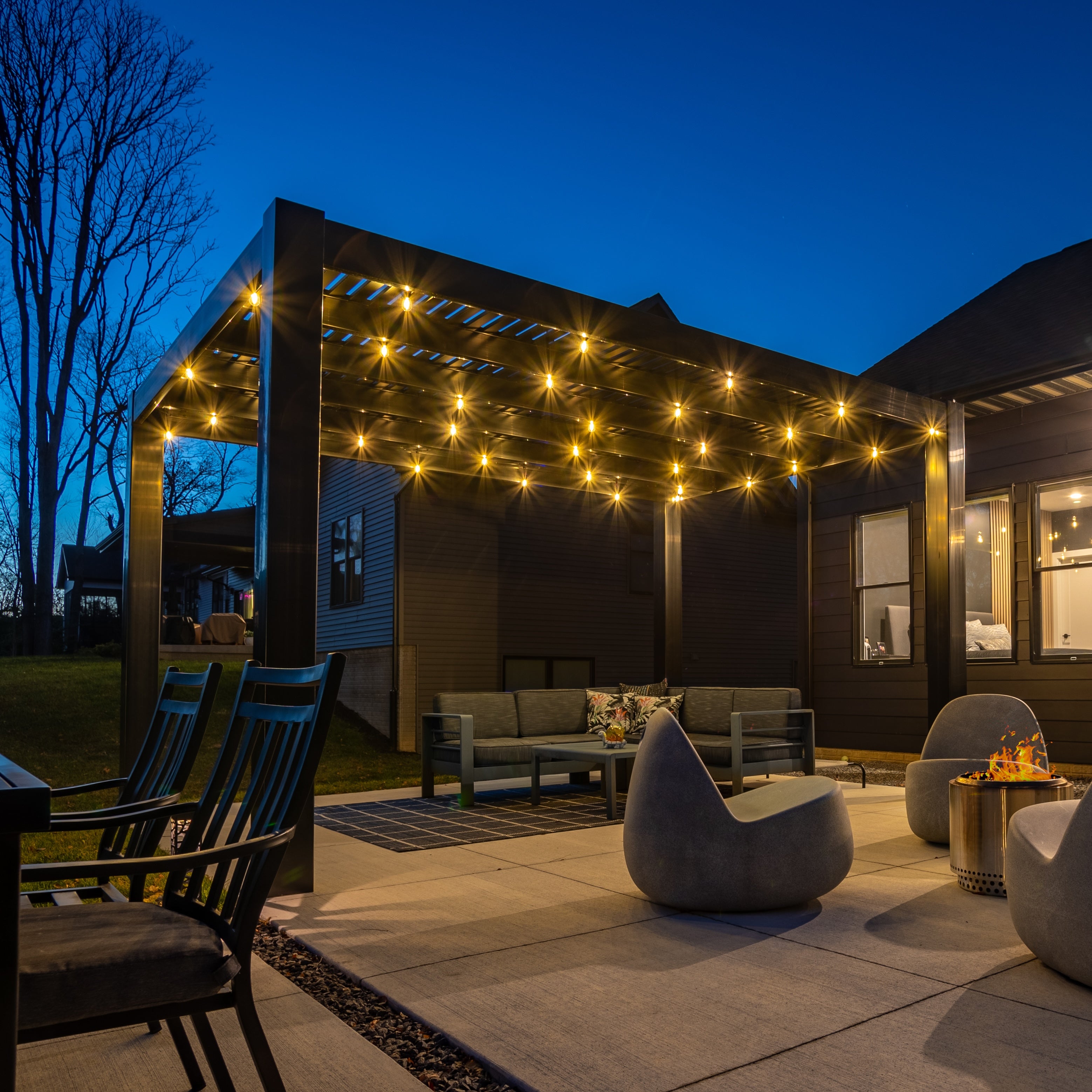
Newer contemporary homes and renovated pool areas often look best with flush corners and minimal ornament. A modern pergola reinforces that language without faux-traditional tails or projecting beams. White can soften the structure against a bright exterior, while black creates a stronger graphic outline and uses 8-inch square posts rather than the 7-inch posts available with other modern colors.
Modern designs require corner posts. If a door, walkway, pool edge, or outdoor-kitchen layout demands inset supports, the homeowner should reconsider the footprint or select a traditional structure with compatible post-placement options.
White is the most affordable vinyl color and often integrates naturally with white trim, light stucco, painted brick, and poolside settings. Tan can relate well to warm masonry and earth-toned exteriors. Black is the most visually assertive and most expensive option, working best when the home already uses dark window frames, roofing details, railings, or outdoor-kitchen finishes.
The structure does not have to match the wall color. Matching a stable architectural detail—such as window trim or columns—can create a more intentional result than matching a large field of brick or siding.
White and bronze are the two polycarbonate roof-panel colors. Both provide the stated UV protection and cooling benefit, but their visual effects differ. White generally creates a brighter underside and relates easily to pale trim. Bronze introduces a warmer, darker roof plane that may coordinate with brown roofing, warm masonry, or darker exterior palettes.
Panel color should also be considered from inside the house. A roof that looks attractive from the pool may alter the light at adjacent doors and windows. Reviewing the structure from both viewpoints helps it feel integrated rather than added onto the rear elevation.
The most consequential mistake is assuming that 90% shade means nearly complete rain protection. It does not. Water can pass between fixed slats, so furniture and equipment beneath them remain exposed. Choose a solid polycarbonate roof whenever keeping the activity area dry is a project requirement.
 Designing for the Best Season
A patio may feel comfortable during spring mornings and still become unusable on summer afternoons. Choosing 50% shade from a pleasant-weather showroom impression can leave an open western patio underprotected. Evaluate the hardest sun exposure and intended hours of use before choosing the percentage.
Houston-area storm risk should not be reduced to a citywide label. Open lots, waterfront-influenced locations, detached structures, and sheltered courtyards have different exposure. Confirm applicable design criteria, anchoring, foundation needs, and whether optional hurricane brackets are appropriate for the exact project.
A drawing may show a balanced roof while hiding a post that conflicts with a grill route, door, pool gate, or dining chair. Mark proposed posts on the actual patio and walk the space before ordering. Traditional inset-post options can improve circulation, but they must remain within the allowed configuration.
A rainproof roof solves overhead exposure by moving water elsewhere. If runoff reaches a door, foundation, walkway, flower bed, or low section of patio, the new problem may be more disruptive than the old one. Study grading, drainage, and roof relationships early in the design process.
A modern flush-corner pergola may suit the architecture but cannot provide inset posts, overhangs, decorative end caps, or hurricane brackets. Resolve structural, placement, and storm-planning needs first. Then select the style that satisfies those constraints while complementing the home.
A successful permanent structure begins with the site rather than the catalog. Measurements, attachment conditions, foundations, drainage, wind criteria, and local approvals can all affect which configuration is practical. The following guidance helps identify the right questions, but the final answers must be verified for the property and project.
Begin with furniture in its used position. Pull chairs away from the table, open doors and gates, identify the path from the kitchen to the grill, and preserve access to pool equipment and landscaping. Then locate the posts and roof perimeter around that activity zone.
Also observe the site at the actual time it will be used. A noon shadow study cannot reveal low western glare during dinner. Adjacent trees and buildings may help during one season and change the pattern during another.
An attached structure must coordinate with the home's construction, ledger location, roofline, drainage, and exterior details. A freestanding structure still requires appropriate supports and anchoring. An existing slab should not automatically be assumed adequate for a permanent structure without evaluating the installation requirements and site conditions.
Large structures, attached projects, unusual elevations, and challenging foundations are good reasons to involve a qualified contractor or other appropriate professional. DIY installation can be realistic for experienced homeowners who understand the project and follow the supplied instructions.
Traditional pergolas and solid-roof patio covers offer optional hurricane brackets. Sunset Pergola Kits recommends them when the area ever experiences winds of 80 MPH or higher, and adding them includes a lifetime wind-damage warranty. Modern pergolas do not offer hurricane brackets.
Brackets are one part of a system. They do not eliminate the need for proper anchoring, foundations, installation, code compliance, or site-specific evaluation. Homeowners should confirm current wind and structural requirements for their address before finalizing the design.
Requirements may differ across the City of Houston, surrounding municipalities, unincorporated Harris County, Fort Bend County, Montgomery County, and other jurisdictions within the metro. Structure size, attachment method, property conditions, easements, setbacks, utilities, drainage, and wind criteria may affect the review.
HOA architectural approval can be separate from governmental requirements. Verify both before ordering, particularly when the structure will be visible from neighboring properties or when the community controls color, height, placement, or exterior alterations.
These kits are designed to be DIY-friendly, but that description should be matched honestly to the project. Homeowners considering self-installation can review the assembly information and videos before deciding. Attached structures, large spans, complex foundations, limited access, and unfamiliarity with construction may justify professional installation.
Routine painting, staining, sanding, and sealing are not required for the vinyl exterior. Clean the structure periodically with suitable nonabrasive methods, especially where pollen, leaves, or damp organic residue collect. Keep solid roof panels free of accumulated debris and follow product-specific care instructions.
Periodically observe visible anchors, fasteners, and surrounding installation conditions, particularly after severe weather. The fixed roof contains no motors, movable louvers, or retractable components to service, which keeps the long-term ownership routine comparatively straightforward.
Start with the outcome your patio needs most: comfortable filtered shade, dense relief from direct sun, or dependable protection from rain. Then match the structure to the home's architecture, the site's wind and drainage conditions, and the way people will actually move through the space. That sequence makes it easier to select a Houston pergola or patio cover that feels integrated, useful, and appropriate for long-term ownership.
A slatted pergola is usually better when filtered shade, airflow, and an open-roof appearance are the priorities. A solid-roof patio cover is better when the space must remain protected from overhead rain. Houston homeowners should make that functional decision before choosing the frame style.
Seventy-five percent shade is a practical general-purpose starting point. Ninety percent often makes more sense for exposed pool patios and western sun, while 50% can suit partially shaded sites or spaces where openness and filtered light matter more than maximum relief.
No. The fixed angled slats are closer together, but openings remain between them. Choose a solid polycarbonate patio cover when complete overhead rain protection is required.
Several properly designed materials can work. Aluminum-reinforced vinyl is particularly practical because aluminum supplies the internal structural reinforcement while the extruded-vinyl exterior requires no routine painting, staining, sanding, or sealing and resists rot and insect damage.
Wind performance depends on the structure, site exposure, foundations, anchoring, installation, and applicable design criteria. Traditional pergolas and solid-roof patio covers offer optional hurricane brackets recommended where winds may reach 80 MPH or higher. Verify requirements for the exact address rather than relying on a general citywide assumption.
They are recommended when the project area ever experiences winds of 80 MPH or higher. They are available for traditional pergolas and solid-roof patio covers, and adding them includes a lifetime wind-damage warranty. They are not offered for modern pergolas and do not replace proper anchoring or code compliance.
Attached structures work well for dining and cooking areas directly outside the home. Freestanding structures suit detached pools, gardens, open yards, or properties where attachment is impractical. Attachment conditions, drainage, doors, windows, rooflines, and utilities should be reviewed before deciding.
Requirements can vary by jurisdiction, structure size, attachment method, property conditions, setbacks, easements, and other project details. Confirm current rules with the authority responsible for your exact address, and obtain any separate HOA approval that applies.
Size it around the occupied lounge or dining zone rather than the pool deck's total dimensions. Include reclined chairs, pulled-out dining seats, safe circulation, gates, equipment access, and drainage. The goal is to shade the usable zone without obstructing movement around the water.
The vinyl exterior does not require routine painting, staining, sanding, or sealing. Occasional nonabrasive cleaning may be needed to remove pollen, dirt, leaves, and organic residue. Homeowners should also observe visible anchors and installation components and keep solid roof panels free of accumulated debris.


