

MADE IN THE USA
with American products
w/ American products


Home ▸ Vinyl Pergolas ▸ By Location ▸ Florida Gulf Coast
Along Florida's Gulf Coast, a permanent outdoor structure has to do more than create an attractive patio. Strong sun, humid weather, seasonal downpours, coastal exposure, and hurricane risk all affect the right choice of roof, materials, placement, and anchoring. For pool patios, waterfront homes, and outdoor dining spaces, aluminum-reinforced vinyl pergolas provide fixed shade with low-maintenance exteriors, while solid-roof patio covers are better suited to spaces where dependable rain protection matters.

Choosing a pergola on Florida's Gulf Coast starts with a different question than it does in many parts of the country: do you primarily need shade, or do you need a patio that remains useful during frequent rain? Strong sunshine makes overhead shade valuable, while warm-season downpours can make a solid roof considerably more useful for outdoor kitchens, dining areas, and furniture that homeowners want to keep protected.
Shade can materially change how useful a Florida patio feels during the middle of the day. Pool decks, west-facing patios, and hardscape with limited tree cover are particularly good candidates for substantial overhead shade. The important distinction is that more shade is not automatically better: homeowners who value filtered sunlight and the open character of a pergola may prefer a slatted roof, while patios used for long afternoon meals or lounging often benefit from denser shade.
Humidity also changes the ownership equation. A permanent outdoor structure lives outside year after year, so choosing materials that do not require routine painting, staining, sanding, or sealing can be especially attractive in a climate where homeowners already spend considerable effort maintaining pools, landscaping, screens, and exterior surfaces.
Florida's Gulf Coast makes the difference between a pergola and a patio cover especially important. A 50%, 75%, or 90% slatted pergola provides shade, but none of those roofs is rainproof. If the objective is to keep an outdoor dining table, grill area, or seating zone usable when a shower passes through, a solid-roof patio cover is the appropriate starting point.
This is one of the most useful decisions to make before comparing styles or colors. Think about what would actually cause you to abandon the patio: too much sun, or rain? If sun is the main problem, a slatted pergola may preserve the open-air experience you want. If rain routinely ends outdoor meals or sends cushions inside, solve the roof problem first.
Wind deserves serious consideration throughout the Gulf Coast. The Atlantic hurricane season officially runs from June through November, and recent hurricanes have demonstrated that Gulf Coast communities can experience significant tropical-cyclone impacts. A permanent structure therefore needs to be planned around the conditions of the specific property rather than treated like a lightweight backyard accessory.
Exposure can vary substantially between a protected inland backyard and an open waterfront lot. Proper anchoring, the supporting surface or footings, local design requirements, structure configuration, and site-specific wind exposure should all be considered. Sunset Pergola Kits also offers optional hurricane brackets for traditional pergolas and solid-roof patio covers when additional wind protection is appropriate.
Homes near bays, beaches, canals, and open Gulf water add another consideration: salt exposure. Aluminum reinforcement is rust-proof, while the structural components are enclosed by premium extruded vinyl. That combination is particularly relevant for homeowners who want a permanent structure without the recurring finishing requirements associated with wood.
The practical lesson is that "Florida Gulf Coast" covers many different sites. A Sarasota inland subdivision, a canal-front Cape Coral home, and a barrier-island property may share the same regional climate but not the same exposure. The closer and more open the site is to coastal wind and salt, the more important site-specific structural planning becomes.
Material selection on the Gulf Coast should balance structural strength, exterior maintenance, moisture exposure, and appearance. Wood, quality aluminum, and reinforced vinyl systems can all be legitimate permanent solutions. Sunset Pergola Kits combines an internal aluminum structural system with an extruded vinyl exterior, which addresses several of the region's ownership priorities without relying on a painted exterior finish.
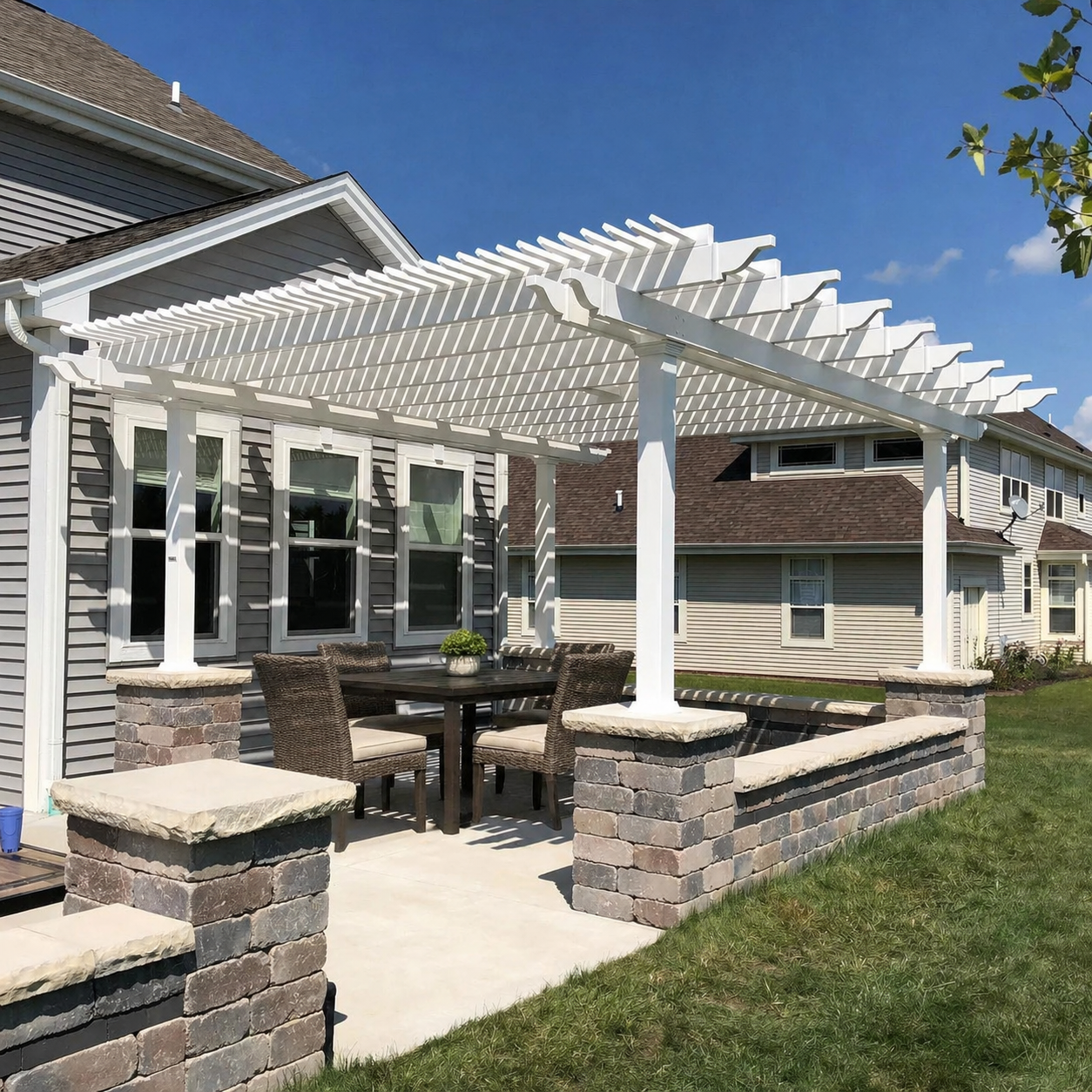 These are not hollow vinyl structures relying on vinyl alone for structural support. Traditional pergolas, modern pergolas, and patio covers contain aluminum inserts in their weight-bearing posts, beams, and rafters. The aluminum provides structural reinforcement while the premium extruded vinyl forms the visible exterior.
That distinction matters when comparing permanent pergolas. Looking only at the exterior material can hide substantial differences in how structures are built internally. For a Gulf Coast project, homeowners should evaluate the complete structural system, anchoring plan, and local requirements rather than simply asking whether a pergola is "vinyl" or "aluminum."
The vinyl is colored throughout rather than painted. It does not require the recurring painting, staining, sanding, or sealing associated with maintaining a finished wood exterior. Occasional cleaning may still be appropriate—particularly around salt, pollen, dirt, or organic debris—but the normal ownership routine is comparatively simple.
Wood can be an excellent choice when natural material and a particular architectural character are priorities. The tradeoff is maintenance. For owners of vacation homes, rental properties, waterfront homes, or simply anyone who would rather spend weekends using the patio than refinishing it, that difference can carry considerable long-term value.
Sunset Pergola Kits uses fixed angled slats on its shade pergolas and solid polycarbonate panels on its rainproof patio covers. There are no motors, retractable mechanisms, or moving louvers. That means homeowners who specifically want adjustable overhead coverage should consider another system, but those who prefer a permanent fixed structure have fewer moving roof components to service.
| Florida Gulf Coast Condition or Need | Why Aluminum-Reinforced Vinyl Performs Well |
|---|---|
| Permanent outdoor installation | Aluminum reinforces the weight-bearing structural components. |
| Coastal moisture and salt exposure | The internal aluminum reinforcement is rust-proof. |
| Low-maintenance ownership | Extruded vinyl needs no routine painting, staining, sanding, or sealing. |
| Strong sun | Fixed slatted roofs provide 50%, 75%, or 90% shade choices. |
| Frequent rain | Solid polycarbonate patio-cover roofs provide rainproof coverage. |
| UV protection beneath a solid roof | Polycarbonate patio-cover roofing provides 100% UV protection. |
| High-wind locations | Traditional pergolas and patio covers can be ordered with optional hurricane brackets. |
| Long-term ownership | Traditional, modern, and patio-cover frames carry a lifetime warranty. |
For Gulf Coast homeowners, roof selection should be based on how the patio will actually be used. The four choices are meaningfully different: 50%, 75%, and 90% fixed slatted shade preserve the character of an open pergola, while a solid polycarbonate roof turns the structure into a rain-protected patio cover.
A 50% roof uses fixed angled slats spaced 6 inches on center. It makes sense when the goal is to soften direct sun without making the space feel heavily covered. Consider it for garden seating, patios with some existing shade, or homeowners who actively want sunlight to remain part of the outdoor experience.
A 75% roof uses slats spaced 4 inches on center and is a practical starting point for many Gulf Coast patios. It provides substantially more shade while retaining filtered light and the visual character of a pergola. Poolside seating and general-purpose lounge or dining areas are natural applications.
A 90% roof uses slats spaced 3 inches on center. It is worth considering for highly exposed pool decks, west-facing patios, and seating areas where afternoon sun is the dominant comfort problem. The tradeoff is straightforward: denser shade means less sunlight reaching the patio.
 When keeping rain off the patio is a core requirement, skip the shade-percentage debate and consider a solid-roof patio cover. Its polycarbonate roof is rainproof, provides 100% UV protection, and can make the patio up to 15°F cooler. White and bronze are roof-panel colors; they are not shade-percentage choices.
This can be particularly useful for outdoor kitchens, dining areas immediately outside the house, and furnished patios where afternoon showers otherwise interrupt use. A solid roof changes the experience from "shade structure" toward "covered outdoor room," so homeowners who prefer filtered light and an open pergola appearance may still favor slats.
For Gulf Coast homes, begin with the problem the structure needs to solve. Explore slatted-roof pergolas when shade and an open-air appearance are the priorities, or rainproof patio covers when reliable overhead weather protection matters. From there, architecture and site layout can guide the choice between traditional pergolas, modern designs, and attached or freestanding configurations.
The region's long outdoor season makes a pergola more than a summer-only amenity. Pool patios, outdoor kitchens, waterfront seating, dining terraces, and vacation properties can all benefit, but the right structure depends on what happens beneath it. Design around the activity first; then size and position the structure around that activity.
A pool pergola often works best when it protects the area where people actually linger rather than attempting to cover the entire deck. Lounge chairs, conversation seating, and a table can be grouped beneath a slatted structure while the pool and surrounding deck remain open. A freestanding configuration is particularly useful when that activity zone is separated from the house.
Outdoor kitchens create a different set of priorities. Placement relative to the indoor kitchen matters, as does circulation between cooking, dining, and pool areas. When rain protection is important, an attached or freestanding solid-roof patio cover can provide more dependable coverage than a slatted pergola.
On waterfront properties, preserving sightlines can matter nearly as much as creating shade. Structure width, post locations, and placement should be planned from the seated viewing position—not just from a plan view of the patio. For second homes and rentals, low-maintenance materials can also reduce recurring exterior upkeep.
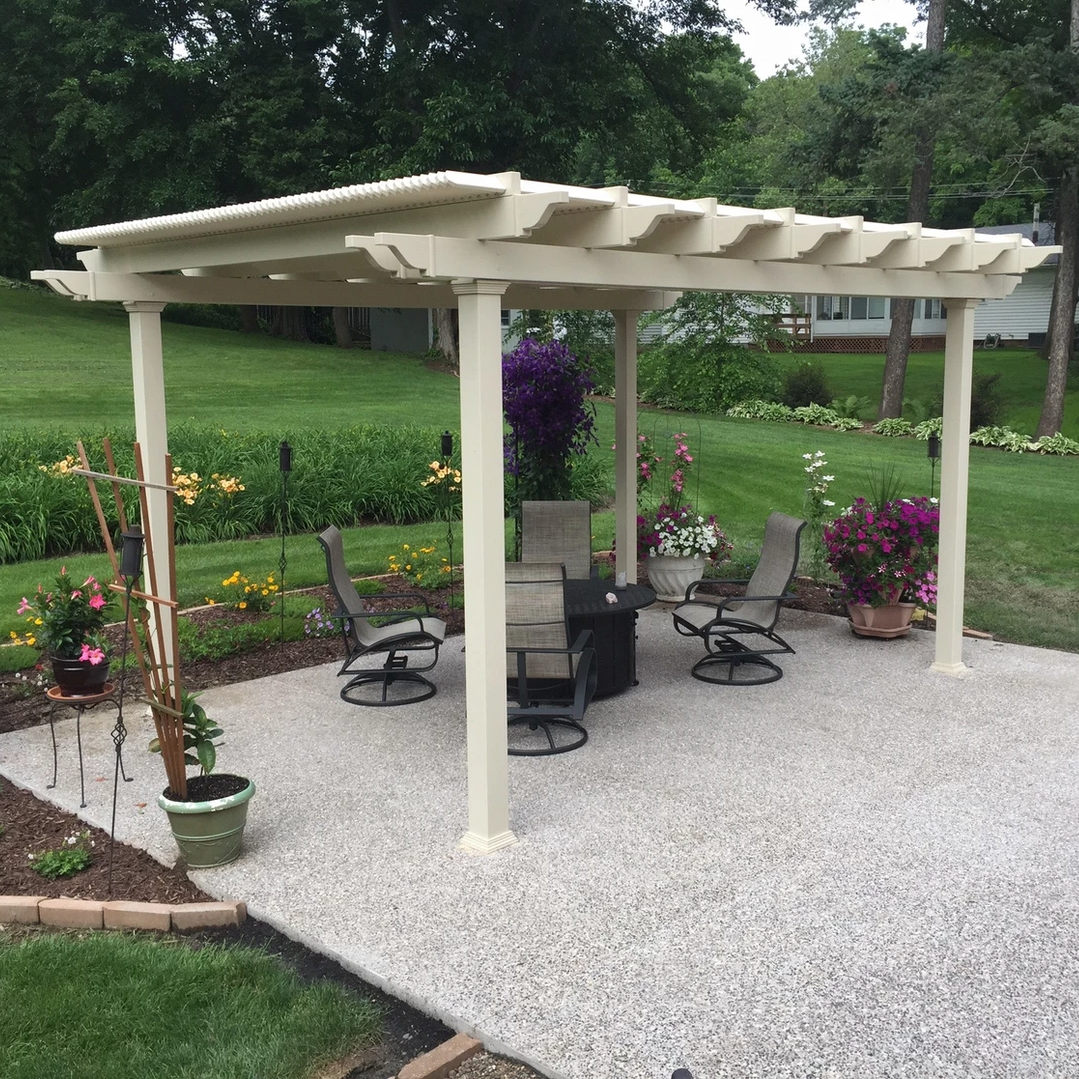 The strongest configuration is usually the one that follows the architecture and activity zone instead of simply filling the available slab. An attached structure can extend outdoor living directly from the house, while a freestanding pergola can establish a separate destination around a pool, garden, or waterfront seating area.
Traditional pergolas suit homeowners who want a more architectural shade structure with optional beam and rafter overhangs, decorative end caps, and flexible post placement. Modern pergolas create cleaner square corners with posts at the corners, no overhangs, and no decorative end caps. Solid-roof patio covers retain a traditional frame appearance but are designed for complete overhead rain protection.
For many coastal and Florida-inspired homes, traditional profiles integrate naturally with established patios and landscaped backyards. Modern pergolas are a better visual match for contemporary construction and renovated pool areas where simple lines are intentional.
An attached pergola or patio cover is worth considering when the primary outdoor room begins immediately outside a rear door. It can make the transition from kitchen or living area to patio feel deliberate while avoiding a second row of posts along the house side. Attachment details, rooflines, doors, windows, eaves, drainage, and local structural requirements all need to be evaluated before choosing this configuration.
Freestanding structures make sense when the ideal shade location does not align with the house. They can define a poolside lounge, create a destination farther into a large yard, or preserve flexibility where attachment to the building is undesirable.
A common planning mistake is choosing dimensions simply because they fit the patio. Instead, lay out the table, chairs, loungers, grill, or sectional first and add the circulation space people actually need. Then position posts so they do not create pinch points between the house, pool, furniture, and landscape.
Traditional pergolas also allow posts to be inset by up to 36 inches, while patio-cover posts can be inset by up to 24 inches. Those options can help preserve usable circulation or sightlines. Modern pergolas place their posts at the corners, so their cleaner geometry comes with less post-placement flexibility.
The Gulf Coast includes everything from older Florida ranch homes and Mediterranean-influenced residences to contemporary waterfront construction. The goal is not to make the pergola the most visually dominant object in the yard. A successful permanent structure should look related to the home's massing, rooflines, exterior colors, hardscape, and landscape.
White or tan traditional pergolas can work naturally with light stucco, coastal palettes, pavers, tropical landscaping, and more conventional rooflines. Traditional structures can also use scrolled, beveled, or flat end caps and optional beam and rafter overhangs, giving homeowners more control over how decorative or restrained the structure appears.
Black or white modern pergolas can complement contemporary homes where square forms, broad glass openings, and restrained exterior detailing call for a cleaner structure. Modern pergolas have flush corners and no decorative end caps or overhangs, so the silhouette is intentionally simpler.
A solid roof has greater visual presence than open slats, making integration with the house especially important. White or bronze polycarbonate panels can be selected according to the desired appearance. For an attached installation, consider the patio cover together with the home's existing eaves and roofline rather than treating it as an isolated backyard object.
Not every project requires a full patio structure. Eyebrow pergolas can add a shallow attached architectural accent above garages, windows, or entries. Their 2-foot rafter depth makes them fundamentally different from a full-size shade structure.
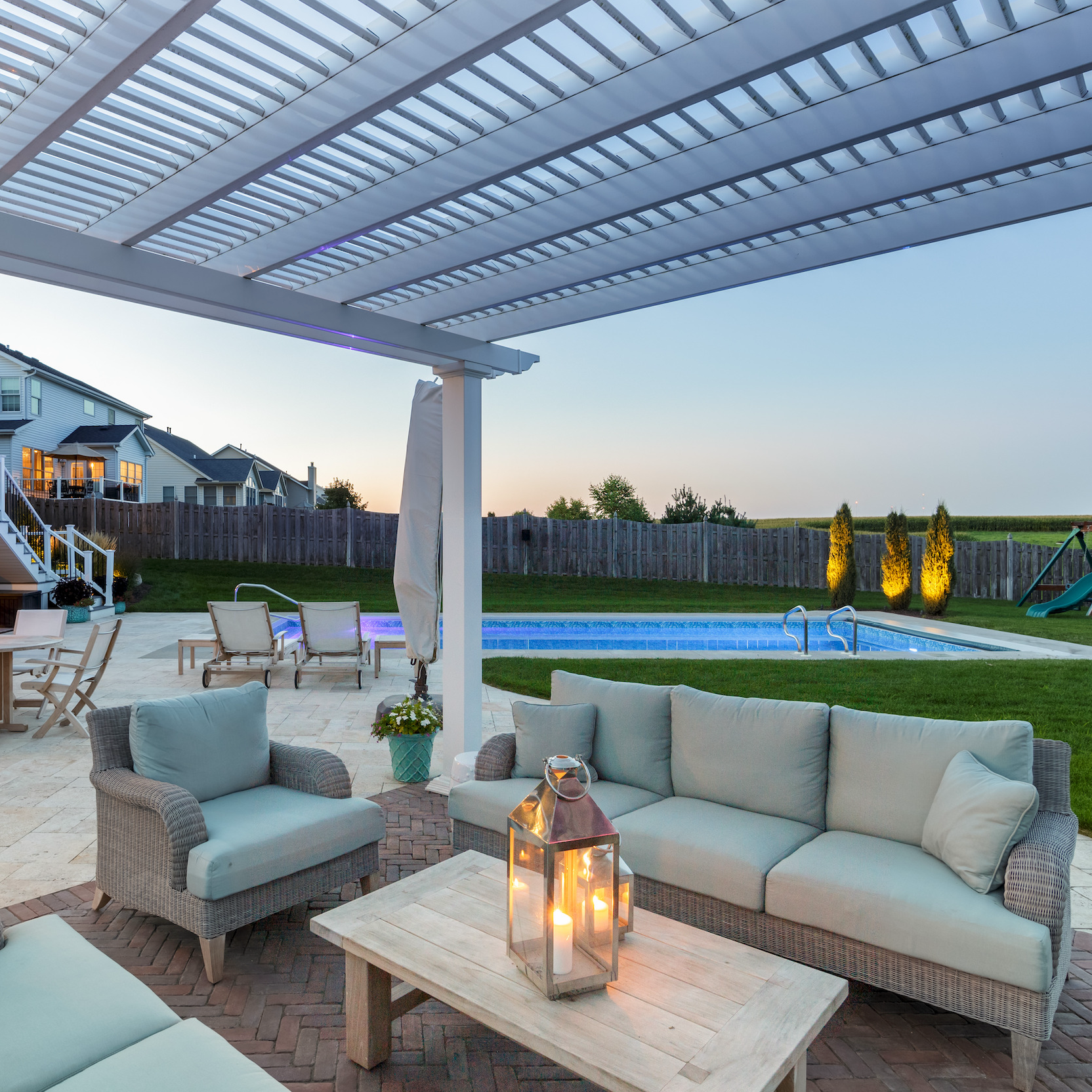 Even 90% shade does not make a slatted pergola rainproof. On the Gulf Coast, where shade and rainfall are both meaningful considerations, confusing the two can produce the wrong structure. Decide whether rain protection is a requirement before choosing a shade percentage.
A beautiful pergola design is irrelevant if the structural plan does not suit the site. Waterfront, barrier-island, canal-front, and exposed properties can present different wind considerations than protected inland lots. Investigate applicable design criteria, anchoring, and engineering requirements for the exact property before installation.
The patio's orientation matters. A west-facing space receiving difficult late-day sun may need a different solution than a patio shaded by the house for part of the afternoon. Evaluate when the patio becomes uncomfortable and where the sun enters before deciding between 50%, 75%, and 90% shade.
A solid roof solves the overhead-rain problem but also creates runoff that has to go somewhere. Placement, surrounding drainage, the house, landscaping, and walking surfaces should be considered during planning rather than after the structure is installed.
Waterfront and pool properties often have valuable sightlines. Before finalizing dimensions, stand where people will actually sit and identify where posts would interrupt the view. Traditional pergolas and patio covers offer inset-post options that may help, while modern pergola posts remain at the corners.
A large slab does not necessarily need a pergola of the same size. Cover the zone that benefits from shade or rain protection and preserve intentional circulation around it. This often produces a more comfortable layout and a structure that feels better proportioned to the property.
Florida's coastal conditions make pre-installation planning particularly important. A pergola or patio cover should be treated as a permanent structure, with its location, supporting surface, anchoring, wind exposure, drainage, and relationship to the home evaluated before ordering.
Measure more than the slab. Document doors, windows, roof edges, utilities, pool setbacks, landscaping, furniture, and walking routes. For an attached structure, confirm that the proposed attachment area is suitable. For freestanding installations, evaluate the intended post and footing locations before committing to dimensions.
Hurricane exposure is a legitimate structural-planning concern on Florida's Gulf Coast. Sunset Pergola Kits offers optional hurricane brackets for traditional pergolas and solid-roof patio covers and recommends them where the area ever experiences winds of 80 MPH or higher. Adding those brackets includes a lifetime wind-damage warranty. Hurricane brackets are not available for modern pergolas.
Those brackets do not replace proper anchoring, applicable engineering, or code compliance. Requirements vary according to the exact location, structure, site conditions, and governing jurisdiction, so homeowners should verify what applies to their property before installation.
Do not assume that requirements are identical from Tampa to Naples—or even between neighboring municipalities. Structure dimensions, attachment method, wind criteria, setbacks, easements, property conditions, and HOA rules can all affect a project. Florida maintains statewide building standards, but local review and project-specific requirements still matter. Verify current requirements with the appropriate building authority and HOA for the exact address.
Sunset Pergola Kits are designed to be DIY-friendly, but that does not mean DIY is the right choice for every project. A contractor can be particularly useful for large structures, attached installations, challenging foundations, highly exposed coastal sites, or projects involving permitting and inspections. Homeowners comfortable with construction may prefer to assemble the kit themselves using the provided instructions and assembly information and videos.
The vinyl exterior does not need routine painting, staining, sanding, or sealing. Normal ownership can include occasional cleaning and removal of salt residue, pollen, leaves, and other debris. Solid polycarbonate roofs should also be kept free of accumulated debris, and homeowners should periodically observe anchors, fasteners, and the surrounding installation for visible issues.
Because the roofs are fixed, there are no motors, retractable components, or movable louvers to maintain. That simplicity can be valuable for a permanent structure expected to remain outdoors through years of Gulf Coast weather.
The most useful Gulf Coast pergola is not necessarily the one with the most shade or the largest footprint. Start with the space you want to make more usable, decide whether shade or rain protection matters most, and then choose the style and configuration that fits the house. From poolside slatted shade to a rain-protected outdoor dining area, Sunset Pergola Kits offers permanent configurations that can be tailored around the way you actually use your property.
Start with your main weather problem. A fixed slatted pergola is a strong choice when shade and an open-air feel are the priorities. If keeping rain off the patio is essential, consider a solid-roof patio cover. Wind exposure, architecture, placement, and maintenance preferences should then guide the specific configuration.
There is no single correct percentage. A 75% slatted roof is a versatile starting point for many Gulf Coast patios, while 90% can make sense for highly exposed or west-facing spaces. A 50% roof works better when filtered sunlight is desirable. All three are fixed slatted roofs and are not rainproof.
No. A 90% slatted pergola provides substantial shade but is not rainproof. If dependable overhead rain protection is required, choose a solid polycarbonate patio-cover roof.
Premium vinyl pergolas can be well suited to coastal ownership when properly designed and installed. Sunset Pergola Kits use premium extruded vinyl around aluminum-reinforced weight-bearing components. The exterior does not require routine painting, staining, sanding, or sealing, and the internal aluminum reinforcement is rust-proof.
Consider site-specific wind exposure, structural requirements, anchoring, the supporting surface or footings, and applicable local codes. Sunset Pergola Kits offers optional hurricane brackets for traditional pergolas and solid-roof patio covers and recommends them in areas that ever experience winds of 80 MPH or higher. They are not available for modern pergolas.
Attached structures often make sense for patios and outdoor kitchens directly outside the house. Freestanding pergolas are useful for detached pool lounges, gardens, waterfront seating, and locations where attachment is undesirable or impractical. The best choice depends on the property's layout and attachment feasibility.
It can be, especially when dependable rain protection is a priority. Sunset Pergola Kits' solid polycarbonate roof is rainproof, provides 100% UV protection, and can make the patio up to 15°F cooler. The complete outdoor-kitchen design should also account for appliance requirements, ventilation, clearances, drainage, and applicable codes.
Permit and review requirements vary by municipality, county, project size, attachment method, site conditions, and other factors. Do not assume that requirements are identical across Gulf Coast communities. Check the current requirements for your exact address with the appropriate local building authority and review applicable HOA rules before installation.
The vinyl exterior does not require routine painting, staining, sanding, or sealing. Periodic cleaning may be appropriate to remove salt residue, pollen, dirt, and organic debris. Owners should also follow product-specific care instructions and periodically observe the installation, anchors, and fasteners for visible issues.
Traditional pergolas work well when decorative end caps, optional overhangs, and more flexible post placement complement the home. Modern pergolas offer flush corners and simpler lines for contemporary properties. Color, roof style, proportions, and placement should relate to the home's exterior rather than being selected independently.


