

MADE IN THE USA
with American products
w/ American products


Choosing between a vinyl vs aluminum pergola involves more than deciding which material looks better beside your home. For a permanent shade structure on an upscale patio, the important differences include exterior appearance, surface heat, maintenance, corrosion exposure, and construction quality. This comparison focuses on vinyl-clad pergolas versus pergolas with visible aluminum exteriors, using equivalent roof styles and layouts so you can make a meaningful material decision.
A vinyl pergola can also be an aluminum pergola structurally. Some premium vinyl pergolas use aluminum reinforcement inside their posts, beams, and rafters. The vinyl forms the visible exterior, while aluminum provides internal structural support.
That distinction matters because comparing an aluminum-reinforced vinyl pergola with an exposed-aluminum pergola is not necessarily comparing two entirely different frame materials.
| Comparison | Vinyl-Clad Pergola | Exposed-Aluminum Pergola |
|---|---|---|
| Visible exterior | Vinyl surfaces cover the structural members. | Aluminum surfaces remain visible. |
| Structural core | May include aluminum reinforcement. | Uses aluminum structural components. |
| Exterior color | May be colored throughout the vinyl rather than painted. | Depends on the specified coating, anodizing, or other finish. |
| Roof system | Can use fixed slats or other supported roof configurations. | Varies by product and manufacturer. |
| Primary material decision | Do you prefer a vinyl exterior and its associated upkeep? | Do you prefer visible aluminum and its specified finish? |
For example, Sunset Pergola Kits uses aluminum inserts within the weight-bearing posts, beams, and rafters of its traditional and modern pergolas, with premium extruded vinyl on the exterior. Its vinyl is colored throughout rather than painted.
To isolate the material difference, compare pergolas with similar dimensions, post arrangements, and roof coverage. A fixed-slatted vinyl pergola and a motorized louvered aluminum structure introduce major differences unrelated to the exterior material.
The better-looking material is the one that complements your architecture and surrounding finishes. Neither vinyl nor aluminum requires a particular design style, but their surface characteristics can create different visual effects.
 Premium extruded vinyl can create a smooth, consistent appearance that coordinates naturally with exterior trim, columns, and other architectural details.
Consider a home with light-colored trim, substantial columns, and a carefully designed outdoor dining patio. A vinyl pergola with compatible proportions and detailing can appear visually integrated with the house rather than looking like an unrelated addition.
Because Sunset Pergola Kits' vinyl is colored throughout, its appearance does not depend on a painted surface. Its traditional pergolas are available in white, tan, and black, with optional decorative beam and rafter ends, post styles, and overhangs.
This makes vinyl particularly appealing when the goal is an architectural extension of the home with minimal finish maintenance.
 Exposed-aluminum pergolas can complement contemporary courtyards, minimalist architecture, and outdoor spaces featuring metal railings or other metal finishes.
Depending on the manufacturer, aluminum may have a powder-coated, anodized, or other specified surface finish. These finishes can look different even when the underlying material is identical.
A visible metallic finish may be especially appealing beside steel-framed windows, metal fencing, or contemporary outdoor furniture. However, the finish should be inspected in actual product photographs or samples rather than assumed from a product labeled simply "aluminum."
One common misconception is that aluminum pergolas are modern while vinyl pergolas are traditional.
That is not necessarily true. Sunset Pergola Kits also offers modern pergolas with squared corners, flush beams and rafters, and no decorative overhangs. They retain the same aluminum-reinforced construction and vinyl exterior used in the company's traditional models.
Buying implication: Select your preferred architectural profile first, then compare the available exterior finishes. Otherwise, you may attribute a design difference to the material when it actually comes from the product's shape and detailing.
A cooler-feeling pergola surface does not automatically mean cooler air underneath the pergola. Surface temperature and shaded-space comfort are two different considerations.
When exposed to direct sunlight, a pergola's surface can become noticeably warmer than the surrounding air. The amount of solar energy absorbed depends on factors including color, finish, pigment characteristics, and exposure.
Research from Lawrence Berkeley National Laboratory on vinyl siding identifies solar absorptance as an important factor in heat buildup. Darker colors generally absorb more solar energy, although pigment formulations can produce different results even between surfaces that appear similar in color.1
That finding is useful when evaluating pergola finishes, but it does not establish a universal temperature difference between vinyl and aluminum pergolas.
A black vinyl exterior and a black powder-coated aluminum exterior cannot be reliably ranked for surface temperature without product-specific measurements under comparable conditions.
Imagine two pergolas with matching dimensions, orientation, and slatted-roof coverage. One has vinyl-clad structural members, while the other has exposed aluminum.
The roof configuration determines how much direct sunlight passes through the structure. The material covering the posts and beams does not independently establish the amount of shade provided.
Other influences on comfort include:
For a fair comparison, keep the roof style and approximate coverage constant. Sunset Pergola Kits' slatted-roof pergolas, for example, offer fixed configurations providing 50%, 75%, or 90% shade coverage.
Comparing a 90% shade pergola with a much more open roof would mainly measure differences in shade coverage, not vinyl versus aluminum.
Buying implication: If reducing direct sun exposure is your priority, evaluate roof coverage first. If you are concerned about touching hot posts or beams, request surface-temperature evidence for the specific colors and finishes under consideration.
Both vinyl-clad and exposed-aluminum pergolas can offer relatively low-maintenance ownership. The difference lies in what needs cleaning, what protects the visible surface, and which components may require attention over time.
| Ownership Task | Vinyl-Clad Pergola | Exposed-Aluminum Pergola |
|---|---|---|
| Routine cleaning | Clean dirt, pollen, and environmental deposits using approved methods. | Clean dirt, pollen, and deposits using the finish manufacturer's instructions. |
| Painting or staining | Not required for through-colored vinyl. | Typically not routine for a factory-finished product, but coating repairs may be necessary. |
| Finish damage | Inspect for physical damage, marks, or changes in surface appearance. | Inspect for scratches, coating damage, discoloration, or finish deterioration. |
| Exposed surfaces | Vinyl covers the main structural exterior. | Metal surfaces and their finishes remain exposed. |
| Connections and hardware | Inspect accessible fasteners, brackets, and attachment points. | Inspect accessible fasteners, brackets, joints, and attachment points. |
| Coastal or corrosive exposure | Verify the suitability of underlying metal components and hardware. | Verify aluminum alloy, finish, fastener compatibility, and manufacturer restrictions. |
Sunset Pergola Kits' extruded vinyl exterior does not require painting, staining, or sanding, making it attractive for homeowners who want to avoid ongoing finish restoration.
A properly specified exposed-aluminum pergola may also require little maintenance. However, its care obligations depend on the actual finish and the manufacturer's instructions. It would be inaccurate to assume every aluminum pergola has the same protective coating or cleaning requirements.
Aluminum does not develop the familiar reddish rust associated with iron and steel. It naturally forms a protective oxide layer, but this does not make every aluminum component immune to corrosion.
ASM International identifies several possible forms of aluminum corrosion, including pitting, crevice corrosion, and galvanic corrosion.2
Galvanic corrosion can become a concern when dissimilar metals are electrically connected in the presence of moisture or another conductive liquid. Conditions around fasteners and joints can therefore matter even when the broad exterior surfaces appear sound.
The Aluminum Association describes the importance of compatible materials, protective coatings, and isolating or sealing susceptible metal connections.3
This is relevant to both exposed-aluminum and aluminum-reinforced vinyl pergolas because both can contain metal components and connections.
If your pergola will be installed near the ocean or in another corrosive environment, request written confirmation that the proposed system is suitable for that exposure.
Ask the manufacturer about:
Buying implication: A vinyl exterior reduces direct exposure of the surfaces it covers, but it does not eliminate the need to evaluate structural connections. Conversely, an exposed-aluminum exterior should not be rejected simply because it is metal. Documented corrosion protection is more useful than either material label.
Neither vinyl nor exposed aluminum automatically guarantees a longer-lasting pergola. Material quality, structural design, environmental suitability, and finish performance all influence durability.
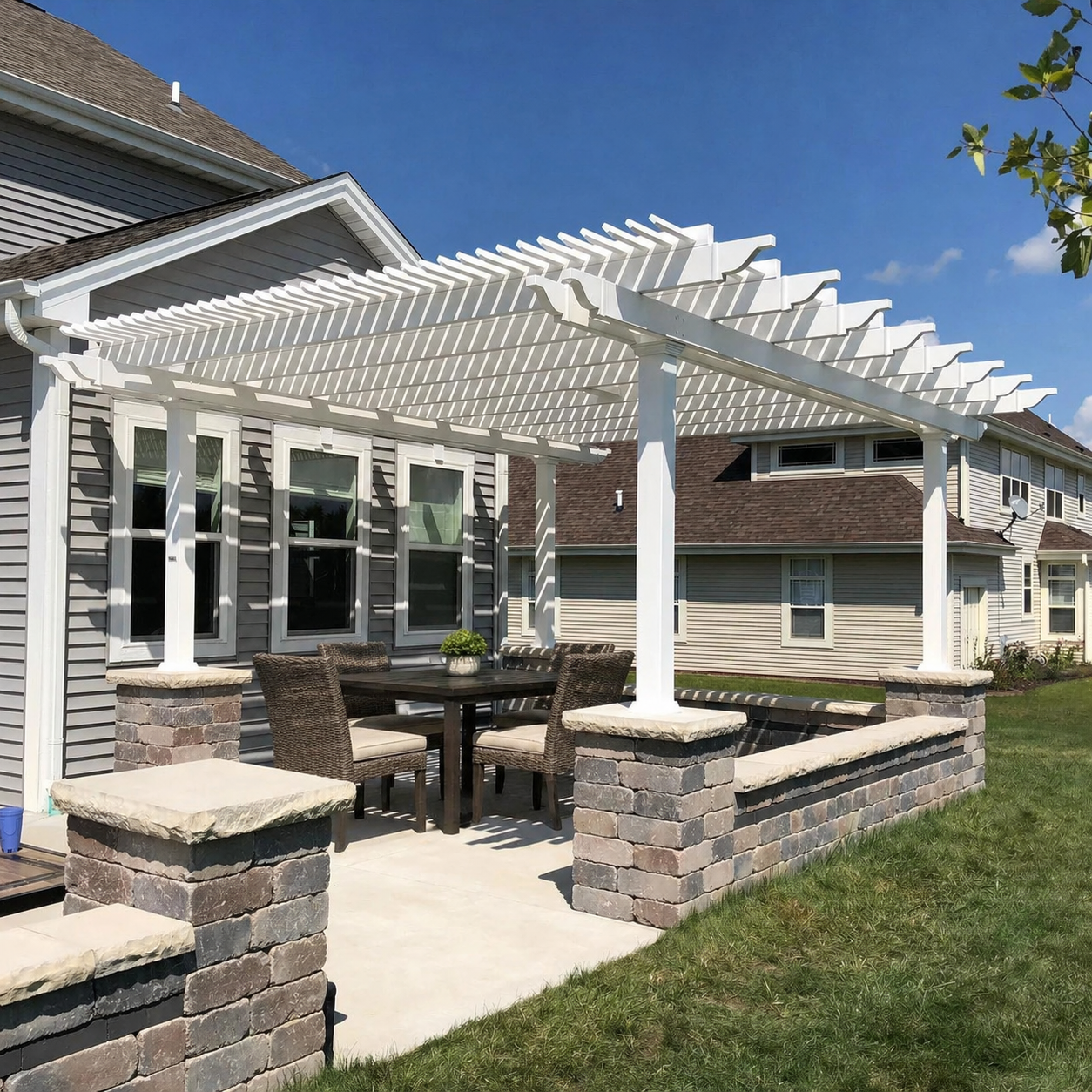 An aluminum-reinforced vinyl pergola and an exposed-aluminum pergola may both use metal to carry structural loads. However, the actual profiles, reinforcement, connections, spans, and installation requirements can differ substantially.
For the vinyl-clad option, verify which members contain reinforcement and whether the structure is engineered for the proposed size and installation conditions.
For the exposed-aluminum option, request corresponding structural documentation rather than assuming the visible aluminum automatically indicates greater strength.
Sunset Pergola Kits' traditional and modern pergolas use aluminum inserts in their weight-bearing posts, beams, and rafters. These are permanent structures intended for long-term outdoor installation, not lightweight decorative frames.
For vinyl, relevant evidence includes the quality of the extruded material, its color construction, and documentation addressing weather exposure, discoloration, deformation, or cracking.
For exposed aluminum, evaluate the specified finish and its documented resistance to relevant environmental conditions. Ask how scratches, finish damage, and discoloration are handled under the manufacturer's care instructions and warranty.
A statement such as "weather-resistant" is less informative than specific documentation explaining which environmental conditions the product is designed to withstand.
Warranty length can help you understand a manufacturer's commitments, but it should not replace construction and finish specifications.
Sunset Pergola Kits' traditional and modern pergolas carry lifetime warranties. That is useful ownership context, but buyers should still review the terms, covered components, exclusions, and installation requirements.
A longer warranty does not, by itself, prove that one exterior material will outlast another. Likewise, a manufacturer-provided lifespan estimate should be evaluated against its stated conditions and supporting evidence.
Buying implication: When two pergolas look equally appealing, prioritize the product with clearer structural documentation, environmental suitability, finish specifications, and warranty terms rather than choosing based solely on whether the exterior says vinyl or aluminum.
The vinyl-or-aluminum decision becomes easier when you identify what you value most about the finished outdoor space and how you expect to maintain it.
| Your Priority | What to Favor or Verify |
|---|---|
| Coordinating with architectural trim | Favor vinyl when its texture, color, and detailing provide the closest match to your home. |
| A visible metallic appearance | Favor exposed aluminum when its actual finish complements your architecture and other metal elements. |
| Avoiding painting and staining | Through-colored vinyl is an especially straightforward choice; compare the aluminum alternative's coating-care requirements. |
| Minimizing surface heat | Compare color and measured finish performance rather than assuming either material is cooler. |
| Coastal exposure | Require evidence about alloys, finishes, fasteners, and connection protection for either construction type. |
| Long-term durability | Compare engineering, material specifications, environmental restrictions, and warranty terms. |
| Clean contemporary lines | Compare design profiles in both materials; modern styling is not exclusive to exposed aluminum. |
For a homeowner seeking a visually coordinated outdoor extension without routine painting or staining, aluminum-reinforced vinyl pergolas are worth considering. They offer a vinyl exterior while retaining aluminum within the structural frame.
For someone who specifically wants a visible metal surface, exposed aluminum may be the better aesthetic choice. The deciding questions then become which finish is offered, how that finish is maintained, and whether the complete system is suitable for the installation environment.
If either manufacturer cannot provide the relevant structural, finish, or corrosion information, the evidence does not support a confident durability comparison. Request the missing documentation rather than assuming the material itself resolves the uncertainty.
In a vinyl vs aluminum pergola comparison, the best choice depends on both the exterior you want to see and the quality of the complete product. Premium vinyl can deliver a coordinated architectural appearance with no painting or staining, while exposed aluminum can provide a distinctive metal finish. Neither automatically wins on shade comfort, corrosion resistance, or longevity.
If a low-maintenance vinyl exterior suits your home, explore the vinyl pergola collection from Sunset Pergola Kits. If visible aluminum better matches your design, use the same structural, finish-care, and corrosion questions when evaluating that supplier's products.
Yes. An aluminum-reinforced vinyl pergola uses aluminum within structural components and vinyl on the visible exterior. Sunset Pergola Kits' vinyl pergolas use this combination, allowing homeowners to have a vinyl appearance without relying exclusively on vinyl for structural support.
It can. Darker surfaces generally absorb more solar energy, but pigment characteristics and specific finishes also affect surface heating. A black vinyl pergola and a black aluminum pergola cannot be reliably ranked for temperature without comparable measurements.
No. Shade coverage, roof configuration, sunlight exposure, airflow, and surrounding surfaces have greater relevance to comfort beneath the pergola. A vinyl exterior alone does not establish a measurable reduction in shaded-air temperature.
No. Exposed aluminum can have powder-coated, anodized, or other surface finishes, depending on the manufacturer. Request the specific finish designation, maintenance instructions, and warranty information rather than assuming all aluminum pergolas use powder coating.
Yes. Salt-containing moisture can contribute to corrosion at susceptible metal connections, including areas involving dissimilar metals. This matters for both exposed-aluminum and aluminum-reinforced vinyl pergolas. Coastal buyers should verify fastener materials, connection protection, and environmental suitability.
No. Fixed-slatted and adjustable-louvered roofs differ in functionality, complexity, and shade control, regardless of exterior material. To compare vinyl and aluminum fairly, use similar roof systems. Sunset Pergola Kits offers fixed-slatted pergolas, not motorized or adjustable-louvered systems.


