

MADE IN THE USA
with American products
w/ American products


A cracked, punctured, or loose patio cover roof panel doesn't necessarily mean the entire roof needs replacing. The right approach to polycarbonate patio cover panel replacement depends on the damage, the condition of the surrounding connections, and whether a compatible replacement is available. This guide explains how to distinguish a repairable issue from one requiring a new panel, what specifications to verify, and how to approach the work without creating additional problems.
Start by identifying exactly what is damaged and whether it affects the roof's ability to exclude rain, remain securely attached, or perform as intended. Visible damage does not always tell the whole story: a panel may look relatively intact while its mounting area is compromised, or an apparently damaged connection may be correctable without replacing the panel.
| Observed Condition | What to Check | Potential Next Step |
|---|---|---|
| Cracked panel | Crack location, extent, and whether it affects attachment or weather protection | Determine whether an approved repair is permitted or panel replacement is required |
| Punctured panel | Penetration, surrounding damage, and ability to maintain a weatherproof roof | Seek manufacturer guidance; replacement may be appropriate |
| Loose or displaced panel | Condition of the panel edges, retaining components, seals, and fixing interfaces | Evaluate approved connection correction before assuming the panel needs replacing |
| Deeply scratched or gouged panel | Whether damage is superficial or has compromised the panel's protective or functional characteristics | Confirm manufacturer repair limits and whether replacement is necessary |
| Damaged panel edge or fixing location | Whether the panel can still be securely retained by its intended connection system | Assess both the panel and adjoining components for replacement or approved repair |
A visible scratch is not automatically a reason to replace a panel. However, a deep gouge that affects a protective surface, panel construction, or manufacturer-defined performance requirement deserves closer attention.
Similarly, a crack near an edge or fixing location may have different implications from a mark elsewhere on the panel. The relevant question is whether the panel still meets the installed system's requirements, not simply how noticeable the damage appears.
Photograph the affected area and its position relative to nearby supports and connections. If there is uncertainty about strength, weather exclusion, or secure attachment, have the condition assessed by the original supplier or a qualified contractor.
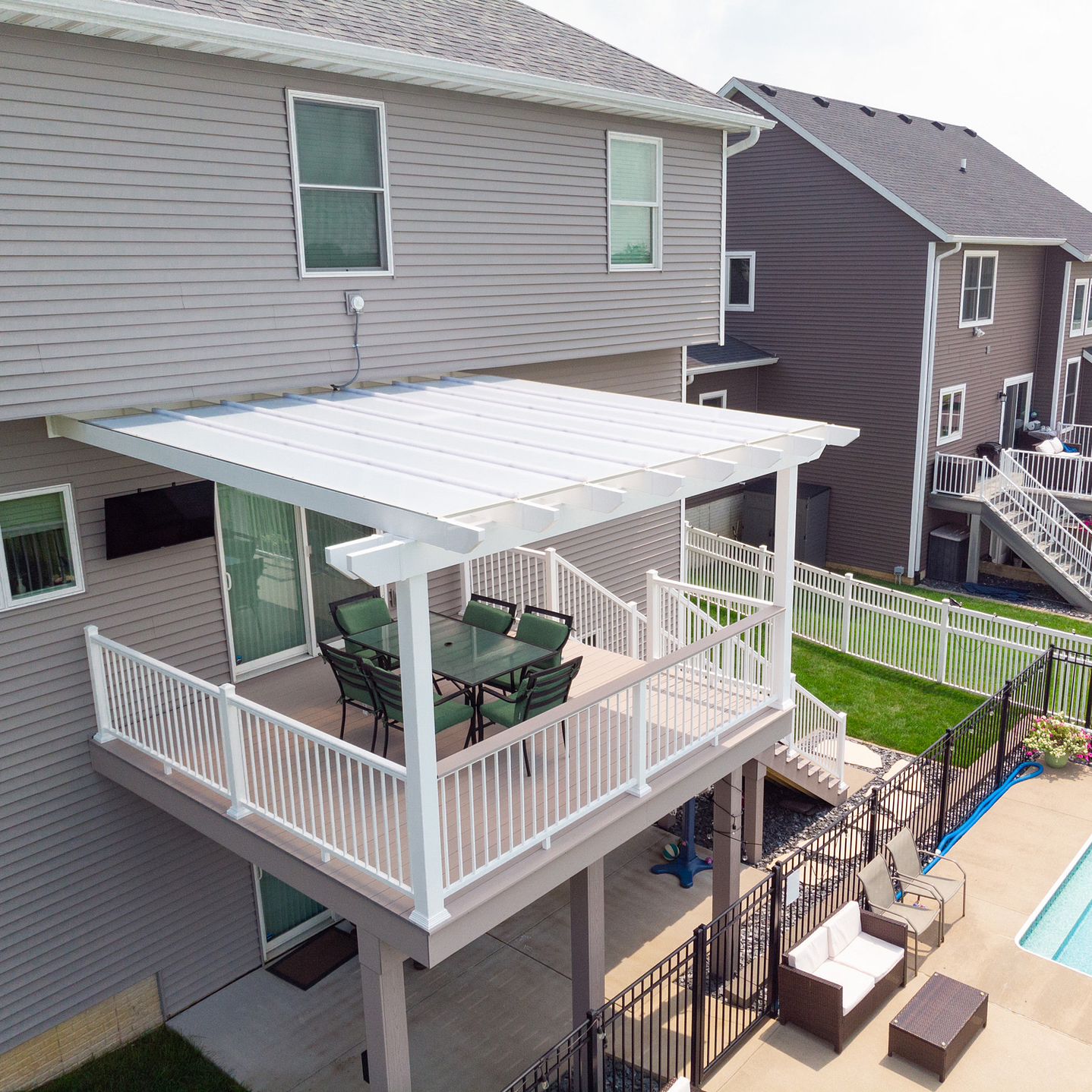 A loose panel may be experiencing a connection problem rather than a failure of the polycarbonate itself. Look for visible displacement, damaged retaining parts, deteriorated seals, or separation at the panel's intended mounting interface.
Do not assume that tightening an accessible fastener will solve the problem. The attachment method, permitted adjustment, and condition of the surrounding components must be verified against the actual roof system.
If a panel is visibly insecure or its structural condition is uncertain, keep people away from the affected area until it has been evaluated.
Three different types of work may be considered: repairing the panel material, correcting a seal or connection, or replacing the panel. Identifying the appropriate category first prevents unnecessary component purchases and potentially ineffective repairs.
A repair should be considered only if the panel manufacturer provides or approves a method suitable for the specific damage and installation. The method must restore the functions affected by the damage, not merely make the surface look intact.
Before accepting a proposed repair, establish:
For example, applying a general-purpose adhesive over a crack may conceal or temporarily cover the opening without establishing that the panel remains suitable for continued service. A seemingly successful patch is not proof of a permanent, manufacturer-approved repair.
If the polycarbonate is undamaged but water is entering at a panel connection, or a panel is loose because a retaining component is not functioning correctly, the solution may involve the connection rather than the panel.
Depending on the particular system and its approved service procedures, this could involve correcting or replacing a compatible seal, retaining component, or fixing assembly.
The key is to identify the actual failure before selecting a remedy. Adding sealant indiscriminately can conceal a problem without addressing a displaced panel or faulty connection. Likewise, excessive fastener tightening should not be used as a substitute for checking the manufacturer's specified installation requirements.
If the manufacturer cannot confirm a suitable repair method, do not assume a generic polycarbonate repair product is compatible with the roof. Ask whether replacement is the approved remedy and what components would be required.
A professional assessment is particularly important when damage involves attachment points or when the panel's continued integrity cannot be established through the available documentation.
Replacing a damaged polycarbonate patio roof panel becomes the stronger option when the existing panel cannot be confirmed to meet the manufacturer's functional requirements after an approved repair or connection correction.
Individual-panel replacement may be appropriate when:
There is no universal crack length, puncture diameter, or scratch depth that automatically determines the correct action for every polycarbonate patio cover. The decision depends on the panel's construction, damage location, mounting arrangement, and applicable manufacturer instructions.
Yes, individual patio cover roof panel replacement may be possible if the roofing system permits separate panel removal and installation, a compatible replacement is available, and the surrounding components remain suitable for continued use.
For example, a localized puncture affecting one panel does not inherently require replacing several undamaged panels or the supporting patio cover frame.
However, replacement of one component should not be assumed possible until the original supplier confirms the system's construction and available service parts. Some installations may require adjoining retaining or sealing components to be removed or replaced during the work.
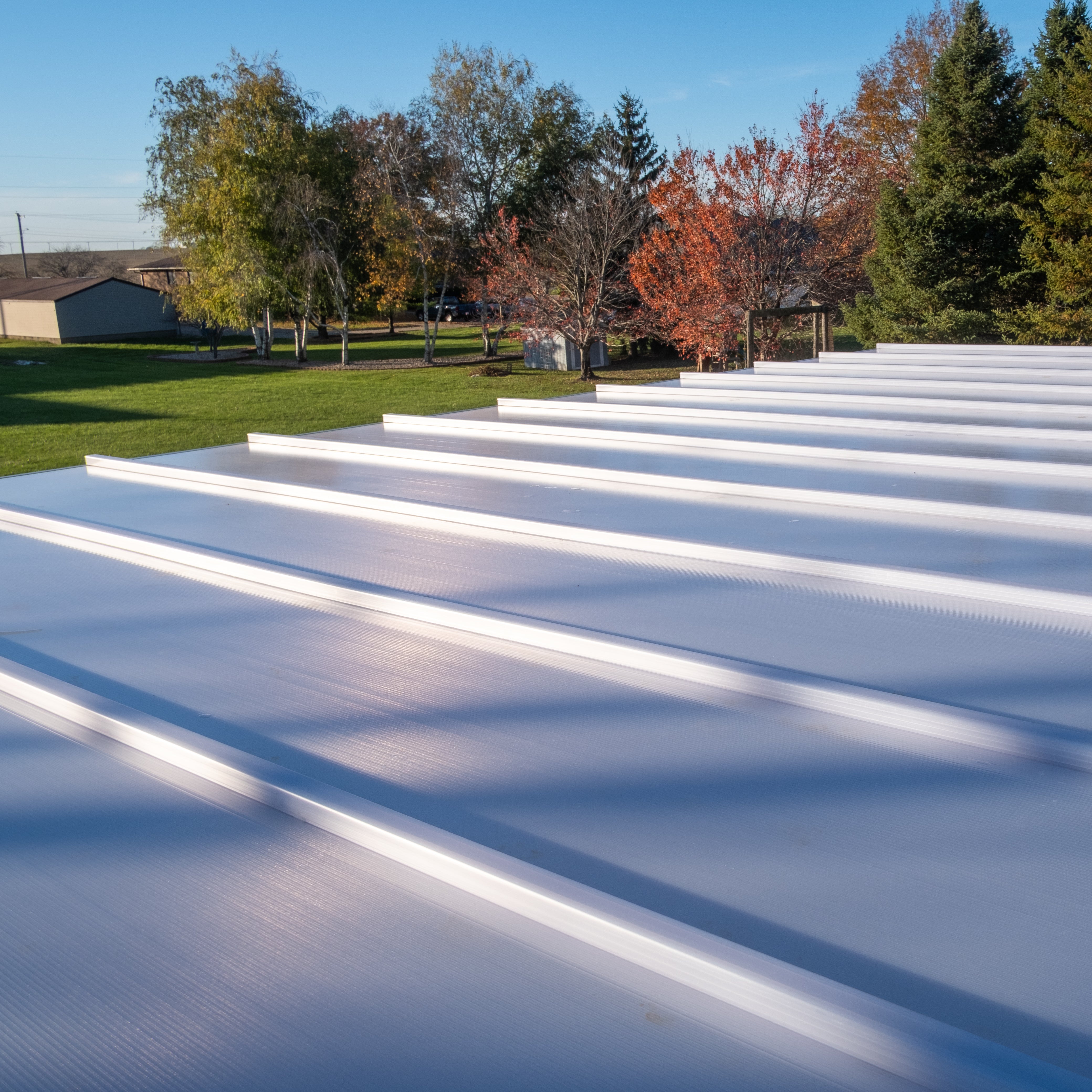
If the damage extends into neighboring panels, retaining assemblies, or supporting components, the scope of work may need to expand beyond the initially damaged panel.
That determination should be based on documented conditions, not a blanket recommendation to replace an otherwise serviceable patio cover.
A complete-cover replacement is a separate decision that should be supported by an assessment showing why panel-level repair or replacement is insufficient, impractical, or incompatible with the existing system.
Finding a replacement panel labeled "polycarbonate" is not enough. Polycarbonate roofing is manufactured in different constructions and configurations, and even panels that look similar may not fit the same retaining or sealing system.
Before ordering a replacement, compare the proposed panel against the original system's documented specifications.
| Specification | What Must Be Verified | Why It Matters |
|---|---|---|
| Dimensions | Required length, width, and any manufacturer-specified allowances | The replacement must fit the intended opening and connection arrangement |
| Panel construction | Specified construction, internal structure if applicable, and overall profile | Different configurations are not automatically interchangeable |
| Thickness | Original specified thickness and any approved alternative | Thickness can affect fit within retaining and sealing components |
| Protective features | Required UV protection or other specified protective characteristics | A substitute must meet the original system's functional requirements |
| Orientation | Required panel direction and orientation of any designated protective surface | Incorrect installation orientation may conflict with manufacturer requirements |
| Fixing and sealing interfaces | Panel edges, profiles, retainers, seals, and required attachment details | These determine whether the replacement can be properly secured and weather-sealed |
| Color and appearance | Specified color, finish, and compatibility with adjacent panels | A matching label does not necessarily produce an identical visual result |
The most useful starting point is the original patio cover manufacturer and the documentation associated with the installation.
Gather any available:
Do not remove a potentially damaged panel simply to obtain measurements unless safe access and removal procedures have been established. The supplier may be able to identify the necessary specifications from existing records.
Not necessarily. A replacement supplied years after the original installation may differ in available construction, profile, finish, or other specifications. An updated product or apparently equivalent material is not automatically a compatible replacement.
Ask the supplier whether the exact original panel remains available, whether a manufacturer-approved substitute exists, and whether any compatible sealing or retaining components must also be obtained.
Even a functionally compatible replacement may appear somewhat different from older adjacent panels. Confirm the current panel's visual characteristics rather than relying only on a shared color name.
For context, Sunset Pergola Kits offers rainproof patio covers with solid polycarbonate roofing in white or bronze roof-panel options. These are complete patio cover systems; the collection should not be treated as a catalog of replacement panels for existing installations.
Before removing a damaged panel or approving repair work, establish who should perform the work, whether the damage may be covered by a warranty, and how the exposed area will be protected.
Sunset Pergola Kits' rainproof patio covers carry a 10-year roof warranty and a lifetime frame warranty. However, these stated warranty periods do not establish that every crack, puncture, impact, or other form of panel damage qualifies for free replacement.
Actual eligibility, remedies, required documentation, and claim procedures must be verified against the applicable warranty terms.
Before arranging work, ask:
Keep the original purchase documentation and obtain clear photographs before any work changes the damaged area.
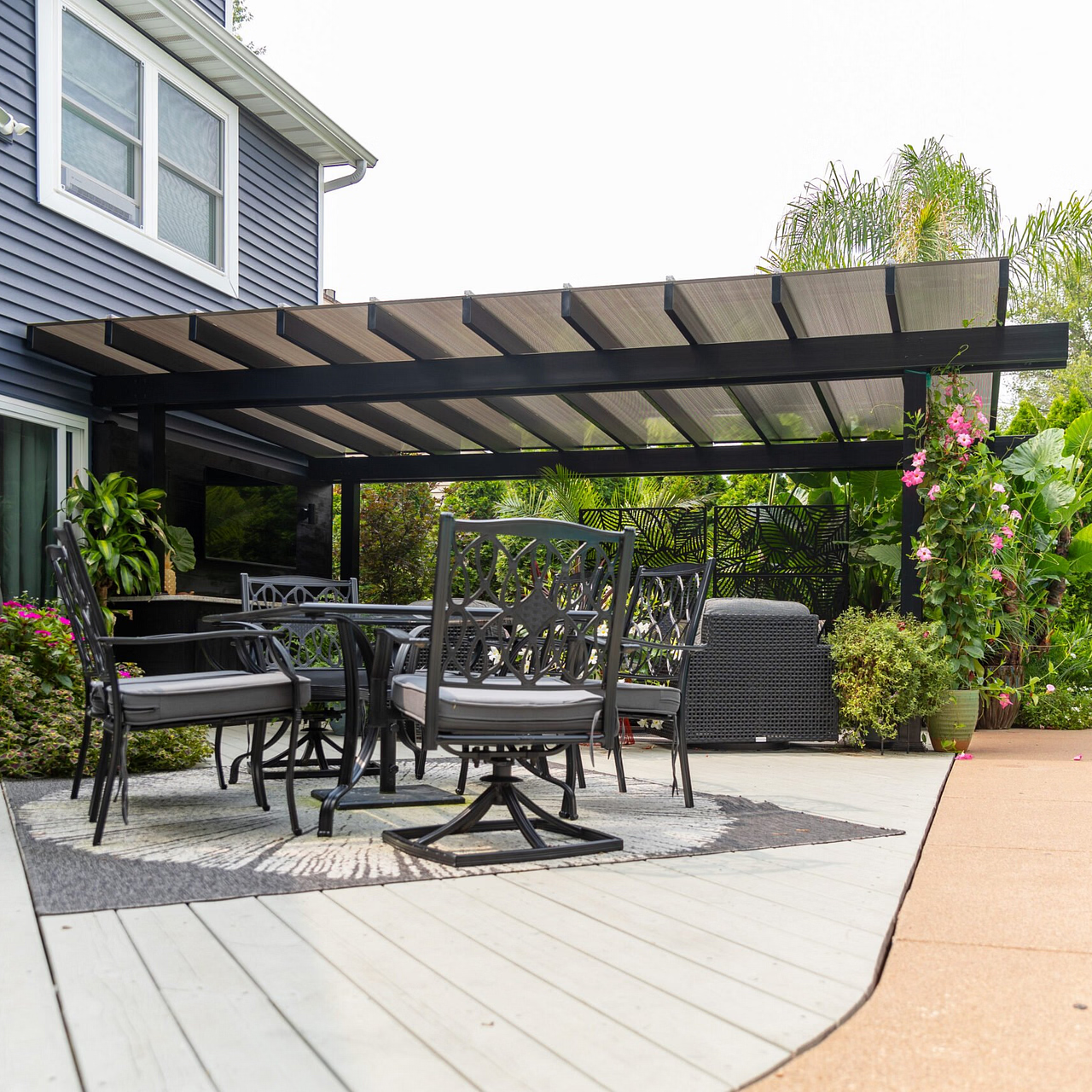 Replacing a roof panel can involve elevated work and temporarily disturbing the components that keep the roof secure and weather-resistant.
Do not assume polycarbonate roofing is designed to support a person's weight. Avoid walking or standing on the panels unless the manufacturer expressly documents an approved access method.
A qualified contractor should assess the appropriate access equipment, removal procedure, panel handling, and safe work conditions for the installation. The original supplier's instructions should guide how the roof is serviced.
Homeowners considering a do-it-yourself replacement should first establish that the manufacturer permits the work and provides complete instructions for their particular system.
If damage has created an opening or compromised weather protection, contact the supplier or contractor about suitable temporary measures.
Any temporary protection must be compatible with the roof and should not require unsafe access, damage other components, or introduce an attachment method the manufacturer does not approve.
Move vulnerable furnishings or equipment away from the affected area when practical, and document any continuing damage.
Temporary protection is not a substitute for confirming that the roof has been permanently restored to its required condition.
After an approved repair, seal correction, or panel replacement, verify that the completed work meets the manufacturer's installation and performance requirements. A new panel should not be considered successfully installed merely because it looks similar to the old one.
If the repair addresses the identified panel damage but water still enters the roof, record the location and circumstances and ask the contractor or supplier to investigate the unresolved condition. Continuing leakage should not automatically be attributed to the replaced panel.
For homeowners considering a separately justified complete replacement, the available freestanding rainproof patio cover and attached rainproof patio cover configurations offer examples of complete roof-and-frame systems to review. Ask about applicable replacement-component availability, compatibility, and service procedures before choosing a new system.
Polycarbonate patio cover panel replacement is not always necessary when roofing is damaged, and replacing the entire cover is rarely a decision that should be made from the panel's appearance alone. The correct solution depends on whether an approved repair or connection correction can restore the required function, or whether a compatible replacement panel is needed.
Start with photographs, original purchase records, and a specific description of the damage. Ask the original supplier or a qualified contractor to confirm the remedy, replacement compatibility, and warranty requirements before proceeding.
If the assessment establishes a separate need for a complete new roof-and-frame system, explore rainproof patio cover options with a clear understanding of the service and replacement-component questions worth asking.
Yes, individual-panel replacement may be possible if the roofing system permits it, a compatible replacement is available, and the surrounding components remain serviceable. Confirm these conditions with the original supplier before ordering a panel or starting work.
No. A loose panel may result from a problem with its retaining components, seals, or fixing connections. If the panel remains undamaged and an approved correction restores secure attachment, replacement may be unnecessary. Damaged panel edges or fixing locations may require a different remedy.
No. Replacement compatibility also depends on dimensions, construction, profile, thickness where relevant, protective features, orientation, and fixing or sealing interfaces. Obtain confirmation that the proposed replacement is approved for the installed system.
Yes. Even when a replacement is functionally compatible, its color or appearance may differ from adjacent panels. Confirm the supplier's current specifications and discuss expected visual differences before ordering.
Yes. Original purchase information, manufacturer identification, installation documentation, and clear photographs can help identify the correct replacement and support a warranty inquiry. Avoid disassembly until the supplier's requirements and safe access procedures are confirmed.
No. A temporary patch may provide limited protection without restoring the panel's required integrity, attachment, or long-term weather resistance. A permanent repair should follow a procedure approved by the panel or system manufacturer for the specific damage.
No. Sunset Pergola Kits' rainproof patio covers include a 10-year roof warranty, but the stated duration alone does not establish coverage for every type of damage. Check the applicable warranty terms for eligibility, remedies, documentation, and claim procedures before authorizing work.


