

MADE IN THE USA
with American products
w/ American products


Wondering how to clean a polycarbonate patio cover without scratching the roof or damaging its surface? Pollen, dirt, bird droppings, and organic buildup can accumulate even on a well-maintained outdoor living space. The right approach depends on your particular panels, the type of buildup, and whether you can safely reach the roof. This guide explains how to plan and carry out a gentle cleaning routine, recognize when tougher deposits need special attention, and know when to stop.
Before choosing a polycarbonate patio roof cleaner, identify the actual roofing product. Polycarbonate is a category of material, not a single product with one universal cleaning procedure. Different panel manufacturers may specify different cleaning solutions, tools, and precautions.
Start with the documentation supplied with your patio cover. Look for the panel manufacturer, product name, installation instructions, and maintenance or warranty guidance.
Confirm the following before cleaning:
For example, Palram's published instructions for its SUNTUF and SUNLITE products recommend warm water, mild detergent, and gentle wiping with a soft cloth. They also warn against abrasive cleaning materials and certain chemical cleaners.1 These recommendations are useful examples, but they should not be treated as confirmation that the same products are approved for an unidentified roof.
If you cannot identify the panels, contact the patio-cover supplier or installer before applying unfamiliar chemicals.
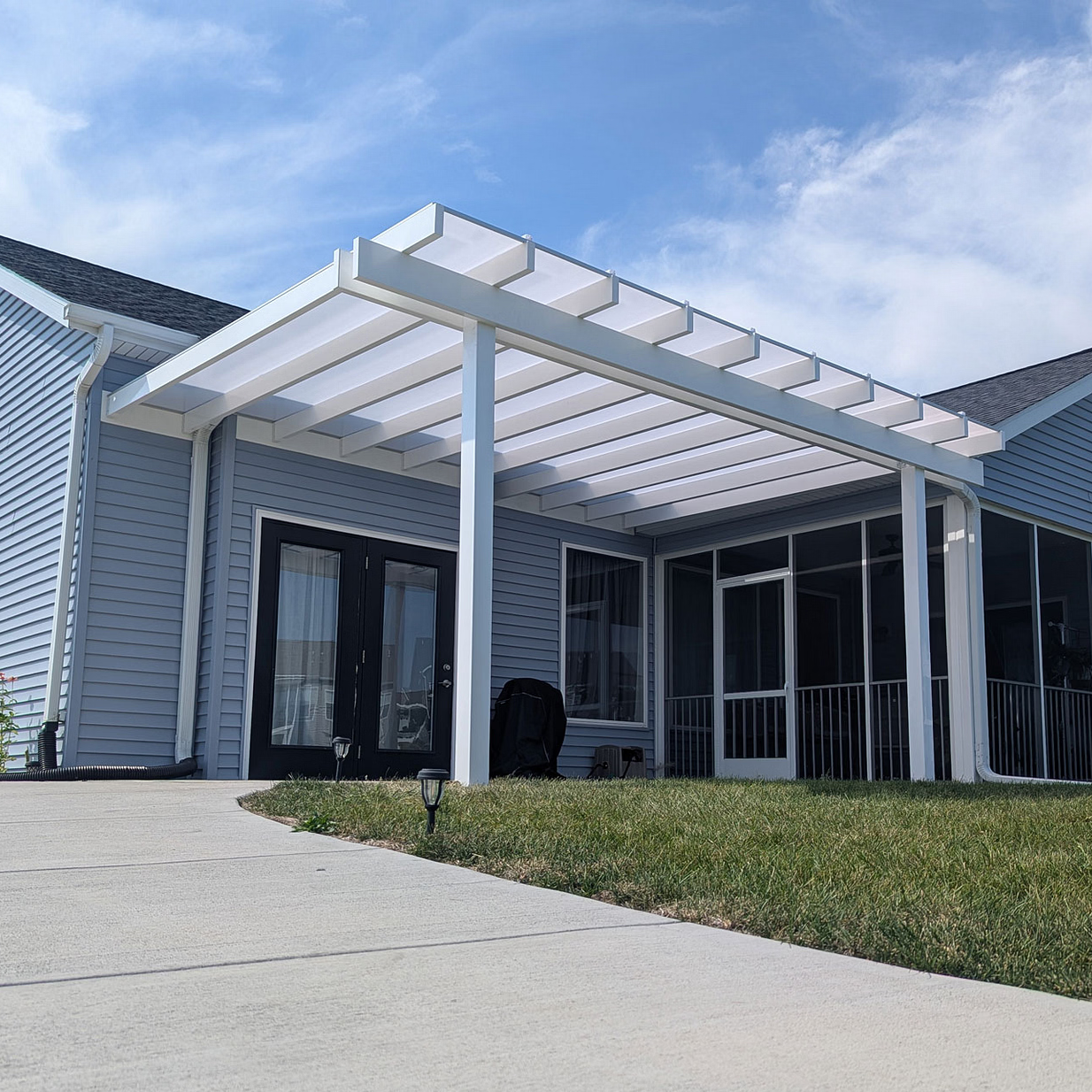 The next question is access. A roof that can be reached from a suitable ground-level position presents a different cleaning situation from a high or difficult-to-reach installation.
Consider the roof height, slope, surrounding landscaping, nearby electrical equipment, and whether your cleaning equipment can reach the surface without excessive force.
Do not walk, stand, or kneel directly on polycarbonate panels unless an appropriately qualified professional has established an approved access system. Palram specifically warns against stepping directly on its polycarbonate sheets.1 The presence of structural framing does not establish that the panels themselves can support a person's weight.
An extendable cleaning tool may help with some installations, but it does not automatically eliminate access hazards. If the entire roof cannot be reached safely, arrange professional cleaning rather than improvising a rooftop work position.
The best cleaning method depends on what is actually on the roof. Loose pollen is different from hardened bird droppings, and a product intended for ordinary dirt may not be appropriate for sticky sap or mineral deposits.
Begin with the least aggressive approved method likely to remove the buildup. Do not assume that a cleaner labeled for outdoor surfaces, vinyl, glass, or general household use is automatically suitable for polycarbonate.
| Buildup | Recommended Starting Approach | Important Precaution |
|---|---|---|
| Loose dust and pollen | Begin with a gentle water rinse where approved, allowing particles to wash away before wiping. | Avoid dry rubbing that could drag grit across the surface. |
| General dirt and grime | Use an approved mild cleaning solution and soft cleaning material, following the panel instructions. | Confirm detergent compatibility and rinse requirements. |
| Algae or organic buildup | Begin with approved routine cleaning; request a panel-compatible organic-deposit treatment if necessary. | Do not assume exterior algae removers or bleach-based products are suitable. |
| Bird droppings | Wet the deposits with approved water or cleaning solution to soften them before gentle removal. | Do not scrape hardened material from the panels. |
| Tree sap | Use a manufacturer-approved spot treatment specifically compatible with the roofing surface. | Do not automatically use household solvents or adhesive removers. |
| Mineral deposits or water spots | Try approved routine cleaning first; confirm any specialty deposit remover with the panel manufacturer. | Avoid unverified acidic descalers or abrasive polishing. |
The table identifies a suitable starting strategy, not universal chemical approval. If the manufacturer's instructions specify a particular dilution, water temperature, application time, or rinsing procedure, follow those instructions rather than substituting a general household cleaning recipe.
For ordinary pollen, dust, and light grime, a careful sequence is usually more important than stronger cleaning chemicals. The goal is to remove particles before they can scratch the surface, loosen remaining dirt, and rinse away cleaning residue.
Choose conditions consistent with the panel manufacturer's instructions. Avoid cleaning when strong wind could interfere with safe access or carry cleaning solution into nearby areas.
Move or protect furnishings and other items below the work area where necessary. Check that the cleaning solution, water supply, cloths, and reach tools are suitable for the panels.
Inspect the roof for obvious damaged areas or loose components before starting. If anything appears structurally questionable, do not proceed with routine cleaning until it has been assessed.
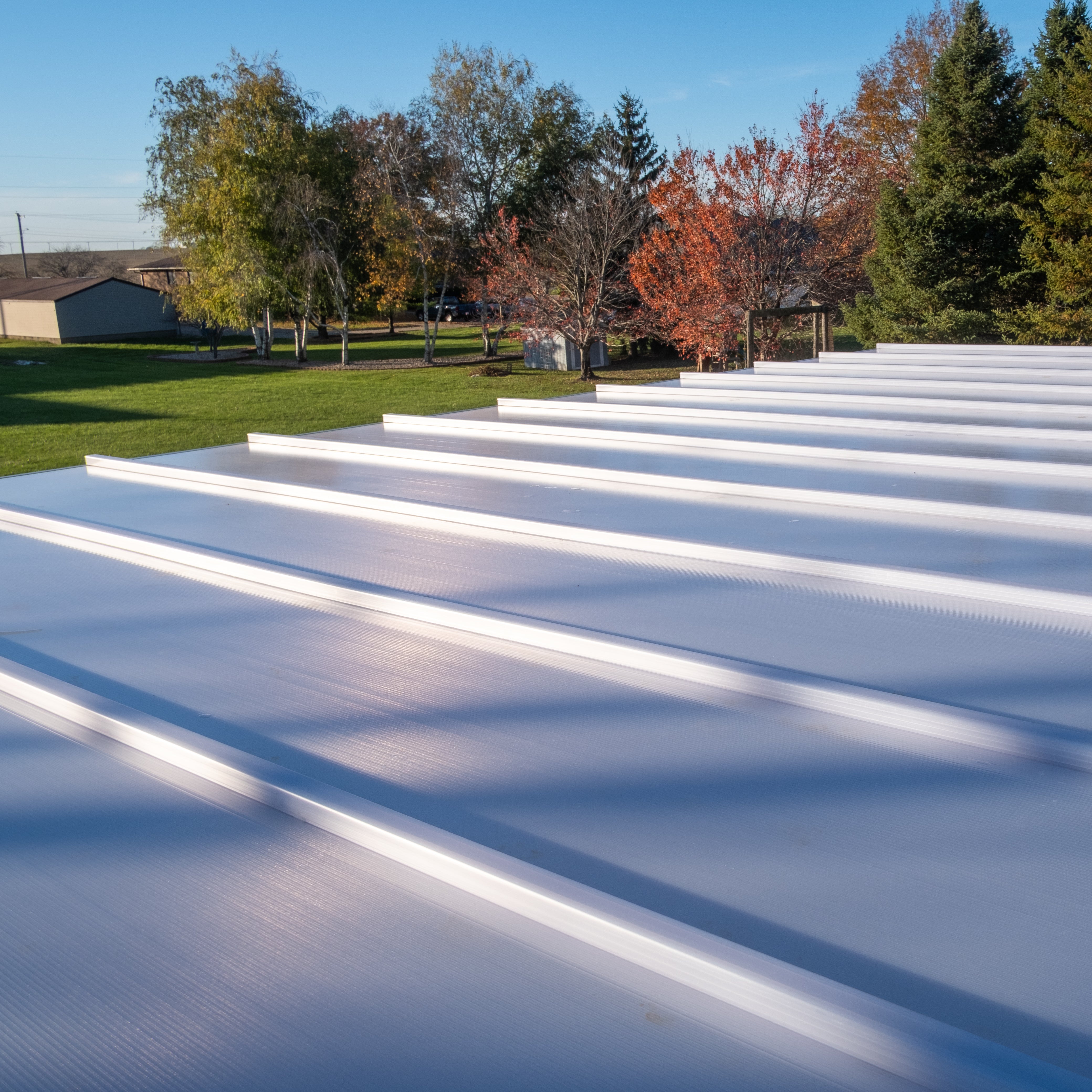 Where approved, begin with a gentle water rinse to remove pollen, dust, and other loose particles.
This initial rinse matters because small particles trapped between a cloth and a roof panel can act like abrasive material. Pressing those particles against the surface during wiping increases the risk of scratching.
Allow loose debris to wash away without using an aggressive spray or directing water into vulnerable joints and edges. Follow the panel manufacturer's instructions for water application.
Use the cleaner and dilution specified or approved for your particular panels. For many products, manufacturers recommend mild detergent and water, but this is not permission to use every household soap or cleaning concentrate.
Work in manageable sections so the cleaning solution can be controlled and rinsed according to the instructions. Do not leave chemicals on the panels longer than permitted.
If the manufacturer recommends testing a cleaner in an inconspicuous location first, complete that test before cleaning a larger area.
Using an approved soft cloth or sponge, lightly clean the wetted surface. Avoid pressing firmly against stubborn particles.
If dirt remains, rewet the affected area and repeat the approved method rather than increasing pressure. Keep the cleaning material free of trapped grit by rinsing or replacing it as needed.
Do not assume that a household scrub brush, window-cleaning pad, squeegee, or rotating cleaning attachment is suitable simply because it works on other exterior surfaces.
Rinse the panels using the manufacturer's specified method to remove loosened dirt and detergent residue. Pay attention to panel edges and areas where residue may collect, without directing forceful spray into the roofing assembly.
Where drying is recommended and safely accessible, use the approved material and method. Otherwise, let the roof dry naturally and inspect its appearance afterward.
A remaining mark does not necessarily mean the roof needs more aggressive scrubbing. First determine whether it is an unresolved deposit or a surface condition that routine cleaning cannot correct.
Some stains require more attention than routine dust removal. However, repeated scrubbing or increasingly aggressive chemicals can turn a minor cleaning problem into permanent surface damage.
Algae and organic buildup: Begin with the approved routine cleaning process. If material remains attached, ask the panel manufacturer whether a specific organic-deposit treatment is permitted. This is particularly important for cleaners marketed for roofs, decks, or mildew removal.
Bird droppings: Avoid scraping dried deposits. Wet and soften the material using an approved method, then remove it gently without dragging trapped grit across the panel.
Tree sap: Sticky deposits may resist ordinary washing. Do not assume that rubbing alcohol, citrus-based adhesive removers, mineral spirits, or other solvents are safe. Obtain approval for the exact spot-cleaning product and method before use.
Compatibility can vary considerably. An agent approved for one manufacturer's polycarbonate product may be restricted on another product or coating.
Mineral residue may remain visible even after ordinary dirt is removed. Before applying a descaler, vinegar solution, or polishing product, verify that the proposed treatment is compatible with the panels and their surface treatments.
Do not try to remove persistent spots with abrasive pads or repeated hard rubbing. If an approved cleaning method does not improve the appearance, contact the panel supplier for the next appropriate step.
Do not pressure wash polycarbonate patio roofing unless the manufacturer specifically permits the equipment and procedure for your panels.
Pressure washers can produce concentrated force at the spray tip. Palram cautions that directing a pressure-washer tip too close to its panels can damage or penetrate the material.1 An ordinary garden-hose rinse should not be confused with pressure washing.
Similarly, do not introduce the following without explicit compatibility guidance:
When ordinary cleaning fails, the safest next step is usually to identify a manufacturer-approved treatment rather than experimenting with increasingly aggressive products.
There is no single cleaning schedule that fits every polycarbonate patio roof. Start with the panel manufacturer's maintenance recommendations, then adjust inspection and cleaning based on the conditions around your patio.
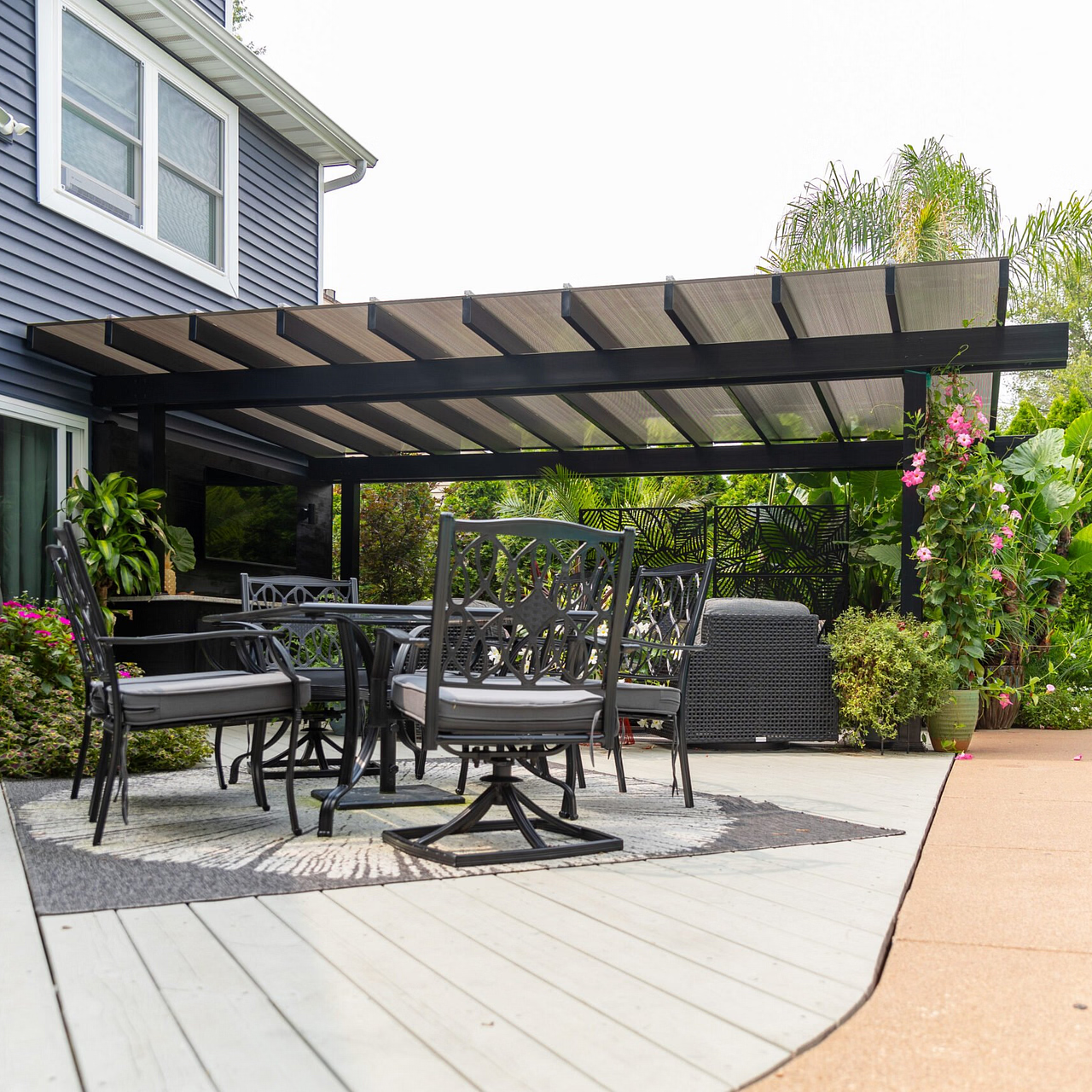 A roof beneath overhanging trees may collect leaves, pollen, sap, or bird droppings more frequently than a roof in an open yard.
Shaded locations and areas with persistent moisture may also experience more organic buildup. Conversely, an exposed roof with little surrounding vegetation may need attention less often.
Watch for:
These conditions are more useful scheduling signals than an arbitrary calendar reminder. Inspect the roof after periods of unusual debris accumulation, and clean when necessary using the approved method.
When inspecting the roof, also note accessible gutters or surrounding areas where leaves and debris are accumulating. Only remove material that can be reached safely and according to the relevant maintenance instructions.
For homeowners considering a new installation, roof height, surrounding trees, and cleaning access are practical ownership considerations. These are worth evaluating alongside the appearance and configuration of a rainproof patio cover.
Once an approved cleaning method has been completed, allow the panels to dry and inspect them from a safe position. The purpose is to determine whether additional cleaning is appropriate or whether the remaining appearance needs professional assessment.
A mark that responds to gentle, approved washing may be ordinary residue. A mark that remains unchanged after proper cleaning could involve a more persistent deposit or a change to the panel surface.
Do not assume cloudiness, yellowing, or visible scratches can be reversed with stronger cleaning chemicals or polishing.
Instead, document the affected area and consult the panel supplier or manufacturer. They can help determine whether the condition warrants further cleaning guidance, inspection, or another remedy.
Use this checklist before attempting another treatment:
If the answer raises uncertainty about compatibility, access, or damage, stop and obtain appropriate professional or manufacturer guidance. Continuing to scrub is not always the right solution.
Cleaning a polycarbonate patio cover roof is primarily about choosing a compatible method, removing loose grit before wiping, and working safely. Follow your panel manufacturer's instructions, address stubborn deposits only with approved treatments, and stop when a remaining mark may be outside routine maintenance.
For homeowners planning a future outdoor living space, our polycarbonate-roof patio covers combine solid rainproof roofing with aluminum-reinforced, vinyl-clad framing. Reviewing cleaning access and panel-care requirements before installation can help you enjoy the finished space with realistic maintenance expectations.
Not necessarily. Vinyl and polycarbonate have different cleaning compatibility requirements. A product approved for the vinyl frame should only be used on the roof panels if the panel manufacturer also approves it.
Yes. Where manufacturer instructions permit, rinse away loose dust, sand, and grit before wiping. Dry rubbing can drag abrasive particles across polycarbonate and scratch the surface.
No. Do not assume pressure washing is safe without explicit manufacturer approval. Concentrated spray force can damage roofing panels, and an ordinary water rinse is generally a more conservative starting method when permitted.
Not necessarily. Ordinary dust may be removed with an approved rinse and mild cleaning solution, while sticky sap may require a specific spot treatment. Verify chemical compatibility before applying solvents or adhesive removers.
Only if the panel manufacturer's instructions specifically permit it. Many polycarbonate cleaning procedures require prompt rinsing to prevent cleaning chemicals and residue from remaining on the surface. Follow the specified contact time and rinsing method.
No. Extendable tools can help reach some roof surfaces from a safe position, but roof height, slope, surrounding obstacles, and tool control may still create hazards. Professional cleaning is appropriate when the panels cannot be accessed safely.
Stop using stronger chemicals or abrasive methods. Persistent cloudiness could involve remaining deposits or a change to the panel surface. Contact the manufacturer or supplier for guidance rather than assuming additional cleaning will restore the appearance.


