

MADE IN THE USA
with American products
w/ American products


How long do vinyl pergolas last? If you're investing in a permanent shade structure for your patio, deck, or outdoor living area, the important question is whether it will remain safe, attractive, and useful throughout your years of ownership. Premium vinyl pergolas are designed with decades of service in mind, but their actual lifespan depends on construction, environmental exposure, installation quality, and care. Here's how to evaluate those factors and distinguish a credible longevity expectation from an unsupported promise.
A vinyl pergola's useful lifespan is the period during which the installed structure continues to perform its intended function safely and effectively. That is different from how long the material retains its original appearance or how long an individual component remains in service.
For a permanent pergola, the most important measure of longevity is whether its supporting structure remains suitable for continued use. Posts, beams, rafters, connections, and other structural elements must continue functioning together as intended.
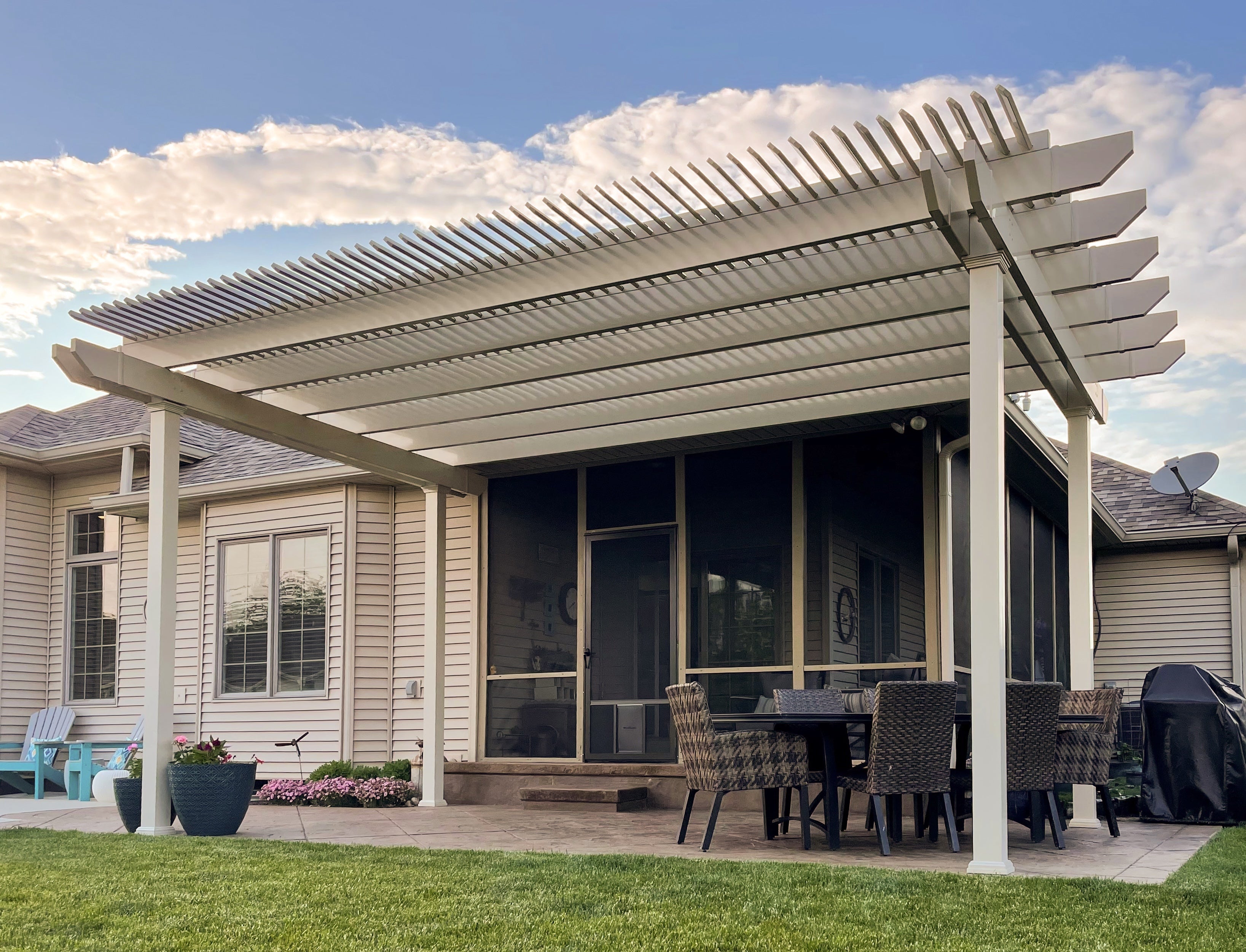 Appearance is another consideration, particularly for homeowners who want their outdoor spaces to maintain a polished, upscale appearance. However, cosmetic aging and structural performance are not necessarily the same thing. A change in appearance does not automatically establish that the entire pergola requires replacement.
Likewise, a structure that looks attractive is not necessarily free of installation or structural concerns. Assessing useful life requires considering both appearance and actual condition.
A pergola is an assembly of materials and connections rather than one indivisible product. Its structural frame, exterior vinyl, hardware, and roof components may not all have identical service lives.
This distinction is particularly important for a solid-roof patio cover. Its polycarbonate roof panels and supporting frame perform different functions and should not automatically be assigned the same expected replacement timeline.
The practical takeaway: Evaluate the continuing usefulness of the complete installed structure, while recognizing that individual components may require attention or replacement at different times.
There is no universally reliable number of years that describes every vinyl pergola's life expectancy. Material descriptions and warranty labels alone cannot establish how long a particular installation will remain serviceable.
For a meaningful estimate, look for evidence that relates to the actual product and the conditions in which it will be used.
If a supplier states that a pergola will last a particular number of years, ask what supports that estimate. Useful evidence may include:
Evidence from one model or installation should not automatically be applied to every pergola. Differences in structural materials, assembly, site exposure, and installation can materially change the relevance of an advertised lifespan.
Sunset Pergola Kits positions its premium aluminum-reinforced vinyl pergolas as permanent outdoor structures built for decades of ownership rather than temporary seasonal use.
That describes the intended ownership horizon and product positioning. It is not a measured prediction that every installation will remain serviceable for an identical number of years.
Homeowners comparing vinyl pergola kits should use that long-term positioning as a starting point for evaluating construction, manufacturer documentation, and installation suitability—not as a substitute for supporting evidence.
Construction quality establishes the starting point for long-term durability. Two pergolas with vinyl exteriors can have substantially different internal structures, material specifications, and assembly details.
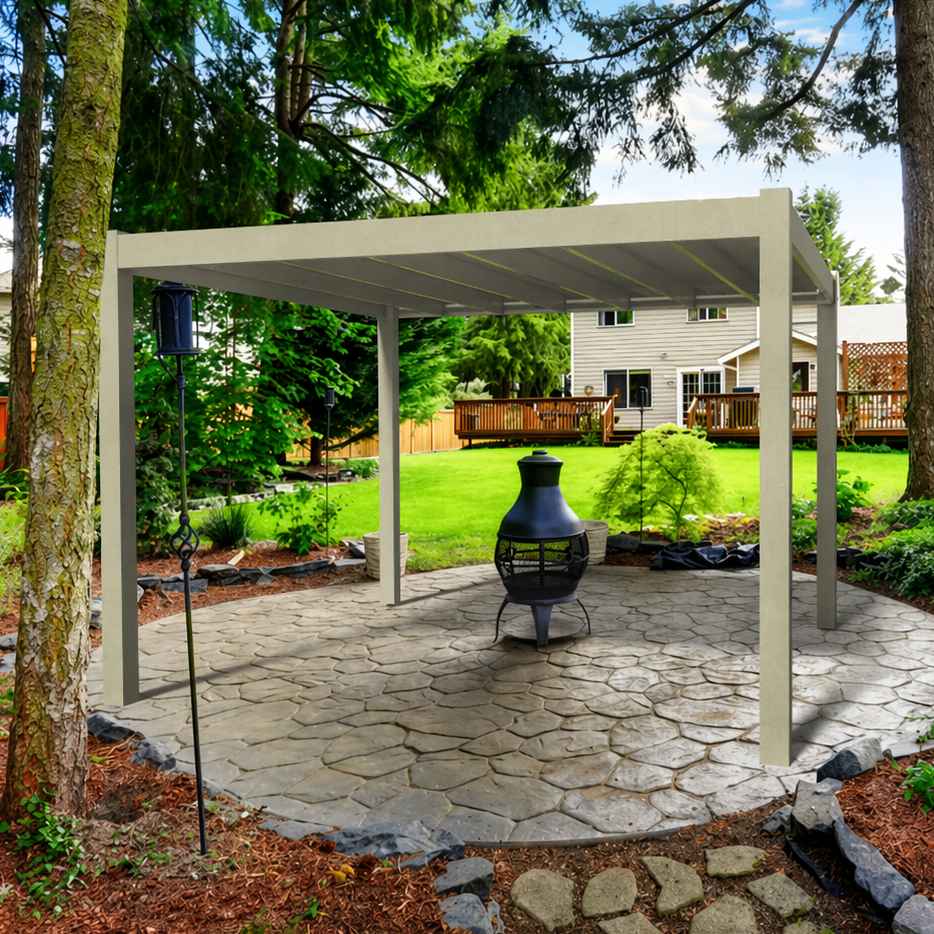 A critical distinction is whether vinyl forms the primary structural material or serves as an exterior surrounding an internal reinforcing frame.
Sunset Pergola Kits' traditional and modern pergolas use aluminum inserts inside their weight-bearing posts, beams, and rafters. The aluminum provides structural strength while the vinyl forms the exterior surface.
Aluminum reinforcement allows a pergola to combine the appearance and low-maintenance characteristics of vinyl with the structural benefits of metal framing. The actual durability of an assembly still depends on its engineering, dimensions, connections, and intended installation conditions.
For buyers evaluating longevity, asking whether a pergola is reinforced is a useful first question. The more important follow-up is understanding how that reinforcement is incorporated throughout the structure.
Vinyl quality also influences the ownership experience. Sunset Pergola Kits uses premium extruded vinyl that is colored throughout the material rather than relying on a painted exterior finish.
Because the color is incorporated into the vinyl, the pergola does not require the recurring painting or staining associated with some other exterior materials.
However, not every product marketed as a vinyl pergola uses the same vinyl formulation, material dimensions, manufacturing methods, or quality controls. Those differences matter when comparing long-term performance claims.
Ask a manufacturer for relevant material specifications and product documentation rather than assuming that all vinyl products offer equivalent durability.
Strong structural materials are only part of a durable pergola. The way the members are assembled and connected is also important.
A permanent pergola must function as an integrated structure. Its posts, beams, rafters, fasteners, and attachment points all contribute to its ability to remain serviceable.
When comparing products, examine the manufacturer's assembly information and installation requirements. Clear installation documentation helps homeowners and contractors understand how the components are intended to work together.
Buying implication: Evaluate the complete structural system, not simply the visible vinyl exterior or a general claim of heavy-duty construction.
A pergola's environment and installation can change its long-term ownership outlook even when the underlying product is identical.
Consider two identical vinyl pergolas. One is installed in a relatively sheltered backyard. The other stands in an exposed location subject to frequent strong winds, intense sun, and substantial seasonal weather.
Both pergolas may be designed for permanent installation, but their exposure conditions differ. The second location places different demands on the structure and its components.
Relevant environmental considerations include:
These factors do not establish a specific reduction in lifespan. They explain why performance information from one location may not be directly transferable to another.
Installation quality matters because the pergola must remain securely supported and connected throughout its intended use.
For both freestanding and attached pergolas, the manufacturer-required installation method should be appropriate for the property and its conditions. An attached pergola also relies on its connection to the supporting building.
A structurally capable pergola kit cannot compensate for an unsuitable installation. Homeowners should confirm that the proposed installation follows the manufacturer's instructions and applicable local requirements.
The goal is not to find a universal lifespan number. It is to establish that the specific product and proposed installation are appropriate for the conditions at your property.
For example, a homeowner comparing a freestanding pergola with an attached pergola should consider how each installation will be supported and what manufacturer requirements apply.
Before relying on a long-term durability claim, request documentation relevant to your location, chosen configuration, and intended installation.
One of vinyl's major ownership advantages is that it does not require regular painting or staining. That reduces ongoing maintenance work, but it does not eliminate the need to care for and monitor a permanent outdoor structure.
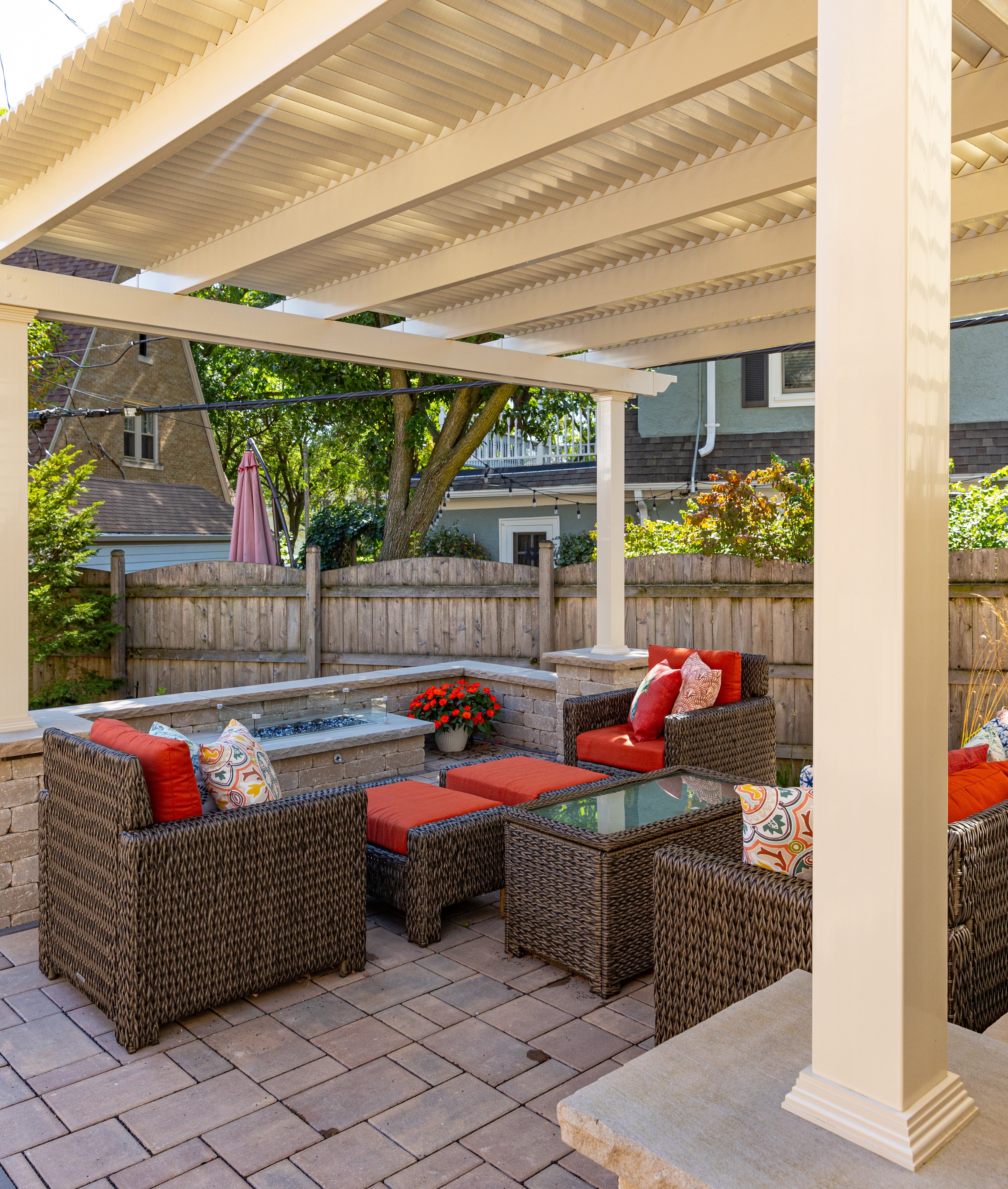 Keeping the pergola clean helps maintain its appearance and provides opportunities to observe the condition of its exterior components.
Follow the manufacturer's cleaning instructions and use only methods and products appropriate for the materials. Routine cleaning should be treated as part of ownership rather than as a structural repair procedure.
Condition checks are important even for a low-maintenance pergola. They help homeowners recognize concerns that might otherwise go unnoticed.
Areas worth observing include:
Follow manufacturer guidance for inspections and any recommended maintenance. If you notice a potentially significant structural concern, arrange an assessment by a qualified professional rather than assuming the pergola remains safe because of its age or warranty.
Visible changes to an exterior material may affect appearance without necessarily establishing that the entire structure has reached the end of its useful life.
Conversely, a structural or connection concern may warrant attention regardless of how new or attractive the pergola looks.
Ownership implication: Make maintenance and replacement decisions based on the condition and function of the relevant components, not appearance or age alone.
No. A lifetime warranty and a predicted service life answer different questions.
A warranty describes the manufacturer's stated coverage commitments under its written terms. Service life describes how long a product or component actually remains suitable for its intended purpose.
A warranty should therefore be considered useful supporting information, but not proof that every pergola will provide an unlimited number of years of service.
Sunset Pergola Kits offers lifetime warranties on its traditional and modern vinyl pergolas. Its fully covered rainproof patio covers have a lifetime frame warranty and a separate 10-year roof warranty.
These different coverage periods illustrate why the frame and roof should not automatically be treated as having identical ownership horizons.
A 10-year roof warranty does not, by itself, establish that the roof will fail or require replacement at year ten. Likewise, a lifetime frame warranty is not a measured prediction that the frame can never require attention.
Homeowners considering rainproof patio covers should evaluate the longevity of the supporting structure and solid roof components separately.
Before choosing a pergola for long-term ownership, make sure you can answer these questions:
The more thoroughly these questions can be answered, the stronger the basis for confidence in the pergola's long-term suitability.
Premium vinyl pergolas are intended to be long-term outdoor investments, with well-built aluminum-reinforced systems designed for decades of useful service. However, their actual life expectancy cannot be reduced to one guaranteed number of years.
The strongest longevity assessment considers documented construction quality, suitable installation, environmental exposure, ongoing care, and the condition of individual components. A lifetime warranty adds useful context, but it should never replace that evidence.
When comparing permanent pergola options, focus on products with clearly explained construction and installation requirements. That provides a more meaningful basis for long-term ownership than an unsupported lifespan promise.
No. A lifetime frame warranty describes coverage for the frame under the manufacturer's written terms. Roof panels, hardware, exterior materials, and other components may have different service lives or warranty coverage. Sunset Pergola Kits' rainproof patio covers, for example, have a lifetime frame warranty and a separate 10-year roof warranty.
Yes. Vinyl pergolas can differ in reinforcement, material quality, assembly, installation, and environmental exposure. Those differences can influence how long each structure remains serviceable. Comparing documented construction and installation requirements is more meaningful than assuming every vinyl pergola has the same lifespan.
No. Age alone does not establish whether a pergola remains suitable for use. Its structural condition, connections, installation, and individual components matter more. A qualified professional should evaluate concerns that could affect safety.
Not necessarily. A solid polycarbonate roof and its supporting frame are different components that may have different service lives and warranty periods. Homeowners considering rainproof patio covers should assess the roof and frame separately rather than assuming they will require replacement at the same time.
No. Vinyl pergolas do not require routine painting or staining, but the installed structure should still receive appropriate cleaning and condition checks. Manufacturer-directed care and attention to visible connections or damage help support continued useful service.
Ask for documentation describing structural reinforcement, vinyl materials, installation requirements, relevant performance evidence, maintenance guidance, and written warranty coverage. If the supplier quotes a lifespan in years, ask what product evidence and environmental assumptions support that estimate.


