

MADE IN THE USA
with American products
w/ American products


Do polycarbonate roof panels yellow, become cloudy, or develop scratches after years outdoors? They can, but not every visible change indicates permanent deterioration. If you're considering a premium patio cover, understanding the difference between surface deposits, physical damage, and changes within the roofing material will help you evaluate its appearance over time—and know which questions to ask before purchasing.
The first step in evaluating a polycarbonate patio roof is identifying what has actually changed. A panel that looks yellow, cloudy, or dull may be showing a surface condition rather than deterioration of the material itself.
These distinctions matter because each condition has different causes and implications.
| Appearance | Possible Explanation | What to Evaluate |
|---|---|---|
| Original white or bronze tint | Intentional factory color | Compare with the panel's original appearance |
| Cloudy or hazy areas | Deposits, fine scratches, or material changes | Determine whether the haze is on the surface or persists within the panel |
| White spots or streaks | Mineral deposits or environmental residue | Consider water exposure and deposit patterns |
| Fine lines or dull patches | Surface scratching or abrasion | Examine whether marks follow contact or cleaning patterns |
| Progressive yellowing | Possible material discoloration from weathering | Compare with earlier photographs and review panel specifications |
This table identifies possible causes, not definitive diagnoses. A close examination and relevant manufacturer documentation may be necessary to distinguish them.
 Polycarbonate roofing does not always begin as a perfectly transparent, colorless sheet. Some panels are manufactured with an intentional tint or light-diffusing appearance.
Sunset Pergola Kits offers solid polycarbonate patio-cover roofs in two colors: white and bronze. These are original roof-color options, not evidence of discoloration.
For example, a bronze roof may naturally give transmitted daylight a warmer appearance than a white roof. That does not mean the bronze material has yellowed.
To evaluate an actual change, compare the panel with its own documented original condition—not with a different roof color or a photograph of an unrelated product.
A cloudy-looking polycarbonate roof may have accumulated residue on its exposed surfaces. Alternatively, its appearance could reflect scratching, surface degradation, or changes within the material.
The distinction is important: surface contamination and permanent deterioration should not be treated as the same problem.
Likewise, a panel may remain functional as a roof while becoming less visually attractive. Appearance and overall structural usefulness are separate considerations.
The best evidence of long-term appearance retention comes from documentation for the specific polycarbonate panels being purchased—not general statements about polycarbonate as a material.
Sunlight can contribute to the deterioration of unprotected polycarbonate, potentially affecting its color and optical properties. Some manufacturers address this by incorporating specialized UV-protective layers into their roofing sheets.
For example, polycarbonate manufacturer Palram explains that certain products incorporate co-extruded UV-resistant layers to protect the sheets themselves. Some products have protection on one side, while others offer protection on both sides.1
This illustrates why panel construction matters. Two products described simply as "polycarbonate roofing" may have different protective features and different expected weathering performance.
Sunset Pergola Kits states that both its white and bronze polycarbonate roof options provide 100% UV protection.
However, a claim about blocking UV radiation from passing through the roof does not automatically establish that the panel itself cannot yellow, cloud, or otherwise change appearance.
Those are separate performance questions:
Before purchasing, ask for panel-specific documentation addressing the second and third questions rather than relying on the UV-blocking claim alone.
For an upscale patio where roof appearance matters, useful questions include:
Published weathering data, product specifications, and written warranty terms provide a stronger basis for evaluating appearance retention than a general promise that a roof is UV protected.
Not every reduction in apparent clarity comes from sunlight or material aging. Environmental deposits and surface contact can affect the look of a polycarbonate roof even when its underlying color has not changed.
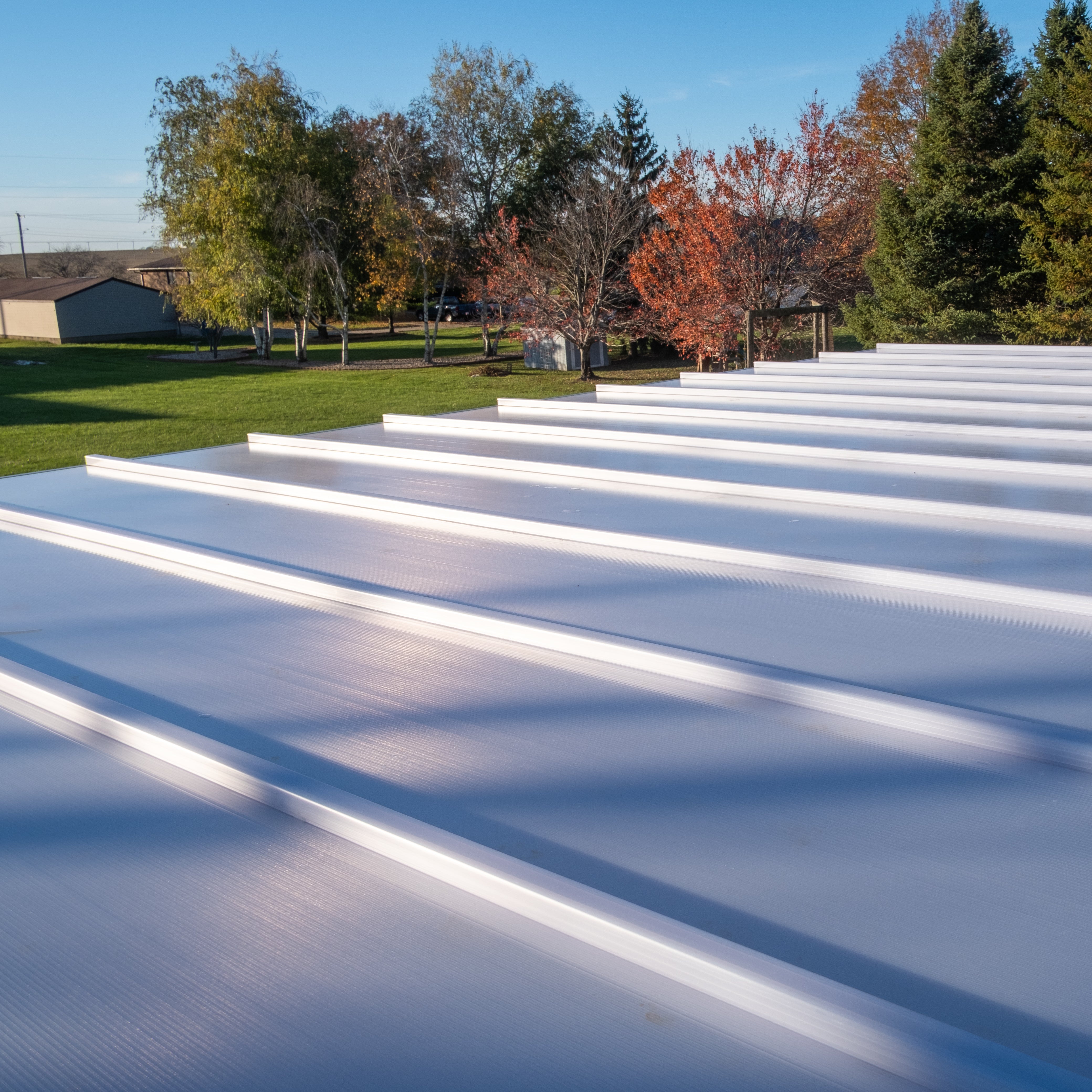 Water containing dissolved minerals can leave visible residue as it evaporates. Dust, pollen, and other environmental materials may also accumulate on exposed roofing surfaces.
These deposits can create spotting, streaking, or a cloudy appearance, particularly when viewed against the light.
Consider a covered patio near landscaping irrigated by sprinklers. Repeated overspray might leave mineral residue on the roof, making its surface appear duller over time.
That appearance should not automatically be classified as UV-related discoloration.
Persistent marks still deserve attention, however, because not every stain is necessarily removable or harmless.
Polycarbonate is a durable roofing material, but that does not mean its exposed surface is immune to scratching.
Fine abrasions can scatter incoming light, creating a hazy or less glossy appearance without necessarily changing the original color of the material.
Potential sources of abrasion include:
Scratch resistance may differ between individual polycarbonate products and protective surface treatments. Do not assume that a panel is scratchproof without supporting specifications.
Certain chemicals may be incompatible with particular polycarbonate products or their surface treatments.
Depending on the product and exposure, incompatible substances can potentially contribute to visible surface damage or changes in clarity. This should not automatically be confused with yellowing caused by sunlight.
The safest purchasing approach is to obtain the actual panel manufacturer's care restrictions and chemical-compatibility information. Avoid assuming that a product approved for glass or another roofing material is necessarily appropriate for polycarbonate.
Likewise, do not assume that polishing or chemical treatment can restore a panel that has undergone permanent material changes.
The same polycarbonate roofing product can encounter very different environmental conditions depending on where it is installed.
Evaluating the setting helps distinguish realistic appearance concerns from unsupported assumptions about how quickly a roof will deteriorate.
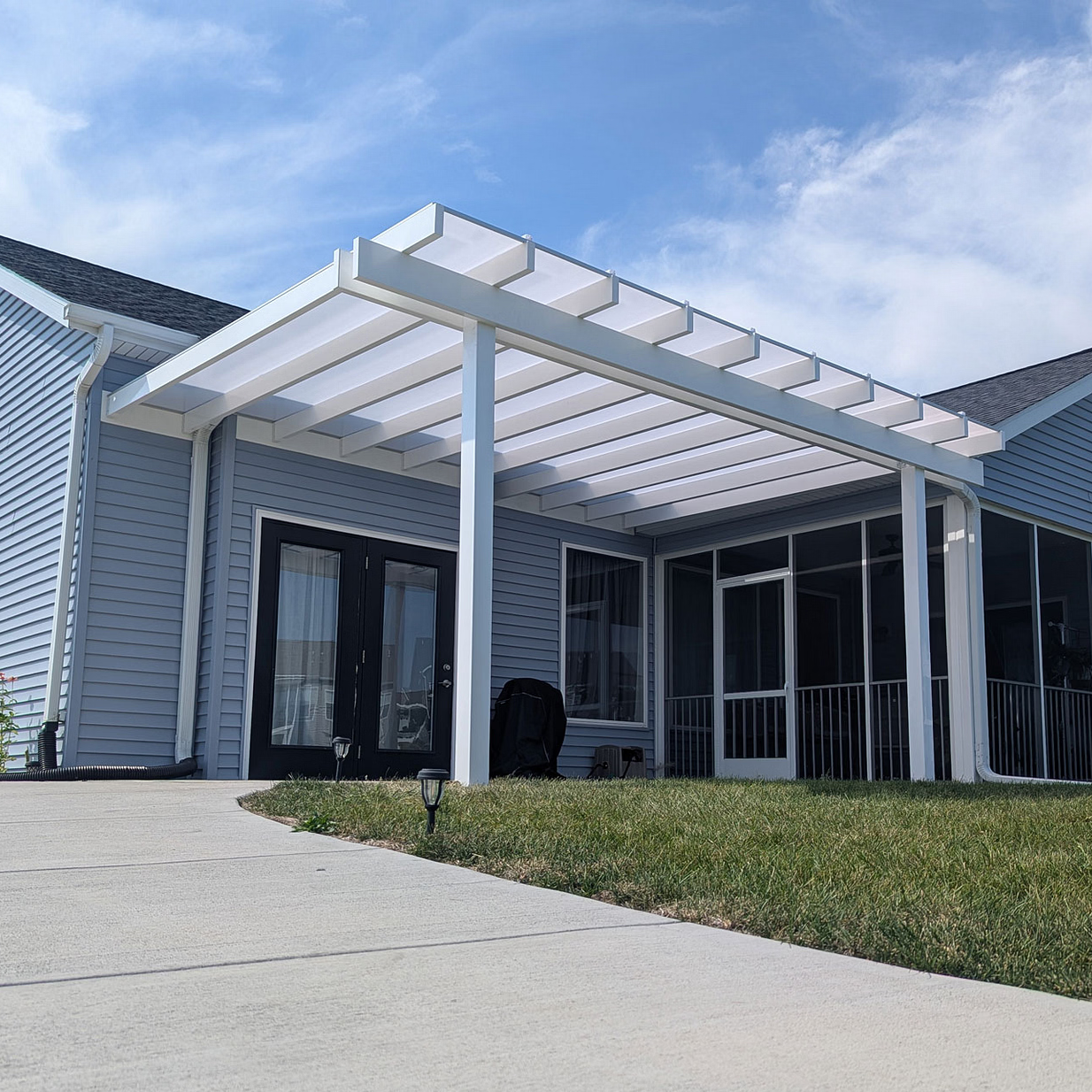 A roof on an open, sun-exposed patio may receive substantial direct sunlight during the year.
In this setting, documented outdoor weathering performance becomes especially relevant. Ask whether the panel's UV-protective construction and appearance-retention information address prolonged outdoor exposure.
However, sunlight exposure alone cannot establish when—or whether—a particular roof will visibly yellow. Panel specifications and actual conditions matter.
A covered patio surrounded by mature trees, landscaping, or irrigation equipment may face more frequent surface contamination.
Water spots, pollen, dust, and other deposits can affect how the roof looks from below or from an upper-story window.
In this setting, a homeowner may be more concerned about surface staining and visible residue than material discoloration.
The practical question is whether the chosen panels have clearly documented care requirements compatible with the property's conditions.
A polycarbonate roof may look different under direct sunlight, overcast skies, or evening light—even if its physical condition has not changed.
Viewing angle, reflections, background colors, and camera settings can all influence apparent tint and clarity.
For reliable comparisons, examine photographs taken under reasonably similar lighting and viewing conditions. Comparing a shaded photograph with one taken directly into bright sunlight may exaggerate a suspected change.
This is particularly relevant when evaluating white or bronze panels because their intended optical appearances differ.
For homeowners investing in a permanent outdoor living area, appearance retention can be just as important to satisfaction as the roof's rain protection.
Consider how visible the roofing will be from the house, upper-floor windows, pool area, or neighboring outdoor spaces.
White and bronze panels offer different visual effects. Neither color should be assumed to have superior resistance to yellowing or scratching without panel-specific evidence.
When comparing rainproof patio covers, review both the initial roof appearance and the documentation supporting how that appearance is expected to hold up outdoors.
If an installed polycarbonate roof appears to be yellowing, clouding, or developing unusual surface marks, documenting the condition can help separate routine appearance concerns from issues that deserve supplier review.
Keep a concise record that includes:
Whenever possible, photograph comparable areas under consistent lighting conditions. Avoid relying on color differences between unrelated products as proof of deterioration.
A question about ordinary dust or water spots may primarily concern surface care.
Supplier assessment becomes more relevant when there is reason to suspect a persistent change in the panel itself, such as unexplained discoloration, recurring haze after appropriate care, or unusual patterns affecting particular panels.
Do not attempt abrasive or chemically aggressive restoration methods before establishing what the manufacturer recommends, especially if a warranty review may be needed.
Sunset Pergola Kits offers a lifetime warranty on its patio-cover frame and a 10-year warranty on the polycarbonate roof.
However, the stated roof-warranty duration alone does not establish that every cosmetic change is covered.
Before purchasing—or assuming an existing appearance issue qualifies for warranty service—verify the applicable written terms, including:
A warranty should be evaluated according to its actual coverage, exclusions, and remedies rather than its duration alone.
Finally, keep appearance concerns separate from questions about the overall usefulness of the patio cover. A visible surface change does not, by itself, establish that the entire structure needs replacement.
Polycarbonate roof panels can develop yellowing, cloudiness, staining, or scratches, but those changes have different causes and should not be treated as interchangeable. Surface buildup may affect appearance without indicating material deterioration, while persistent discoloration or haze may warrant closer evaluation.
For a new patio cover, the most useful approach is to evaluate the actual panel's UV protection, appearance-retention documentation, care restrictions, and warranty terms. If you're considering a permanent covered outdoor space, explore Sunset Pergola Kits' polycarbonate-roof patio covers and request the panel-specific information that matters most for your property.
1. Palram Americas. "FAQs" — explanation of UV-resistant co-extruded layers, one-sided and two-sided UV protection, and the distinction between blocking UV transmission and protecting the polycarbonate sheet itself. palram.com/us/faq/
No. Bronze is an intentional roof-panel color. Yellowing refers to a change from the panel's original appearance. Compare the panel with its own original condition rather than a different roof color.
Yes. Dust, mineral residue, and environmental deposits can create a cloudy or hazy appearance. However, persistent cloudiness can also result from scratching or material changes, so appearance alone does not establish the cause.
Yes. Fine surface scratches can scatter light and make polycarbonate appear dull or hazy without necessarily changing its underlying color. Scratch resistance depends on the particular panel and any protective surface treatment.
No. Blocking UV radiation from passing through a panel and resisting discoloration from outdoor weathering are different performance characteristics. Ask for documentation addressing the specific panel's color retention and weathering resistance.
Yes. Lighting, reflections, viewing angles, and camera settings can affect apparent roof color. Compare photographs taken under similar conditions whenever possible before concluding that the panel has discolored.
No. Sunset Pergola Kits offers a 10-year warranty on its polycarbonate roof, but that duration alone does not establish coverage for yellowing, clouding, scratches, or stains. Review the applicable written warranty for specific coverage, exclusions, and remedies.
Yes. Differences in factory tint, panel construction, lighting, and surface condition can make comparisons between different roofs misleading. Original installation photographs and documentation provide a more useful reference for identifying changes.


