

MADE IN THE USA
with American products
w/ American products


Home ▸ Pergolas by WxD Dimensions ▸ 10x20 Pergolas
Shop 10x20 pergolas in traditional freestanding or attached configurations, modern attached designs, and freestanding or attached rainproof patio covers. Slatted pergolas offer fixed 50%, 75%, or 90% shade choices, while patio covers use solid polycarbonate roofing for rain protection. Available options include white, tan, or black vinyl exteriors, with family-specific choices for post placement and overhangs. The long 10-by-20-foot footprint is especially well suited to arranging dining and compact lounging in sequence. [read more]


A 10x20 pergola has a nominal roof footprint measuring 10 feet wide by 20 feet deep, for a mathematical roof-footprint area of 200 square feet. Its 2:1 proportion creates a distinctly long rectangle: the 10-foot dimension governs crosswise planning, while the 20-foot dimension provides enough length to organize activities sequentially rather than as one broad furniture grouping.
For an attached installation, the 10-foot width runs along the structure and the 20-foot depth projects outward. That makes an attached 10x20 a relatively narrow connection to the house with a much deeper projection into the patio or outdoor space.
For a freestanding structure, 10x20 and 20x10 describe the same physical rectangle after a 90-degree rotation. The label still matters when planning how the long axis relates to furniture, paths, doors, and nearby features, but rotation does not create a different amount of roof area.
This size is available as a traditional pergola in both four-post freestanding and two-post attached configurations. A rainproof patio cover is also available in both four-post freestanding and two-post attached configurations. A modern pergola is available as an attached configuration in the stated 10-foot-wide by 20-foot-deep orientation; freestanding modern availability belongs to the rotated 20x10 orientation.
| Specification | 10x20 Details |
|---|---|
| Roof Size | 10 ft wide × 20 ft deep nominal roof footprint |
| Covered Area | 200 sq ft nominal horizontal roof-footprint area; not a guarantee of usable, shaded, or rain-protected interior area |
| Shape | Long 2:1 rectangle |
| Best Uses | Sequential dining and compact lounging |
| Typical Overall Layout | A rectangular dining group followed by a compact sofa-and-chair area arranged along the long axis |
| Available Styles | traditional pergola, modern attached pergola, and rainproof patio cover |
| Available Install Types | traditional and rainproof: freestanding or attached; modern: attached in the stated 10x20 orientation |
| Roof Options | Fixed slatted roofs with 50%, 75%, or 90% shade choices, or a solid polycarbonate rainproof roof |
| Standard Kit Size | 10x20 |
| Smaller Comparison | 10x18 for a shorter 10-foot-wide footprint with a less developed secondary zone |
| Larger Comparison | 10x24 for more length, or 12x20 for more crosswise room |
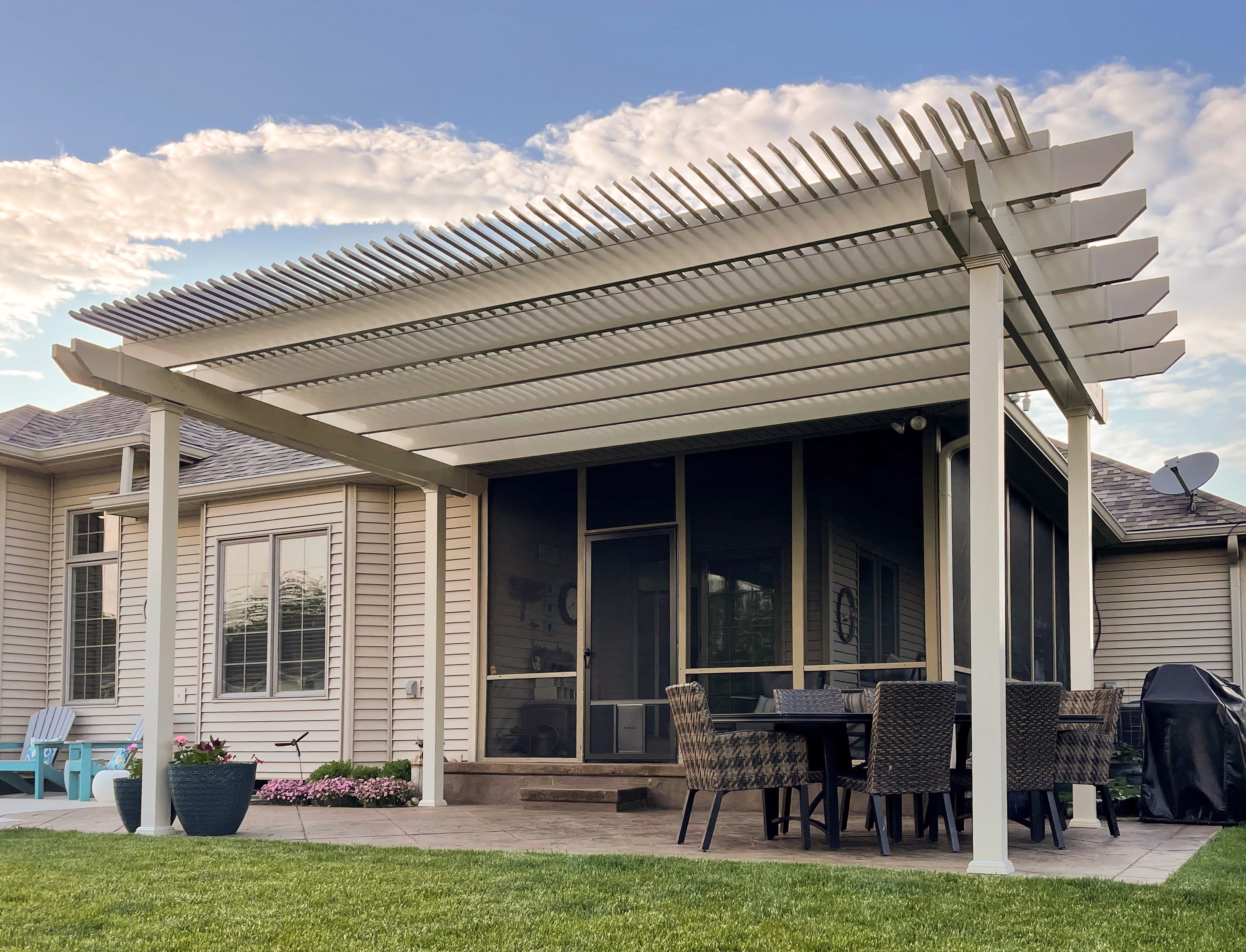
A 10x20 pergola makes the most sense when the project benefits from length more than width. The 20-foot run can create recognizable separation between two linked activities, while the 10-foot width keeps both furniture groups relatively narrow.
This proportion works particularly well when dining and lounging should feel distinct without requiring two broad outdoor rooms. A rectangular dining group can occupy one portion of the long axis, followed by compact lounge seating farther along the same direction. The result is a progression from one activity to the next rather than one large, square-feeling social space.
The extra depth is meaningful compared with a 10x18 pergola. Two additional feet along the long axis can make the transition into a second activity zone feel more intentional, especially when that secondary zone is meant to function as actual seating rather than simply leftover space at the end of the dining area.
If the second activity is minor, the 10x18 may accomplish the same basic plan with less overall depth. At the other end of the decision, a 12x18 can be more appropriate when both dining and lounging need broader crosswise furniture arrangements rather than additional longitudinal separation.
The important question is not simply whether 200 square feet sounds sufficient. In a 10x20 footprint, those 200 square feet are distributed through a narrow 10-foot band. If wider furniture groupings or more lateral interaction matter more than an elongated two-zone sequence, added width can be more useful than added length.
The representative layout for this footprint is a rectangular dining group followed by a compact sofa-and-chair area. This arrangement uses the 20-foot dimension to separate activities while respecting the fact that the 10-foot width remains the principal constraint on furniture composition.
Think of the long axis as the organizing line for the entire space. Dining can occupy the first portion of the footprint, with compact lounge seating continuing beyond it rather than spreading beside it. That arrangement makes better use of the 20-foot depth and gives each activity a recognizable place without requiring either one to become especially broad.
This is different from treating the pergola as two unrestricted rooms. The length helps create separation, but it does not widen either zone. Large furniture in both areas can quickly consume the short axis and make movement between the two activities feel more constrained.
The 10-foot dimension encourages furniture to stay aligned with the overall length of the structure. Crosswise pieces should be selected with the narrow band in mind, particularly where movement needs to pass alongside or between the dining and lounge portions.
Circulation should be considered as part of the sequence rather than as an independent corridor with assumed clearances. A practical arrangement avoids forcing routine movement through the center of both activity groups. Exact furniture sizes, post locations, and usable clearances vary by configuration and should be considered during the final layout.
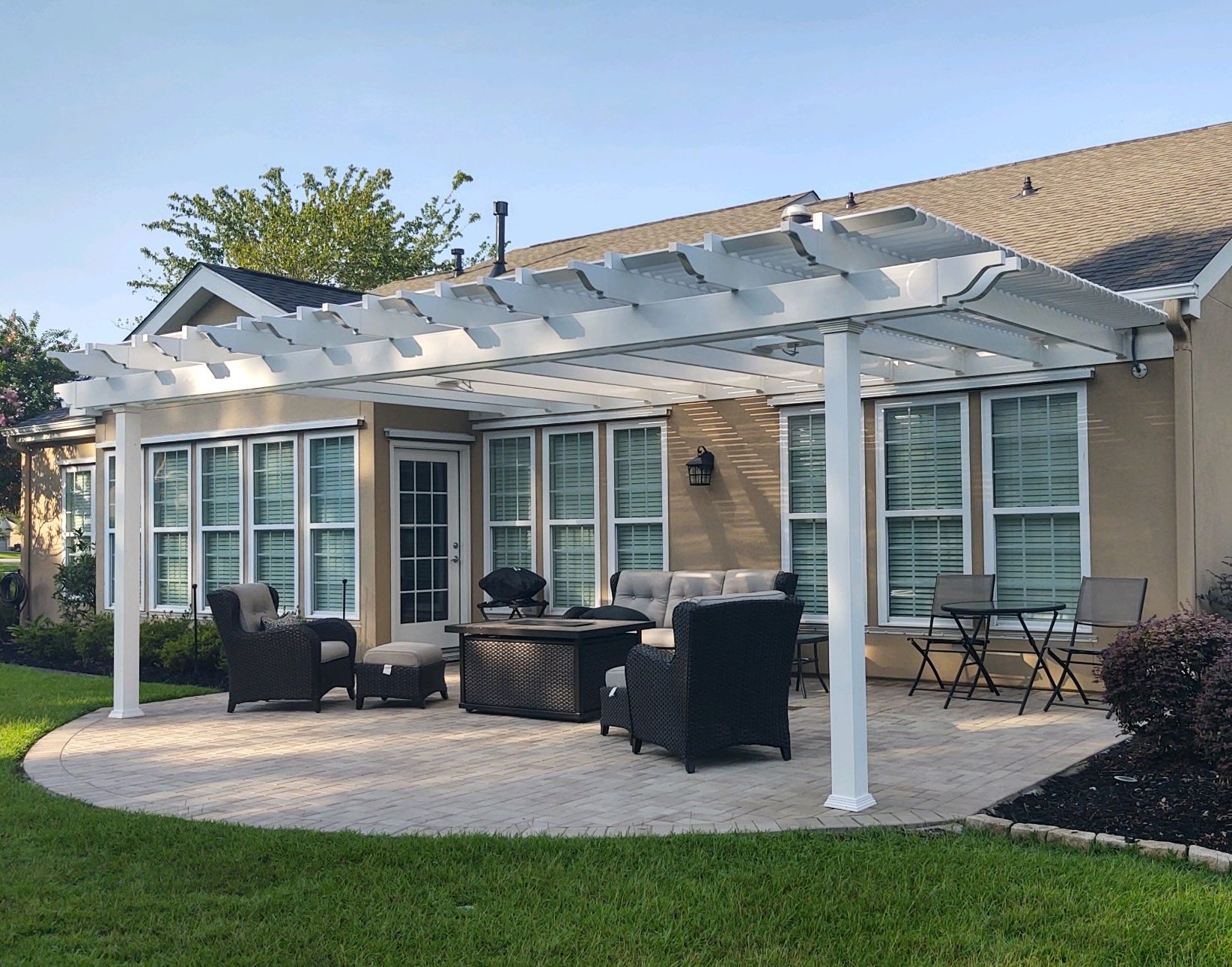
The 10x20 shape is well matched to sites where the outdoor area naturally extends in one direction. Long, narrow patios and similarly elongated hardscapes can take advantage of the 20-foot run without requiring the broader lateral space associated with wider pergola sizes.
A site does not need to be unusually narrow, but the layout should benefit from a clear directional flow. The strongest fit occurs when furniture, circulation, and the surrounding patio already suggest a sequence from one end of the covered footprint to the other.
That can make the pergola feel intentionally zoned even though each individual furniture grouping remains limited by the 10-foot width. The same 200-square-foot area arranged as a 20x10 attached footprint would create a very different relationship to the structure because its long side would run along the wall instead of projecting outward.
Before choosing the final orientation, consider where people enter the space and how they move between the house, patio, yard, and nearby features. A deep attached 10x20 layout can work well when those movement patterns naturally follow the long axis, while a freestanding version can be rotated to align the long dimension with the most useful direction on the site.
The goal is to let the pergola reinforce the existing direction of the outdoor room rather than create a long roof footprint that conflicts with major access points or forces movement through the center of a furniture zone.
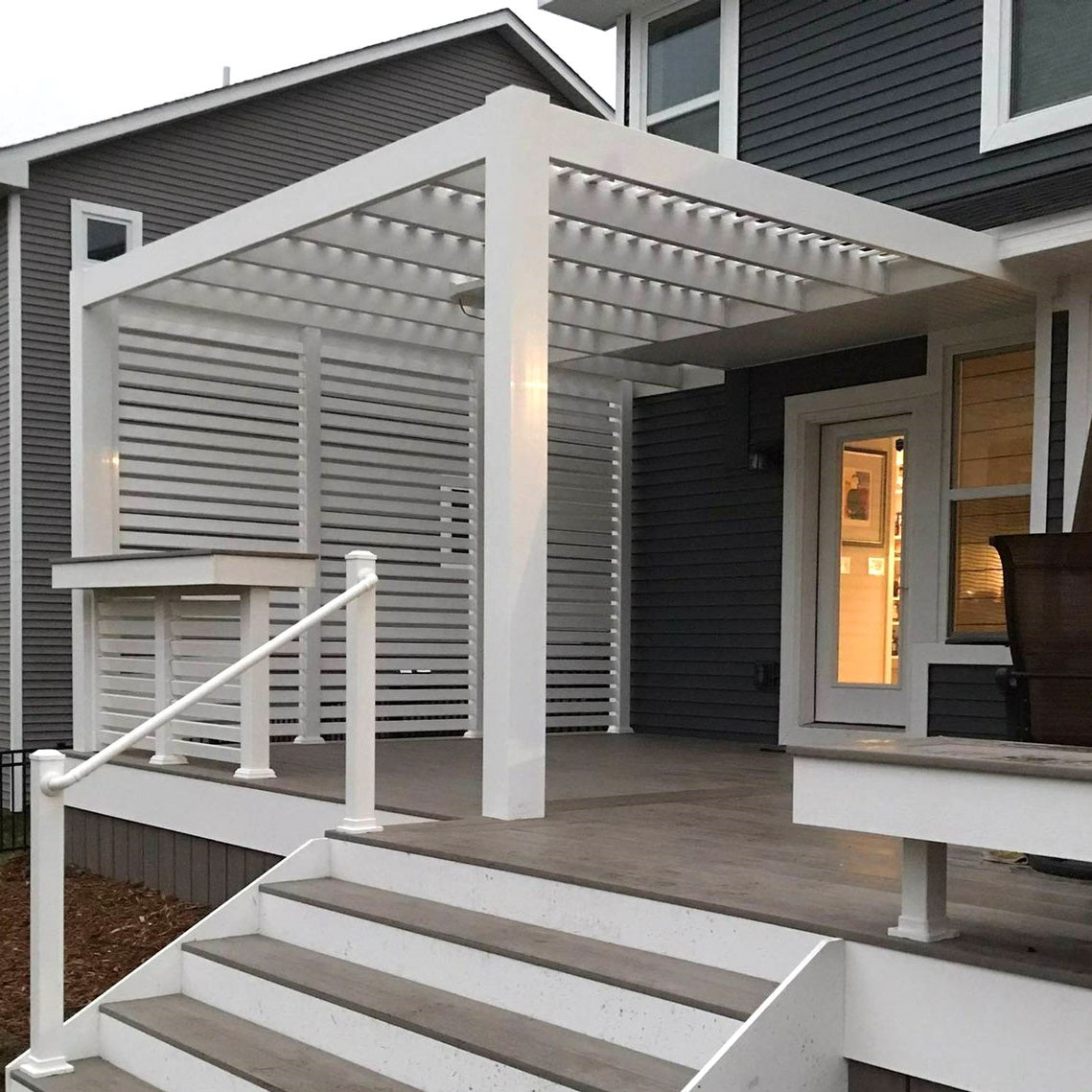
The elongated 10x20 footprint behaves differently depending on whether it is attached or freestanding and which product family is selected. Roof geometry, post treatment, overhang choices, and the relationship between the roof outline and supporting posts can all affect how the two-zone plan is organized.
In an attached 10x20 configuration, 10 feet runs along the structure and the pergola projects 20 feet outward. That creates a short wall connection and a deep outdoor room. By contrast, an attached 20x10 pergola places the 20-foot dimension along the structure and projects only 10 feet outward.
The distinction can materially change where dining and lounge zones sit relative to doors and the house. Buyers who want the activity sequence to extend away from the structure may prefer the 10x20 orientation, while a long frontage along the building points toward the rotated attached layout.
A freestanding 10x20 is physically the same rectangle as a freestanding 20x10 after rotation. What changes is its relationship to the surrounding site: the long axis may align differently with furniture, circulation, nearby features, and the direction of shade created by the fixed roof slats.
Rotation therefore affects planning without changing the actual rectangle. It should be treated as a placement decision rather than as a claim that one freestanding label provides more room than the other.
A traditional pergola can use corner posts or inset posts and allows beam and rafter overhangs up to 36 inches. Those choices mean the roof footprint and the space between supporting posts are not necessarily identical. Rainproof patio covers similarly allow corner or inset posts, with overhangs up to 24 inches.
For a modern pergola, the 10x20 stated orientation is an attached configuration using the applicable additional supports for this size. Modern designs retain corner posts, do not offer optional inset-post positioning, and use flush roof lines without beam or rafter overhangs. Exact support locations and spacing should not be inferred from the nominal roof dimensions alone.
Nearby sizes clarify what the 10x20 does especially well: it creates a genuine two-zone sequence without becoming wider than 10 feet. The tradeoff is that added length cannot substitute for crosswise room when furniture groupings need to spread laterally.
| Pergola Size | Covered Area | Main Difference | Best Choice When |
|---|---|---|---|
| 8x20 | 160 sq ft nominal roof footprint | Two feet narrower, creating a tighter single furniture band | Site width is the binding constraint and a simpler dining-plus-service sequence is sufficient |
| 10x18 | 180 sq ft nominal roof footprint | Same width with two fewer feet of depth, reducing separation at the secondary end | Dining is primary and the second use can remain modest |
| 10x20 | 200 sq ft nominal roof footprint | 2:1 rectangle that supports two narrow sequential zones | Dining and compact lounging need recognizable separation within a 10-foot-wide plan |
| 10x24 | 240 sq ft nominal roof footprint | Adds four feet of length without adding crosswise room | A third linked function, such as a distinct service segment, genuinely needs its own place |
| 12x20 | 240 sq ft nominal roof footprint | Adds two feet of width for more developed crosswise furniture arrangements | Both activity zones need broader furniture groupings |
| 20x10 | 200 sq ft nominal roof footprint | Same freestanding rectangle, but reversed attached width and projection | An attached project needs the long dimension along the structure instead of projecting outward |
The comparison also shows why total area alone is not enough. A 10x20 and 20x10 have identical nominal roof areas, yet their attached orientations create very different site relationships. Likewise, moving from 10x20 to 12x20 increases both area and lateral flexibility, while moving to 10x24 adds length but leaves the defining 10-foot crosswise constraint unchanged.
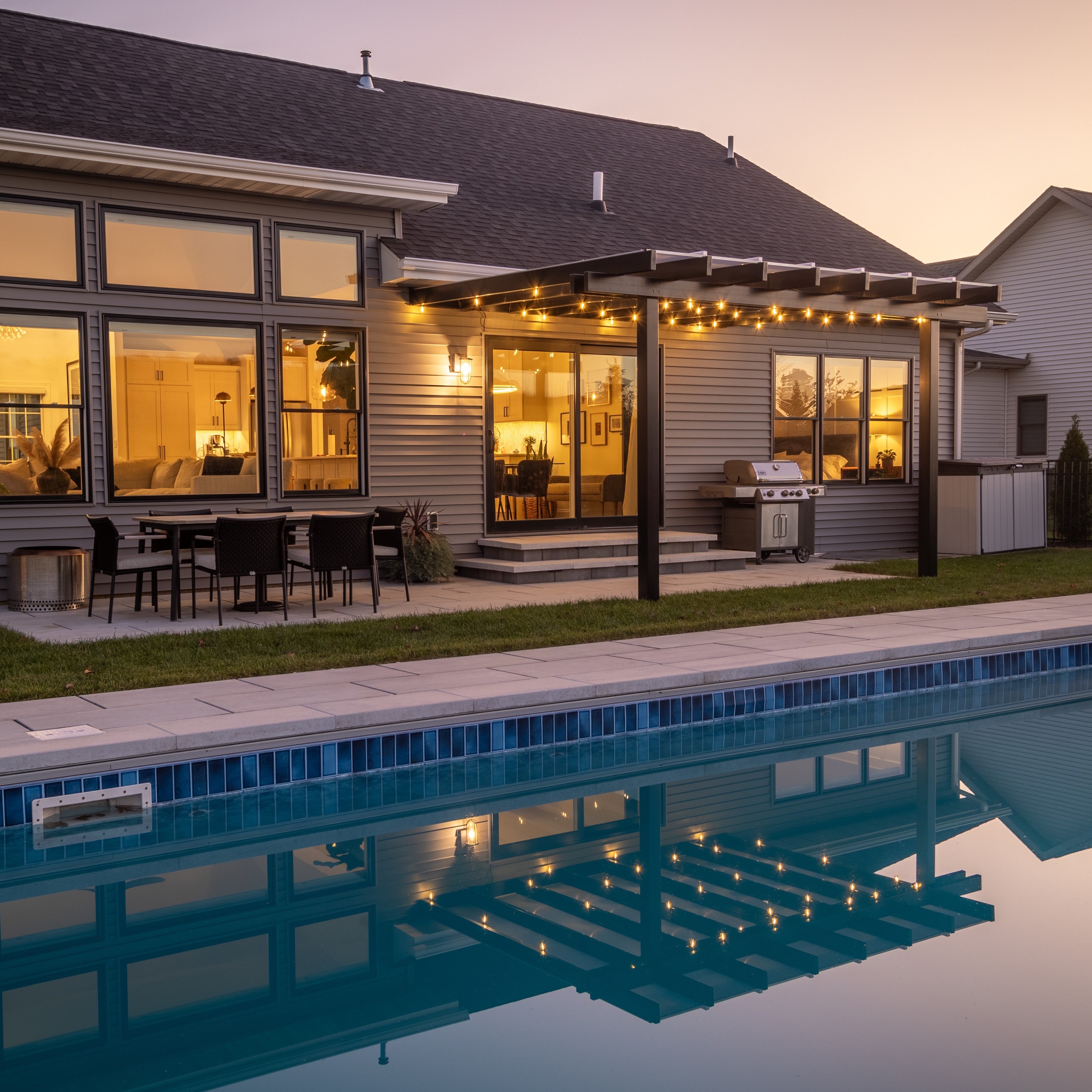
Once the 10x20 footprint fits the site and activity plan, the remaining decision is which product family and installation type best match the intended use. The most important distinction is between fixed slatted shade and a solid rainproof roof, followed by the differences in post and overhang treatment among the available designs.
A traditional pergola is the most configurable choice for this footprint, with freestanding and attached options, optional inset posts, and adjustable beam and rafter overhangs. Its fixed angled slats are available in 50%, 75%, or 90% shade configurations, but the slatted roof is not rainproof.
A modern pergola is available in the stated 10x20 orientation as an attached design. Its flush edges and lack of optional post inset create a more literal relationship between the roof outline and support system. If rain protection is required, choose a rainproof patio cover with solid polycarbonate roofing rather than a slatted pergola.
An attached installation is most logical when the 10-foot connection to the structure and 20-foot outward projection fit the patio and activity sequence. A freestanding traditional pergola or rainproof patio cover can instead be positioned independently and rotated so the long axis follows the most useful direction on the site.
Because the 10x20 footprint is so directional, orientation deserves as much attention as the nominal area. A good placement lets dining, compact lounging, and circulation follow the length coherently rather than forcing the arrangement across the narrow axis.
Choose 10x20 when two recognizable but relatively narrow zones are the actual goal. If the second zone can remain minor, 10x18 may be enough. If both zones need more crosswise furniture flexibility, 12x20 or 12x18 may be the better direction. If the plan truly requires a third distinct function along the same narrow band, the extra length of 10x24 may be more appropriate.
The key is to match the footprint to the program rather than selecting the longest size that fits. A 10x20 works because its 20-foot dimension strengthens separation between two activities while preserving a relatively compact 10-foot width; extending or widening the structure should solve a specific planning need.
Yes, a 10x20 footprint can support a rectangular dining group followed by a compact sofa-and-chair area arranged along the 20-foot dimension. The length helps the two activities read as separate zones, but the 10-foot width still limits how broad either furniture grouping can become. It is better viewed as two narrow sequential zones than as two unrestricted outdoor rooms.
Both sizes share the same 10-foot width, but the 10x20 adds two feet of depth. That extra length makes the transition from dining into a compact second seating zone more distinct. A 10x18 can be a better fit when dining is the dominant activity and the area at the far end only needs to support a modest secondary use.
The main difference is width. A 12x20 has 40 more square feet of nominal roof footprint and gives furniture groups two additional feet of crosswise room, while a 10x20 fits a narrower site. Choose based on whether the project needs fuller lateral furniture arrangements or whether a narrower 10-foot band with the same 20-foot length is preferable.
For a freestanding structure, 10x20 and 20x10 are the same rectangle after a 90-degree rotation. For an attached installation, they are materially different: a 10x20 runs 10 feet along the structure and projects 20 feet outward, while a 20x10 runs 20 feet along the structure and projects 10 feet outward.
Use the 2:1 proportion intentionally by arranging activities in sequence rather than lining both sides with competing furniture. A dining zone followed by compact lounge seating can create a natural progression along the 20-foot axis. Planning movement as part of that sequence also helps avoid layouts that force people through the center of each furniture grouping.
An attached 10x20 creates a 10-foot connection along the structure with a 20-foot outward projection, which works well when the activity sequence should extend away from the building. A freestanding traditional pergola or rainproof patio cover can be rotated independently. Nearby doors, paths, patio edges, and other features should determine which orientation fits the site more naturally.
Yes, a 10x20 rainproof patio cover is available with a solid polycarbonate roof. Traditional and modern pergolas instead use fixed angled slats with 50%, 75%, or 90% shade choices and are not rainproof. If both the dining and lounge zones need overhead rain protection, select the solid-roof patio-cover configuration rather than a slatted pergola.
Use the intended activity program as the test. A 10x18 is often sufficient when the second end use is minor, while 10x20 is better when dining and compact lounging should read as separate zones. A 12x20 better supports broader furniture groups, and a 10x24 becomes relevant when a genuine third function needs its own segment along the long axis.


