

MADE IN THE USA
with American products
w/ American products


Polycarbonate patio cover UV protection is an important consideration when you want a sunny deck or patio to become a comfortable outdoor living space. A solid roof may provide substantial protection from overhead sunlight, but will it also reduce heat enough for afternoon entertaining, outdoor dining, or relaxing beside the pool? The answer depends on what the roof panels actually block, how much daylight they transmit, and the conditions beneath and around your patio. Understanding those differences will help you evaluate the performance claims before choosing a permanent cover.
Sunset Pergola Kits offers solid polycarbonate patio-cover roofing in two panel colors: white and bronze. Both are advertised as providing 100% UV protection and making the patio up to 15 degrees cooler.
Those are meaningful performance claims, but they describe different characteristics. Neither should be interpreted as a guarantee that every part of a covered patio will receive complete UV protection or experience the same temperature reduction.
The stated 100% UV protection applies to the polycarbonate roof panels. It indicates that the roofing is intended to prevent ultraviolet radiation from passing through the covered roof area.
However, the claim does not establish that every location beneath the structure is protected from all UV exposure. Sunlight can enter through open sides, particularly when the sun is low in the sky. UV radiation may also reach shaded areas indirectly through scattering and reflection.
Before treating the percentage as a verified technical specification, request the applicable manufacturer's documentation. Ideally, that documentation should identify:
Without that supporting information, the advertised percentage should be understood as a product claim rather than independently verified evidence of complete UV protection across every relevant wavelength.
The advertised cooling benefit is up to 15 degrees. The phrase "up to" describes a potential maximum under particular conditions, not a temperature reduction that every installation will achieve.
For a meaningful comparison, the supporting documentation should identify whether the measurement refers to air temperature, a surface temperature, or another measurement. It should also establish the temperature unit, measurement location, time of day, and conditions used for comparison.
For example, a reduction in the temperature of sun-exposed paving is not equivalent to an identical reduction in the surrounding air temperature. Likewise, a measurement taken beneath a cover cannot automatically be compared with one taken in a different location or at a different time.
The practical takeaway is that a solid polycarbonate roof can provide shade and reduce exposure to direct solar radiation, but the advertised maximum cooling figure should not be used to predict the exact temperature of your finished patio without additional evidence.
One of the most common misunderstandings about polycarbonate roofing is that a panel allowing visible light through must also allow substantial UV radiation or solar heat through.
That is not necessarily true. Ultraviolet radiation, visible light, and infrared radiation occupy different portions of the electromagnetic spectrum. A roofing material can transmit some wavelengths while absorbing or reflecting others.
For homeowners, this means a bright covered patio can still benefit from UV-blocking roofing. However, the amount of daylight entering the space does not, by itself, reveal how effectively the roof limits solar heat gain.
UV transmission describes how much ultraviolet radiation passes through a material. A panel designed to block UV radiation may still transmit substantial visible daylight.
UV performance is particularly relevant for people spending extended periods beneath a patio roof and for materials exposed to sunlight. However, roof-panel protection should not be confused with complete protection from UV entering around the structure.
Visible light transmission describes how much light in the visible spectrum passes through a roofing material.
A roof that admits daylight can help maintain a naturally illuminated outdoor living area. That may be desirable for a covered dining space, outdoor kitchen, or patio adjoining interior living areas.
However, brightness and visual comfort are not identical. A patio may receive enough daylight for comfortable use while still experiencing glare from the roof, nearby windows, reflective paving, or sunlight entering from an open side.
To evaluate brightness accurately, look for documented visible light transmission values for the specific panels. Do not assume that a roof's advertised UV protection percentage reveals how bright the covered space will be.
Solar heat gain concerns the solar energy transmitted into an area through a material. This includes more than UV radiation.
Although UV radiation is part of sunlight, it represents only one portion of the solar spectrum. Blocking UV therefore does not automatically mean blocking an equivalent percentage of solar heat.
When evaluating polycarbonate patio cover heat reduction, useful documentation may include solar transmission, solar reflectance, or an applicable solar heat-gain measurement.
Those values can help explain how the roofing interacts with sunlight. However, a roof-panel measurement is not the same as a prediction of the finished patio's air temperature.
The important distinction: UV transmission helps describe ultraviolet protection, visible light transmission helps describe daylight, and solar-energy measurements help describe heat-related performance. No single measurement fully establishes all three.
A roof panel may have excellent UV-blocking characteristics while the seating area beneath it still receives direct sunlight from the side.
For that reason, evaluating polycarbonate patio cover UV protection requires more than examining a sample of roofing material. You should also consider where people will sit and how sunlight moves across the outdoor living area.
Identify the direction your patio faces and the times when you expect to use it most often.
A patio used primarily for morning coffee may experience very different sunlight conditions from one used for afternoon gatherings or early-evening dinners.
Rather than judging the space at a single moment, observe it during the periods that matter most to your household.
Record:
This creates a practical picture of the conditions the finished cover must address.

A solid polycarbonate roof provides continuous overhead coverage across its roofed area. However, sunlight does not always arrive from directly overhead.
When the sun is lower in the sky, its rays may travel beneath the roof edge and enter the patio horizontally or diagonally.
This distinction matters especially when seating is positioned near an open edge of the cover. A chair that remains shaded around midday may receive direct sunlight later in the afternoon.
For example, imagine a homeowner planning a covered outdoor dining area. The table may remain beneath the roof throughout the day, yet diners on one side could still experience direct evening sunlight.
In that situation, the roof-panel UV rating alone cannot establish the UV exposure at every seat.
UV radiation can reach shaded locations through atmospheric scattering and reflection from surrounding surfaces.
Nearby paving, water, walls, and other surfaces may contribute to the overall light environment. Their influence depends on the materials involved, the direction of incoming sunlight, and the geometry of the space.
This does not mean every shaded patio experiences substantial reflected UV exposure. It means the roof-panel claim cannot account for every possible path by which UV radiation may reach the occupied area.
For an outdoor living space beside a pool or surrounded by bright hardscaping, consider both overhead coverage and sunlight entering from the surrounding environment.
The goal is to determine whether the actual seating positions receive the protection you expect during normal use.
Does polycarbonate roofing keep a patio cool? It can improve comfort by shading people and surfaces from direct sunlight, but the resulting conditions depend on more than the roof itself.
A covered patio remains part of the outdoor environment. Airflow, surrounding surfaces, sunlight direction, and local weather all influence how comfortable it feels.
Direct sunlight can make people feel warmer because solar radiation reaches their bodies and surrounding surfaces.
Providing shade reduces direct exposure to that radiation. As a result, a shaded seating area may feel noticeably more comfortable even when the measured air temperature differs only modestly from nearby unshaded air.
This is why it is important to distinguish three different outcomes:
These outcomes can occur together, but they should not be treated as interchangeable.
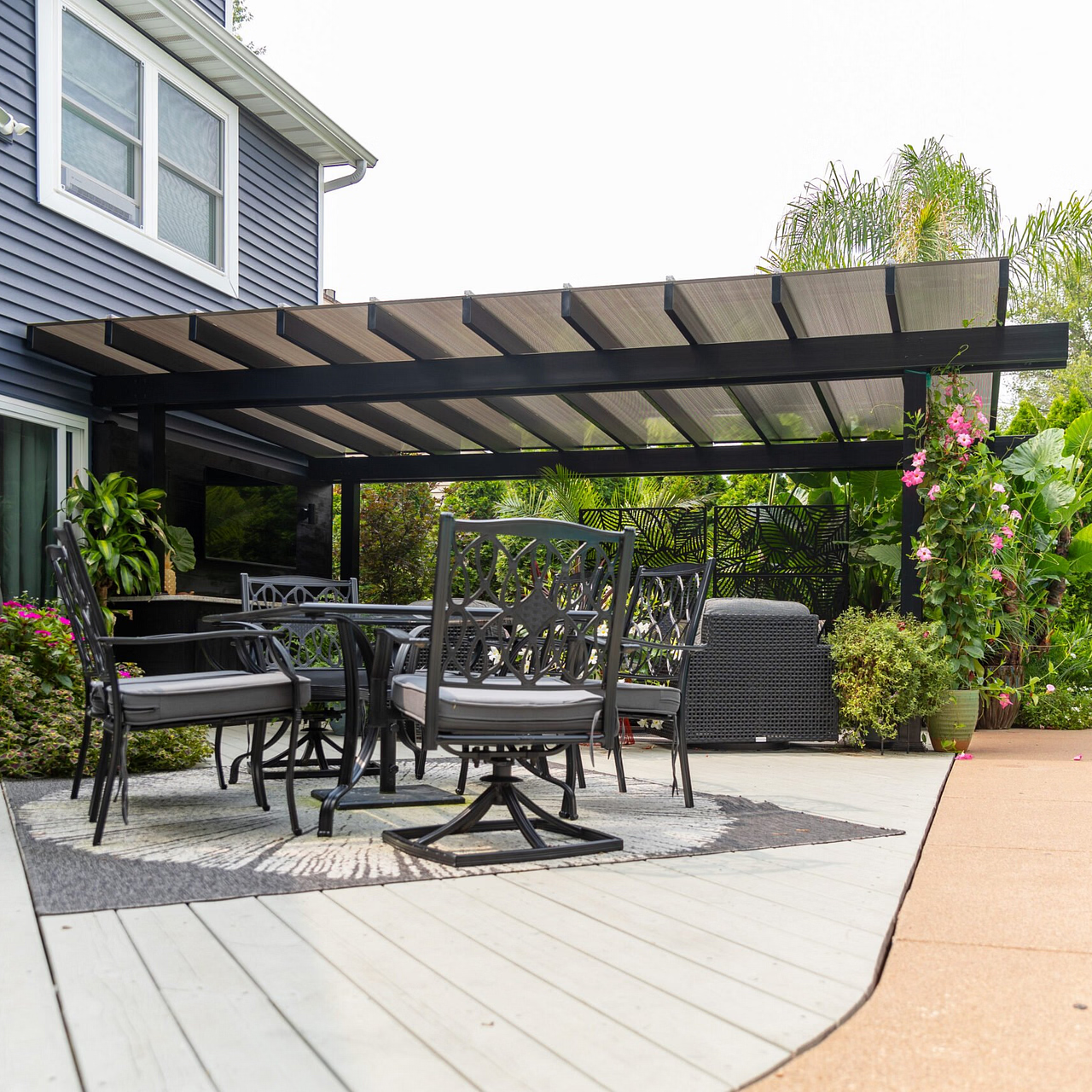
Outdoor surfaces absorb solar energy and can become warmer than the surrounding air. Those surfaces may continue releasing heat after direct sunlight moves away.
Consequently, a patio can feel warm even when its roof blocks UV radiation.
Consider an afternoon seating area surrounded by paving and exterior walls that have been exposed to sunlight for several hours. Although the roof shades the seating area, nearby materials may still contribute to the surrounding thermal environment.
By contrast, a sheltered patio used during the morning may begin the day with cooler surrounding surfaces and less accumulated heat.
Neither example establishes a specific temperature difference. They illustrate why the same roofing product can produce different comfort experiences in different locations.
Air movement affects perceived comfort, particularly in warm conditions.
An open patio with natural cross-ventilation may feel different from a sheltered patio surrounded by walls or other structures that restrict airflow.
For example, a covered outdoor dining area exposed to a gentle breeze may feel comfortable even on a warm day. A similarly shaded area with little air movement may feel less pleasant.
When evaluating a proposed installation, observe whether the location typically receives a breeze during the hours you plan to use it.
Do not assume the roof's advertised cooling performance accounts for every possible ventilation condition.
Glare occurs when bright light or strong brightness contrasts interfere with visual comfort.
A patio can be well protected from overhead UV radiation yet still feel uncomfortably bright. Reflections from windows, water, paving, or other surfaces may contribute to that experience.
This matters when the space will be used for reading, conversation, dining, or viewing an outdoor television.
When reviewing UV-blocking patio roof panels, ask about visible light transmission and any documented glare-related performance. Photographs can help you evaluate the appearance of a roofed patio, but they do not establish measured glare reduction.
The ideal result is not necessarily the darkest possible space. It is a comfortable balance between useful daylight, manageable glare, and the degree of solar protection you need.
Once you understand the differences between UV filtering, daylight, solar heat, and perceived comfort, the next step is to connect the available performance evidence to the way you actually intend to use your patio.
The following checklist provides a practical way to identify which claims support your decision and which questions still need answers.
Begin with the activities and seating locations that matter most.
These observations establish the conditions against which the roof's performance should be evaluated.
For the specific polycarbonate panels being considered, request documentation supporting the advertised UV protection.
Look for the measured wavelength range, testing method, and applicable transmission or blocking results.
If the information confirms the advertised performance, it supports the roof-panel UV protection claim. It does not establish the amount of UV entering from open sides or reflected surroundings.
If heat reduction is a major purchasing priority, ask what the advertised cooling figure actually measures.
Useful supporting information should identify:
Temperature readings taken at different times of day are not directly comparable without accounting for changing conditions. Sunlight intensity, wind, cloud cover, and ambient temperature can all change between measurements.
A well-documented comparison provides stronger evidence than an isolated maximum cooling claim.
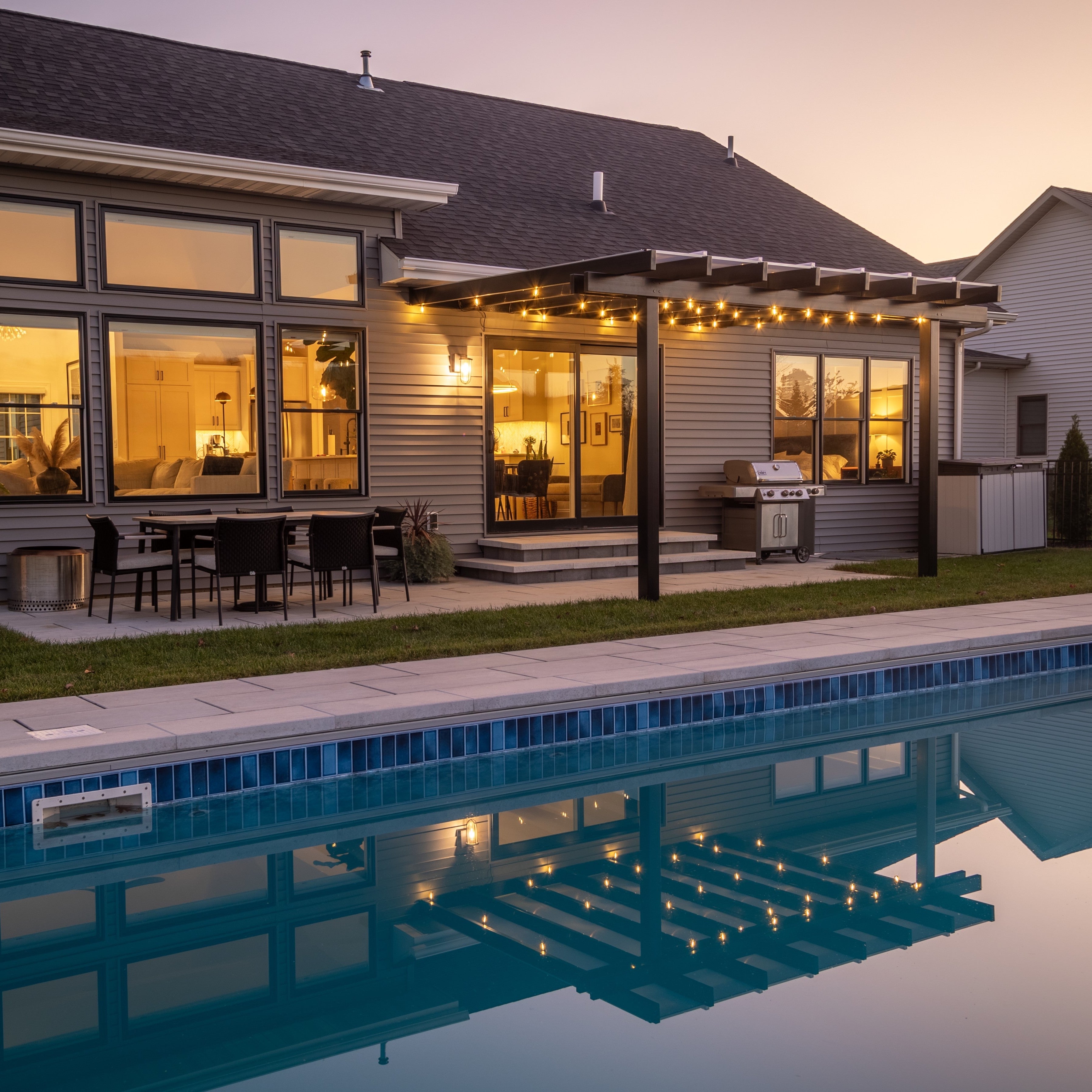
Think about the level of natural brightness you want beneath the finished cover.
For example, a homeowner creating a bright outdoor dining area may prioritize maintaining daylight. Someone planning a lounge area with frequent afternoon glare may place greater importance on visual comfort.
These preferences should be compared with actual panel documentation rather than assumptions based on appearance alone.
Sunset Pergola Kits offers white and bronze polycarbonate roof panels. However, the supplied product information does not establish measured differences in visible light transmission, solar heat performance, or glare reduction between those colors.
Before choosing a panel color based on those characteristics, obtain the relevant performance specifications.
The following comparison helps clarify what different types of evidence can establish.
| Comfort Priority | Useful Evidence | What Still Needs Evaluation |
|---|---|---|
| UV protection | Documented UV transmission or blocking performance for the roof panels | Sunlight entering through open sides and indirect exposure |
| Heat reduction | Qualified solar-performance data and comparable temperature measurements | Actual air temperature, surrounding surfaces, and site conditions |
| Natural daylight | Measured visible light transmission | Preferred brightness at the intended seating locations |
| Reduced glare | Relevant optical performance data and observations of comparable installations | Reflections, sunlight direction, and the homeowner's glare tolerance |
| Comfortable outdoor seating | Roof-performance documentation combined with site observations | Airflow, use times, surrounding materials, and changing weather |
This approach prevents one attractive product claim from being mistaken for proof of every desired outcome.
UV exposure can contribute to the deterioration and fading of some outdoor materials, but UV is not the only factor involved.
Visible light, heat, moisture, material composition, and other environmental conditions can also influence how furnishings age.
Therefore, even when a roof provides strong UV filtering, it would be inaccurate to promise that furniture beneath it will never fade.
If protecting expensive outdoor furnishings is an important priority, review the applicable furniture manufacturer's care recommendations alongside the roof-panel documentation.
A polycarbonate patio cover may be a suitable choice when the documented roof performance aligns with your desired overhead UV protection, daylight preferences, and expectations for shade.
However, additional verification is warranted when your decision depends on a specific temperature reduction, a particular glare level, or complete protection from sunlight entering around the structure.
Before making a final decision, you should be able to answer three questions:
If those questions are answered satisfactorily, you can compare polycarbonate rainproof patio covers with a clearer understanding of the performance characteristics that matter for your property.
For homeowners who prefer a roofed structure positioned independently of the house, a freestanding patio cover with a solid polycarbonate roof provides one available configuration. Where the intended outdoor living area adjoins the home, an attached polycarbonate patio cover offers another configuration to evaluate.
In either case, the roof-panel performance questions remain the same: verify the relevant UV data, understand the limitations of the cooling claim, and consider the actual conditions where people will spend time.
A polycarbonate patio cover can provide valuable overhead UV protection and improve outdoor comfort by reducing direct sunlight exposure. However, UV filtering, solar heat reduction, visible daylight, and glare are separate performance characteristics, and a roof's advertised cooling benefit should not be interpreted as a guaranteed temperature drop throughout the patio.
The best way to evaluate a cover is to combine verified panel-performance information with observations of your patio's orientation, seating locations, airflow, and typical use times. Once you know what protection and comfort you need, explore the available rainproof patio cover options and confirm that the documented roofing performance supports your expectations.
No. Visible light and ultraviolet radiation occupy different portions of the electromagnetic spectrum. A polycarbonate roof can transmit visible daylight while blocking UV radiation. To evaluate UV protection, consult the specific panel's documented UV transmission or blocking performance rather than judging its brightness.
No. A roof-panel UV protection claim describes the roofing material, not all sunlight entering the patio. Direct sunlight can reach the seating area through open sides, particularly when the sun is low. Scattered and reflected UV may also reach shaded locations.
Yes. UV blocking does not eliminate all solar heat, and paving can retain heat absorbed earlier in the day. Surrounding walls and other surfaces may also contribute warmth. A roof can improve shade and comfort without guaranteeing that every surface beneath it remains cool.
Not without accounting for changing conditions. Air temperature, sunlight, wind, and cloud cover can vary throughout the day. For a meaningful cooling comparison, measurements should use comparable locations, measurement types, and environmental conditions, preferably collected simultaneously.
No. UV exposure is one contributor to fading, but visible light, heat, moisture, and material characteristics can also affect furniture. UV-blocking roofing may reduce exposure from overhead sunlight, but it does not guarantee that outdoor furnishings will never fade.
Yes. A roof may provide strong UV protection while allowing visible daylight into the patio. Brightness contrasts and reflections from windows, water, paving, or nearby surfaces can still create glare. Evaluate visible light transmission and the actual lighting conditions at your intended seating positions.
No. Sunset Pergola Kits advertises cooling of up to 15 degrees for its polycarbonate patio covers, but this is a maximum claim, not a guaranteed result. The supplied information does not specify the temperature unit, measurement type, or comparison conditions. Actual comfort depends on sunlight, airflow, surrounding surfaces, and other site-specific factors.


