

MADE IN THE USA
with American products
w/ American products


Polycarbonate patio cover condensation can leave water droplets on the underside of a roof that is designed to keep rain out. If you've noticed moisture overhead, particularly in the morning or after a humid night, you may be wondering whether the roof is sweating or leaking. The distinction matters: understanding when and where the moisture appears can help you assess the surrounding conditions and decide whether further inspection is necessary.
The most useful starting point is to observe when the moisture appears, where it collects, and what the weather was doing beforehand. Condensation and rain intrusion can produce similar-looking droplets, but their patterns may offer different clues.
| What You Notice | What It May Suggest | What to Observe Next |
|---|---|---|
| Droplets appear early in the morning, with no recent rain. | Condensation is plausible, especially after a cool, humid night. | Check whether droplets diminish as conditions warm or become less humid. |
| Moisture first appears or increases during rainfall. | Rain intrusion is possible, although condensation may also be present. | Record when the moisture began and whether the pattern repeats during rain. |
| Small beads cover a broad area of the roof's underside. | Surface condensation may be occurring across the cooler panel area. | Compare the pattern with humidity, temperature, and airflow conditions. |
| Water appears repeatedly in one localized area. | Localized condensation or another moisture mechanism may be involved. | Record the location and whether it changes with weather or patio use. |
| Moisture appears inside a panel rather than on its exposed underside. | A different issue involving panel construction or internal moisture paths may exist. | Identify the panel type and consult its manufacturer documentation. |
These observations are indicators, not diagnoses. Widespread droplets do not prove condensation, and a localized wet area does not automatically establish a leak. More than one moisture mechanism can occur at the same time.
If moisture consistently develops during rain, is concentrated around a particular area, or remains unexplained, a qualified patio-cover installer or roofing professional can assess possible water entry. That investigation is separate from managing humidity beneath the roof.
 A rainproof roof blocks rainfall from passing directly through its covered surface. It does not prevent water vapor already present in the surrounding air from becoming liquid water on the underside of the panels.
Condensation occurs when water vapor in the air changes into liquid droplets upon contact with a sufficiently cool surface. The key temperature is the dew point: the temperature at which air with a given moisture content becomes saturated. When a surface is at or below the dew point of the air contacting it, moisture can collect on that surface.1
This is the same general process that produces moisture on the outside of a cold drinking glass. The glass does not need to leak for droplets to appear, and neither does a polycarbonate roof.
Three conditions influence whether condensation develops:
During the night, outdoor surfaces may cool while moisture remains in the surrounding air. If the underside of a polycarbonate roof becomes cool enough, condensation can develop before sunrise or during the early morning.
As the day progresses, changes in panel temperature, humidity, and air movement may allow the droplets to evaporate. A recurring morning pattern during dry weather therefore makes condensation worth considering, although it does not conclusively establish the source.
A patio cover can perform its intended rain-protection function while still experiencing condensation underneath. Rainproofing concerns water arriving from above the roof; condensation concerns water vapor already in the air beneath or around it.
Sunset Pergola Kits offers rainproof patio covers with solid polycarbonate roofs. These provide a covered outdoor living area, but their rainproof construction should not be interpreted as a guarantee that underside condensation will never occur.
The patio's surroundings can be just as important as the roof itself. Two patios with similar polycarbonate covers may experience different condensation patterns because of differences in ventilation, moisture sources, and everyday use.
An open patio generally allows outdoor air to circulate beneath and around the cover. That air exchange may help disperse moisture introduced by activities beneath the roof, although condensation can still occur when outdoor humidity is high and the panels become sufficiently cool.
A partly enclosed patio behaves differently. Privacy screens, curtains, walls, or other barriers may restrict air exchange, allowing moisture from nearby activities to remain beneath the roof longer.
For example, a patio that was originally open on all sides may experience different moisture conditions after additional side enclosures are installed. If condensation becomes more noticeable following that change, reduced airflow is one factor worth examining.
Some outdoor activities introduce additional water vapor into the air:
These sources do not automatically cause roof condensation. Their effect depends on the surrounding humidity, roof temperature, distance from the source, and how readily moist air can escape.
A useful comparison is whether condensation appears only under certain conditions. Does it occur after the hot tub has been used? Is it more noticeable when side curtains are closed? Does it develop on humid mornings even when the patio has not been occupied?
These distinctions help identify whether moisture is primarily associated with general outdoor conditions or potentially intensified by the patio environment.
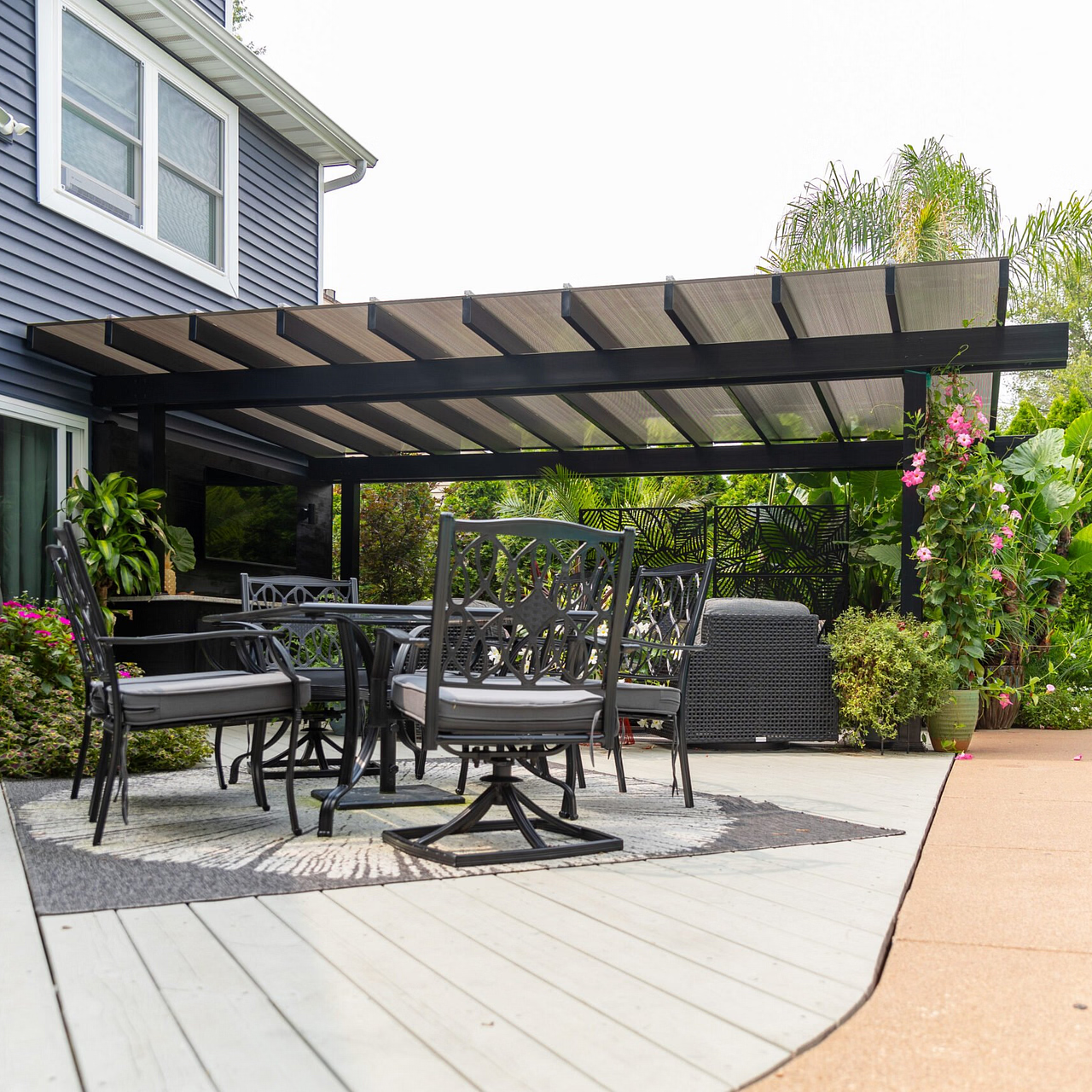 Before recommending modifications to address condensation, identify the actual roof system. Not all polycarbonate panels have the same construction, and installation requirements can differ.
Polycarbonate roofing may use solid sheets or other panel constructions, including products with internal channels. These different designs can have different moisture-management requirements.
Do not assume a roof has internal chambers simply because it is made from polycarbonate. Likewise, droplets on the exposed underside of a panel are not necessarily the same issue as moisture within an internal panel cavity.
If moisture appears inside a panel, its construction and manufacturer instructions become especially important.
For an existing roof, identify the manufacturer and specific panel product whenever possible. Then review the documentation for:
The absence of a specific detail in general advice should not be interpreted as permission to modify the roof.
Managing moisture in the surrounding environment is different from changing the roofing system. Adding holes, altering roof slope, changing panel orientation, or modifying panel channels should never be treated as a universal condensation solution.
Any proposed system modification should follow the manufacturer-approved guidance for the installed components and, where necessary, be assessed by a qualified professional.
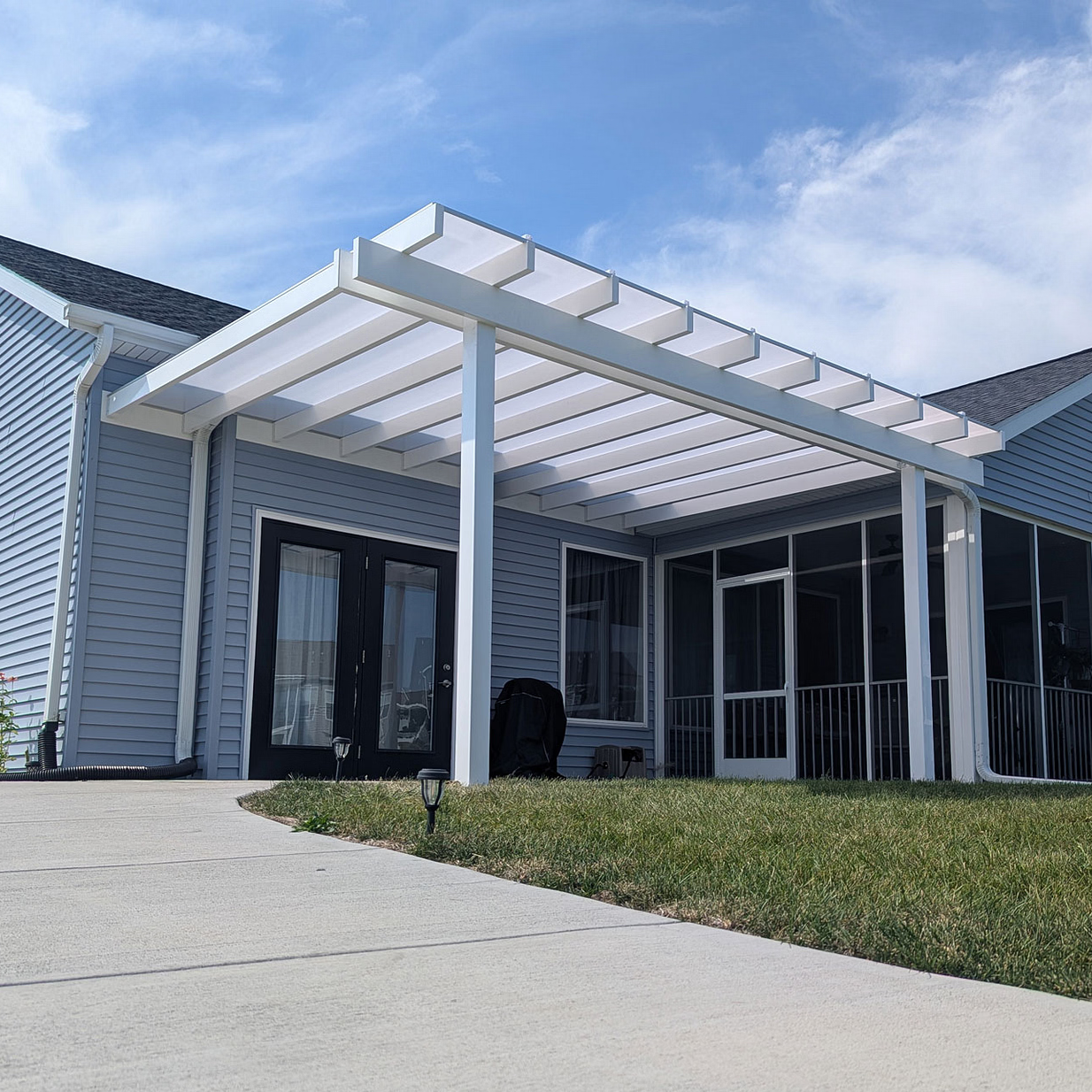
Homeowners considering a future attached polycarbonate patio cover or freestanding rainproof patio cover can use these questions when reviewing the roof specifications and discussing the intended installation environment.
There is no single universal method for stopping condensation under a patio cover. The appropriate response depends on whether droplets are actually forming from humid air, how that moisture accumulates, and what changes are compatible with the roof system.
If observations suggest that nearby activities contribute to humidity beneath the cover, reducing unnecessary moisture accumulation may help.
Examples include keeping a hot tub covered when it is not in use and allowing cooking-generated vapor to disperse rather than become trapped beneath a sheltered roof.
These measures address the surrounding environment, not the roof panels themselves. Their effectiveness depends on conditions and should not be interpreted as a promise that condensation will disappear.
Where a patio has adjustable curtains or movable side screens, opening them when appropriate may improve air exchange and help disperse locally generated moisture.
However, increased airflow is not always a guaranteed solution. Outdoor air can itself be highly humid, and changing air movement can affect roof temperature as well as moisture distribution.
If a proposed change involves permanent ventilation features, alterations to enclosed sides, or modifications to the roof, verify that the approach is compatible with the manufacturer's requirements and any applicable installation constraints.
Condensation occurs because of the interaction between moisture in the air and a cool surface. Its presence alone does not demonstrate defective materials or improper installation.
At the same time, repeated dripping, wet furnishings, slippery surfaces, or moisture affecting nearby construction should not be dismissed merely because condensation is possible.
The goal is to understand the mechanism and determine whether ordinary environmental management is sufficient or a professional assessment is warranted.
 If moisture is occasional, appears under predictable humid conditions, and disappears without causing damage, documenting the pattern may be a reasonable first step.
When the cause is uncertain, more consistent observations can also help a professional assess the situation without relying on assumptions.
For several occurrences, make a short record of:
Photographs taken during different conditions can make patterns easier to compare. Weather records and the manufacturer's panel information may also be useful.
Contact a qualified installer, roofing professional, or other appropriate specialist when:
A professional can evaluate the evidence, identify the roof system, and determine whether the issue involves condensation, possible water entry, or a combination of factors.
For prospective buyers, the same environmental considerations are useful before choosing a cover. If you're comparing solid-roof rainproof patio covers, consider how humid the setting becomes, whether its sides will remain open, and what ventilation or installation conditions the selected roof requires.
Condensation can form beneath a polycarbonate patio cover even when the roof is doing its job of keeping rain out. Moisture timing, distribution, humidity, surface temperature, and airflow can help explain what is happening, but observations alone do not always distinguish condensation from rain intrusion.
For existing covers, begin by documenting the conditions, checking the applicable manufacturer guidance, and seeking qualified assessment when moisture is persistent or unexplained. If you're planning a new patio cover, choose a system with a clear understanding of how your outdoor environment may affect moisture beneath the roof.
Yes. Water vapor in the air can condense on the underside of a polycarbonate patio roof when its surface becomes sufficiently cool. Morning droplets during dry weather are consistent with condensation, although their appearance alone does not prove the cause.
No. A rainproof polycarbonate patio cover is designed to protect the area beneath it from rainfall. Condensation is a separate process involving moisture already present in the surrounding air.
No. Overnight cooling and humid conditions can produce condensation that becomes visible in the morning. However, moisture timing alone cannot rule out rain intrusion, especially when water persists or appears after rainfall.
Yes. Adding screens, curtains, walls, or other barriers can reduce air exchange beneath the roof. If moisture-producing activities continue within the sheltered space, humidity may accumulate differently than it did when the patio was fully open.
Yes. Cooking vapor and evaporation from warm water can increase local humidity. If that moist air reaches a sufficiently cool roof surface, condensation may occur. The effect depends on temperature, airflow, and the surrounding environment.
No. Droplets on the exposed underside may result from surface condensation. Moisture inside a panel can involve different conditions, depending on its construction. Identify the panel type and consult the manufacturer's documentation before determining what action is appropriate.
Yes. Condensation and rain intrusion are different moisture mechanisms, but they can occur simultaneously. A humid patio may experience underside condensation while water also enters from another source. Persistent or unexplained moisture should be assessed by a qualified professional.


