

MADE IN THE USA
with American products
w/ American products


Home ▸ Rain Covers for Patios
Rain covers for patios create a permanently covered outdoor area with a solid polycarbonate roof that blocks rain and provides 100% UV protection. Available in attached and freestanding configurations, these aluminum-reinforced patio covers have a low-maintenance vinyl exterior and no motorized or moving roof parts. Choose white or bronze roof panels, multiple frame colors, and a size suited to your patio layout. [read more]


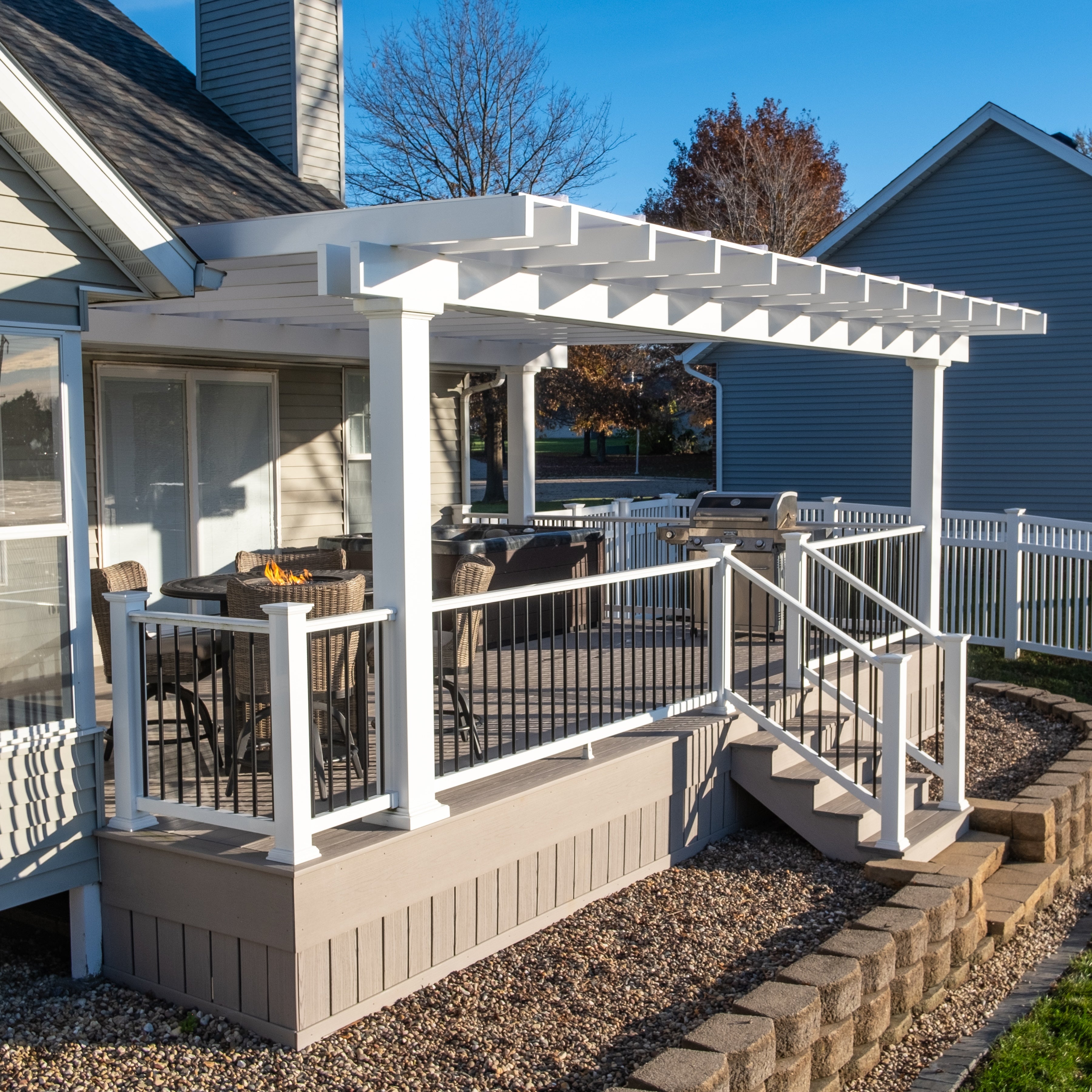
Rain covers for patios are permanent outdoor structures built with solid roofing rather than open shade slats. The rainproof patio covers in this collection pair a solid polycarbonate roof with an aluminum-reinforced frame and premium extruded vinyl exterior. They are designed for homeowners who want dependable rain protection without the upkeep associated with a painted or stained structure.
Solid polycarbonate panels form a continuous covered roof over the patio. Unlike an open pergola, the roof is intended to keep the space beneath it dry during ordinary rainfall while also providing full overhead UV protection.
The roof is supported by aluminum inserts inside all weight-bearing posts, beams, and rafters. This internal frame provides structural strength, while the vinyl exterior creates the finished appearance and eliminates routine painting or staining.
A solid polycarbonate roof provides full overhead coverage from rain and direct sunlight. A slatted pergola roof uses fixed angled slats to create partial shade while retaining an open-air feel, but it is not rainproof.
For a dining area, outdoor kitchen, hot tub, or furniture arrangement that needs weather protection, a solid roof is normally the more appropriate choice. Slats are better suited to homeowners whose primary goal is filtered shade rather than rain coverage.
An attached rain cover connects to the house or another suitable structure and extends coverage directly from the building. A freestanding cover uses its own posts and can be positioned over a patio that is separate from the home or where attachment is not practical.
These patio covers are intended for permanent installation. They are not fabric canopies, portable gazebos, retractable awnings, or temporary shelters that are taken down between seasons.
A permanent structure involves more planning and investment, but it can become an architectural part of the property rather than a consumable outdoor accessory.
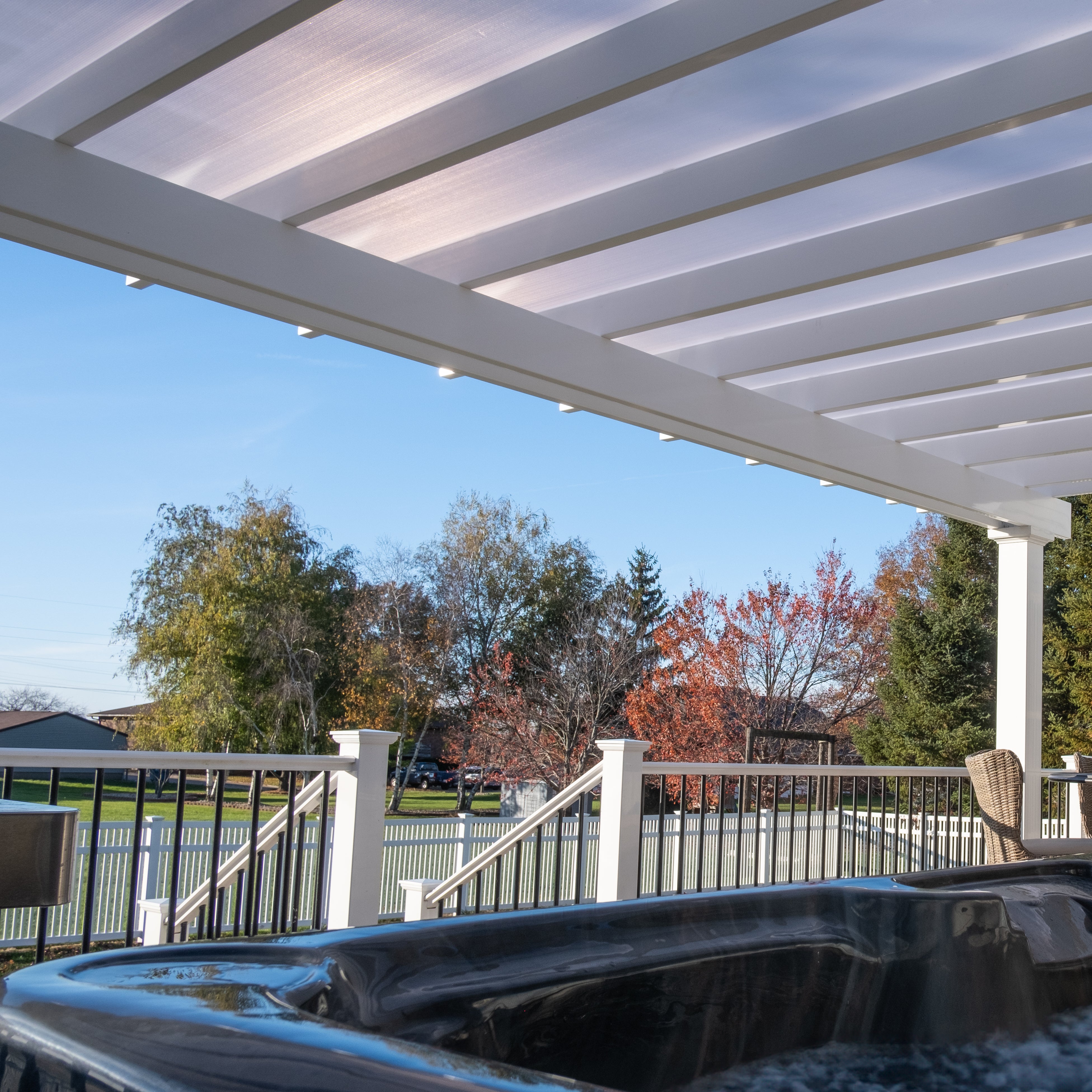
A permanent patio rain cover addresses two closely related needs: keeping the outdoor area drier and reducing exposure to direct sun. That combination makes a patio easier to furnish and more dependable for everyday use.
A solid roof helps prevent rainfall from falling directly onto the covered portion of the patio. This can make outdoor dining, conversation seating, and hot-tub areas usable during more types of weather.
Rain may still enter from open sides when it is driven by wind, so the protected area should be planned with the roof footprint, typical storm direction, and furniture placement in mind.
Overhead coverage reduces the amount of rain and direct sunlight reaching tables, seating, cushions, and other items beneath the structure. Both white and bronze polycarbonate roof panels provide 100% UV protection from above.
A roof does not fully enclose the space, so furniture may still encounter humidity, blowing rain, and low-angle sunlight. Outdoor-rated materials remain important even under a patio cover.
The solid roof blocks direct overhead sun and can make the covered patio up to 15 degrees cooler. Actual comfort will also depend on the climate, time of day, airflow, roof-panel color, and the patio’s orientation.
Weather protection makes it easier to plan a stable outdoor living arrangement instead of moving furniture whenever conditions change. A properly sized cover can shelter a dining table, lounge group, cooking area, or several coordinated zones.

The polycarbonate roof distinguishes these patio covers from conventional open-roof pergolas. It provides fixed, full overhead coverage without adjustable louvers, retractable fabric, motors, or other moving roof components.
The solid panels create a rainproof roof over the structure’s footprint. Correct installation is important because panel placement, roof alignment, attachment details, and the completed roof assembly must work together as designed.
Site drainage should also be considered before installation. Water leaving the roof needs a suitable destination that does not create problems near doors, foundations, walkways, or neighboring property.
Roof panels are available in white or bronze. Both choices provide rain coverage and 100% UV protection, so the decision can be based on the desired appearance and the quality of light preferred beneath the structure.
Reviewing completed installations in the pergola and patio cover gallery can help you evaluate how roof and frame colors work with different homes and landscapes.
Polycarbonate panels protect the covered area from overhead ultraviolet exposure while still creating a brighter environment than many opaque roofing materials. This makes them appropriate for homeowners who want weather protection without making the patio feel completely closed in.
A fixed polycarbonate roof does not depend on motors, tracks, hinges, or rotating louvers. Fewer mechanical components means there are no roof-opening mechanisms to operate, service, or eventually replace.
These covers are therefore best for homeowners who consistently want a covered patio. They are not designed for buyers who want to open the roof on demand.
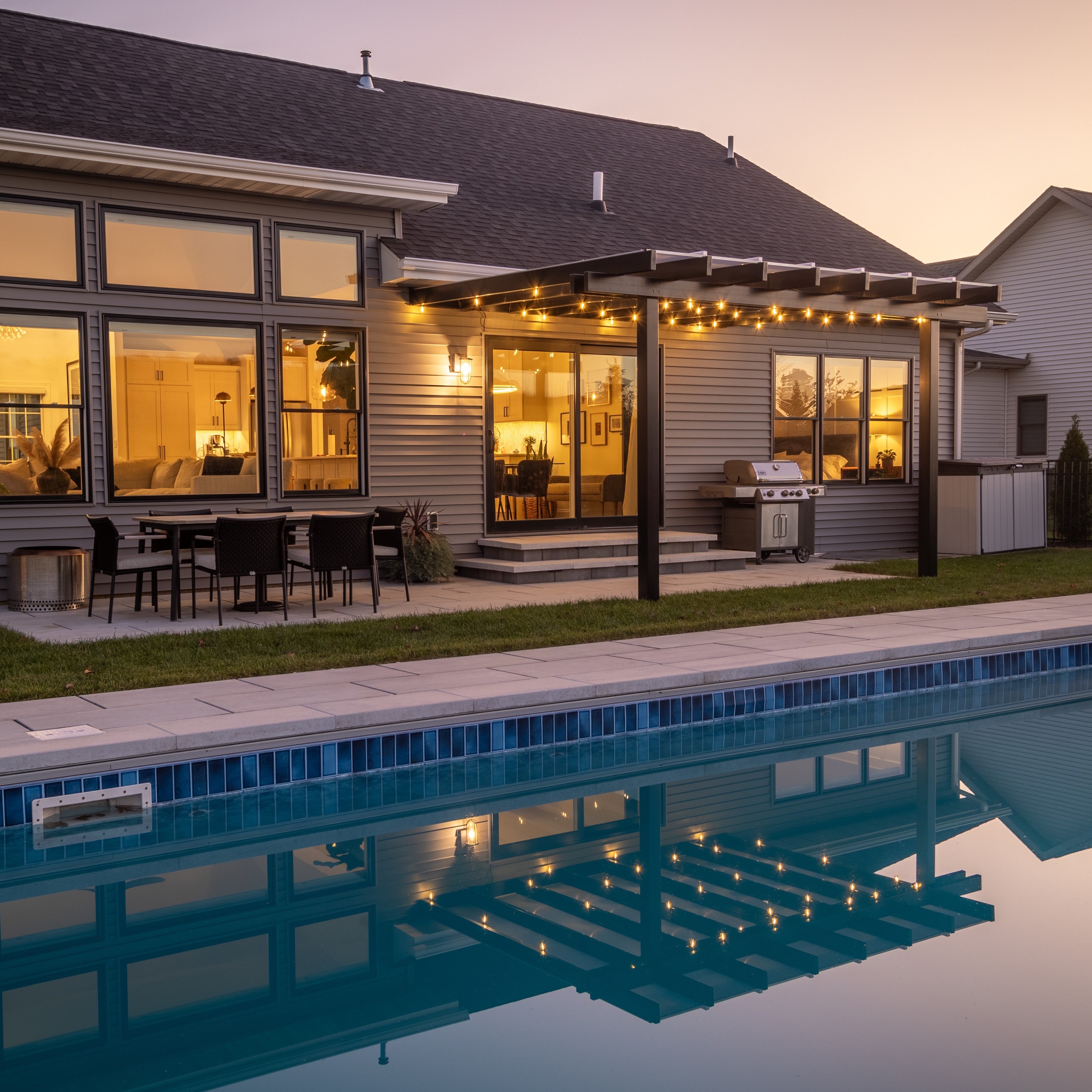
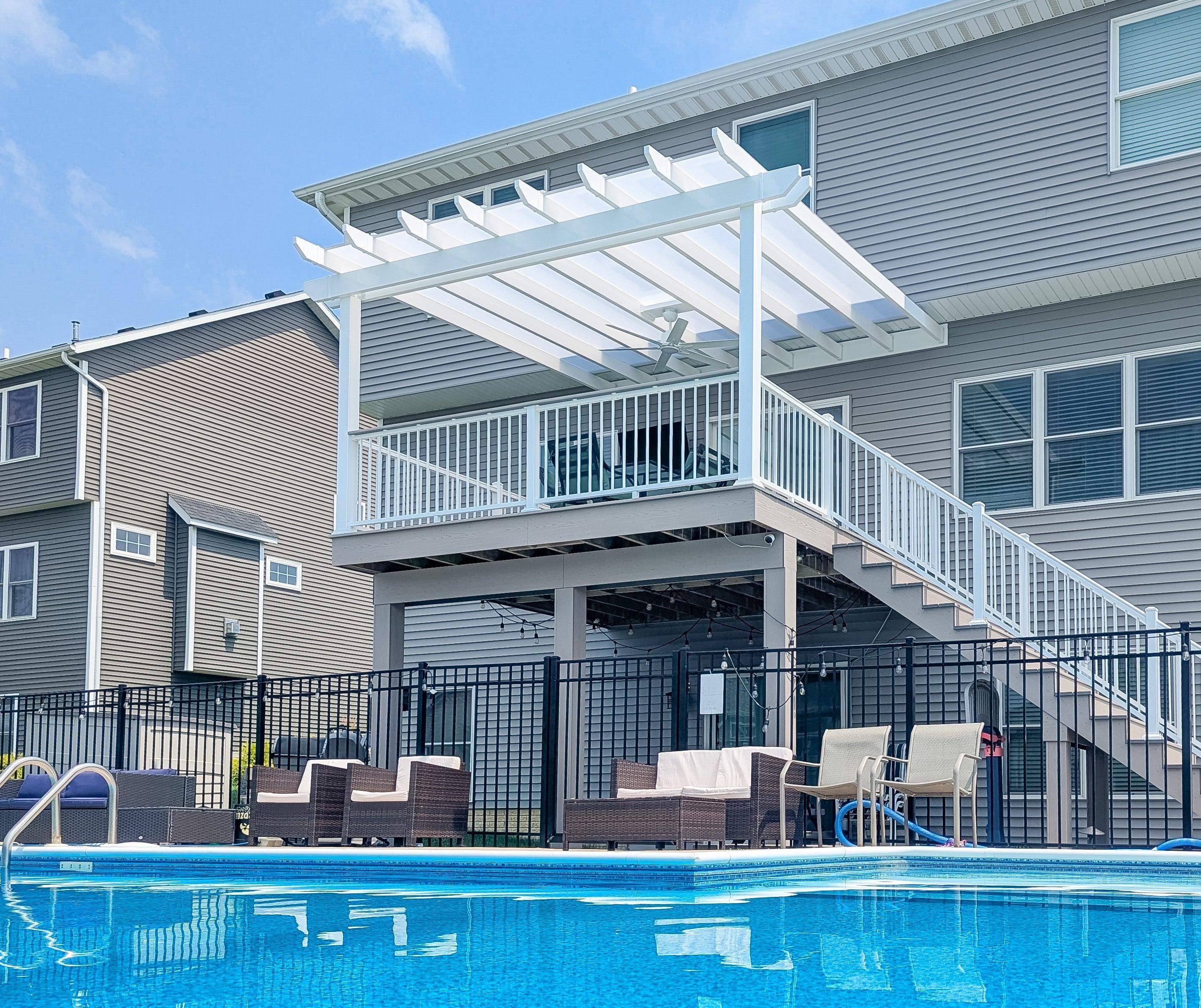
Attached and freestanding patio covers use the same core rainproof roof concept, but they solve different site-planning problems. The right configuration depends on where coverage is needed, whether the house is suitable for attachment, and how posts can fit around the patio.
An attached cover begins at the house and can provide a more continuous transition from an interior room to the patio. The standard two-post attached patio cover is available from 8 to 20 feet along the house and from 8 to 20 feet out from the structure.
For wider areas, the three-post attached patio cover accommodates widths from 24 to 32 feet along the house and projections from 8 to 20 feet.
A freestanding structure can cover a detached patio, poolside seating area, garden terrace, or another location that does not begin at the house. The four-post freestanding patio cover is offered in sizes from 8 by 8 feet through 20 by 20 feet.
Larger rectangular areas can use a six-post freestanding patio cover, available in widths from 24 to 32 feet and depths from 8 to 20 feet.
Consider doors, windows, rooflines, pathways, furniture clearances, and the direction water should travel away from the covered space. An attached configuration also requires a suitable connection point on the existing structure.
A freestanding cover offers more placement flexibility, but its posts and footings must fit the site without obstructing circulation. In either configuration, local code, setback, anchoring, and permit requirements should be confirmed before ordering.
Choose attached when the goal is to extend sheltered space directly from the home and the building can support the planned connection. Choose freestanding when the patio is detached, attachment is undesirable, or independent placement creates a better layout.
The best rain cover is sized for the activity area, compatible with the installation site, and configured so posts do not interfere with how the patio is used. Measure the physical space first, then select the attachment type, structural size, and finish options.
Measure the patio’s width and depth, but also identify the actual zone that needs overhead protection. Include furniture footprints, chair movement, walking paths, grill or cooking clearances, door swings, and any space needed around a hot tub or other feature.
You can compare available footprints on the shop-by-size page. Rainproof models range from 8 feet wide to 32 feet wide and from 8 to 20 feet deep, depending on configuration and post count.
A roof that only matches the furniture footprint may provide inadequate practical coverage near its edges. Where the site allows, plan enough roof area to cover both the main activity zone and the normal movement around it.
Finished height should relate to the house, doors, windows, views, and desired sense of enclosure. It must also work with the complete engineered layout rather than being selected only for appearance.
Rainproof patio covers can place posts at the corners or inset them by as much as 24 inches. Inset posts can help align supports with an existing slab, preserve a roof overhang, or improve clearance around the usable patio area.
Post location affects spans, anchoring, and the overall configuration. Confirm the intended placement when ordering rather than treating it as an adjustment to make during installation.
Review the mounting surface, house connection where applicable, utility locations, surrounding grade, and where roof runoff can go. Conditions vary by property, so local building and permit requirements should be checked for the exact site.
The kits are designed to be DIY-friendly, but installation still requires accurate layout, anchoring, assembly, and work at height. Homeowners can review the assembly information and videos before deciding whether to install the structure themselves or hire a contractor.
The available options let homeowners coordinate a patio rain cover with the home while preserving the same core structural system. Choices include frame and roof colors, post treatments, end-cap profiles, overhangs, post placement, fan mounts, and optional hurricane brackets.
Aluminum inserts reinforce every weight-bearing post, beam, and rafter. The rust-proof aluminum frame provides strength without the bulk of a fully solid structural material and supports longer spans between posts.
Thicker aluminum helps the structure resist bowing, bending, and breakage. The system is intended as a professional-grade permanent structure rather than a lightweight seasonal patio shelter.
The aluminum reinforcement is enclosed by premium extruded vinyl that is colored throughout rather than surface-painted. The vinyl does not require painting, staining, or sanding and is easy to clean.
Frame colors include white, tan, and black. White is the most affordable option, while black is the highest-priced frame color.
Post options include 5-inch square posts with a lower trim ring, 5-inch square posts with upper and lower trim rings, and 7-inch square posts with upper and lower trim rings. Posts can be located at the corners or inset up to 24 inches.
Beam and rafter overhangs can range from 0 to 24 inches. Scrolled, beveled, or flat end caps allow the finished cover to lean more decorative or more restrained while retaining its traditional structural form.
Optional fan mounts can be incorporated when overhead air movement or lighting is part of the patio plan. The electrical fixture, wiring, and installation should be selected and completed separately for the specific project.
Optional hurricane brackets are recommended for areas that ever experience winds of 80 MPH or more. Adding the hurricane-bracket option provides a lifetime wind-damage warranty for the patio cover.
These rainproof patio covers are made in the USA with American-sourced materials. Their combination of aluminum reinforcement, thick extruded vinyl, and a fixed polycarbonate roof is designed for buyers prioritizing durability and low maintenance over temporary or adjustable coverage.
There is no single cost for rain covers for patios because each project depends on size, attachment type, post count, colors, upgrades, site preparation, and installation. Evaluating the complete installed project is more useful than comparing kit prices without accounting for configuration or durability.
Width and depth are primary cost factors because larger covers require more structural and roofing material. Attached versus freestanding construction, the number and style of posts, frame color, roof-panel color, overhangs, fan mounts, and hurricane brackets can also affect the final price.
Project cost may extend beyond the kit itself. Depending on the property, preparation can include confirming the mounting surface, creating suitable footings, arranging permits, addressing drainage, and hiring a contractor.
Homeowners considering DIY installation should weigh potential labor savings against the tools, time, lifting, accurate layout, and anchoring required. A more complex attached or large-span project may justify professional installation.
The extruded vinyl exterior eliminates recurring painting, staining, and sanding. Routine care centers on cleaning the frame and roof surfaces and periodically checking the structure, anchors, and areas where debris could interfere with water movement.
The aluminum-reinforced frame carries a lifetime warranty, while the solid polycarbonate roof carries a 10-year warranty. When hurricane brackets are added, the structure also receives a lifetime wind-damage warranty.
A permanent patio cover is intended to remain part of the property for the long term. Its value comes from creating a more dependable outdoor area, reducing finish maintenance, and avoiding motors or moving roof parts that may require future repair or replacement.
This makes it most appropriate for homeowners who want lasting rain and sun protection—not shoppers seeking a temporary cover or a $500 to $1,500 seasonal pergola.
A fixed patio cover with a solid, properly installed roof provides more dependable rain protection than an open slatted pergola or fabric shade. These rainproof patio covers use solid polycarbonate roof panels.
The solid polycarbonate roof system is designed to be rainproof when correctly assembled and installed. Wind-driven rain can still enter through the open sides of the patio cover.
Yes. Both the white and bronze polycarbonate roof-panel options provide 100% UV protection from above.
The roof blocks direct overhead sunlight and can make the patio up to 15 degrees cooler. Actual temperature differences vary with climate, orientation, airflow, and time of day.
Yes. Rainproof covers are available as attached two-post models and attached three-post models. The house must have a suitable attachment location, and local requirements should be confirmed.
Yes. Freestanding versions are available with four posts for sizes up to 20 by 20 feet and six posts for sizes up to 32 by 20 feet.
The solid roof panels are available in white or bronze. The extruded vinyl frame is available in white, tan, or black.
No. Fixed angled slats provide 50%, 75%, or 90% shade coverage, but they do not form a rainproof roof. Compare them with slatted-roof pergolas when filtered shade is more important than rain protection.
No. The exterior is premium extruded vinyl colored throughout, so it does not require painting, staining, or sanding.
The kits are DIY-friendly, but installation requires accurate layout, anchoring, assembly, lifting, and work at height. Review the assembly information and use a qualified contractor when the project exceeds your experience.


