

MADE IN THE USA
with American products
w/ American products


Home ▸ Hardtop Patio Covers
Hardtop patio covers create a permanently covered outdoor area with a solid polycarbonate roof that protects against rain and blocks 100% of UV rays. Our aluminum-reinforced, vinyl-clad covers are available in attached and freestanding configurations, with white or bronze roof panels. Explore the options below to find a low-maintenance cover sized for your patio, deck, pool area, or outdoor living space. [read more]


A hardtop patio cover is a permanent outdoor structure with a fixed, solid roof rather than fabric, canvas, or movable louvers. The rainproof patio covers in this collection use polycarbonate roof panels supported by an aluminum-reinforced frame with a premium extruded vinyl exterior.
“Hardtop” describes a rigid roof that remains in place throughout the year. Unlike a retractable awning or temporary canopy, it does not need to be opened, closed, removed, or stored as weather conditions change.
The roof consists of solid polycarbonate panels offered in white or bronze. Both choices create a rainproof covering, provide 100% UV protection, and can make the covered patio up to 15 degrees cooler.
A hardtop cover is designed for homeowners who want overhead protection from both sunlight and rain. A pergola with a slatted roof provides filtered shade and a more open-air setting, but its angled slats do not form a rainproof roof.
Hardtop patio covers can be secured to a house or built as independent structures. Both configurations use the same basic solid-roof concept, but they serve different patio layouts and require different installation planning.
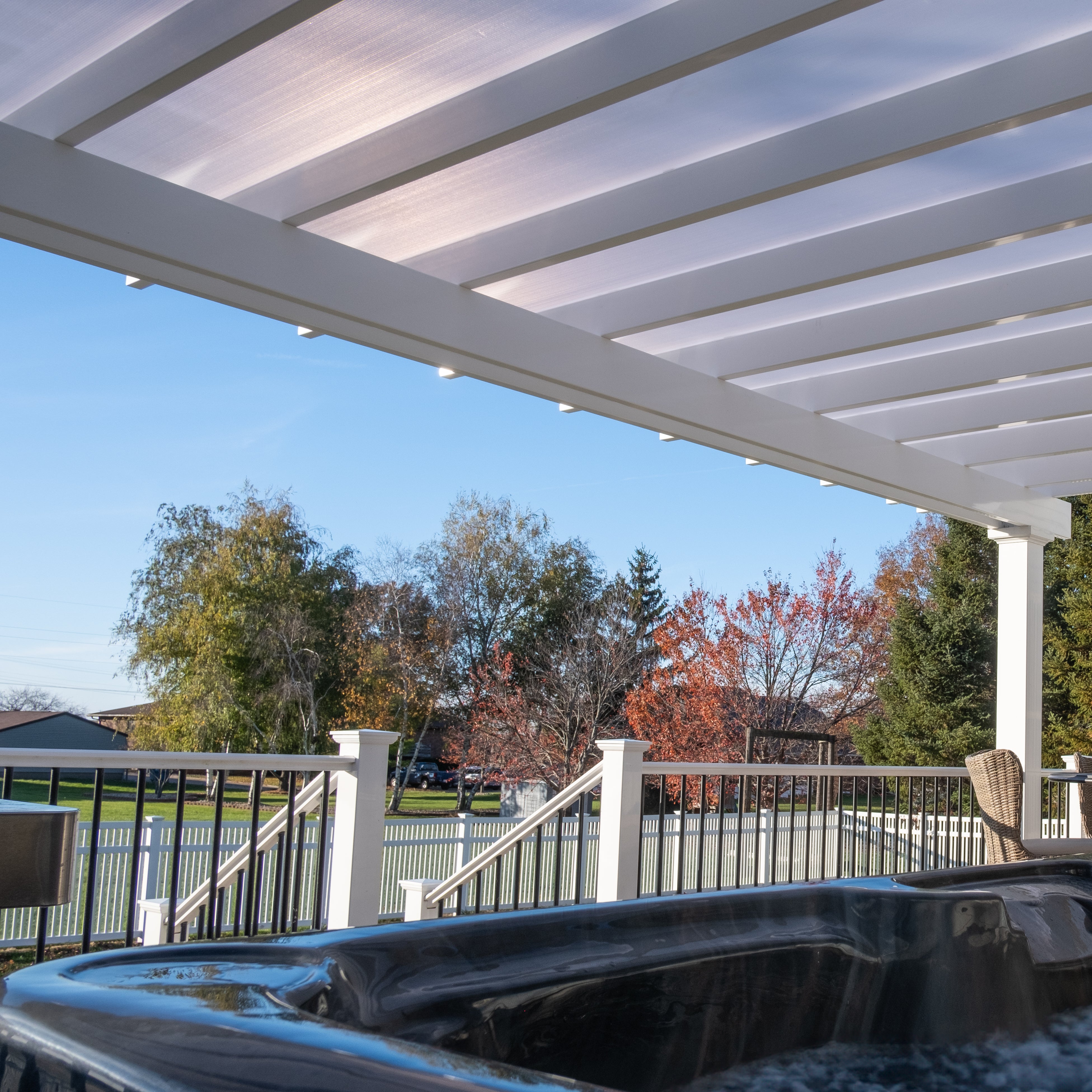
A fixed hardtop roof turns an exposed patio into a more dependable outdoor living area. Its value comes from solving practical weather and maintenance concerns without relying on fabric, movable roof parts, or seasonal setup.
The solid polycarbonate roof is rainproof, so it provides substantially different coverage than an open or slatted pergola. It can help keep a dining area, lounge, grill station, or hot-tub area usable when wet weather would otherwise send everyone indoors.
White and bronze polycarbonate panels both provide 100% UV protection beneath the roof. This gives people and covered furnishings a protected area away from direct ultraviolet exposure.
The roof panels can make the space underneath up to 15 degrees cooler. Actual comfort will also depend on the local climate, time of day, patio orientation, and airflow around the structure.
A solid roof reduces direct exposure to rain and sunlight from above, helping protect outdoor seating, tables, and other patio furnishings. Because the sides remain open, wind-driven rain and low-angle sun may still reach items near the perimeter.
Consistent overhead coverage makes the patio more practical across changing conditions. The structure remains in place year-round and has no motorized or moving roof components that must be operated or periodically replaced.
Not every outdoor cover solves the same problem. The right choice depends on whether the priority is dependable rain protection, adjustable sunlight, filtered shade, temporary coverage, or the natural appearance of another roofing material.
Hardtop patio covers use a solid polycarbonate roof for rain protection and complete overhead UV coverage. Slatted Traditional and Modern pergolas instead use fixed angled slats that provide 50%, 75%, or 90% shade coverage while allowing air and some light through the roof.
Both materials can form fixed roofs, but this collection uses polycarbonate roof panels rather than sheet-metal roofing. The supporting structure combines rust-proof aluminum reinforcement with a thick vinyl exterior, while the white or bronze polycarbonate panels supply the weather barrier overhead.
A fixed polycarbonate roof provides consistent coverage without adjustable louvers, motors, or other moving parts. A louvered system may appeal to someone who prioritizes adjustable exposure, but louvered and motorized roofs are not offered in this collection.
Retractable awnings extend and retract as needed, while these hardtop covers are permanently installed structures. They do not use retractable fabric or canvas and are intended for homeowners seeking durable, year-round overhead coverage.
Portable canopies are typically selected for temporary use and low initial cost. A hardtop patio cover is a professional-grade addition intended to remain anchored in place, add long-term utility, and complement a finished outdoor living area.
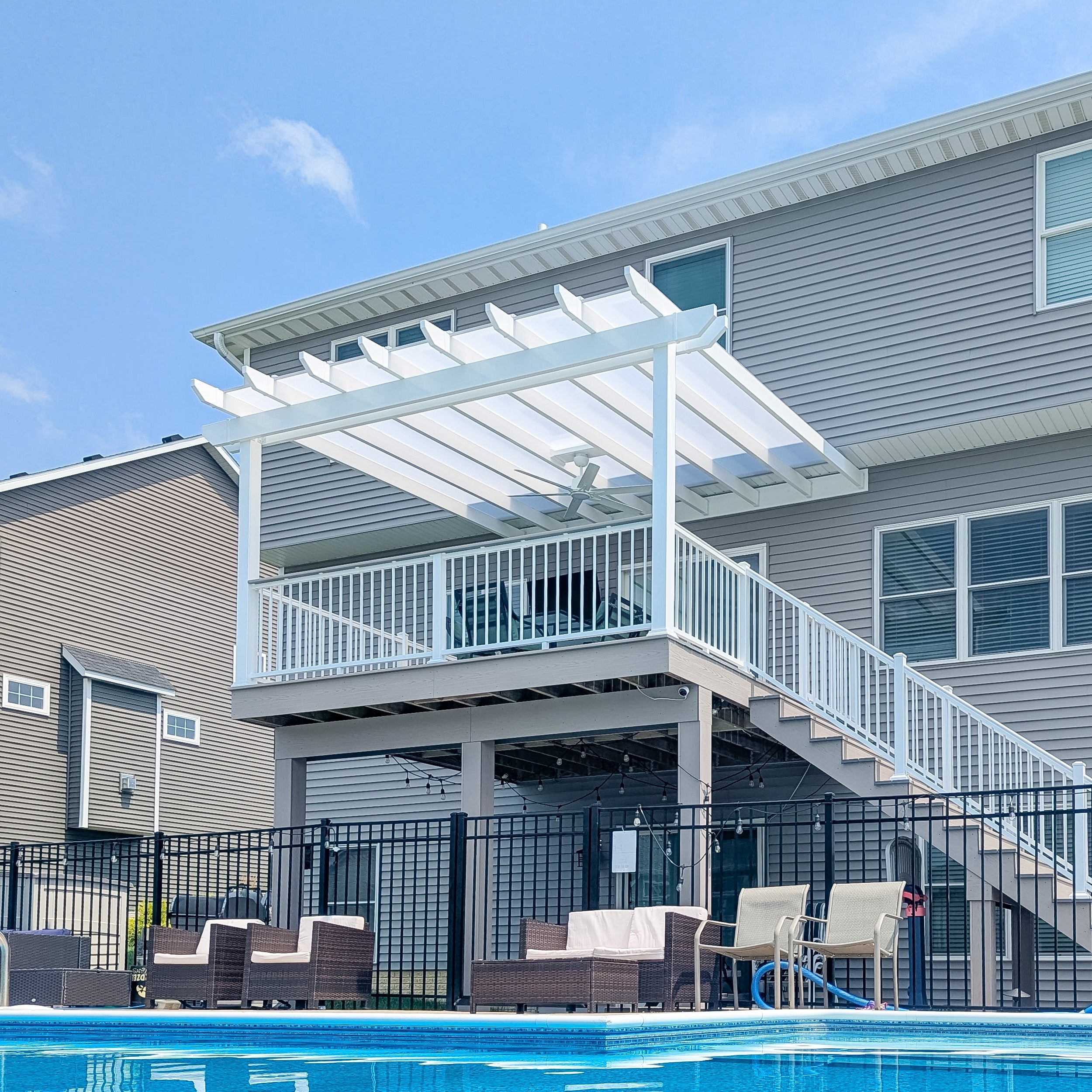
Choosing a cover begins with the usable area, the relationship between the patio and the house, and the locations where posts can be anchored. Work from field measurements rather than furniture dimensions alone, and confirm structural and permitting requirements before ordering.
Measure the width, projection, and available height of the proposed installation area. Allow for doors, windows, rooflines, steps, utilities, property setbacks, and enough circulation space around the intended furniture layout.
An attached hardtop patio cover connects the outdoor space directly to the house and can use two posts in sizes up to 20 feet wide by 20 feet out from the structure. A four-post freestanding patio cover, also available up to 20 by 20 feet, can be positioned independently over a patio, poolside seating area, or other open location.
Post locations affect both appearance and movement beneath the cover. Posts can be placed at the corners or inset by as much as 24 inches, allowing the structure to respond to the edge of a slab, furniture placement, and desired roof overhang.
Consider the direction of midday and late-afternoon sun as well as how rain reaches the space. The cover protects the area directly beneath its roof, but low-angle sunlight and wind-driven rain can enter through the open sides.
Requirements for permanent outdoor structures vary by jurisdiction and site. Before installation, confirm applicable permits, setbacks, anchoring rules, engineering requirements, and any neighborhood or homeowners-association restrictions.

A permanent patio cover depends on more than the visible roof. The frame, exterior finish, connections, and roof panels work together to create a strong, weather-resistant structure designed for long-term residential use.
Aluminum inserts reinforce all weight-bearing posts, beams, and rafters. The rust-proof aluminum frame provides strength without excessive weight, supports longer spans between posts, and is engineered for demanding wind conditions.
The structural frame is clad in thick, premium extruded vinyl that is colored throughout rather than surface-painted. This exterior does not require painting, staining, or sanding and is easy to clean, making these vinyl outdoor structures well suited to low-maintenance properties.
Polycarbonate panels form the fixed, rainproof roof. They are offered in white or bronze, and both panel colors block 100% of UV rays while helping reduce heat beneath the cover.
These are not lightweight decorative shelters. Thicker aluminum reinforcement helps the frame resist bowing and bending, while permanent anchoring creates a substantial outdoor structure intended to add lasting function to the property.
The covers are made in the USA using American-sourced materials. The frame carries a lifetime warranty, and the polycarbonate roof carries a 10-year warranty.
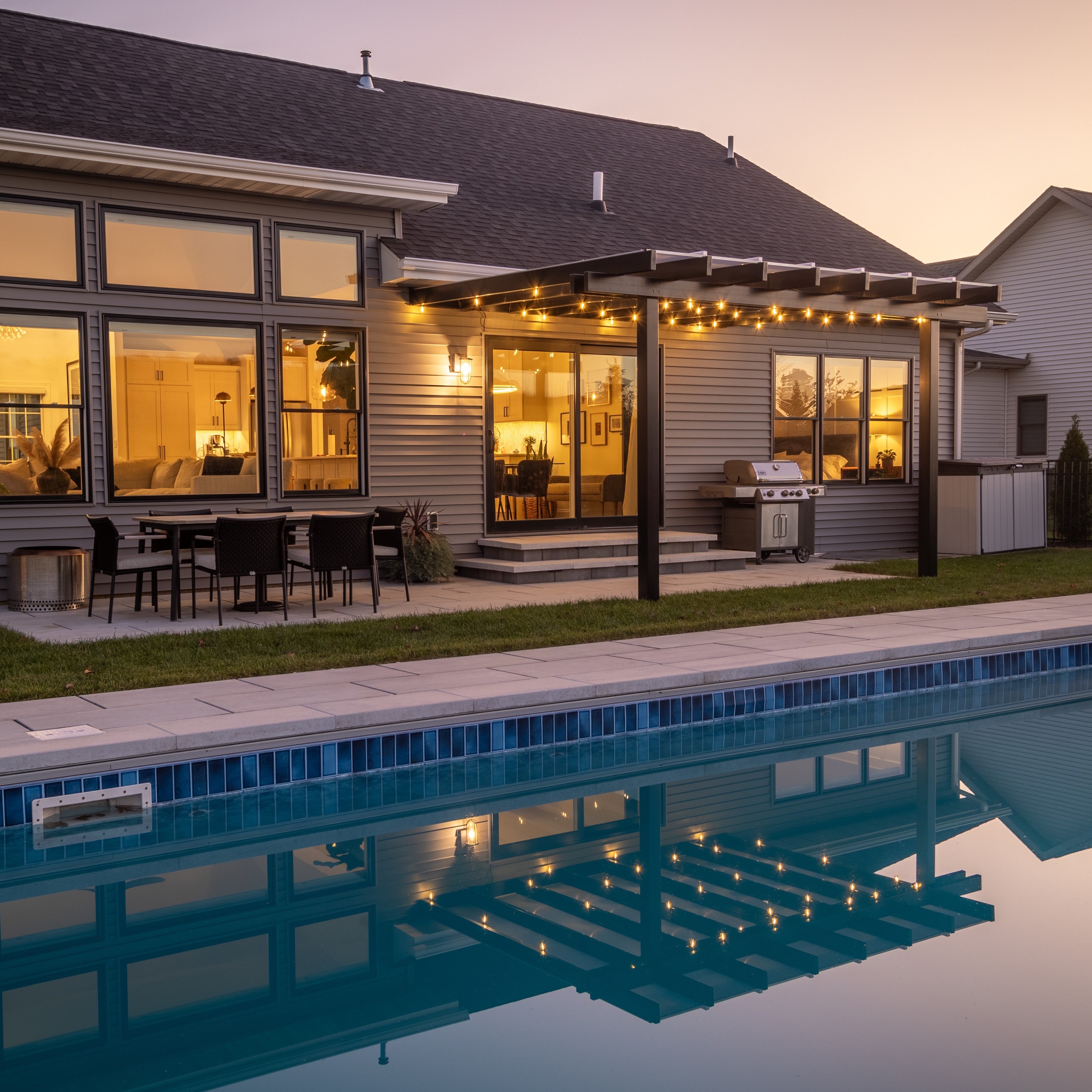
Hardtop patio covers can be configured to coordinate with the home and the dimensions of the outdoor space. The available choices affect appearance, post count, roof coverage, and placement, but the roof always remains fixed and rainproof.
Choose white or bronze roof panels according to the preferred appearance and quality of light beneath the cover. Both choices provide the same 100% UV protection and up-to-15-degree cooling benefit.
The vinyl-clad frame is available in white, tan, or black. White is the most affordable option, tan provides a warmer neutral finish, and black creates a stronger visual contrast at the highest color-option price.
Available supports include 5-inch square posts with a lower trim ring, 5-inch square posts with upper and lower trim rings, and 7-inch square posts with upper and lower trim rings. Scrolled, beveled, or flat end caps and optional overhangs from 0 to 24 inches allow the traditional-style frame to be tailored to the home.
Four-post freestanding and two-post attached covers are available from 8 by 8 feet through 20 by 20 feet. Larger layouts use either six freestanding posts or three attached posts and can extend from 24 to 32 feet wide with projections from 8 to 20 feet.
Optional fan mounts can be included when overhead air movement is part of the patio plan. Optional hurricane brackets are recommended where winds may reach 80 MPH or higher; adding them provides a lifetime wind-damage warranty for the structure.
The cost of a hardtop patio cover depends on the structure selected rather than one universal price per square foot. Size, configuration, color, post count, decorative details, options, delivery, site preparation, and installation can all affect the completed project.
Larger roofs require more material and may require additional posts and structural components. Attached and freestanding designs also use different support layouts, so covers with similar roof dimensions may not have identical costs.
White is the most affordable vinyl color, while tan and black increase the price. Post style, end-cap profile, overhang dimensions, roof-panel color, fan mounts, and hurricane brackets can further change the final configuration.
Project cost may include preparing suitable footings or an existing surface, obtaining permits, arranging delivery access, and hiring a contractor. The kits are DIY-friendly, and the assembly information and videos can help homeowners and contractors understand the process before deciding who will install the structure.
A premium vinyl exterior eliminates recurring painting, staining, and sanding, while the fixed roof has no motors or movable louvers to service. The lifetime frame warranty and 10-year roof warranty support a long-term value comparison with temporary covers or lower-grade structures that may require earlier replacement.
A hardtop cover should be evaluated as a permanent addition rather than a consumable seasonal product. For homeowners investing in a finished patio, pool deck, or outdoor entertaining area, durable materials and dependable coverage may matter more than obtaining the lowest upfront price.
Yes. The covers in this collection use a solid polycarbonate roof designed to provide rainproof overhead coverage.
The fixed roof is made from polycarbonate panels available in white or bronze. Both colors provide 100% UV protection.
A hardtop patio cover has a solid, rainproof roof. A typical slatted pergola provides partial shade but allows rain through the roof.
Yes. Attached models are available with two posts in sizes up to 20 by 20 feet and with three posts in widths from 24 to 32 feet.
Yes. Choose a four-post cover for sizes up to 20 by 20 feet or a six-post cover for widths from 24 to 32 feet.
Yes. Both the white and bronze polycarbonate roof panels provide 100% UV protection beneath the roof.
No. The premium extruded vinyl exterior is colored throughout and does not require painting, staining, or sanding.
No. These covers use fixed polycarbonate roofs and do not include louvers, retractable panels, canvas, motors, or adjustable roof parts.
Yes. The kits are designed for DIY-friendly assembly, although homeowners may hire a contractor based on project size, site conditions, and local requirements.
The aluminum-reinforced frame has a lifetime warranty, and the polycarbonate roof has a 10-year warranty. Optional hurricane brackets add a lifetime wind-damage warranty.


