

MADE IN THE USA
with American products
w/ American products


Home ▸ Balcony Covers
Balcony covers create permanent shade or rain protection over elevated outdoor spaces, helping make balconies more comfortable and usable throughout the year. Our aluminum-reinforced vinyl structures are available with fixed slatted roofs for 50%, 75% or 90% shade, or solid polycarbonate roofs for rainproof coverage. Choose from attached or freestanding configurations and traditional or modern styles to complement your home and the way you use your balcony. [read more]


Balcony covers are permanent overhead structures designed to add shade, weather protection or both to an elevated outdoor living area. Depending on the roof design, a cover can reduce direct sunlight while retaining an open-air feel or provide a solid roof that keeps the space underneath protected from rain.
The primary purpose of a balcony cover is to make an exposed balcony more comfortable and functional. A fixed slatted roof provides substantial shade while maintaining airflow and an open appearance, while a solid roof provides complete overhead coverage from rain as well as sun protection.
The terms overlap, but "balcony cover" can describe both slatted and solid-roof structures. A balcony roof more often implies continuous overhead coverage. For homeowners who specifically need protection from rain, our rainproof patio covers use solid polycarbonate roof panels rather than open slats.
Permanent balcony covers differ from temporary fabric canopies and portable shade structures in both construction and intended lifespan. Our pergolas and patio covers combine aluminum-reinforced structural components with a premium extruded vinyl exterior and are designed to remain permanently installed.
Depending on the balcony layout and available structural support, a cover may be attached to the house or designed as a freestanding structure. Our attached pergolas connect to an existing structure, while freestanding designs use their own supporting posts.
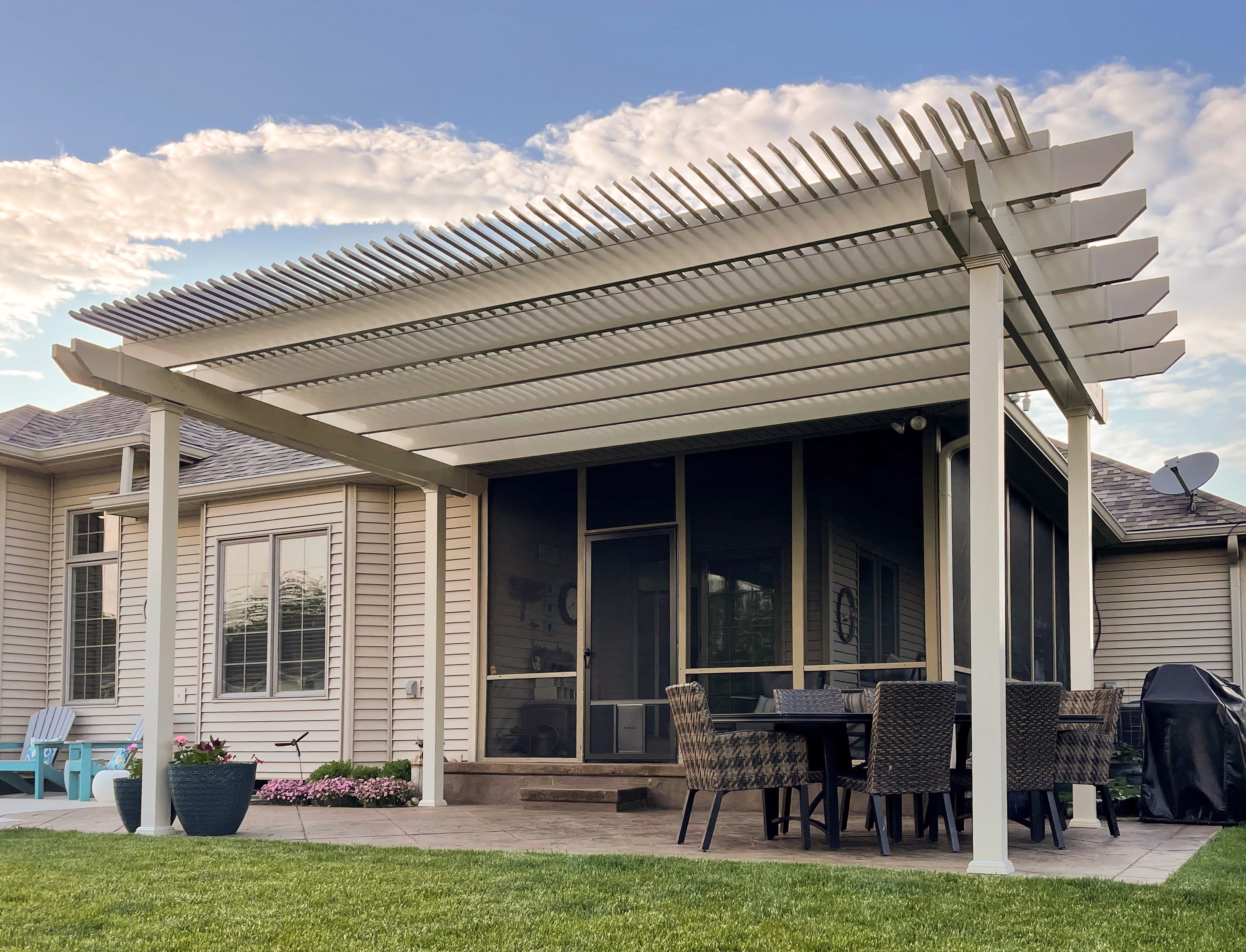
An uncovered balcony can receive intense direct sun and, depending on its exposure, become difficult to use during parts of the day. Adding the right overhead structure can create meaningful shade, provide rain protection when a solid roof is selected and define the balcony as a more intentional outdoor living space.
Traditional and modern pergola roofs use fixed angled slats and are available in 50%, 75% and 90% shade configurations. This lets homeowners choose how much shade they want without installing adjustable or motorized components.
A slatted pergola roof is designed for shade, not rain protection. If keeping the balcony dry is the priority, a solid polycarbonate roof provides rainproof overhead coverage. The white and bronze polycarbonate roof panel options both provide 100% UV protection and can make the covered area up to 15 degrees cooler.
Reducing direct sun or adding a solid roof can make a balcony usable during more weather conditions and more hours of the day. For homes where the balcony functions as an extension of an indoor living area, permanent overhead coverage can also give the space greater architectural definition.
Overhead coverage can reduce direct exposure of furniture and finishes to sunlight, while a solid roof also limits direct rain from above. Actual protection will vary with roof type, balcony orientation and wind-driven weather, since the sides of the balcony remain open.
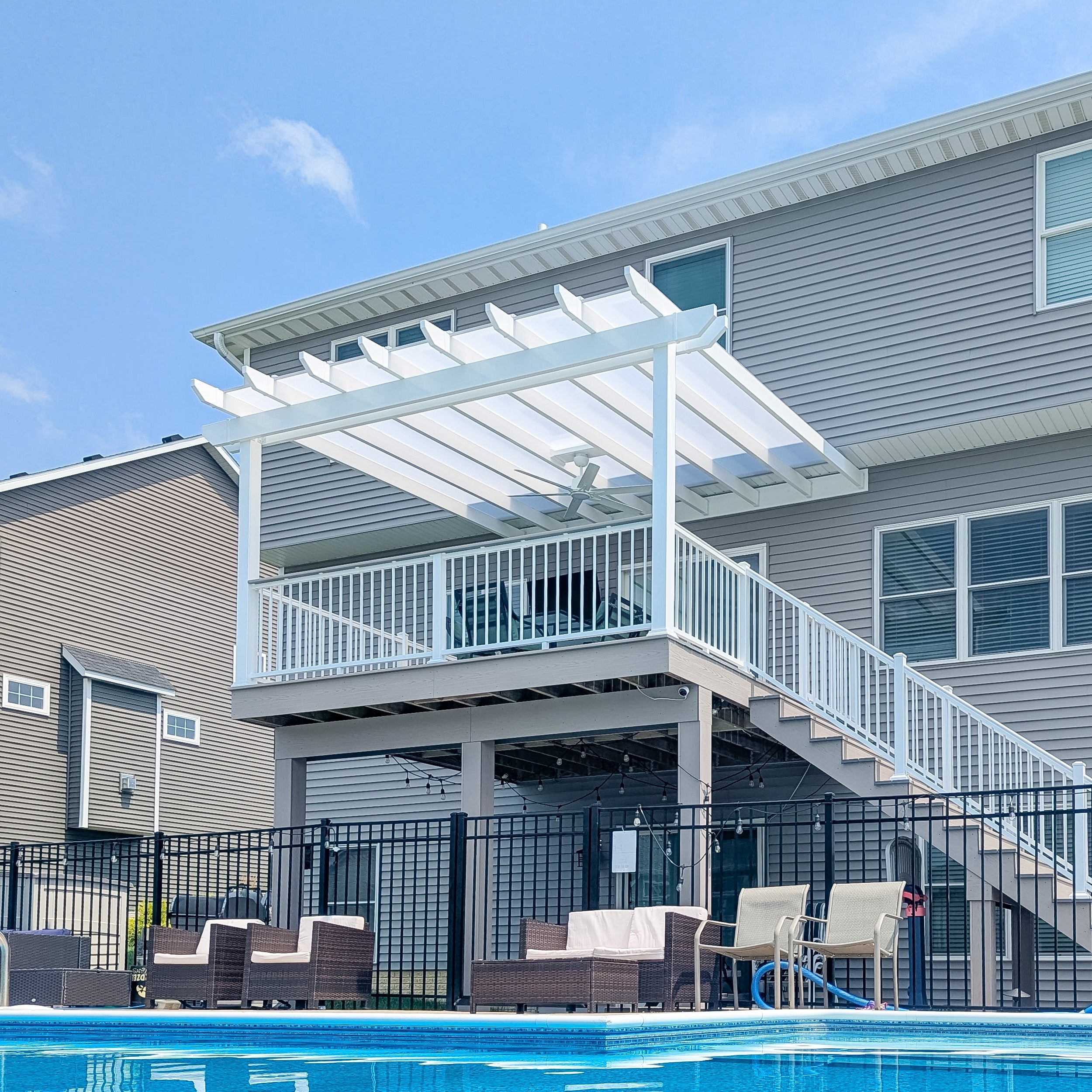
The best balcony cover depends largely on whether the goal is shade, full overhead rain protection or a particular architectural style. Permanent pergola and patio-cover systems provide several ways to address these needs without relying on retractable fabric or moving roof components.
A pergola with a slatted roof uses fixed angled slats to create real shade while maintaining the visual character of a pergola. Our traditional and modern models are available with 50%, 75% or 90% shade coverage. Because gaps remain between the slats, these roofs are not rainproof.
For homeowners who want rain protection, a fully covered patio-cover design uses solid polycarbonate roof panels. These permanent covers are available in attached and freestanding configurations, with white or bronze roof panels providing 100% UV protection.
Traditional pergolas feature a classic beam-and-rafter profile and can include 0 to 36 inches of overhang on slatted models. Depending on the configuration, posts can be positioned at the corners or inset by up to 36 inches, and scrolled, beveled or flat end caps provide additional design choices.
Modern pergolas use square, flush corners with posts positioned at the corners and no beam or rafter overhangs. The resulting profile is cleaner and more geometric while retaining the same aluminum-reinforced construction and fixed 50%, 75% or 90% shade options.
Attached covers use the existing house or structure as one side of the installation, reducing the number of supporting posts required. Freestanding covers support themselves independently with posts on both sides. Which configuration is appropriate depends on balcony dimensions, attachment conditions and structural requirements.

Choosing a balcony cover starts with the practical requirements of the space rather than appearance alone. Determine whether you primarily need shade or rain protection, then evaluate the available dimensions, attachment conditions, structural support and architectural style.
For shade, choose among fixed slatted roofs with 50%, 75% or 90% coverage. A 50% configuration has slats spaced 6 inches on center, 75% uses 4-inch spacing and 90% uses 3-inch spacing. If the primary objective is staying dry during rain, select a solid-roof patio cover instead.
Measure both the area you want covered and the space available for posts, attachment points and roof projections. Traditional attached pergolas are available in configurations ranging from 8 to 44 feet along the attached side and 8 to 44 feet outward, depending on the number of posts. Modern attached models are available up to 32 by 32 feet, depending on configuration, while attached solid-roof covers are available up to 32 feet along the structure and 20 feet outward.
Balconies require particular attention to structural support because the cover and its posts must ultimately transfer loads into suitable structural components. Before ordering, confirm that the balcony, building and proposed attachment locations can accommodate the selected system and applicable loads. Local permitting and building-code requirements should also be checked before installation.
Wind exposure is especially important on elevated and exposed spaces. Our structures use aluminum reinforcement in weight-bearing components, and hurricane brackets are available for traditional pergolas and solid-roof patio covers. They are recommended when an area ever experiences winds of 80 mph or higher and add a lifetime wind damage warranty to those eligible structures.
Traditional designs suit homes where overhangs, decorative end caps and multiple post styles complement the architecture. Modern designs provide flush corners and a streamlined profile for contemporary homes. White, tan and black vinyl exterior options make it possible to coordinate the structure with many exterior palettes.
The material and construction method affect maintenance, appearance, structural performance and long-term ownership. Wood, fabric, aluminum and vinyl-based systems each serve different priorities, so the appropriate choice depends on whether the homeowner wants a temporary shade product or a permanent architectural structure.
Premium extruded vinyl offers a low-maintenance exterior that does not require painting, staining or sanding. Our vinyl pergolas use thick extruded vinyl that is colored throughout rather than relying on a painted surface, helping maintain a consistent appearance over time.
Aluminum provides structural strength without the maintenance associated with exposed wood. Our pergolas use aluminum inserts within weight-bearing posts, beams and rafters, with the aluminum protected by an extruded vinyl exterior. This construction combines a rust-proof structural frame with a maintenance-free finished surface.
Wood offers a natural appearance and can be painted or stained in many finishes, but maintaining that appearance generally requires periodic refinishing. Homeowners comparing wood with vinyl should consider both initial appearance and the painting, staining, sanding and other maintenance that may be required over the life of the structure.
Fabric canopies and retractable awnings can be appropriate when temporary or adjustable shade is the objective. They are fundamentally different from a permanent structural pergola or patio cover, however. Sunset Pergola Kits does not offer canvas, retractable or motorized cover systems.
For homeowners prioritizing long-term ownership, construction quality matters as much as the exterior material. Thick aluminum reinforcement allows longer spans between posts and helps the structure resist bowing and bending, while the vinyl exterior eliminates routine painting and staining. The absence of motors and moving roof components also removes mechanical parts that can require replacement.
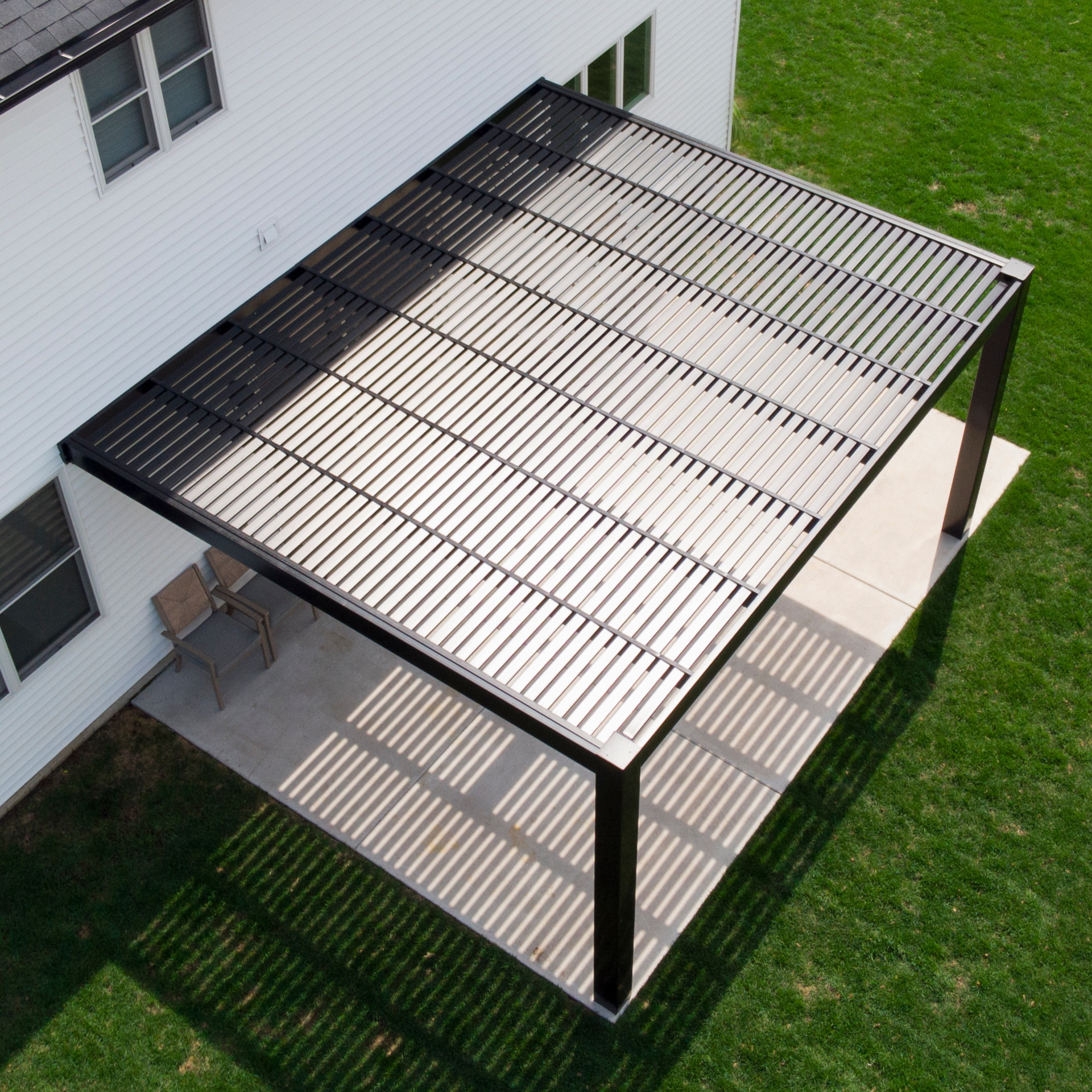
A permanent balcony cover can be configured around the amount of shade or weather protection needed as well as the architecture of the home. Roof design is the most important functional choice, while style, color, posts and finishing details determine how the structure fits the property.
Traditional and modern pergolas offer three fixed shade levels. Choose 50% coverage for a more open roof, 75% for increased shade or 90% for the greatest shade coverage available with the slatted design. The angled slats are fixed rather than adjustable, so there are no motors or moving roof components.
When complete overhead rain protection is needed, a solid polycarbonate roof is the appropriate option. White and bronze roof panels are available, both providing 100% UV protection and making the covered area up to 15 degrees cooler. Solid-roof covers can be freestanding or attached to the house or another suitable structure.
Traditional designs offer the most decorative flexibility, including beam and rafter overhangs, multiple post styles and scrolled, beveled or flat end caps. Modern designs eliminate overhangs and end caps in favor of flush corners and corner-positioned square posts.
The extruded vinyl exterior is available in white, tan and black. The color runs throughout the vinyl rather than being applied as surface paint. White is the most affordable option, while black is the highest-priced of the three finishes.
Traditional slatted pergolas offer 5-inch square, 7-inch square and 10-inch round post choices with applicable trim options, while modern pergolas use square posts and a more minimal design. Optional fan mounts are also available for traditional, modern and solid-roof structures.
The cost of a permanent balcony cover varies according to size, roof type, style, color, post configuration and other selected options. Rather than comparing price alone, homeowners should also consider structural quality, maintenance requirements, warranty coverage and the expected service life of the cover.
Dimensions are a major factor because larger structures require additional material and may require more posts. Roof type, traditional or modern styling, vinyl color and optional components can also affect the final price.
A slatted pergola and a solid-roof cover solve different problems. Slatted roofs are intended to create shade, while solid polycarbonate roofs add rain protection. Choosing according to the actual purpose of the balcony helps avoid paying for functionality you do not need—or selecting a shade structure when the real requirement is a dry outdoor area.
Long-term maintenance can materially affect the ownership cost of a permanent outdoor structure. The extruded vinyl exterior does not need painting, staining or sanding, and fixed roofs avoid motors and moving mechanisms that can eventually require service or replacement.
A professional-grade balcony cover is a different purchase from an inexpensive temporary canopy or lightweight pergola. These systems are intended as permanent additions to the property, using aluminum reinforcement and thick extruded vinyl for long-term outdoor use.
Traditional and modern pergola frames carry a lifetime warranty, as do the frames of fully covered patio covers; solid polycarbonate roofs carry a 10-year warranty. The structures are made in the USA using America-sourced materials, providing an alternative for homeowners specifically seeking a permanent domestic-made outdoor structure.
The best balcony cover depends on the goal. A fixed slatted pergola is appropriate for shade, while a solid-roof patio cover is the better choice when overhead rain protection is required.
Yes. A permanent pergola can provide substantial balcony shade when the balcony and supporting structure are suitable for installation. Slatted pergolas provide shade but are not rainproof.
Yes. Attached pergolas and solid-roof patio covers can connect to a suitable house or structure. Structural conditions and local building requirements should be verified before installation.
Yes. Freestanding pergolas and freestanding solid-roof patio covers are available when attachment to the building is not desired or appropriate.
No. Fixed slatted roofs are designed to provide shade, with 50%, 75% or 90% coverage options, but gaps between the slats allow rain through.
A solid-roof cover is needed for overhead rain protection. Sunset Pergola Kits' fully covered systems use solid polycarbonate roof panels in white or bronze, both of which provide 100% UV protection.
Our traditional and modern pergolas are available with approximately 50%, 75% or 90% shade coverage, determined by fixed slat spacing of 6, 4 or 3 inches on center, respectively.
No. The premium extruded vinyl exterior is colored throughout and does not require painting, staining or sanding. Routine cleaning is generally all that is needed to maintain the exterior.
The pergola kits are designed to be DIY-friendly and can also be installed by a contractor. Because balconies are elevated structures, the supporting structure, attachment method and local code requirements should be confirmed before installation. See the assembly information and videos for additional installation guidance.
Permit and building-code requirements vary by location and project. Check with the local building authority and, where applicable, an HOA or property association before ordering or installing a permanent balcony cover.


