

MADE IN THE USA
with American products
w/ American products


Home ▸ Waterproof Pergolas
Waterproof pergolas provide a permanent outdoor structure with either real shade or a fully covered, rainproof roof. Our pergola systems combine aluminum-reinforced structural components with a maintenance-free extruded vinyl exterior, with solid polycarbonate roofs available when rain protection is the priority. Choose a traditional or modern slatted pergola for shade, or a fully covered patio cover for a rainproof outdoor living space. [read more]


A waterproof pergola is an outdoor structure designed to provide meaningful protection from weather, but the roof type matters. Traditional and modern pergolas have fixed angled slats that provide 50%, 75%, or 90% shade but are not rainproof. For dependable protection from rain, our fully covered pergolas—commonly called patio covers—use a solid polycarbonate roof.
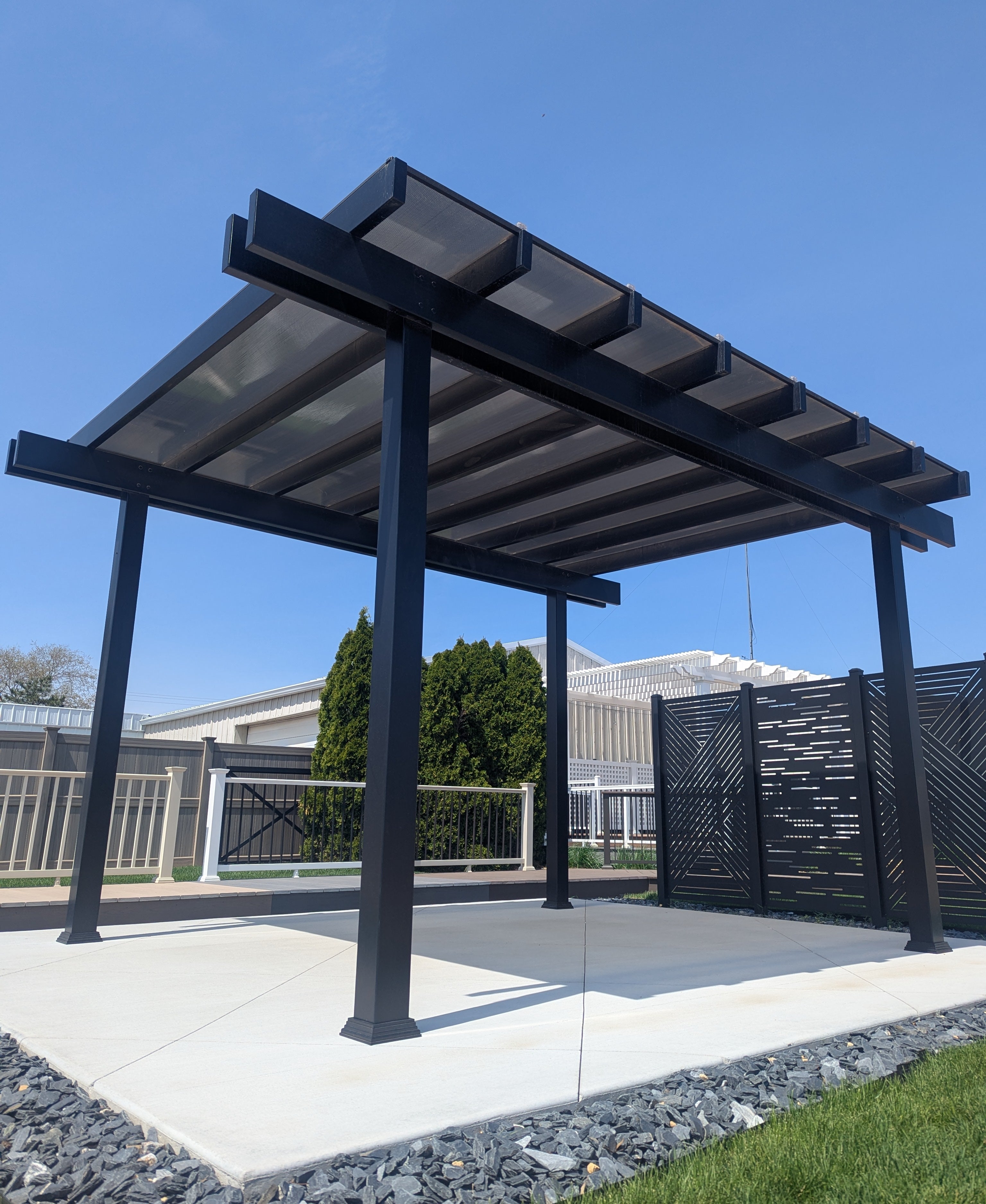
A pergola needs a solid roof system to provide reliable rain protection. Our rainproof patio covers use solid polycarbonate roof panels rather than open shade slats, creating a fully covered outdoor area that can be used during rainy weather.
The roof panels are available in white or bronze and provide 100% UV protection. They also help keep the patio up to 15 degrees cooler while providing coverage from rain and direct sunlight.
These terms should not be treated as interchangeable. A slatted pergola can provide substantial shade while still allowing rain to pass between the slats, so it should not be described as waterproof or rainproof.
A fully covered patio cover is the appropriate choice when the primary goal is a roofed outdoor space with rain protection. See our rainproof patio covers for the fully covered options.
The solid polycarbonate roof creates continuous overhead coverage rather than the open gaps found in a traditional slatted pergola. This makes a fully covered system better suited to protecting outdoor seating, dining areas, patios, and other spaces from rain.
A fully covered patio cover is designed to provide rainproof overhead coverage, while the sides remain open unless the surrounding area is enclosed separately. Traditional, modern, and eyebrow pergolas with slatted roofs are shade structures rather than rainproof structures.
A properly selected outdoor roof can make a patio or deck substantially more usable by providing protection from the elements. The key is choosing between an open slatted pergola for shade and a solid-roof patio cover when rain protection is required.
A solid polycarbonate roof provides the overhead coverage needed to keep rain off the patio area below. This makes a rainproof patio cover useful for outdoor dining, entertaining, seating areas, hot tubs, and other spaces where staying dry matters.
For homeowners who want an open-air structure but need dependable rain protection, a fully covered configuration is the better choice than a conventional open-slat pergola.
Traditional and modern pergolas provide adjustable-by-selection shade coverage through fixed slat spacing. Customers can choose 50%, 75%, or 90% shade coverage depending on how much sunlight they want to filter.
Fully covered patio covers provide a different type of protection: their polycarbonate roof panels offer 100% UV protection while also helping make the patio up to 15 degrees cooler.
A permanent pergola or patio cover can turn an exposed patio or deck into a more functional outdoor living area. A slatted roof provides shade while maintaining an open-air feel, while a solid roof offers greater protection from rain and sun.
The exterior of these structures is made from premium extruded vinyl that is colored throughout rather than painted as an outer layer. It does not require routine painting, staining, or sanding, making it a practical alternative to wood for homeowners seeking a low-maintenance permanent structure.
The structural components are aluminum-reinforced, providing high strength while keeping the structure relatively lightweight for longer spans between posts.
Roof design is the most important distinction when choosing a pergola for weather protection. Our collection includes fixed slatted roofs for shade and solid polycarbonate roofs for rainproof coverage; we do not offer louvered, retractable, canvas, or motorized roof systems.
Solid polycarbonate roofing is the rainproof option in this collection. These fully covered structures are often called patio covers because their primary function is to create a roofed outdoor living area rather than an open slatted pergola.
Roof panels are available in white or bronze, and both options provide 100% UV protection and can make the patio up to 15 degrees cooler.
Traditional and modern pergolas use fixed angled shade purlins, commonly referred to as roof slats. They are available in three spacing configurations that provide approximately 50%, 75%, or 90% shade coverage.
Because the slats remain open, these structures are not rainproof. They are intended for homeowners who want genuine shade while maintaining an open-air outdoor space.
The available shade levels correspond to different slat spacing. The 50% option uses 6-inch on-center spacing, 75% uses 4-inch spacing, and 90% uses 3-inch spacing.
This gives homeowners a practical way to select the amount of sunlight filtered by a slatted pergola without adding moving or motorized roof components.
Our pergola systems use fixed roof components rather than moving louvers, retractable canopies, or motorized mechanisms. This keeps the structure mechanically simple and eliminates moving roof parts that can require repair or replacement.
The right outdoor covering depends on whether your priority is shade, rain protection, permanence, appearance, or maintenance. Comparing roof types and structures is more useful than treating every pergola as the same product.
A pergola generally emphasizes a permanent architectural structure integrated into an outdoor living area, while a gazebo typically uses a more enclosed, standalone design. Our rainproof patio covers provide solid overhead coverage while maintaining an open-sided patio environment.
The terms can overlap, but patio cover is the more common description for a pergola-style structure with a solid roof. Our fully covered systems use solid polycarbonate roofing and are specifically designed to provide rainproof overhead coverage.
Browse our rainproof patio cover collection when dependable rain protection is the primary requirement.
A retractable awning is a fabric or flexible covering that can be extended and retracted. A permanent pergola or patio cover is a structural installation designed to remain in place rather than being rolled or folded away.
Our systems are intended as permanent outdoor structures and do not use retractable canopies or moving roof mechanisms.
A fully covered patio cover makes sense when you want a permanent outdoor structure with solid overhead protection from rain and sunlight. If your main objective is shade while retaining an open-air roof, a traditional or modern slatted pergola may be the better fit.
For homeowners comparing configurations, our freestanding pergolas and attached pergolas collections make it easier to compare installation styles.
Start with the type of protection you actually need, then narrow the choice by installation style, dimensions, roof design, materials, and structural requirements. Because these are permanent structures, planning the location and configuration before ordering is important.
If you need protection from rain, select a fully covered patio cover with a solid polycarbonate roof. If you primarily want shade and an open-air appearance, choose a traditional or modern pergola with fixed slats.
This distinction should be made before comparing styles or sizes because the roof systems serve different purposes.
Available dimensions vary by product type and post configuration. Traditional freestanding pergolas range from smaller 8-by-8-foot configurations up to structures reaching 44 feet in length or width depending on the number and arrangement of posts. Modern pergolas have different size limits, while fully covered patio covers are available in configurations up to 32 by 20 feet.
For help comparing available dimensions, see our pergola kits by size guide.
A freestanding pergola creates an independent structure over a patio, deck, or other outdoor area. An attached pergola connects to an existing house or structure and can extend the usable living area directly from the home.
Traditional, modern, and fully covered patio-cover systems are available in both configurations. Eyebrow or garage pergolas are the exception and are designed exclusively for attachment to a structure.
All of our primary pergola structures use aluminum-reinforced weight-bearing components, while the exterior uses premium extruded vinyl. The aluminum provides structural strength, while the vinyl exterior eliminates the need for routine painting or staining.
The vinyl is colored throughout rather than simply coated on the outside, helping it resist discoloration, deformation, and cracking over time and in demanding weather conditions.
These pergolas are permanent structures rather than temporary decorative products. Traditional and fully covered systems can be equipped with optional hurricane brackets, which are recommended for areas that may experience winds of 80 MPH or more.
For those systems, adding hurricane brackets also provides a lifetime wind-damage warranty. Modern pergolas do not offer hurricane brackets.
Customization allows the structure to fit the architecture and dimensions of the property without relying on moving roof systems. Available choices vary by pergola type, so the configuration should be selected based on the style, roof, size, and installation requirements of the project.
Traditional pergolas use beam and rafter overhangs, with optional overhang dimensions and decorative end-cap choices. Posts can also be positioned in corners or inset on traditional models, providing more flexibility in how the structure fits the space.
Modern pergolas have a cleaner contemporary appearance, with square flush corners, posts positioned in the corners, and no beam or rafter overhangs or end caps. Explore our traditional pergolas and modern pergolas collections to compare the two approaches.
White, tan, and black vinyl color options are available. White is the most affordable option, while tan and black are positioned at higher price points.
Because the exterior is premium extruded vinyl rather than painted material, routine painting or staining is not required.
Traditional pergolas offer several post styles, including 5-inch square, 7-inch square, and 10-inch round options depending on the configuration. Traditional posts can also be positioned in corners or inset by up to 36 inches.
Modern pergolas use square posts positioned in the corners and cannot use inset post placement. Fully covered patio covers have their own selection of square post sizes and trim configurations.
Slatted pergolas can be configured for 50%, 75%, or 90% shade coverage. Traditional models also offer scrolled, beveled, or flat beam and rafter end caps, along with optional fan mounts.
Fully covered patio covers use solid polycarbonate roofing in white or bronze instead of slatted shade purlins. This is the primary roof configuration to choose when rain protection is required.
The structural components use aluminum reinforcement in the weight-bearing posts, beams, and rafters of the main pergola systems. The combination is designed to provide a strong permanent structure while allowing longer spans between posts than a lighter-duty outdoor structure.
This construction is paired with a thick extruded vinyl exterior, creating a low-maintenance alternative to traditional wood pergola construction.

The cost of a waterproof pergola or rainproof patio cover depends on the size, roof system, post configuration, style, color, and selected options. Rather than treating all pergolas as interchangeable, compare the total configuration and expected service life when evaluating long-term value.
Size is one of the biggest factors because larger structures require additional structural components and posts. Roof type also matters: a fully covered patio cover with solid polycarbonate roofing is a different configuration from a slatted pergola designed primarily for shade.
Color, post styles, trim and end-cap choices, fan mounts, and applicable structural options can also affect the final configuration and price.
Larger outdoor structures generally require more materials and may require additional posts to support the span. Traditional and modern pergolas have different maximum dimensions, while patio covers have their own size and post configurations.
Before comparing prices, make sure you are comparing structures that provide a similar amount of coverage and use a similar post and roof configuration.
A permanent outdoor structure should be evaluated on more than its initial purchase price. Aluminum-reinforced structural components, thick extruded vinyl, a permanent installation design, and a lifetime warranty are intended to provide long-term value rather than the short service life associated with inexpensive temporary structures.
The maintenance requirements also matter. The extruded vinyl exterior does not require painting, staining, or sanding, which can reduce ongoing maintenance compared with wood.
These pergola kits are designed to be DIY-friendly, but homeowners can also choose to have the structure installed by a contractor. The appropriate approach depends on the site, foundation, available tools, experience, and local installation requirements.
Review our assembly information and installation resources before deciding how you want to approach installation.
For homeowners looking for a permanent outdoor structure, the long-term value comes from combining usable outdoor space with durable construction and low maintenance. A solid-roof patio cover can also provide a more functional outdoor area in climates where rain would otherwise limit patio use.
These structures are intended for homeowners who want a permanent, professional-grade addition rather than a low-cost temporary pergola that may need to be replaced after only a few years.

Only the fully covered pergola systems, commonly called rainproof patio covers, are designed for rainproof coverage. Traditional, modern, and eyebrow pergolas use open slatted roofs and provide shade rather than rain protection.
The primary difference is the roof. A rainproof pergola or patio cover uses a solid polycarbonate roof, while a conventional slatted pergola has open spaces between fixed roof slats.
No. These pergolas use fixed roof systems and do not have motorized, retractable, or adjustable louvers. The available roof choices are fixed slatted shade roofs or solid polycarbonate roofs.
The fully covered patio covers use solid polycarbonate roof panels designed to provide rainproof overhead coverage. The sides remain open, so they should be viewed as rainproof roof structures rather than fully enclosed rooms.
Solid polycarbonate roof panels are available in white or bronze. Both options provide 100% UV protection and can help make the patio up to 15 degrees cooler.
Yes. Fully covered patio covers are available as attached configurations as well as freestanding structures. Traditional and modern pergolas are also available in both installation styles.
The structural components are aluminum-reinforced, while the exterior is premium extruded vinyl. The combination provides structural strength with a low-maintenance exterior that does not require painting or staining.
Yes. The pergola kits are designed to be DIY-friendly, although some homeowners choose professional installation depending on the project and site conditions. Assembly resources are available on our assembly information page.
The fully covered patio covers have a lifetime warranty on the frame and a 10-year warranty on the roof. Traditional and modern pergolas have a lifetime warranty.
Yes. The pergolas are made in the USA using America-sourced materials, including aluminum-reinforced structural components and premium extruded vinyl.


