

MADE IN THE USA
with American products
w/ American products


Home ▸ Waterproof Patio Coverings
Waterproof patio coverings create a fully covered outdoor area using a solid polycarbonate roof designed to protect the patio below from rain. These permanent patio covers combine an aluminum-reinforced frame with a maintenance-free extruded vinyl exterior and are available in attached or freestanding configurations. Choose white or bronze roof panels for 100% UV protection and a covered patio that can feel up to 15°F cooler. [read more]


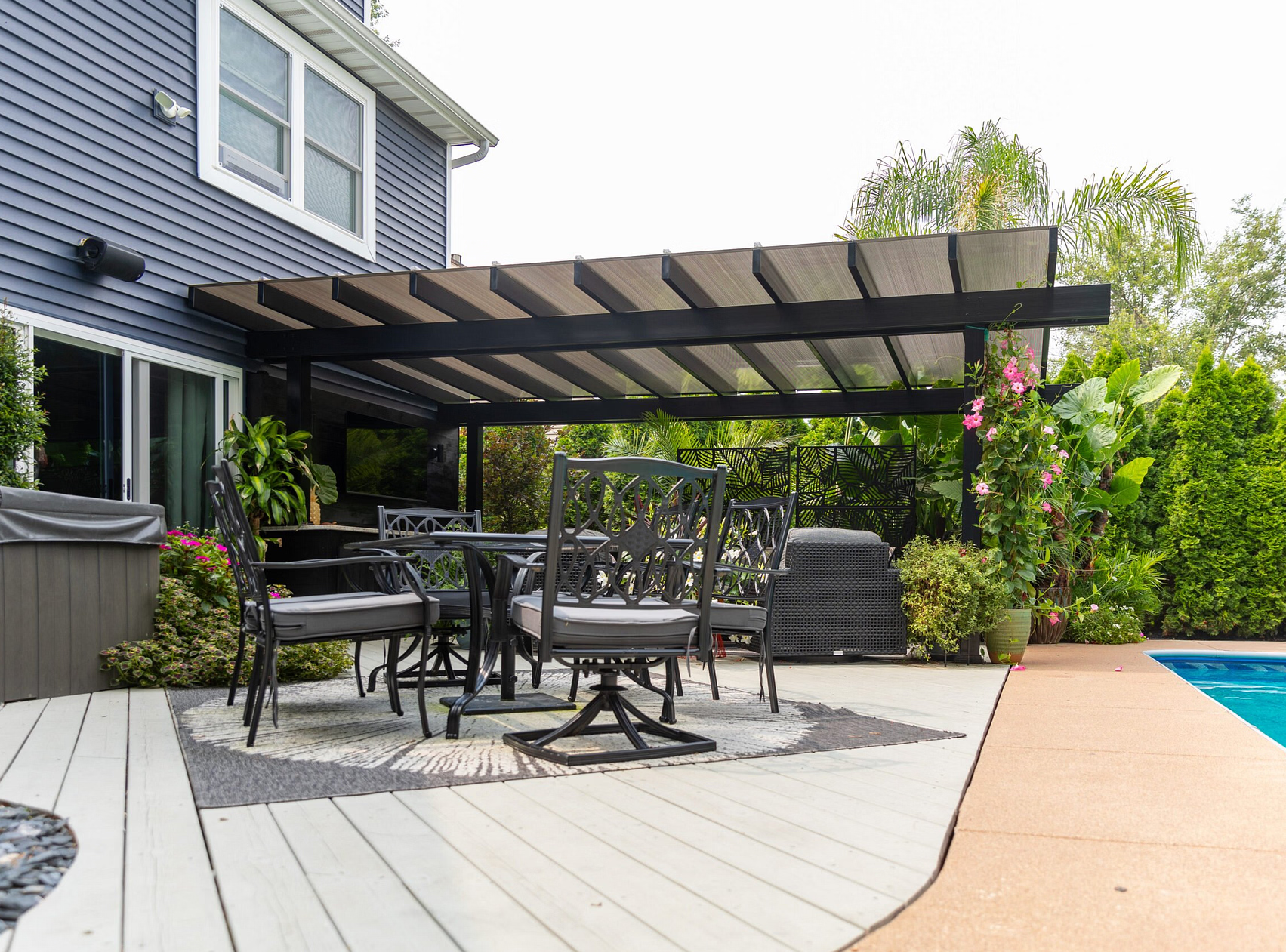
Waterproof patio coverings are permanent outdoor structures with solid roofs that prevent rainfall from passing through to the patio below. Our rainproof patio covers use fixed polycarbonate roof panels rather than open slats, fabric or moving louvers.
A solid polycarbonate roof creates dependable overhead coverage for dining areas, lounge furniture, hot tubs and other outdoor living spaces. Because the roof is fixed rather than retractable, it provides protection without motors, hinges or adjustable components that may eventually require repair.
The sides remain open, so wind-driven rain can still enter around the perimeter. However, the roof itself is designed to keep ordinary rainfall from passing through when the patio cover is assembled and installed correctly.
A standard pergola uses spaced roof slats to create partial shade while allowing air, light and rain through the roof. A waterproof patio covering replaces those open slats with continuous polycarbonate panels, making it the appropriate choice when rain protection is a priority.
Homeowners primarily interested in filtered sunlight may prefer a pergola with a slatted roof. Slatted models provide 50%, 75% or 90% shade coverage, but they are not rainproof.
These patio coverings are professional-grade structures intended for permanent installation. Aluminum inserts reinforce the posts, beams and rafters, while thick extruded vinyl forms the finished exterior.
They are fundamentally different from pop-up shelters, canvas canopies and lightweight seasonal covers. They are designed for homeowners who want a lasting addition rather than a covering that must be removed, refinished or replaced frequently.
A waterproof patio cover can attach to a house or stand independently on its own posts. Attached designs extend covered space directly from the home, while freestanding designs can be positioned over a detached patio, poolside area or another location where a wall connection is not practical.
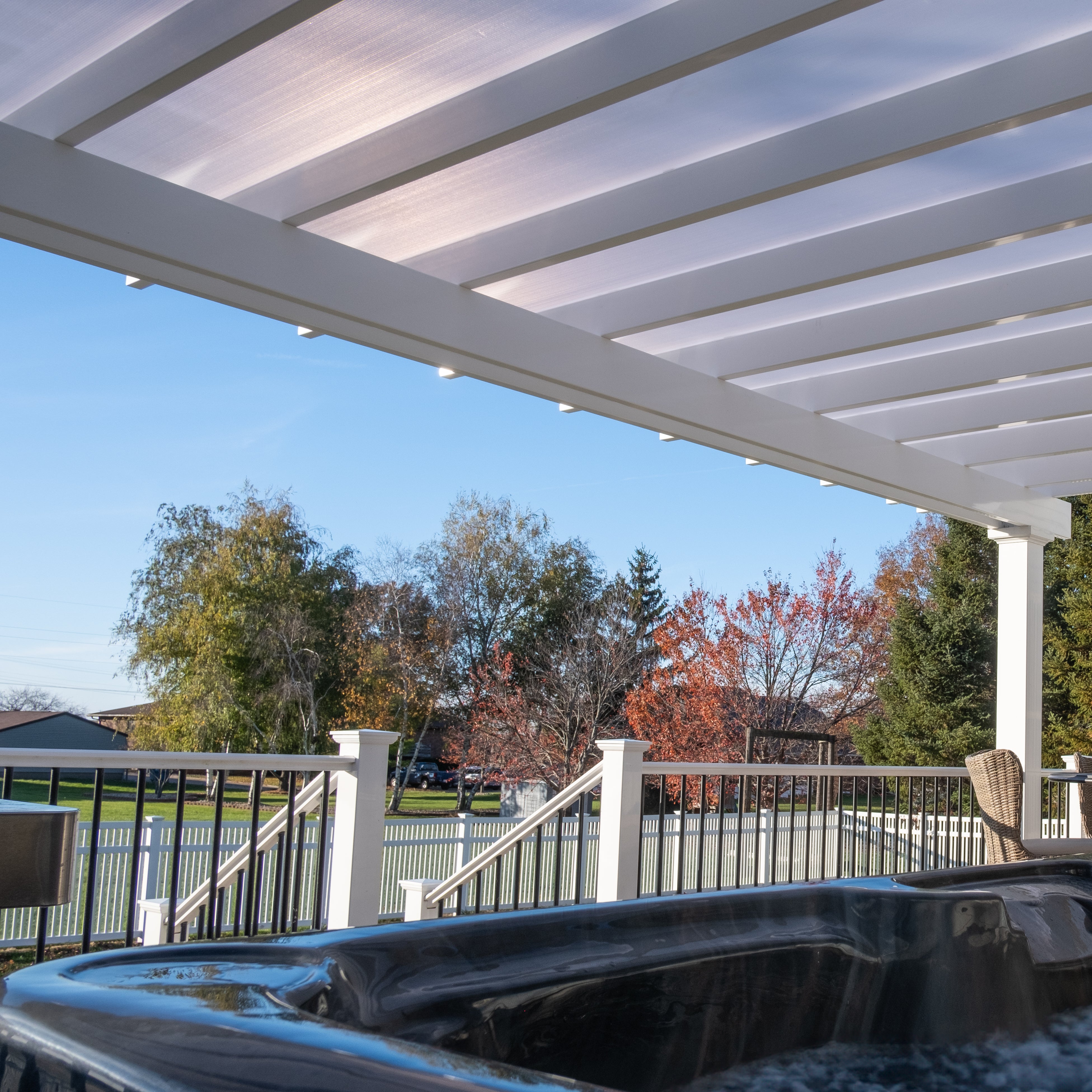
A solid-roof patio cover addresses more than occasional rainfall. It can make an outdoor space more consistently usable while protecting the furnishings and activity areas located beneath it.
Polycarbonate roof panels prevent rain from falling directly through the roof, allowing meals, conversations and everyday outdoor activities to continue during many wet-weather conditions. This makes the patio more dependable than an uncovered space or a pergola with widely spaced slats.
Proper assembly, roof pitch and water management remain essential. As with any open-sided structure, the covered area is not an enclosed room and may still be affected by wind-driven precipitation.
Both the white and bronze roof-panel options provide 100% UV protection. The solid roof also creates continuous overhead shade rather than the shifting bands of sun and shade produced by an open pergola roof.
This protection can make the covered patio more comfortable for dining, relaxing and entertaining. Depending on site conditions, the roof can make the patio beneath it feel up to 15°F cooler.
A rainproof roof reduces direct exposure for patio tables, lounge seating, grills and outdoor kitchens placed beneath the structure. It can also reduce the inconvenience of moving cushions and accessories indoors whenever rain is expected.
The open sides still expose furnishings to humidity, blowing rain and environmental debris, so outdoor-rated materials remain appropriate beneath the cover.
A patio that is protected from direct rain and intense overhead sunlight can be used during a wider range of conditions. The result is a more functional transition between the home and yard rather than an outdoor area that is comfortable only during mild, dry weather.
The extruded vinyl exterior does not require painting, staining or sanding. Its color runs throughout the material rather than being applied as a surface coat, while the internal aluminum structure provides strength without the rust concerns associated with an exposed steel frame.

The performance of a waterproof patio covering depends on both its roof and the structure supporting it. These systems pair solid polycarbonate panels with aluminum-reinforced structural components and a durable vinyl exterior.
Polycarbonate panels form a continuous fixed roof that provides full overhead coverage. Unlike adjustable louvers, the panels have no motorized or moving parts that must be operated to close the roof when rain begins.
The solid-roof design is intended for permanent rain protection. Correct installation is necessary to maintain panel alignment, roof slope and the integrity of the completed roof system.
Roof panels are available in white or bronze. Both options provide 100% UV protection and can make the space below the cover up to 15°F cooler, although actual temperature differences depend on climate, sun exposure and surrounding conditions.
Panel color also affects the appearance of the completed structure and the character of the light below it. Homeowners can select the option that works best with the house, patio and preferred outdoor atmosphere.
Aluminum inserts are used inside every weight-bearing component of the rainproof patio cover, including the posts, beams and rafters. The thicker aluminum frame helps prevent bowing, bending and structural failure while permitting longer spans between posts.
Because the reinforcement is enclosed by extruded vinyl, the completed structure combines the strength of an aluminum frame with the finished appearance and low maintenance of a premium vinyl exterior.
The exterior is made from thick extruded vinyl that is colored throughout rather than painted. It is designed to resist discoloration, deformation and cracking in demanding outdoor conditions without requiring periodic refinishing.
White, tan and black frame colors are available. White is the most affordable option, while black carries the highest material cost.
The structural frame includes a lifetime warranty, while the polycarbonate roof includes a 10-year warranty. Optional hurricane brackets are recommended for locations that may experience winds of 80 mph or more.
Adding hurricane brackets provides a lifetime wind-damage warranty. Local exposure conditions, anchoring requirements and applicable building codes should still be evaluated before installation.
“Waterproof patio covering” can describe several products, but they do not provide the same durability, coverage or maintenance profile. Comparing the roof type and structure helps distinguish a permanent rainproof patio cover from shade-oriented or temporary alternatives.
A polycarbonate patio roof provides continuous overhead coverage for rain and sun. A slatted pergola instead uses fixed angled slats to produce partial shade, with available configurations providing 50%, 75% or 90% shade coverage.
Slatted roofs are appropriate when airflow and filtered light matter more than keeping the patio dry. For reliable rain protection, the solid polycarbonate roof is the relevant option.
Fabric awnings and canvas canopies may provide seasonal shade, but the fabric can fade, stretch, tear or require removal during severe weather. Sunset Pergola Kits does not offer canvas-roof systems.
A vinyl-clad, aluminum-reinforced patio cover is intended to remain permanently installed. Its solid roof and rigid frame are better aligned with homeowners seeking a substantial architectural addition rather than temporary coverage.
Retractable roofs and motorized louvers allow users to change the amount of overhead exposure, but they rely on moving parts and operating mechanisms. These components can introduce additional maintenance and replacement considerations.
Our waterproof patio coverings use fixed roofs with no motors or adjustable louvers. This simpler construction emphasizes consistent coverage, durability and low maintenance rather than on-demand roof adjustment.
Conventional shingle or metal patio roofs may require different framing, installation methods and visual transitions where the new roof meets the home. A polycarbonate-roof patio cover is supplied as a coordinated structure with a lightweight, UV-blocking roof system.
The appropriate solution depends on the home, local requirements and desired appearance. Polycarbonate is particularly useful when the goal is a durable outdoor cover without creating a fully enclosed building addition.
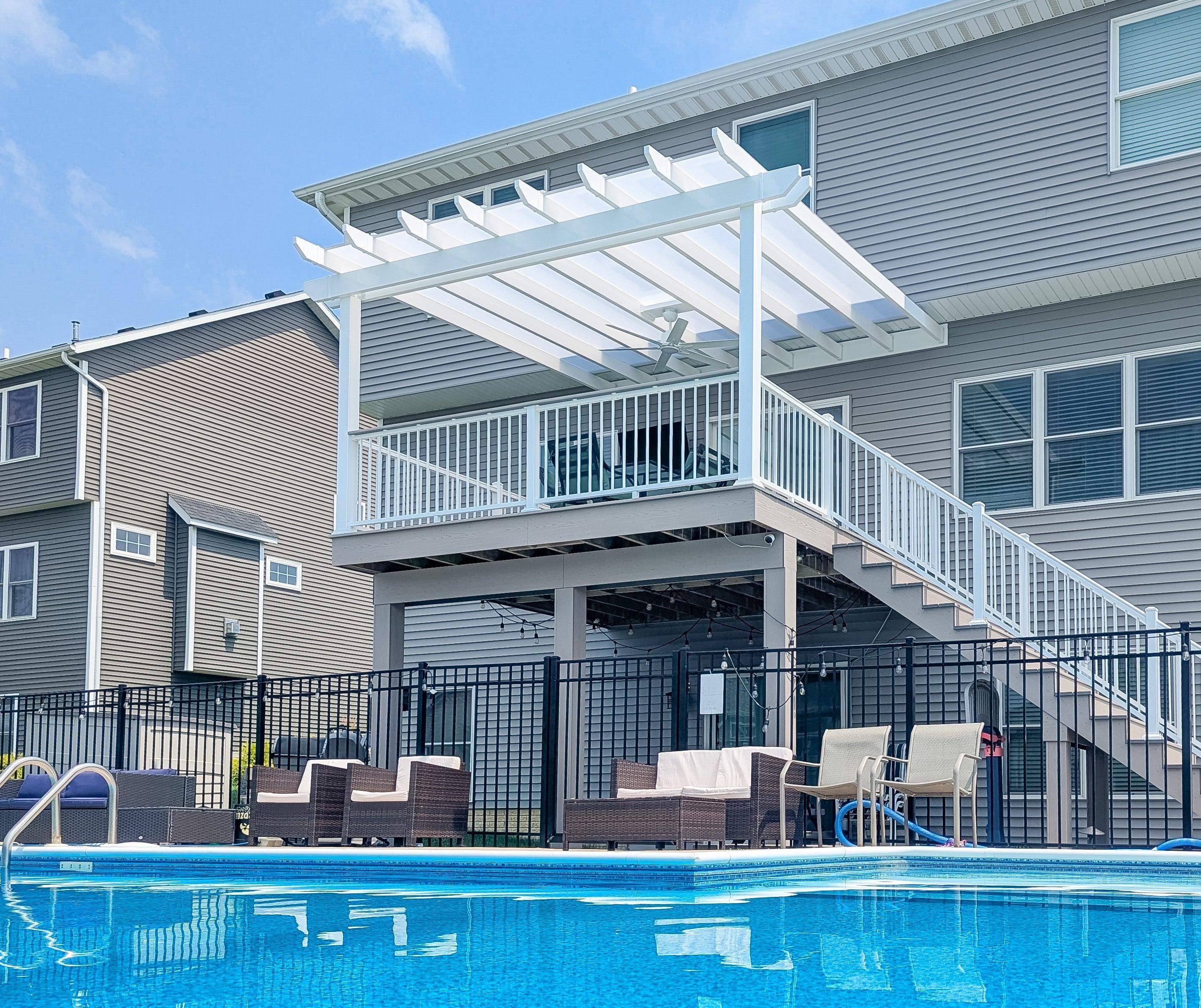
The right configuration depends on the space being covered, how it will be used and whether the structure should connect to the house. Measurements, post locations and site conditions should be considered before choosing a kit.
Measure the usable patio rather than relying only on the dimensions of the existing slab or deck. Account for dining chairs when pulled away from the table, walking paths, grill clearances and any furniture that should remain beneath the roof.
Also consider where rainfall will leave the roof and whether surrounding walls, doors, windows or landscaping affect the available footprint. The pergola and patio-cover size guide can help narrow the available dimensions.
An attached rainproof patio cover creates a direct transition from the house and can cover the area immediately outside a patio door. Standard attached configurations are available from 8 to 20 feet along the house and 8 to 20 feet out from the structure; larger three-post models can extend from 24 to 32 feet along the attachment side.
A freestanding patio cover is useful when the desired location is away from the house or when attachment is impractical. Four-post configurations range from 8 to 20 feet in each direction, while six-post models can span 24 to 32 feet in width and 8 to 20 feet in depth.
Choose dimensions around the way the patio will function. A single dining or conversation area generally needs less space than a combined outdoor kitchen, dining and lounge arrangement.
For larger patios, decide whether one broad covered zone or several defined areas will work better. Post count and placement may change as the overall width increases.
Permanent patio covers require suitable anchoring. Existing concrete, planned footings, deck construction and attachment surfaces should be evaluated to determine whether they can support the selected structure and satisfy applicable requirements.
Homeowners may complete installation themselves or hire a contractor. Review the available assembly information and videos before deciding which approach is appropriate.
Permit, setback, footing and structural rules vary by location. Wind and other environmental requirements may also affect anchoring and accessory choices.
Confirm local requirements before ordering or installing the patio cover. In areas that may experience winds of 80 mph or more, include the optional hurricane-bracket package.

Waterproof patio coverings can be configured around the property’s dimensions and architectural details. Available choices include structure size, installation method, frame color, roof-panel color, post style and decorative finishing details.
Four-post freestanding patio covers are available from 8 by 8 feet through 20 by 20 feet. Larger six-post covers are available from 24 to 32 feet wide and 8 to 20 feet deep.
The additional posts support wider configurations while preserving useful covered spans. Exact post locations should be planned around furniture arrangements, circulation and the installation surface.
Two-post attached covers range from 8 to 20 feet along the structure and 8 to 20 feet outward. Three-post attached configurations cover widths from 24 to 32 feet along the house with depths from 8 to 20 feet.
Attached models are suitable when the covered space should begin directly at the home. The attachment location and supporting wall should be evaluated as part of project planning.
The extruded vinyl frame is offered in white, tan or black. White is the lowest-cost frame color, tan offers a warmer neutral appearance and black provides strong contrast for many contemporary exteriors.
The polycarbonate roof is available in white or bronze. Both panel colors provide 100% UV protection and the same stated cooling benefit, so the choice can be based primarily on appearance and the desired light quality beneath the roof.
Posts may be positioned at the corners or inset by up to 24 inches. Inset placement can create roof overhangs and alter how the structure relates visually to the patio perimeter.
Available post styles include 5-inch square posts with a lower trim ring, 5-inch square posts with upper and lower trim rings, and 7-inch square posts with upper and lower trim rings.
Beam and rafter overhangs can range from 0 to 24 inches. Scrolled, beveled and flat end caps allow the exposed ends to be matched to the home’s architectural character.
Optional fan mounts can be incorporated when overhead air movement is desired. Electrical work and fan installation should be completed in accordance with applicable requirements.
Hurricane brackets are available for rainproof patio covers and are recommended for areas that may experience winds of 80 mph or more. Including them adds a lifetime wind-damage warranty to the structure.
The brackets do not replace appropriate footings, anchoring, permitting or site-specific structural planning. All components of the installation must work together to address local conditions.
The cost of a waterproof patio covering varies because each project combines structural size, configuration, color and optional components. Comparing total ownership value is more useful than evaluating the roof solely by its initial purchase price.
Width and depth are major price factors because larger covers require more framing, vinyl and polycarbonate roofing. Wider designs may also need additional posts, changing both material requirements and installation work.
Accurate measurements help avoid paying for unnecessary coverage while ensuring that furniture and activity areas are adequately protected.
Attached models typically use the building as one side of the support arrangement, while freestanding models rely on posts around the structure. The most economical option depends on the required size, attachment conditions, footing needs and installation site.
An attached cover is not automatically the better choice if the home lacks an appropriate attachment surface. Structural suitability should take priority over a small difference in upfront cost.
White is the most affordable vinyl frame color, followed by tan, with black being the most expensive. Post upgrades, fan mounts and hurricane brackets can also affect the final price.
These choices should be based on appearance, exposure conditions and intended use rather than added automatically. For example, hurricane brackets are especially relevant where winds may reach 80 mph or more.
Total project cost may include permits, concrete footings, surface preparation, delivery, tools, contractor labor and electrical work for a fan. These expenses vary by site and are separate from the patio-cover configuration itself.
The kits are designed to be DIY-friendly, but professional installation may be appropriate for complex attachment conditions, large structures or homeowners who prefer contractor-managed construction.
The premium extruded vinyl exterior does not require the recurring painting, staining or sanding associated with wood. The aluminum-reinforced frame is rust-proof, and the fixed roof contains no motors or adjustable parts that must be maintained.
A lifetime frame warranty and 10-year roof warranty support the long-term value proposition. For homeowners seeking a permanent improvement, durability and reduced maintenance can matter more than the lowest initial price.
Yes. They use continuous solid polycarbonate roof panels rather than open slats. The roof is rainproof, although wind-driven rain can enter through the open sides.
A waterproof patio cover has a solid roof that blocks rain. A traditional pergola normally has spaced slats that provide partial shade but allow rain through.
Yes. Both the white and bronze polycarbonate roof panels provide 100% UV protection.
It can make the covered patio up to 15°F cooler by blocking direct overhead sunlight. Actual results depend on climate, sun exposure and surrounding conditions.
Yes. Attached configurations are available for suitable structures, with two-post and three-post size options.
Yes. Freestanding configurations are available with four or six posts for locations where attachment to a building is not desired or practical.
The extruded vinyl frame is available in white, tan or black. Polycarbonate roof panels are available in white or bronze.
No. The premium extruded vinyl is colored throughout and does not require painting, staining or sanding. Routine cleaning is generally sufficient.
No. These systems use fixed polycarbonate roofs and do not include retractable canopies, adjustable louvers, canvas roofs or motorized components.
Yes. The kits are designed for DIY-friendly assembly, although homeowners may hire a contractor. Review the assembly resources and verify local permit, footing and anchoring requirements before installation.


