

MADE IN THE USA
with American products
w/ American products


Home ▸ Wall-Mounted Patio Covers
Wall-mounted patio covers attach directly to your home or another structure to create permanent shade or rain protection over a patio, deck, or outdoor living area. Choose from slatted-roof pergolas with 50%, 75%, or 90% shade coverage or fully covered patio covers with a solid rainproof polycarbonate roof. Each system combines aluminum-reinforced structural components with a low-maintenance premium vinyl exterior for lasting outdoor use. [read more]


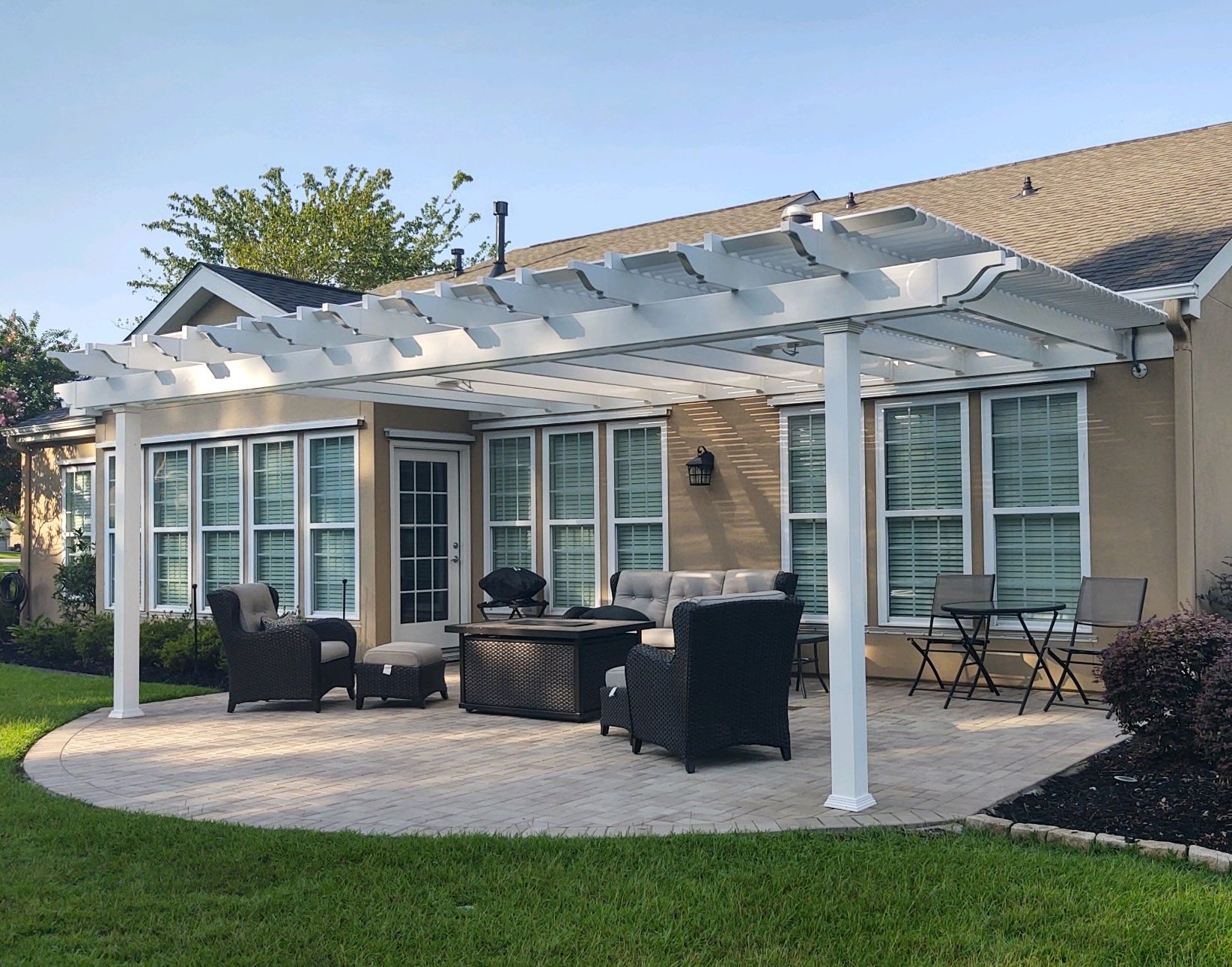
A wall-mounted patio cover is a permanent outdoor structure that attaches to a house or other building on one side while posts support the outer edge. Depending on the roof design, an attached structure can provide substantial shade or complete overhead rain protection while creating a natural transition between indoor and outdoor living areas.
Rather than using posts along every side, a wall-mounted design uses the building as the support point along the attached side. The outer portion is supported by posts, leaving the side next to the house more open and integrating the cover directly with the home's architecture.
The specific attachment method and mounting location depend on the structure, dimensions, and conditions of the home. Because the connection becomes part of a permanent outdoor structure, proper attachment and installation are important.
The terms wall-mounted patio cover, attached patio cover, and house-attached patio cover are often used for the same general configuration: an outdoor cover supported by the house along one side and posts along the opposite side. An attached pergola uses the same basic configuration but commonly has an open slatted roof rather than a solid roof.
Wall-mounted structures can serve different purposes depending on the roof. Traditional and modern pergolas use fixed angled slats that provide 50%, 75%, or 90% shade coverage but are not rainproof. Fully covered patio covers use solid polycarbonate roofing for rain protection, 100% UV protection, and a covered outdoor area that can be up to 15 degrees cooler.
Wall-mounted patio covers are especially useful over outdoor spaces immediately adjacent to a home, including patios, decks, dining areas, and outdoor kitchens. They are a logical choice when the goal is to extend the usable living space outward from the house rather than create a separate structure elsewhere in the yard.
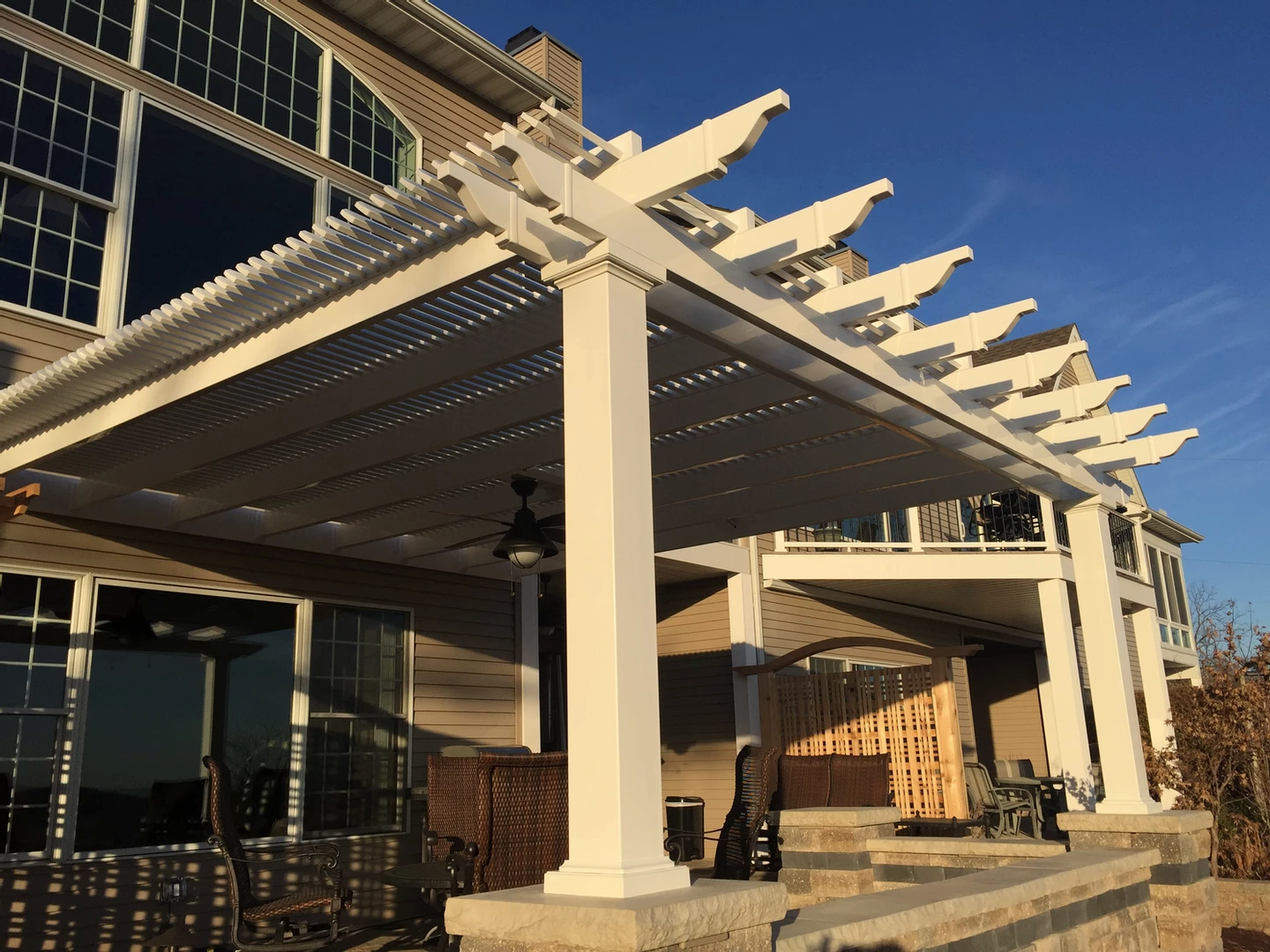
Attaching a patio cover to the home creates an outdoor area that feels connected to the house while providing meaningful overhead protection. The right roof configuration can address direct sun, UV exposure, rain, and the need for a more comfortable outdoor living area.
A slatted wall-mounted pergola provides real shade rather than functioning only as a decorative structure. Fixed angled roof slats are available in 50%, 75%, and 90% shade configurations, allowing homeowners to choose how much overhead coverage they want while retaining the open character of a pergola.
For homeowners who want protection from rainfall rather than shade alone, a rainproof patio cover uses solid polycarbonate roof panels instead of slats. The white and bronze panel options provide 100% UV protection and can make the covered patio up to 15 degrees cooler.
Because the structure begins at the house, covered space can extend directly from a back door or other outdoor access point. This configuration works particularly well for patios used for dining, entertaining, relaxing, or other activities that benefit from a closer connection to the home's interior.
A wall-mounted design eliminates the need for a row of support posts along the side attached to the house. Depending on the selected model and size, posts support the outer edge of the structure instead, helping preserve usable space near doors, windows, and primary circulation areas.
These are permanent outdoor structures rather than temporary canopies. Aluminum reinforcement provides structural strength, while the premium extruded vinyl exterior does not require painting, staining, or sanding. The combination is intended for homeowners who want lasting coverage without the routine finish maintenance associated with wood.
Wall-mounted and freestanding covers can provide similar shade or weather protection, but they differ in how they are supported and where they can be installed. The better configuration depends primarily on the location of the outdoor space and whether attaching the structure to the home is practical.
A wall-mounted patio cover uses the house or another suitable structure for support along one side, with posts supporting the opposite side. A freestanding pergola is independently supported by posts and does not depend on the house for structural attachment.
An attached design is often well suited to a patio or deck directly alongside the house. It creates continuous coverage extending outward from the building and avoids placing an additional row of posts immediately next to the wall.
Freestanding construction can be preferable when the outdoor area is separated from the house, when the desired cover cannot be positioned at a suitable attachment point, or when an independently positioned structure better fits the property layout. It also allows a pergola or patio cover to become a distinct destination elsewhere in the landscape.
Post configuration varies by model and size. Traditional attached pergolas can place posts at the corners or inset them by up to 36 inches, while attached rainproof patio covers allow up to a 24-inch inset. Modern pergolas use square, flush corners with posts positioned at the corners rather than inset.
Both configurations require secure anchoring, but an attached structure also requires a suitable connection to the existing building. Homeowners should account for the wall, roofline, doors, windows, mounting height, and local requirements before choosing the final configuration.
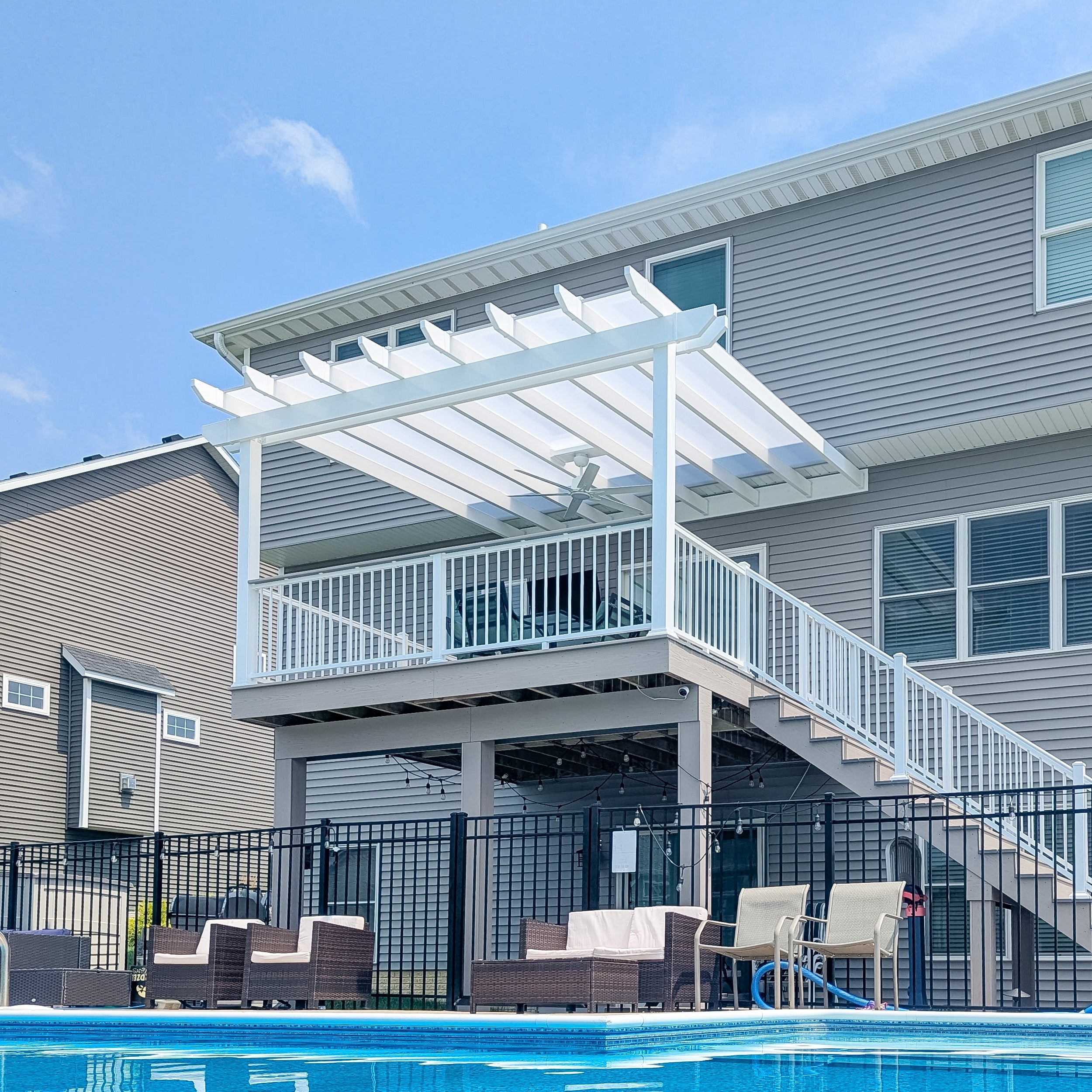
The best wall-mounted patio cover depends on the area you need to cover, the amount of shade or weather protection you want, and the available attachment location. Start with function and dimensions before choosing style and decorative options.
The most important decision is roof type. If the primary goal is shade while retaining an open pergola appearance, choose a slatted roof with 50%, 75%, or 90% shade coverage. If the space needs overhead rain protection, choose a solid polycarbonate roof instead.
Measure the span that will run along the attachment side and consider doors, windows, rooflines, and other architectural features. Traditional attached pergolas are available from 8 to 44 feet along the attached side depending on configuration, while modern attached pergolas range from 8 to 32 feet and fully covered attached patio covers range from 8 to 32 feet.
Projection determines how far the cover extends into the patio or yard. Traditional attached pergolas can extend from 8 to 44 feet depending on configuration, modern designs from 8 to 32 feet, and fully covered attached patio covers from 8 to 20 feet. Larger projections use additional posts as required by the specific configuration.
Available wall height can influence the size and placement of a wall-mounted structure. Evaluate the proposed attachment area in relation to doors, windows, eaves, rooflines, and the finished patio or deck elevation before ordering.
The cover does not necessarily need to match every dimension of the patio itself. Consider which seating, dining, cooking, or circulation areas need coverage and size the structure accordingly. You can also shop pergolas by dimensions to compare available width and depth combinations.

Roof configuration has the greatest effect on how a wall-mounted patio cover performs, while frame style, color, posts, and finishing details determine how it relates visually to the home. The available options differ among traditional, modern, and fully covered designs.
Traditional and modern pergolas use fixed angled roof slats. The 50% option uses 6-inch on-center spacing, 75% uses 4-inch on-center spacing, and 90% uses 3-inch on-center spacing. These roofs are designed for shade and are not rainproof.
Fully covered wall-mounted patio covers replace the slatted roof with solid polycarbonate panels. Panels are available in white or bronze, provide 100% UV protection, and can make the patio up to 15 degrees cooler. This configuration is appropriate when reliable overhead rain protection is a priority.
Weight-bearing structural components in traditional, modern, and fully covered patio systems are reinforced with aluminum. The exterior is premium extruded vinyl that is colored throughout rather than simply painted on the surface. This combination provides the strength of an aluminum-reinforced frame with a vinyl exterior that does not require painting, staining, or sanding.
Traditional pergolas can include beam and rafter overhangs and scrolled, beveled, or flat end caps for a more detailed architectural appearance. Modern pergolas use flush square corners, no beam or rafter overhangs, and no decorative end caps, creating cleaner contemporary lines.
White, tan, and black vinyl are available, with white being the most affordable and black the most expensive. Traditional designs provide multiple square and round post choices, while modern designs use square posts. Optional fan mounts are also available, and hurricane brackets can be added to traditional slatted pergolas and fully covered patio covers when additional high-wind protection is desired.
Attachment is one of the defining characteristics of a wall-mounted patio cover. Because the house supports one side of a permanent structure, the mounting location should be evaluated as part of the project rather than treated as an afterthought.
The attachment side should provide an appropriate location for the selected patio cover while accommodating the home's existing architecture. Dimensions, mounting height, roofline, and surrounding features all need to be considered before installation begins.
Exterior doors and windows can affect where a cover can be mounted and how high it should sit. Roof overhangs, gutters, trim, and other architectural elements can also influence placement. Reviewing these conditions while measuring helps identify potential conflicts before the kit is ordered.
Wall-mounted patio covers are intended as permanent structures, not portable shade products. Proper anchoring and structural attachment are therefore important to the finished installation. Requirements can vary by project and location, so local building requirements should be considered during planning.
The kits are designed to be DIY-friendly, but homeowners can also hire a contractor for installation. The best approach depends on the project, the homeowner's experience, and the complexity of the attachment conditions. Detailed assembly information and videos are available for planning and installation reference.

The cost of a wall-mounted patio cover varies because these structures are available in many sizes, roof configurations, colors, and designs. Rather than comparing price alone, it is useful to consider the structure's materials, coverage, maintenance requirements, expected service life, and warranty.
Size is a major factor because larger structures require more structural and roofing material and may require additional posts. Roof type, vinyl color, post style, shade percentage, decorative details, and optional accessories can also affect the final price.
A slatted pergola and a fully covered patio cover are different systems, so their costs should be compared in the context of what each provides. Slatted pergolas are intended primarily for shade, while solid-roof patio covers add rain protection with polycarbonate roofing. Choosing between them should begin with the type of coverage needed rather than price alone.
Wood structures can require recurring painting, staining, or sanding to maintain their finish. Premium extruded vinyl eliminates those routine finish-maintenance requirements and is easy to clean, which can reduce the time and ongoing maintenance associated with ownership.
These systems are designed as professional-grade permanent structures, so they occupy a different category from inexpensive temporary pergolas, fabric canopies, or portable shade products. Aluminum reinforcement, thick extruded vinyl, fixed roofing components, and permanent installation are intended to provide long-term outdoor use.
Traditional and modern pergolas include a lifetime warranty. Fully covered patio covers include a lifetime warranty on the frame and a 10-year warranty on the roof. The structures are made in the USA using America-sourced materials and are designed around durable fixed components rather than motorized or moving roof mechanisms.
A wall-mounted patio cover is a permanent outdoor structure attached to a house or other building along one side and supported by posts along the outer side. It can have either a slatted shade roof or a solid rainproof roof.
The terms are commonly used interchangeably. Both generally describe patio covers or pergolas that use the house or another structure for support along one side. See our attached pergolas for available configurations.
Only solid-roof models are rainproof. Traditional and modern pergolas have fixed slatted roofs designed for shade, while fully covered patio covers use solid polycarbonate panels for rain protection.
Traditional and modern slatted pergolas are available with 50%, 75%, or 90% shade coverage. The slats are fixed rather than adjustable or retractable.
Sizes depend on the design. Traditional attached pergolas can reach up to 44' x 44', modern attached pergolas up to 32' x 32', and attached rainproof patio covers up to 32' along the house by 20' out from the structure, depending on post configuration.
Traditional, modern, and fully covered models use aluminum reinforcement in the weight-bearing posts, beams, and rafters with premium extruded vinyl on the exterior. The vinyl is colored throughout and does not require painting or staining.
Yes. The kits are designed to be DIY-friendly, although they can also be installed by a contractor. Review the assembly information and videos when evaluating your project.
No. The roof systems are fixed: angled slats for shade or solid polycarbonate panels for rain protection. Motorized, louvered, retractable, and canvas roof systems are not offered.
The vinyl structure is available in white, tan, or black. White is the most affordable color option, while black is the most expensive.
Traditional and modern pergolas include a lifetime warranty. Fully covered rainproof patio covers include a lifetime warranty on the frame and a 10-year warranty on the polycarbonate roof. Additional answers about products and ordering are available on the FAQs page.


