

MADE IN THE USA
with American products
w/ American products


Home ▸ Traditional Pergola DIY Kits
Explore traditional pergolas designed for permanent outdoor shade, classic architectural style, and long-term durability. These aluminum-reinforced vinyl pergolas feature optional beam and rafter overhangs, decorative end caps, customizable shade coverage, and freestanding or attached configurations. Choose whether you want a free-standing or attached (i.e. wall-mounted) pergola. Then select your desired width and depth. [read more]


Traditional pergolas feature a classic 3-level roof comprised of beams, rafters and shade purlins with anywhere from 0- to 36-inch overhangs. The posts can be positioned right in the corners or up to 36" in from the corners. Top features include:
Other pergola styles:
Free = Free-Standing
Att = Attached to House (attaches on the width side)
A traditional pergola is a permanent outdoor shade structure with posts, beams, rafters, and roof slats that create filtered shade while preserving an open-air feel. Traditional pergolas are typically recognized by their classic beam and rafter overhangs, decorative end details, and timeless backyard design.
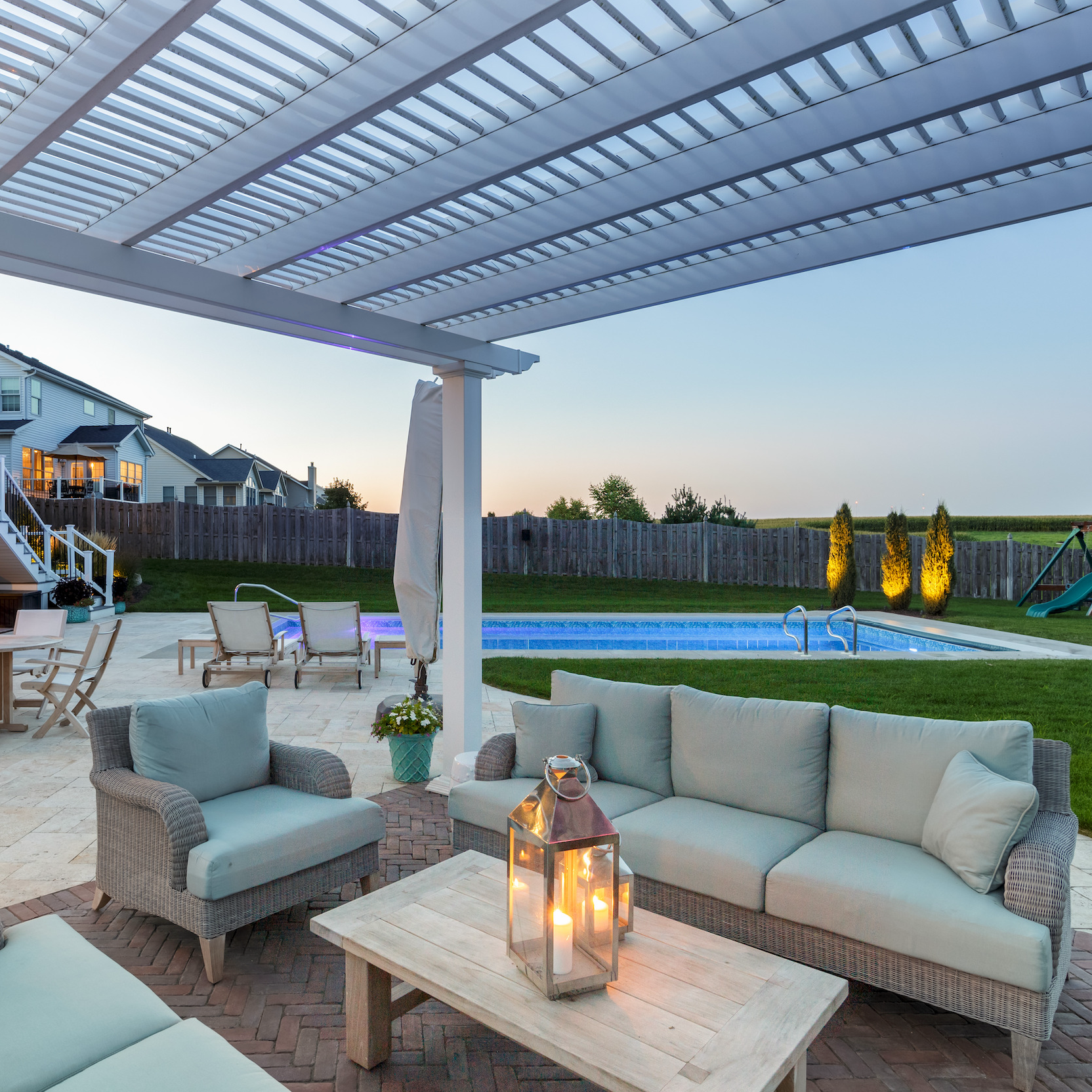 Classic Pergola Design
Traditional pergolas have a more decorative architectural profile than modern pergolas. Instead of flush corners and clean square lines, they often include rafter overhangs, beam overhangs, and optional scrolled, beveled, or flat end caps.
This style works well with patios, gardens, pool decks, outdoor kitchens, and backyard seating areas where the goal is to add shade without making the space feel enclosed.
Most traditional pergolas use a slatted roof rather than a fully solid roof. The angled shade purlins, often called roof slats, provide real shade while still allowing airflow and natural light.
Our traditional pergolas are available with 50%, 75%, or 90% shade coverage depending on the spacing of the shade purlins.
Unlike lightweight temporary pergolas, traditional pergolas are designed for permanent installation. Our traditional pergola kits use aluminum inserts in the posts, beams, and rafters, with a premium extruded vinyl exterior for a low-maintenance finish.
This makes them a strong fit for homeowners who want a long-term shade structure that adds function, visual appeal, and value to an outdoor living area.
Traditional pergolas are popular because they combine shade, structure, and classic outdoor design. They can define an outdoor living space while keeping the area open, bright, and connected to the surrounding yard.
A traditional pergola helps turn an open patio, deck, or backyard space into a more intentional outdoor room. It creates visual structure over dining areas, lounge spaces, grills, outdoor kitchens, and poolside seating areas.
Traditional pergolas are not just decorative. With slatted roof options offering 50%, 75%, or 90% shade coverage, they can provide meaningful sun relief while still allowing ventilation and daylight.
For homeowners who want rain protection instead of filtered shade, a rainproof patio cover with a solid polycarbonate roof may be the better fit.
Our traditional pergolas use premium extruded vinyl that is colored throughout rather than painted. That means the exterior does not require painting, staining, sanding, or regular refinishing like wood.
The vinyl surface is designed to be easy to clean, making it a practical choice for homeowners who want a polished outdoor structure without ongoing maintenance demands.
A permanent traditional pergola can improve the usability and appearance of a backyard, patio, or outdoor entertaining area. Because it is built as a long-lasting structure rather than a short-term accessory, it can support the overall value and enjoyment of the home.
Traditional pergolas can be customized in several important ways, including installation style, size, color, post design, shade coverage, and decorative end details. These options make it possible to match the pergola to both the home and the way the outdoor space will be used.
A freestanding pergola works well when the shade structure needs to stand independently in a backyard, garden, pool area, or detached patio space. Freestanding traditional pergolas are available in 4-post, 6-post, and 9-post configurations depending on the size of the structure.
Traditional freestanding pergolas can range from smaller 8' x 8' layouts up to large multi-post structures designed for expansive outdoor living spaces.
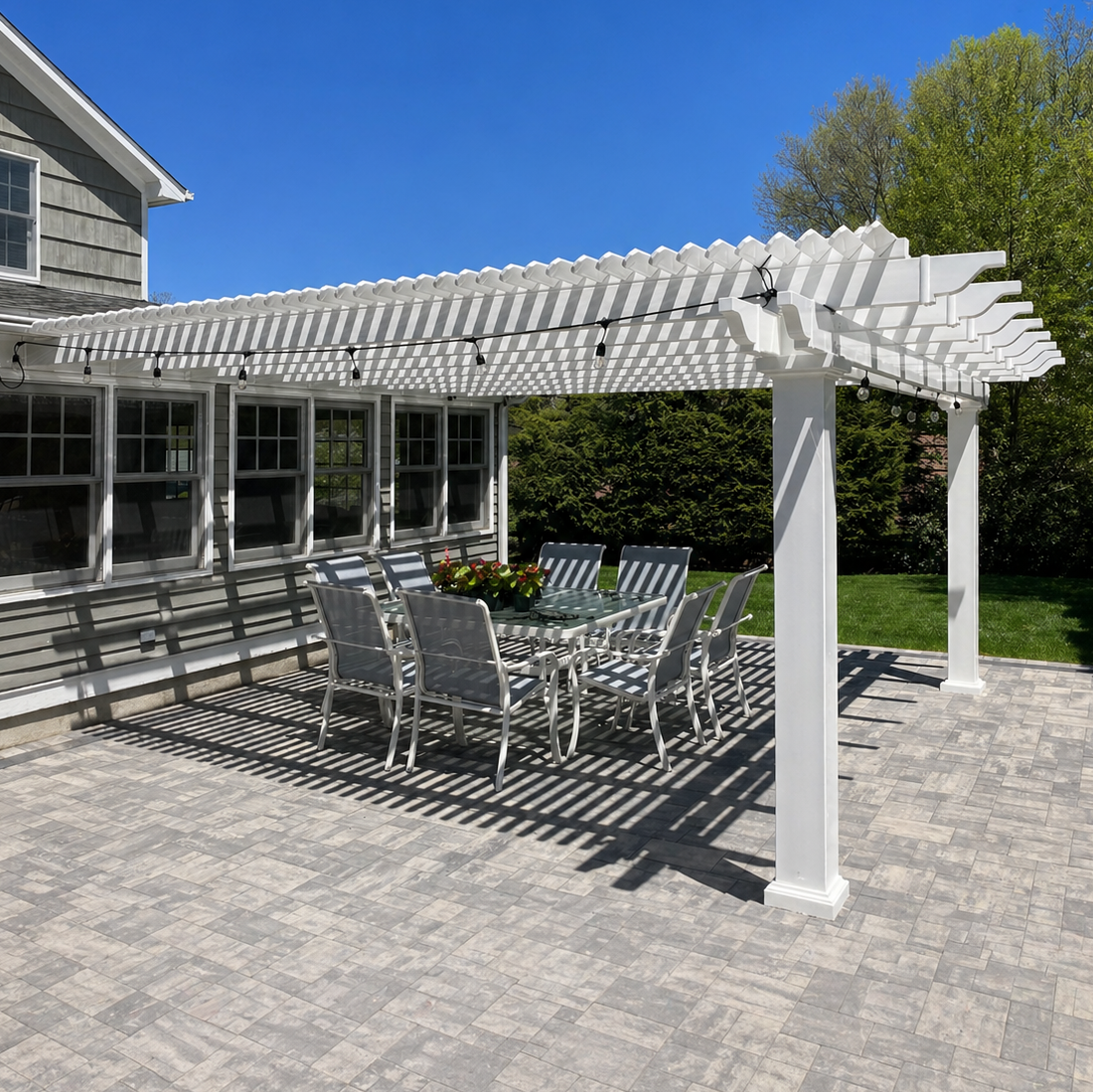 Attached Traditional Pergolas
An attached pergola connects to a house or other structure and extends outward over a patio, deck, or outdoor living area. This is a strong option when the goal is to create shade directly off the home.
Attached traditional pergolas are available in multiple post configurations, allowing homeowners to cover anything from a compact patio to a large outdoor entertaining space.
Traditional pergolas can include scrolled, beveled, or flat beam and rafter end caps. Scrolled ends create the most classic decorative look, beveled ends feel slightly cleaner, and flat ends offer a more understated appearance.
Our traditional pergolas are available in white, tan, or black vinyl. White is the most affordable color option, while black is the most expensive and creates a bold, high-contrast look.
Traditional pergolas can be configured with multiple post styles, including 5-inch square posts, 7-inch square posts, and 10-inch round posts depending on the design. Posts can be placed in the corners or inset up to 36 inches, which can help fine-tune both appearance and usable space.
The right traditional pergola depends on where it will be installed, how much space needs to be covered, how much shade is desired, and whether the structure should be freestanding or attached to the home.
First, decide whether the pergola should stand on its own or connect to the house. Freestanding traditional pergolas are ideal for detached patios, gardens, pool areas, and open backyard zones, while attached traditional pergolas are best for patios and decks directly beside the home.
Traditional pergolas are available in a wide range of sizes, from compact 4-post layouts to large multi-post structures. Smaller pergolas work well for seating areas or dining sets, while larger pergolas can cover outdoor kitchens, extended patios, or multiple furniture zones.
If you are planning around specific dimensions, the shop by pergola dimensions page can help you compare common width and depth options.
Shade coverage is one of the most important decisions. A 50% shade option provides lighter filtered shade, 75% shade creates a more balanced coverage level, and 90% shade offers the most sun protection while still using a slatted roof.
For open-air shade, explore pergolas with slatted roofs. For rain protection, choose a solid-roof patio cover instead.
Traditional pergolas are engineered for permanent outdoor installation, but wind exposure still matters. If your area ever experiences winds of 80 MPH or higher, hurricane brackets are recommended.
Adding hurricane brackets provides additional reinforcement and adds a lifetime wind damage warranty to the pergola.
Traditional pergolas are often compared with modern pergolas, patio covers, gazebos, pavilions, and wood pergolas. The best choice depends on the look, roof type, maintenance level, and amount of protection you want.
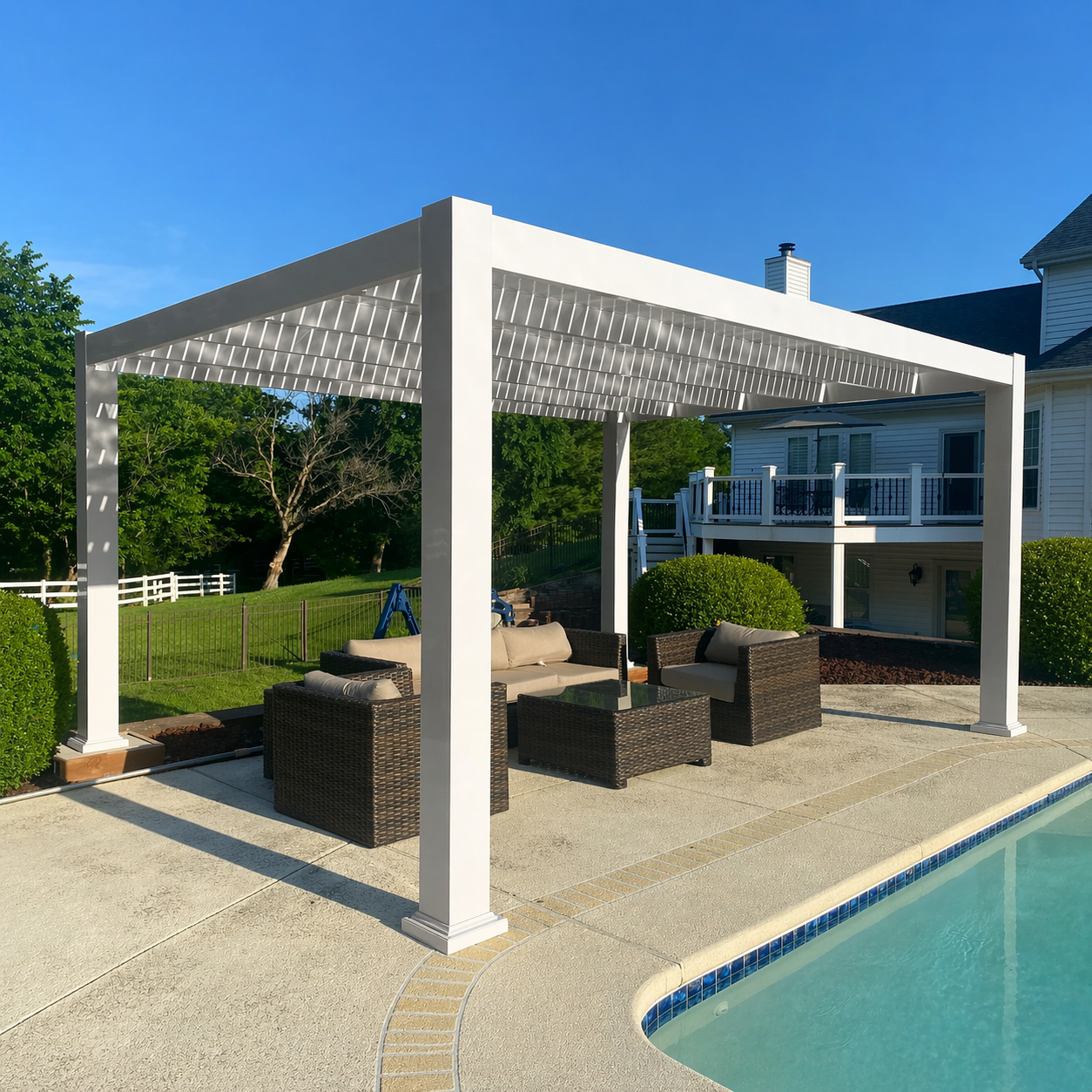 Traditional Pergolas vs Modern Pergolas
Traditional pergolas have optional overhangs, decorative end caps, and a more classic architectural style. Modern pergolas have square flush corners, no overhangs, no end caps, and posts placed in the corners.
Both styles can provide slatted shade, but the visual effect is different. Traditional pergolas feel more decorative and timeless, while modern pergolas feel cleaner and more contemporary.
A traditional pergola uses a slatted roof for shade, not full rain protection. A patio cover uses a solid polycarbonate roof designed to keep the covered area dry while also providing UV protection.
If you want filtered shade and airflow, a traditional pergola is usually the better fit. If you want a fully covered outdoor area for rain protection, a rainproof patio cover is the better option.
Wood pergolas can offer a natural look, but they usually require ongoing staining, sealing, painting, or maintenance. Our vinyl pergolas use a low-maintenance extruded vinyl exterior that does not need to be refinished.
The aluminum-reinforced structural components also help provide strength, stability, and long-term durability without relying on wood framing.
Traditional pergolas are full-size outdoor structures that can be freestanding or attached. Eyebrow pergolas are smaller attached accent structures often installed above garage doors, windows, or entryways.
An eyebrow pergola is mainly used for architectural detail and light shade, while a traditional pergola is designed to create a usable outdoor living area.
Traditional pergolas can be configured to fit the layout, appearance, and shade needs of the space. The most important customization options include roof slat spacing, post style, overhang length, color, end cap style, and optional add-ons.
Traditional pergolas are available with 50%, 75%, or 90% shade coverage. These options are based on the spacing of the angled shade purlins: 6-inch on-center spacing for 50% shade, 4-inch on-center spacing for 75% shade, and 3-inch on-center spacing for 90% shade.
Traditional pergolas can include beam and rafter overhangs from 0 inches to 36 inches. Longer overhangs create a more classic pergola profile, while shorter overhangs create a cleaner and more compact look.
Our traditional pergolas use aluminum inserts in all weight-bearing structural components, including posts, beams, and rafters. This helps create a strong, rust-proof frame while keeping the exterior low-maintenance and visually refined.
For shoppers comparing frame materials, our aluminum-reinforced pergolas combine structural aluminum with a premium vinyl exterior.
Fan mounts are available as an optional add-on for traditional pergolas. This can be useful for covered seating areas, outdoor dining spaces, and warm climates where added airflow improves comfort.
Traditional pergola kits can be installed by a capable DIY homeowner or by a contractor. For planning and installation details, visit the assembly information and videos page.
The cost of a traditional pergola depends on size, configuration, color, shade coverage, post style, decorative options, and add-ons. Larger permanent pergolas with more posts, more material, and additional customization will generally cost more than smaller standard layouts.
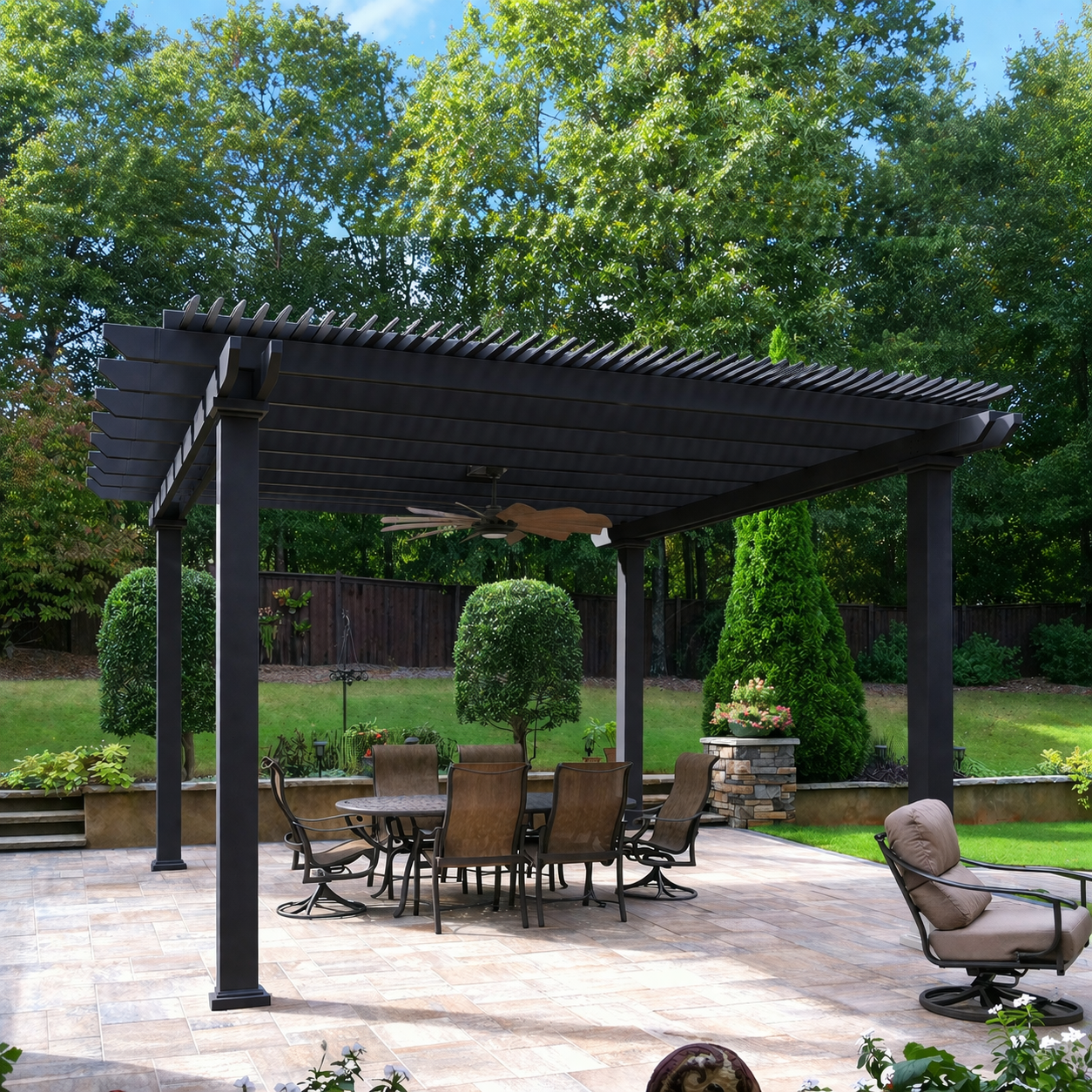 Size is one of the biggest cost factors. A 4-post traditional pergola is typically more affordable than a larger 6-post or 9-post structure because it uses less material and covers a smaller area.
Large traditional pergolas can span wider patios, outdoor kitchens, and multi-zone outdoor living spaces, but they require additional posts, beams, rafters, and roof slats.
Freestanding and attached traditional pergolas use different structural layouts. Attached pergolas connect to a house or other structure, while freestanding pergolas support themselves independently.
The best choice depends on the site layout, intended use, and whether the pergola should extend from the home or stand separately in the yard.
Color can affect price, with white generally being the most affordable option and black being the most expensive. Post style, end cap choice, and overhang length can also influence the final configuration.
Higher shade coverage uses closer purlin spacing, which can affect material requirements. Optional fan mounts and hurricane brackets can also influence total cost depending on the needs of the project.
For homeowners in wind-prone areas, hurricane brackets can be an important upgrade because they add reinforcement and include a lifetime wind damage warranty.
[IMAGE PLACEHOLDER: Close-up detail image of a traditional vinyl pergola showing thick posts, aluminum-reinforced construction, angled shade purlins, decorative end caps, and clean low-maintenance vinyl finish.]Traditional pergolas are best for homeowners who want a long-lasting outdoor structure rather than a temporary shade product. With aluminum-reinforced components, premium extruded vinyl, and a lifetime warranty, they are designed to be a durable part of the home’s outdoor living space.
These pergolas are not lightweight seasonal canopies or short-term decorative structures. They are professional-grade shade structures designed for permanent installation in residential outdoor spaces.
The extruded vinyl exterior is designed to resist the maintenance demands associated with painted or stained materials. It does not need sanding, painting, or staining to maintain its finished look.
Our traditional pergolas are made in the USA with American-sourced materials. This supports consistent quality, durable construction, and long-term reliability for homeowners investing in a permanent outdoor structure.
A traditional pergola is an outdoor shade structure with posts, beams, rafters, and roof slats. It usually includes classic design details such as rafter overhangs and decorative end caps.
Yes. Traditional pergolas provide shade through fixed angled roof slats. Our traditional pergolas are available with 50%, 75%, or 90% shade coverage.
No. Traditional pergolas with slatted roofs are designed for shade, not full rain protection. For rain protection, choose a solid polycarbonate rainproof patio cover.
Yes. Traditional pergolas are available as both freestanding and attached structures, depending on where you want the pergola installed.
Our traditional pergolas use aluminum inserts in the posts, beams, and rafters, with a premium extruded vinyl exterior that does not require painting or staining.
Traditional pergolas are available in white, tan, or black vinyl. White is the most affordable option, while black is the most expensive.
Yes. Traditional pergolas are available with scrolled, beveled, or flat beam and rafter end caps.
Traditional pergolas are engineered for permanent outdoor use. If your area ever has winds of 80 MPH or higher, hurricane brackets are recommended and add a lifetime wind damage warranty.
Very little maintenance is required. The extruded vinyl exterior does not need painting, staining, or sanding and can be cleaned as needed.
No. We do not offer louvered, motorized, retractable, or adjustable pergola systems.


