

MADE IN THE USA
with American products
w/ American products


Home ▸ Swimming Pool Pergolas
A swimming pool pergola creates permanent, low-maintenance shade for pool decks, patios, lounge areas, and outdoor entertaining spaces. Our swimming pool pergola kits combine aluminum-reinforced structural components with a premium extruded vinyl exterior and are available with 50%, 75%, or 90% slatted shade coverage or a solid rainproof polycarbonate roof. Choose from freestanding or attached configurations, traditional or modern styling, and multiple sizes and colors to fit your poolside layout. [read more]


A swimming pool pergola is a permanent outdoor shade structure positioned beside a pool, over part of a pool deck, or adjacent to a poolside patio or entertaining area. Unlike temporary canopies or lightweight decorative structures, a properly designed pool pergola can create a defined, long-lasting outdoor living space with substantial shade and architectural presence.
A pool pergola typically consists of vertical posts supporting beams, rafters, and either a slatted or solid roof system. Our structures use aluminum reinforcement inside the primary weight-bearing components, with premium extruded vinyl forming the exterior.
For traditional and modern pergolas, fixed angled roof slats provide your choice of 50%, 75%, or 90% shade coverage. Homeowners who want full overhead coverage can instead choose a rainproof patio cover with a solid polycarbonate roof.
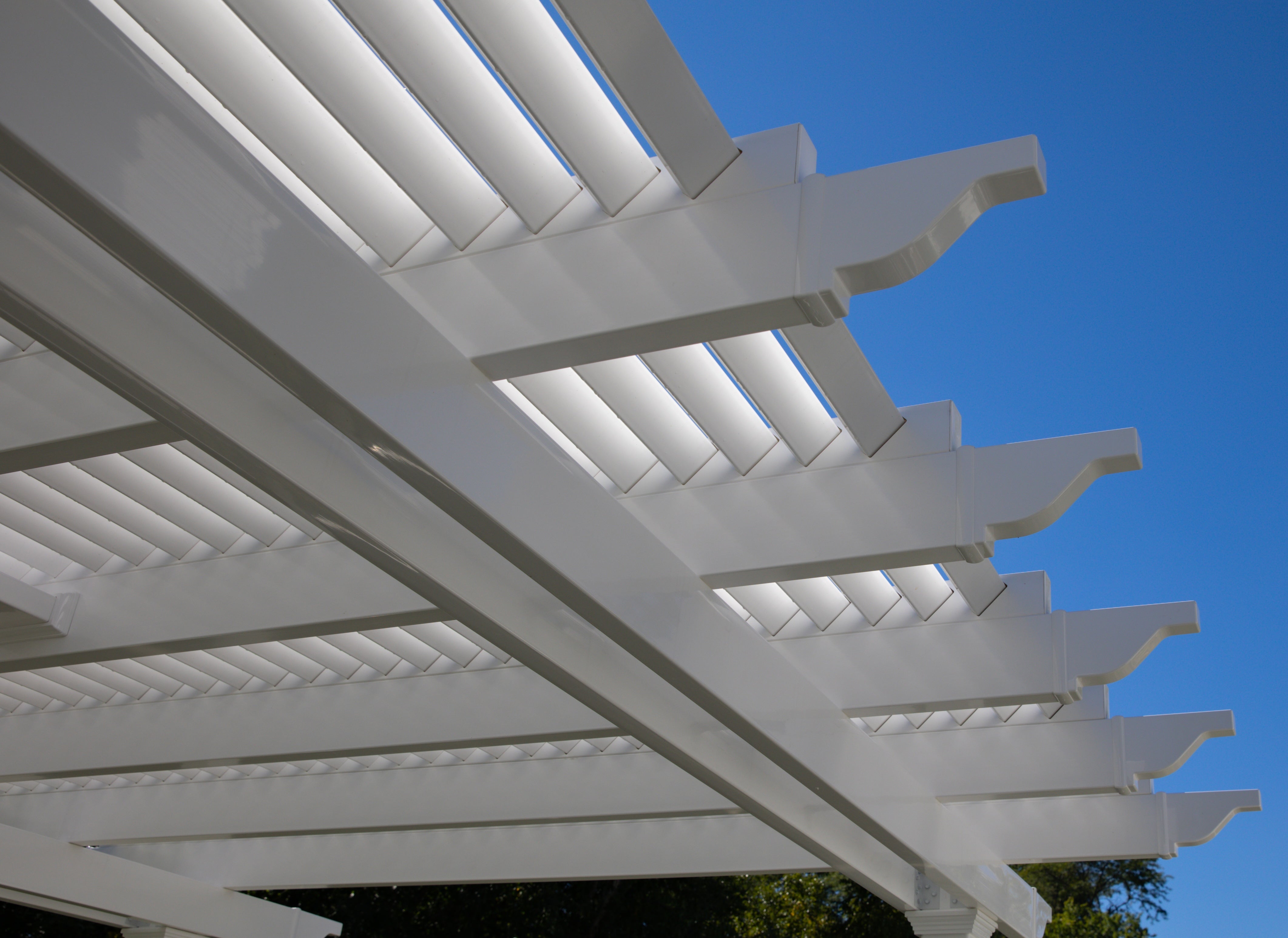 A swimming pool pergola can be installed over a poolside seating area, outdoor dining space, lounge area, or another portion of the surrounding deck or patio. A freestanding pergola can be positioned independently of the home, while an attached pergola extends outward from an existing structure.
The best location depends on the pool layout, available deck space, the direction of the sun, circulation paths, and how the shaded area will be used.
Most pool pergolas are used to cover spaces around the swimming pool rather than the water itself. Common applications include chaise-lounge areas, outdoor sofas, dining tables, poolside kitchens, and transition areas between the house and pool.
Because pergolas are available in a broad range of dimensions, the structure can be sized around a compact seating area or designed to cover a much larger poolside living space.
A pergola is generally a more open structure, while the term "pool cabana" often describes a structure with a solid roof and potentially more enclosure. A slatted pergola is primarily intended to provide shade while retaining an open-air feeling; a solid-roof patio cover is more appropriate when rain protection is also important.
Neither term defines one universal construction method, so shoppers should compare the actual roof, structural system, dimensions, and level of weather protection rather than relying on the name alone.
A pergola can make the space surrounding a pool more comfortable and functional without enclosing it. The primary benefit is dependable shade, but a permanent pool pergola can also define outdoor living zones and create a more finished connection between the house, patio, and swimming pool.
Direct sunlight can make uncovered pool decks uncomfortable during the hottest part of the day. A pergola creates a dedicated shaded area where people can sit, dine, relax, or take a break from the sun while remaining close to the pool.
Our slatted-roof pergolas offer three fixed shade levels—50%, 75%, and 90%—so the structure can be configured around the amount of sunlight you want to retain.
Slatted pergolas reduce direct overhead sunlight without creating a completely enclosed roof. For homeowners who want full overhead coverage, solid-roof patio covers use white or bronze polycarbonate panels that provide 100% UV protection and can make the covered patio area up to 15 degrees cooler.
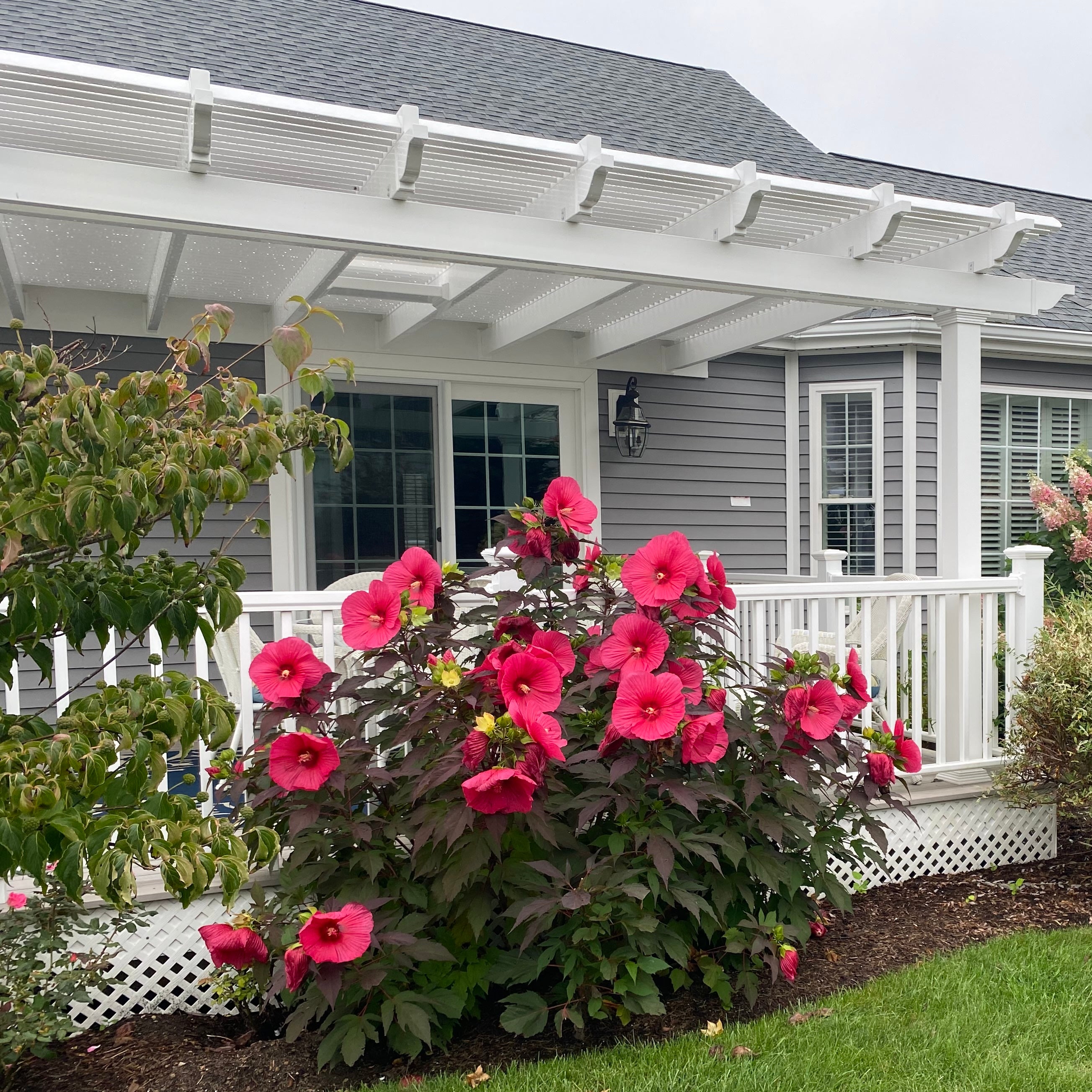 Adding permanent shade can turn an exposed area beside the pool into a usable outdoor room. Furniture, dining areas, conversation spaces, and other amenities can be organized beneath the structure while the open sides preserve views and airflow.
An attached pergola can provide a natural transition from the home to the pool area, while a freestanding design can establish a separate destination elsewhere on the deck or patio.
Large pool decks sometimes lack visual definition. A pergola creates a clear architectural boundary around dining, lounging, or entertaining areas without requiring walls.
This can be especially useful on larger properties where the swimming pool is part of a broader outdoor living environment rather than a stand-alone feature.
Pool areas with little or no shade may be used less during periods of intense sun. Adding a permanent shaded zone gives homeowners and guests another place to spend time outdoors before, during, or after swimming.
With a solid polycarbonate roof, the covered area can also remain usable during rain, providing greater weather protection than a conventional slatted pergola.
The right swimming pool pergola depends on more than appearance. Shade level, dimensions, location, attachment method, and the way people move around the pool should all be considered before selecting a configuration.
For a traditional or modern pergola, choose between 50%, 75%, and 90% shade coverage. The 50% configuration uses slats spaced 6 inches on center, 75% uses 4-inch spacing, and 90% uses 3-inch spacing.
More closely spaced slats create greater shade, while wider spacing allows more sunlight through. If rain protection is required, choose a solid polycarbonate patio cover instead of a slatted roof.
Size the structure around the area you actually want to shade rather than the overall dimensions of the pool. Measure the furniture layout, walking areas, surrounding deck, and any adjacent landscaping or structures before deciding on pergola dimensions.
Traditional freestanding pergolas can range from compact configurations starting at 8 feet to large multi-post structures measuring up to 44 by 44 feet. You can also shop pergolas by size when comparing available dimensions.
The ideal position depends heavily on how the sun moves across the property. Because the roof slats are fixed rather than adjustable, consider when the pool area receives its strongest sunlight and which portion of the deck would benefit most from permanent shade.
It is also important to preserve comfortable circulation around the pool, maintain access to equipment and utilities, and avoid placing posts where they interfere with doors, pathways, or frequently used sections of the deck.
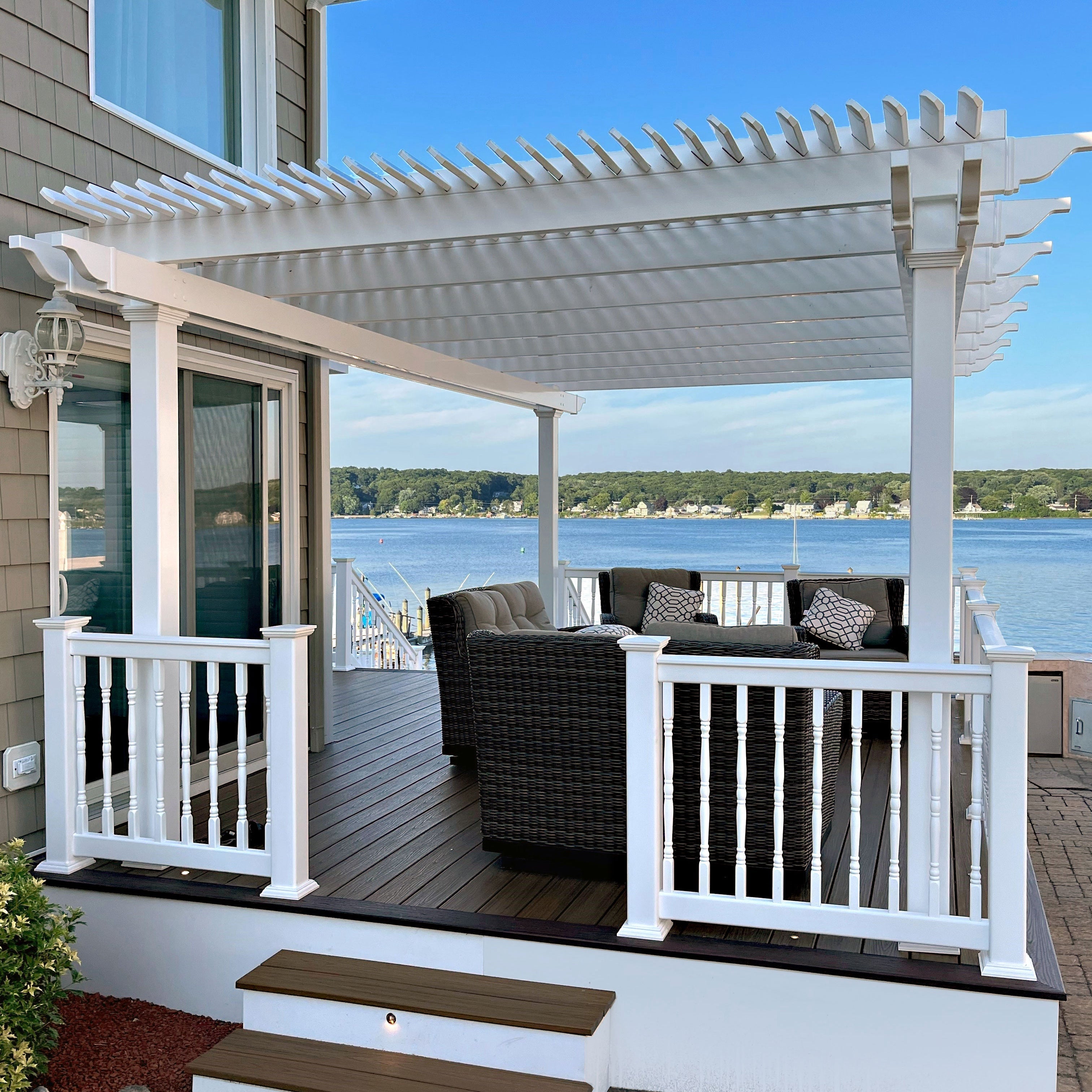 Freestanding pergolas are useful when the desired shade area is separated from the home or when homeowners want to create a distinct poolside retreat. They can be positioned over seating or dining areas without relying on an adjacent building for support.
Attached pergolas are often well suited to pool decks that extend directly from the house. Because one side connects to an existing structure, the pergola can visually and functionally extend the home's outdoor living area toward the pool.
Consider the architecture of the home, the shape of the deck, and the surrounding hardscape when selecting a style. Traditional pergolas can include beam and rafter overhangs, decorative end caps, inset posts, and multiple post styles, while modern pergolas use flush corners, corner-positioned posts, and no decorative end caps.
The roof is one of the most important decisions when configuring a swimming pool pergola because it determines how the structure manages sunlight and rain. Sunset Pergola Kits offers fixed slatted roofs for partial shade and solid polycarbonate roofs for full overhead coverage.
A pergola with a slatted roof retains the open character traditionally associated with pergolas while providing meaningful shade. The angled slats are fixed in place and contain no motors, hinges, or moving roof components.
This design is appropriate when shade is the primary objective but you still want some natural light to filter through the roof.
The 50% shade option provides the most open roof of the three configurations. The 75% option creates a denser shade pattern, while 90% provides the greatest amount of shade available with the slatted system.
The right choice depends on sun exposure, climate, the intended use of the covered area, and personal preference. These percentages describe the shade configuration; slatted roofs are not rainproof.
A solid-roof patio cover is the appropriate option when the goal includes protection from rain. These structures use a solid polycarbonate roof rather than shade slats and are available with white or bronze roof panels.
Both roof-panel colors provide 100% UV protection and can make the covered patio area up to 15 degrees cooler.
A poolside area used primarily for lounging may benefit from a higher shade percentage, while homeowners who want a brighter environment may prefer 50% or 75% coverage. Because the slats do not rotate or retract, selecting the shade level during configuration is an important part of planning the pergola.
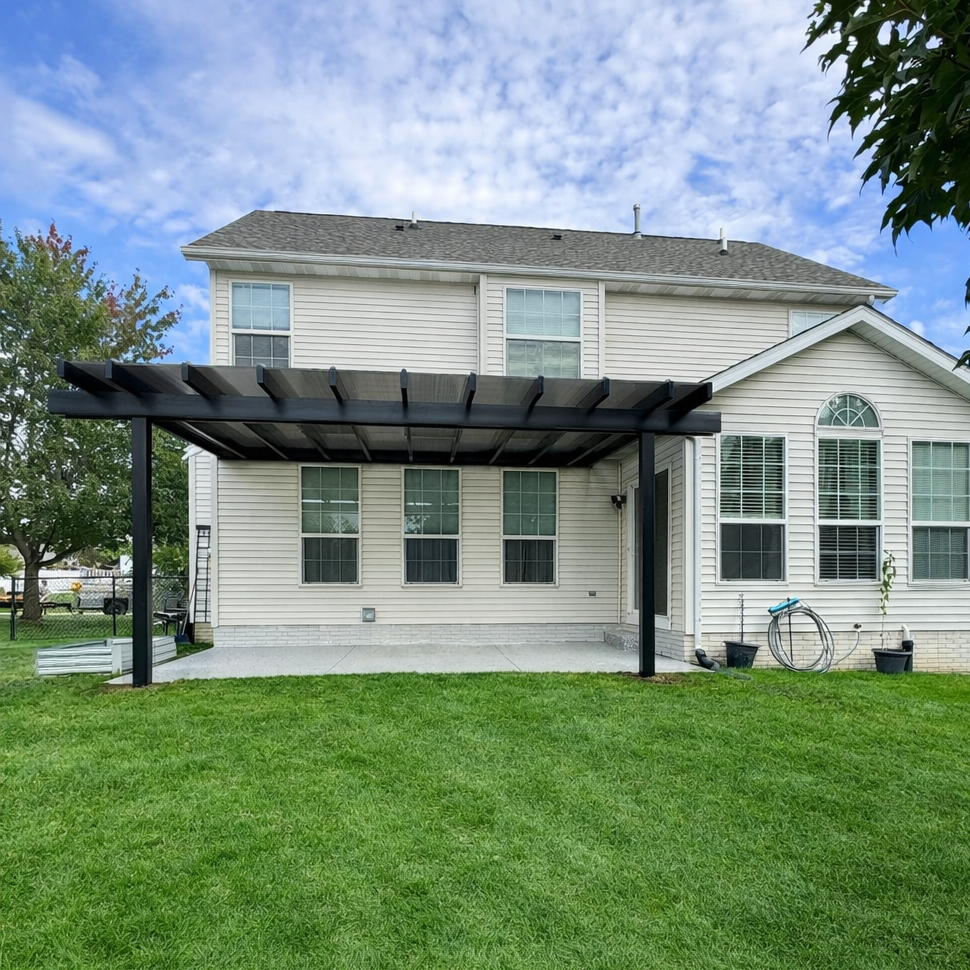 Traditional and modern slatted pergolas are designed for shade rather than rain protection. If the poolside space needs a fully covered roof, choose a rainproof patio cover with solid polycarbonate panels.
A solid roof can be particularly useful over outdoor dining furniture, lounge seating, or other poolside areas that homeowners want to use during a wider range of weather conditions.
A pergola beside a swimming pool is continually exposed to outdoor conditions, so material selection affects maintenance, appearance, and long-term durability. Our pergolas combine structural aluminum reinforcement with a thick extruded vinyl exterior rather than relying exclusively on either wood or lightweight hollow vinyl components.
Aluminum inserts reinforce the weight-bearing posts, beams, and rafters in our traditional, modern, and solid-roof structures. The metal provides structural strength while remaining rust-proof, an important characteristic for permanently installed outdoor structures.
This reinforcement also allows longer spans between posts than would be practical with weaker structural components.
The exterior is made from premium extruded vinyl that is colored throughout rather than painted. It does not require staining, sanding, or repainting, making it particularly useful in pool environments where homeowners generally want to minimize ongoing exterior maintenance.
Our vinyl pergolas are available in white, tan, and black, with white being the most affordable color option.
A permanent pool pergola may be exposed to strong sunlight, changing temperatures, moisture, wind, and routine splashing. Materials that do not depend on a painted or stained exterior can reduce the amount of periodic refinishing associated with maintaining an outdoor structure.
Extruded vinyl is designed to be virtually maintenance-free. Unlike wood, it does not need routine painting or staining, and normal cleaning is generally straightforward.
The lack of retractable, motorized, or adjustable roof mechanisms also eliminates moving roof components that would otherwise require maintenance or eventual replacement.
For a permanent poolside installation, structural quality matters more than simply choosing a material based on appearance. Aluminum reinforcement, thick extruded vinyl, professional-grade components, and appropriate installation all contribute to long-term performance.
Traditional and modern pergolas carry a lifetime warranty. Solid-roof patio covers carry a lifetime warranty on the frame and a 10-year warranty on the roof.
A swimming pool pergola can be configured to complement both the architecture of the home and the practical requirements of the pool deck. Available choices include traditional or modern styling, multiple dimensions, three vinyl colors, slatted or solid roofs, and several structural configurations.
White, tan, and black vinyl exteriors are available. Because the vinyl is colored throughout rather than merely coated on the surface, the color is integral to the exterior material.
White is the most affordable option, while black carries the highest color premium. Color selection can be coordinated with the home's trim, windows, outdoor furniture, fencing, or other poolside architectural elements.
Traditional pergolas can include beam and rafter overhangs, decorative scrolled, beveled, or flat end caps, multiple post styles, and—in many configurations—posts inset from the corners. This gives the structure a more classic architectural profile.
Modern pergolas have square, flush corners with posts positioned at the corners, no beam or rafter overhangs, and no decorative end caps. The resulting appearance is simpler and more contemporary.
Traditional and modern slatted pergolas are offered with 50%, 75%, or 90% shade coverage. Because these systems use permanently fixed angled slats, there are no motorized or retractable components to operate.
Traditional designs offer the broadest range of dimensions, with certain multi-post freestanding configurations available up to 44 by 44 feet. Modern designs are available in configurations up to 32 by 32 feet, while solid-roof patio covers are available in freestanding and attached layouts up to 32 by 20 feet.
The appropriate layout depends on the shape of the pool deck and the specific area being covered, not simply the total square footage of the property.
Traditional pergolas offer 5-inch square, 7-inch square, and 10-inch round post options, depending on the selected configuration, along with several trim and end-cap choices. Traditional posts can generally be positioned at the corners or inset up to 36 inches.
Modern pergola posts remain at the corners and use square posts, preserving the clean geometry of the design. Optional fan mounts are also available for traditional, modern, and solid-roof structures.
The cost of a swimming pool pergola varies because these are permanent structures offered in many sizes and configurations rather than standardized temporary kits. Size, roof type, color, number of posts, structural layout, accessories, installation conditions, and other selected options can all affect total project cost.
Large structures generally require more material and additional posts or structural components than smaller pergolas. Color also affects price, with white being the most economical vinyl option and black the most expensive.
Roof selection is another major consideration because a fixed slatted shade roof and a solid polycarbonate roof use different components and serve different purposes.
A professionally constructed permanent pergola should be evaluated differently from a lightweight temporary structure designed to last only a limited number of seasons. A durable pool pergola can become a long-term architectural improvement to the outdoor living area rather than a consumable patio accessory that requires frequent replacement.
Maintenance requirements also affect long-term value. Because the vinyl exterior does not require routine painting, staining, or sanding, owners avoid many of the recurring maintenance tasks associated with wood pergolas.
These structures are designed for permanent installation and can be assembled by capable DIY homeowners or installed by a contractor. The installation surface and support requirements should be evaluated before construction, particularly when working with an existing concrete deck or patio surrounding a pool.
Detailed assembly information and videos can help homeowners understand the installation process before choosing between DIY assembly and professional installation.
Pool decks may contain plumbing, electrical lines, drainage systems, or other concealed infrastructure. The proposed post locations should therefore be evaluated carefully before drilling, excavating, or installing footings.
Post placement should also preserve safe circulation around the swimming pool and avoid conflicts with equipment, access panels, doors, and other permanent features.
Permanent structures may be subject to local permitting, setback, engineering, or attachment requirements. Homeowners should verify applicable local rules before installation.
Traditional pergolas and rainproof patio covers can be ordered with optional hurricane brackets, which are recommended in areas that may experience winds of 80 MPH or greater. Adding hurricane brackets also provides a lifetime wind damage warranty for those pergola types.
The best type depends on the location and desired coverage. Choose a slatted pergola for partial shade or a solid-roof patio cover when rain protection is also important.
Our traditional and modern pergolas are available with 50%, 75%, or 90% fixed shade coverage. The slats are spaced progressively closer together as the shade percentage increases.
Slatted pergolas are not rainproof. For full rain protection, choose a solid polycarbonate patio cover.
Yes. Freestanding pergolas can be installed independently of the house and are well suited to poolside seating, dining, and lounge areas.
Yes. Traditional, modern, and solid-roof structures are available in attached configurations that connect to an existing house or other suitable structure.
Our pergolas use aluminum reinforcement with a premium extruded vinyl exterior. The vinyl does not require painting, staining, or sanding and is designed for long-term outdoor use.
Available sizes vary by style. Traditional pergolas offer the largest configurations, including certain freestanding layouts up to 44 by 44 feet. See the pergola size guide for available dimensions.
Yes. The kits are designed to be DIY-friendly, although homeowners may also hire a contractor. Review the assembly information and videos before deciding which approach is appropriate.
No. We do not offer louvered, retractable, canvas, motorized, or adjustable roof systems. Slatted pergolas use fixed angled slats, while patio covers use fixed solid polycarbonate roofs.
Traditional and modern pergolas include a lifetime warranty. Rainproof patio covers include a lifetime warranty on the frame and a 10-year warranty on the polycarbonate roof.


