

MADE IN THE USA
with American products
w/ American products


Home ▸ Small Backyard Pergolas
A small backyard pergola can create a defined, comfortable outdoor living area without overwhelming limited space. Sunset Pergola Kits offers permanent, aluminum-reinforced vinyl pergolas in freestanding and attached configurations, with fixed slatted roofs providing 50%, 75% or 90% shade, plus solid-roof patio covers for rain protection. Choose from traditional or modern styles, multiple sizes and finishes, and low-maintenance materials designed for long-term outdoor use. [read more]


A small backyard pergola is a permanent outdoor structure sized and configured to provide useful shade or weather protection without consuming more of the yard than necessary. In compact outdoor spaces, the right dimensions, post placement, roof type and attachment method matter as much as the overall style.
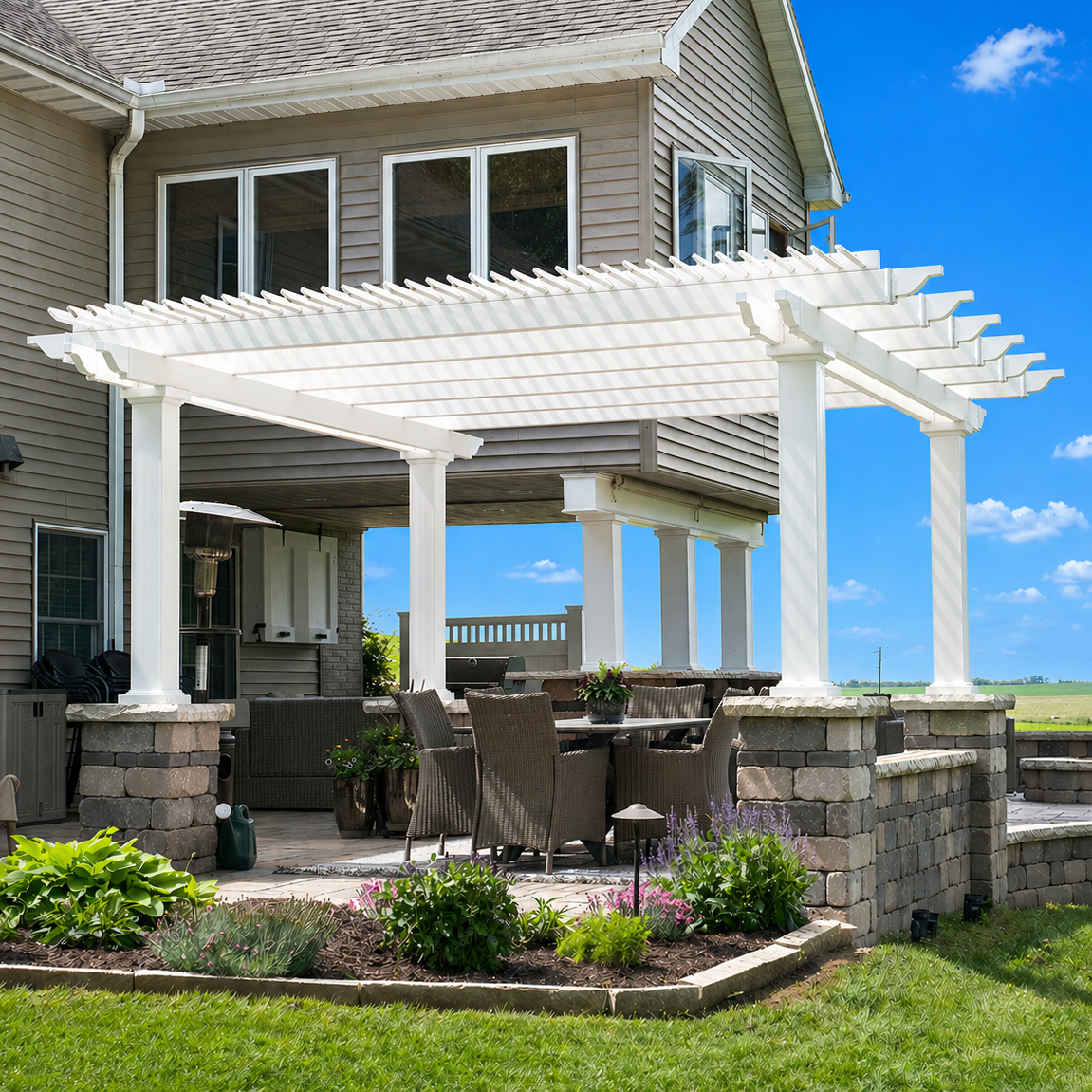 A small backyard pergola is typically used to cover a focused outdoor area such as a patio, dining space, seating area or section of a deck. Rather than filling the entire yard, it defines a specific living zone while leaving surrounding space open for landscaping, circulation and other uses.
Our traditional pergolas can begin at 8' x 8', while modern pergolas also start at 8' x 8'. This makes it possible to create meaningful shade even when the available backyard footprint is relatively limited.
The most important factors are footprint, post location and how much visual space the structure occupies. A pergola that closely matches the dimensions of the patio or seating area usually feels more intentional than one that extends unnecessarily into the yard.
Traditional designs can use corner posts or inset posts, while modern pergolas keep posts at the corners and eliminate decorative overhangs. Those configuration differences can be especially important where fences, walkways, landscaping or property setbacks limit usable space.
A freestanding pergola can be positioned independently over a patio, garden seating area or other outdoor space. It normally uses four posts in smaller sizes, giving you flexibility when the desired shade area is away from the house.
An attached pergola connects directly to the home or another suitable structure and typically requires posts only along the outer edge. In some compact yards, eliminating the rear row of posts can preserve valuable floor space and make the patio feel more open.
Small pergolas work particularly well over patios, decks, outdoor dining areas, conversation spaces and hot tub areas. The goal is usually not to cover the entire backyard, but to create a clearly defined destination within it.
Limited outdoor space can still function as a comfortable extension of the home when it is organized around a defined purpose. A well-sized pergola adds overhead structure and shade while preserving the open-air character of the yard.
A pergola visually separates a seating or dining area from the rest of the landscape without enclosing it with solid walls. In a small yard, that definition can make the available square footage feel more organized and purposeful.
Traditional and modern pergolas use fixed angled roof slats and are available with 50%, 75% or 90% shade coverage. These slatted-roof pergolas provide meaningful overhead shade while remaining open to air and natural light.
For homeowners who want complete overhead coverage rather than partial shade, a solid polycarbonate roof is available on our rainproof patio covers.
A shaded area can make an existing patio or deck more usable during bright, hot portions of the day. Instead of dedicating additional yard space to a separate covered structure, the pergola can be sized specifically around an area that is already part of the home's outdoor layout.
A pergola can establish a natural location for outdoor dining, conversation or entertaining. Optional fan mounts are available for traditional, modern and solid-roof patio cover configurations, allowing a ceiling fan to be incorporated where appropriate.
These are permanent, professional-grade structures rather than temporary shade products. Aluminum-reinforced structural components, premium extruded vinyl and lifetime frame warranties make them appropriate for homeowners who want an outdoor improvement designed for long-term use.
Choosing the correct size is especially important in a compact yard. The pergola should provide enough coverage for its intended use while preserving comfortable circulation around posts, furniture, doors, landscaping and neighboring outdoor features.
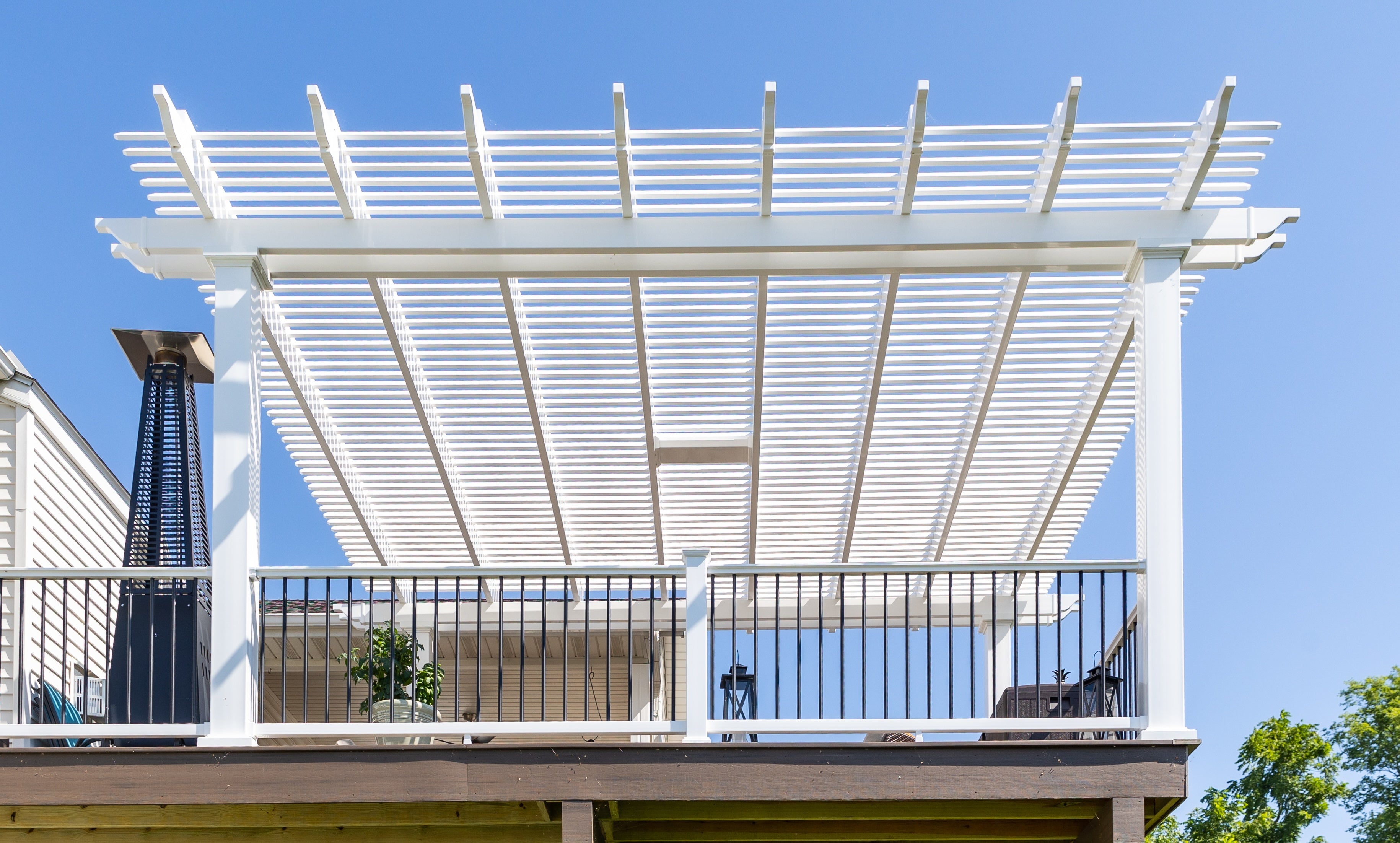 There is no universal ideal size because the right dimensions depend on what you plan to place beneath the structure. A small conversation area may need much less coverage than a full outdoor dining set, while a patio that already has defined dimensions often provides a natural starting point.
Our traditional and modern pergolas begin at 8' x 8'. You can also shop pergolas by dimensions to compare configurations based on the width and depth available in your yard.
Measure the specific patio, deck or ground area where the structure will be installed. Then account for fences, gates, exterior doors, windows, landscaping, pathways and any local setback or permit requirements that may affect placement.
A pergola can technically fit within a space and still feel too crowded if furniture or posts interfere with normal movement. Leave enough room for chairs to pull out, doors to open and people to move comfortably around the shaded area.
Traditional pergolas allow posts to be positioned in the corners or inset by as much as 36 inches. Inset posts can help align supports with an existing patio or create a different relationship between the roof footprint and the area occupied by posts.
Modern pergolas use corner posts only, while rainproof patio covers allow posts to be inset by up to 24 inches. The best arrangement depends on the shape of the patio and where structural supports can be located without disrupting how the space is used.
A useful rule is to begin with the footprint of the furniture or activity area you want to shade, then add enough surrounding room for circulation. This avoids choosing a pergola that is substantially larger than the part of the yard you actually intend to use.
The best pergola for a small yard is not necessarily the smallest available model. It is the configuration that fits the site, provides the desired level of shade or rain protection, and complements the architecture of the home without making the outdoor area feel crowded.
Determine whether the primary goal is to shade a dining table, lounge furniture, a section of patio or another defined feature. Once the functional area is established, choosing width, depth and post placement becomes much easier.
An attached pergola is often practical when the outdoor living area sits directly beside the home. Because the structure connects to the building, smaller attached models use posts only across the outer edge.
A freestanding pergola is more appropriate when the desired shade area is separated from the house or when attachment is not practical. Both configurations are available in traditional, modern and solid-roof designs.
Traditional and modern pergolas are available with fixed angled slats providing approximately 50%, 75% or 90% shade coverage. A 50% configuration allows more sunlight through, while 75% and 90% options provide progressively denser overhead shade.
If partial shade is not enough and you need a rainproof roof, consider a solid-roof patio cover instead. Its polycarbonate roof panels provide complete rain coverage and 100% UV protection.
Traditional pergolas can include beam and rafter overhangs, inset posts and scrolled, beveled or flat end caps. These details create a more classic architectural appearance and provide greater flexibility in how the roof and posts relate to one another.
Modern pergolas have flush corners, no beam or rafter overhangs, no decorative end caps and posts located at the corners. Their clean geometry can work especially well in compact contemporary landscapes where visual simplicity is important.
All of our full-size pergolas use premium extruded vinyl over aluminum-reinforced structural components. The vinyl is colored throughout rather than painted, so it does not require routine painting, staining or sanding like a wood structure.
Small-space pergolas can be configured around both functional and architectural priorities. Available options include shade coverage, color, post style, roof type and structural details, depending on the pergola style selected.
Traditional and modern pergolas use fixed angled roof slats. The slats are spaced at 6 inches on center for approximately 50% shade, 4 inches on center for approximately 75% shade, or 3 inches on center for approximately 90% shade.
These are fixed systems with no motors or moving roof components. The selected shade level remains consistent once the pergola is installed.
Traditional, modern, rainproof and eyebrow pergolas are available in white, tan or black. The color is integral to the premium extruded vinyl rather than applied as a surface coat of paint. White is the most affordable finish, while black is the most expensive.
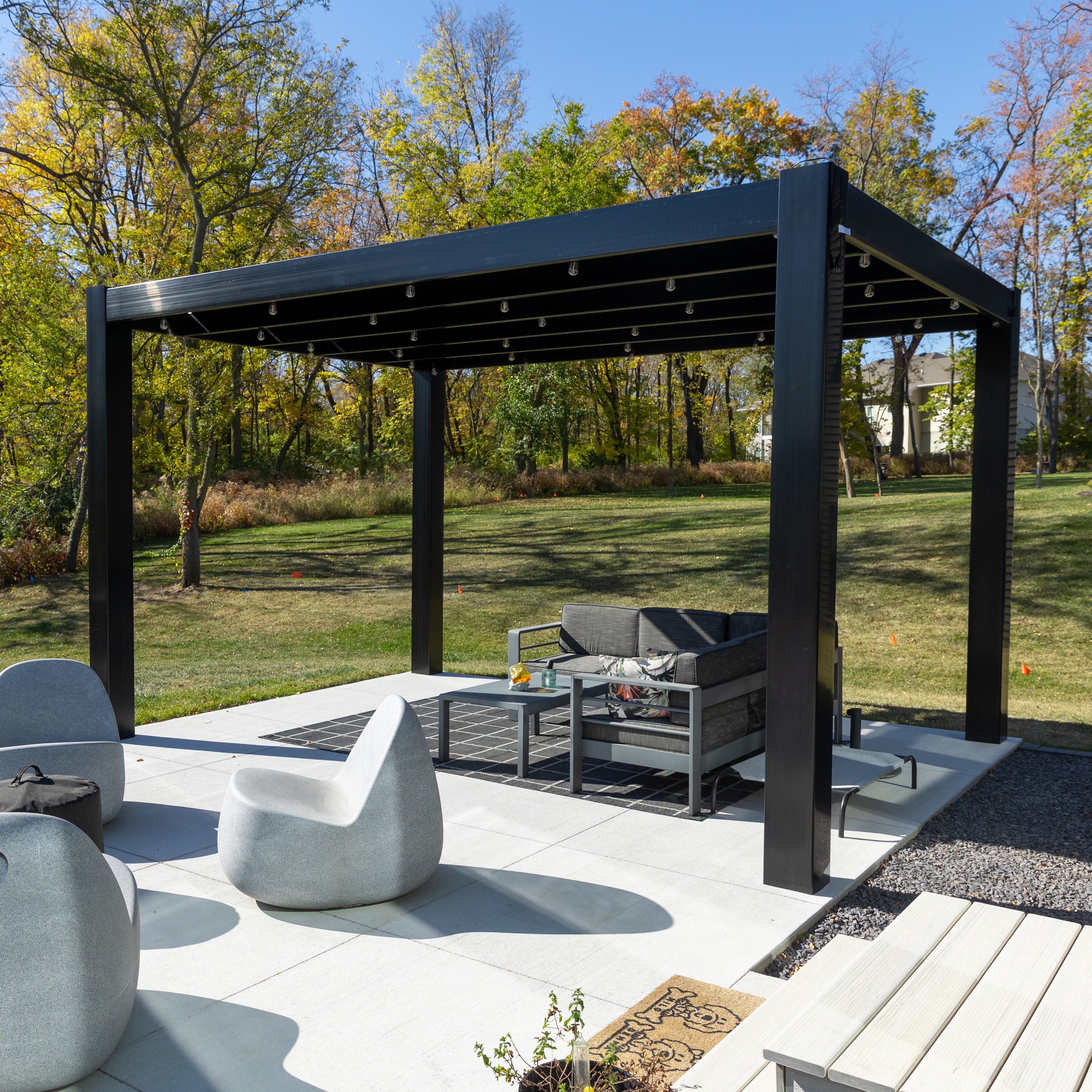 Traditional pergolas offer several post styles, including 5-inch square, 7-inch square and 10-inch round configurations, along with scrolled, beveled or flat beam and rafter end caps. Traditional post placement can also be inset up to 36 inches.
Modern pergolas intentionally use fewer decorative options. They have square, flush corners, corner-positioned posts and no decorative end caps, producing a cleaner contemporary profile.
A slatted pergola is appropriate when shade and an open-air feel are the priority. A solid polycarbonate roof is better when the space needs protection from rain as well as sun.
Solid-roof patio covers are available with white or bronze roof panels. Both provide 100% UV protection and can make the covered patio up to 15 degrees cooler.
Traditional pergolas and rainproof patio covers can be ordered with optional hurricane brackets, which are recommended in areas that may experience winds of 80 MPH or greater. Adding hurricane brackets also adds a lifetime wind damage warranty to those pergola configurations.
Homeowners with limited outdoor space often compare pergolas with gazebos, patio covers and retractable shade products. The best choice depends on whether the priority is partial shade, complete rain protection, visual openness or adjustable coverage.
A pergola generally has a more open architectural form than a typical gazebo. Slatted pergolas provide overhead shade without creating a fully enclosed-looking roof, which can help a compact backyard retain a lighter, more open appearance.
A gazebo may be preferable when a homeowner specifically wants the visual character and fully roofed form of a gazebo. For partial shade, a pergola is often the more open-feeling option.
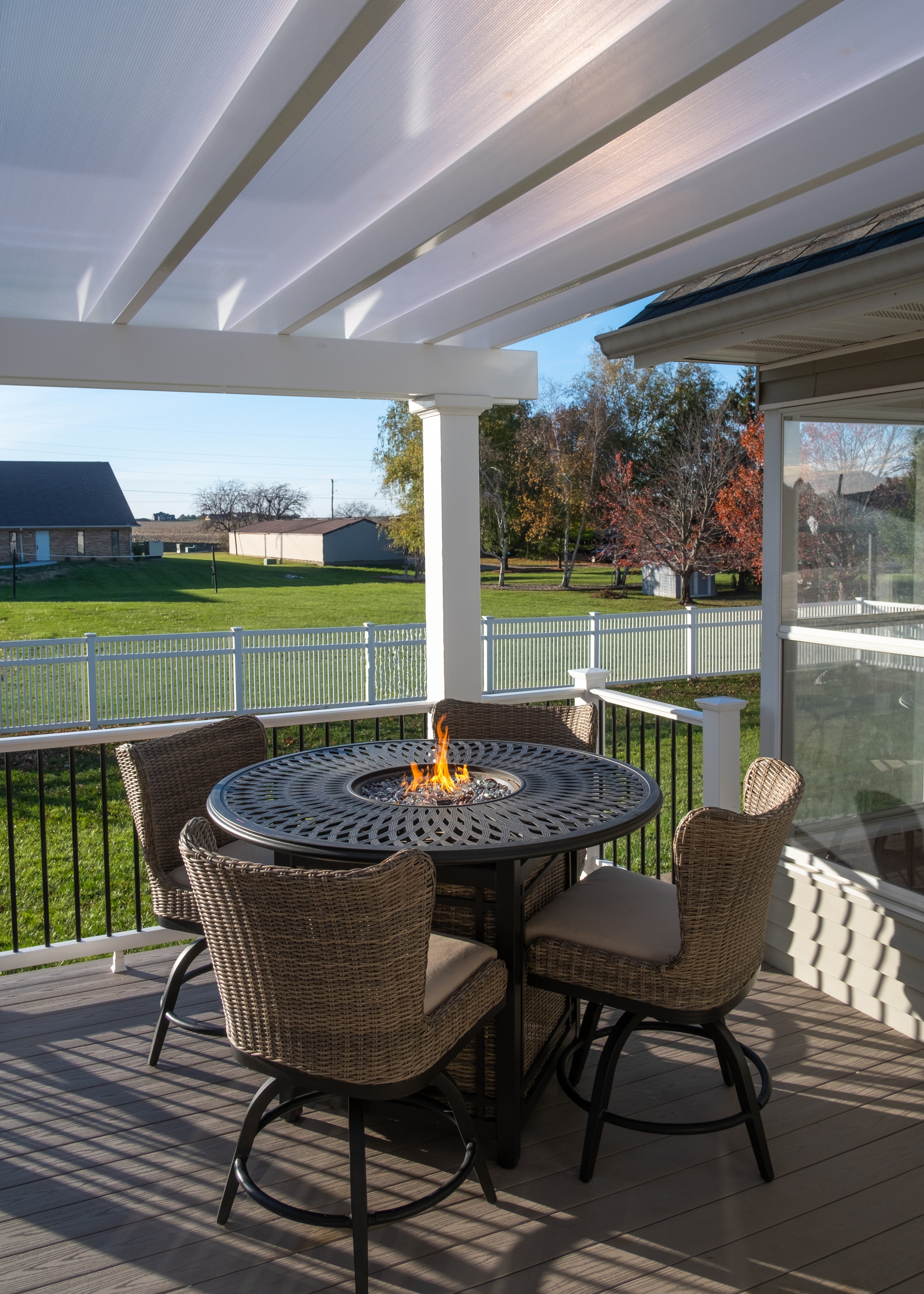 The primary difference is the roof. Traditional and modern pergolas have fixed angled slats that provide partial shade but are not rainproof. A patio cover uses a solid polycarbonate roof to keep rain off the space below.
For a small backyard used mainly in fair weather, a slatted pergola may provide the right balance of shade and openness. If outdoor furniture, cooking or dining areas need dependable overhead rain protection, a solid-roof patio cover is usually the better fit.
Retractable awnings and fabric canopies are designed around movable or fabric-based shade. Our pergolas use permanent structural frames with fixed roofs and do not include retractable, canvas, louvered or motorized systems.
This makes them better suited to homeowners who want a permanent architectural structure rather than adjustable temporary shade.
A pergola is a strong option when the goal is permanent shade, defined outdoor living space, low maintenance and an open-air architectural appearance. It is particularly well suited to patios and decks where a complete solid roof is unnecessary.
If complete rain protection is essential, a solid-roof patio cover is more appropriate than a slatted pergola. If adjustable or retractable shade is a requirement, a different product category will be necessary because these pergolas use fixed roof systems.
The cost of a small backyard pergola depends on more than its overall footprint. Size, style, finish, shade density, post configuration and optional structural features can all affect the final price, so two pergolas with similar dimensions may not cost the same.
Primary cost factors include width and depth, attached versus freestanding installation, traditional versus modern design, vinyl color, shade coverage and optional components. Traditional designs can also vary based on post style, post placement and decorative end-cap selections.
Larger pergolas require more structural and roofing material, so price generally increases with overall size. Additional posts may also be required once the structure exceeds the span available in a smaller four-post or two-post configuration.
For compact yards, accurately sizing the pergola to the functional area can prevent paying for coverage that the space does not need.
These pergolas combine aluminum reinforcement with thick extruded vinyl. The aluminum provides structural strength without the rust concerns associated with exposed steel, while the vinyl exterior does not require painting, staining or sanding.
That low-maintenance construction is an important part of long-term value because the structure is designed as a permanent home improvement rather than a temporary outdoor product that is routinely replaced.
Low-cost pergolas in the $500–$1,500 range are typically aimed at a different buyer and use case. Sunset Pergola Kits is designed for homeowners seeking a professional-grade permanent shade structure with aluminum-reinforced components, premium vinyl and long-term warranty coverage.
Traditional and modern pergolas carry a lifetime warranty, as do eyebrow pergolas. Rainproof patio covers include a lifetime warranty on the frame and a 10-year warranty on the polycarbonate roof.
For homeowners comparing initial purchase price alone, a permanent structure may cost more than a temporary shade product. The more meaningful comparison is often long-term ownership, maintenance requirements, structural durability and how many years the outdoor improvement is intended to remain part of the home.
A good size depends on the patio, furniture and circulation space you want to cover. Sunset Pergola Kits offers traditional and modern pergolas beginning at 8' x 8'. You can compare available dimensions on the pergola size guide.
It can if the structure is oversized for the available space. Choosing dimensions that closely match the patio or seating area generally helps define the space without unnecessarily consuming the rest of the yard.
Either can work. An attached pergola may conserve space beside the house because it does not require a rear row of posts, while a freestanding pergola offers more flexibility in placement.
Traditional and modern full-size pergolas start at 8' x 8'. Eyebrow pergolas are much shallower decorative shade structures with a 2-foot rafter depth and lengths beginning at 4 feet.
Traditional and modern pergolas are available with approximately 50%, 75% or 90% shade coverage. The amount of shade is determined by the spacing of the fixed angled roof slats.
Traditional and modern slatted pergolas are not rainproof. For full rain protection, choose a rainproof patio cover with a solid polycarbonate roof.
No. The exterior is premium extruded vinyl that is colored throughout, so it does not require routine painting, staining or sanding.
Yes. The pergola kits are designed to be DIY-friendly, although homeowners can also hire a contractor. Installation resources and videos are available on the assembly information page.
No. The pergolas use fixed slatted roofs or solid polycarbonate roofs. Louvered, motorized, canvas and retractable roof systems are not offered.
Yes. Traditional, modern, rainproof and eyebrow pergola systems are made in the USA using America-sourced materials.


