

MADE IN THE USA
with American products
w/ American products


Home ▸ PVC Pergolas
A PVC pergola is commonly understood to mean a vinyl pergola: a low-maintenance outdoor structure with a clean, finished exterior. Our PVC pergola kits combine premium extruded vinyl with aluminum reinforcement inside the weight-bearing posts, beams, and rafters. Choose a permanent freestanding or attached structure with a slatted shade roof, or select a solid-roof patio cover for rain protection. [read more]


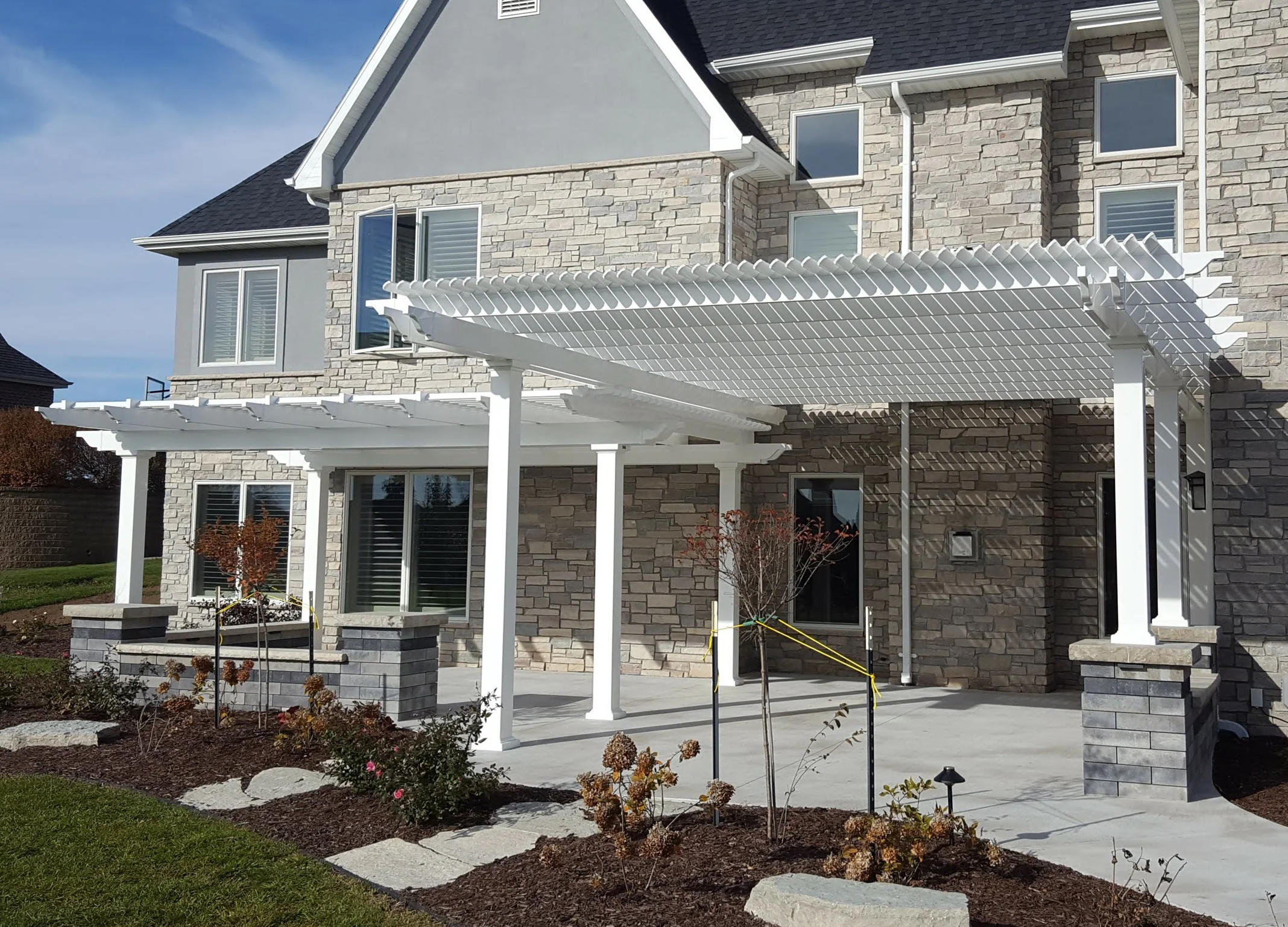
The phrase “PVC pergola” is commonly used by homeowners searching for a low-maintenance vinyl pergola. Although the terminology varies, shoppers generally want a permanent outdoor structure that provides useful shade without the painting, staining, or sealing associated with wood.
PVC is a type of vinyl, so the terms “PVC pergola” and “vinyl pergola” are often used interchangeably in everyday searches. Our vinyl pergolas have a premium extruded exterior that is colored throughout rather than coated with surface paint.
This vinyl creates the finished exterior, but it does not carry the structural loads by itself. The pergola combines vinyl with internal aluminum reinforcement to deliver the appearance and low-maintenance qualities of vinyl with the strength required for a permanent outdoor structure.
Aluminum inserts reinforce the posts, beams, and rafters in our Traditional, Modern, and rainproof structures. The vinyl surrounds these structural components, protecting the finished appearance while eliminating the need for routine painting or staining.
This dual-material construction is why the products may accurately fit searches for either PVC, vinyl, or aluminum-reinforced pergolas. The visible surface is premium extruded vinyl, while the concealed aluminum supplies structural strength and supports longer spans between posts.
A PVC pergola should not be assumed to be a lightweight, unsupported plastic structure. Products with thin hollow components may be appropriate as decorative accents, but they are fundamentally different from an aluminum-reinforced pergola intended for permanent installation.
Our kits are professional-grade shade structures made in the USA with America-sourced materials. They are designed to become a lasting part of a patio, pool area, deck, or other outdoor living space rather than a temporary seasonal accessory.

The main benefits of a PVC pergola are low maintenance, durable construction, and dependable shade. The vinyl exterior provides a finished appearance without creating the recurring refinishing schedule associated with many wood structures.
Premium extruded vinyl does not require paint, stain, or protective sealer. This eliminates several recurring maintenance tasks and helps preserve a consistent finish without sanding or refinishing exposed posts, beams, and rafters.
Routine care is generally limited to cleaning the exterior when dirt, pollen, or outdoor residue accumulates. That makes vinyl especially practical for large pergolas with extensive overhead components that would otherwise be inconvenient to repaint or stain.
The vinyl exterior will not rot like exposed wood and is not a food source for wood-destroying insects. This is valuable in humid environments and around pools, landscaping, or irrigated areas where an outdoor structure may experience regular moisture exposure.
Internal aluminum reinforcement is also rust-proof and does not depend on wood components for structural support. Together, the materials address several common durability concerns associated with exposed wood construction.
The exterior is made from thick extruded vinyl that is colored throughout rather than merely painted on the surface. This construction helps maintain a consistent appearance and prevents peeling paint from becoming an ongoing maintenance issue.
White, tan, and black are available. White is the most affordable color, while black is the most expensive; tan provides a warmer neutral alternative for homes with stone, stucco, brick, or earth-toned exteriors.
Traditional and Modern PVC pergolas use fixed angled roof slats to provide 50%, 75%, or 90% shade coverage. Unlike a purely decorative pergola with widely spaced rafters, these structures are configured to provide meaningful relief from direct sunlight.
A permanent pergola can define an outdoor dining room, seating area, poolside retreat, or entertaining space. Its usefulness, durable materials, and architectural presence can also contribute lasting value to the home.
Material thickness and internal reinforcement are critical when evaluating a PVC pergola kit. A polished vinyl exterior alone does not reveal how well a structure will span between posts, resist bending, or perform as a permanent installation.
The visible exterior consists of thick, premium extruded vinyl made to resist discoloration, deformation, and cracking in demanding outdoor conditions. Because the material is colored throughout, the finish does not depend on a painted outer layer.
The smooth exterior also gives the pergola a refined architectural appearance suitable for upscale patios and landscaped outdoor spaces. It delivers the low-maintenance qualities homeowners expect when they search for a PVC or vinyl pergola.
Traditional, Modern, and rainproof models contain aluminum inserts inside all weight-bearing posts, beams, and rafters. The aluminum carries structural loads while remaining concealed within the vinyl exterior.
Eyebrow pergolas use a different wall-mounted design and contain aluminum reinforcement in the rafters. They are shallow architectural structures rather than full-size freestanding or attached patio pergolas.
Heavier aluminum reinforcement helps the structure resist bowing, bending, and breaking. It also makes longer spans between posts possible, preserving more open space for furniture, walkways, outdoor kitchens, and unobstructed views.
Post count varies with the selected style and dimensions. Larger Traditional pergolas can use six or nine posts, while larger Modern layouts may also use multiple structural bays to cover expansive outdoor areas.
These kits are designed to be permanently anchored rather than moved or disassembled seasonally. The appropriate foundation, mounting method, and structural attachment depend on whether the pergola is freestanding or connected to a house or other structure.
Traditional pergolas and rainproof patio covers can be ordered with optional hurricane brackets. They are recommended where winds may reach 80 MPH or more and add a lifetime wind-damage warranty. Hurricane brackets are not offered for Modern pergolas.
Our PVC pergola kits are made in the USA using America-sourced materials. Domestic construction, substantial aluminum reinforcement, and premium vinyl distinguish these permanent structures from lightweight imported pergolas intended for short-term use.
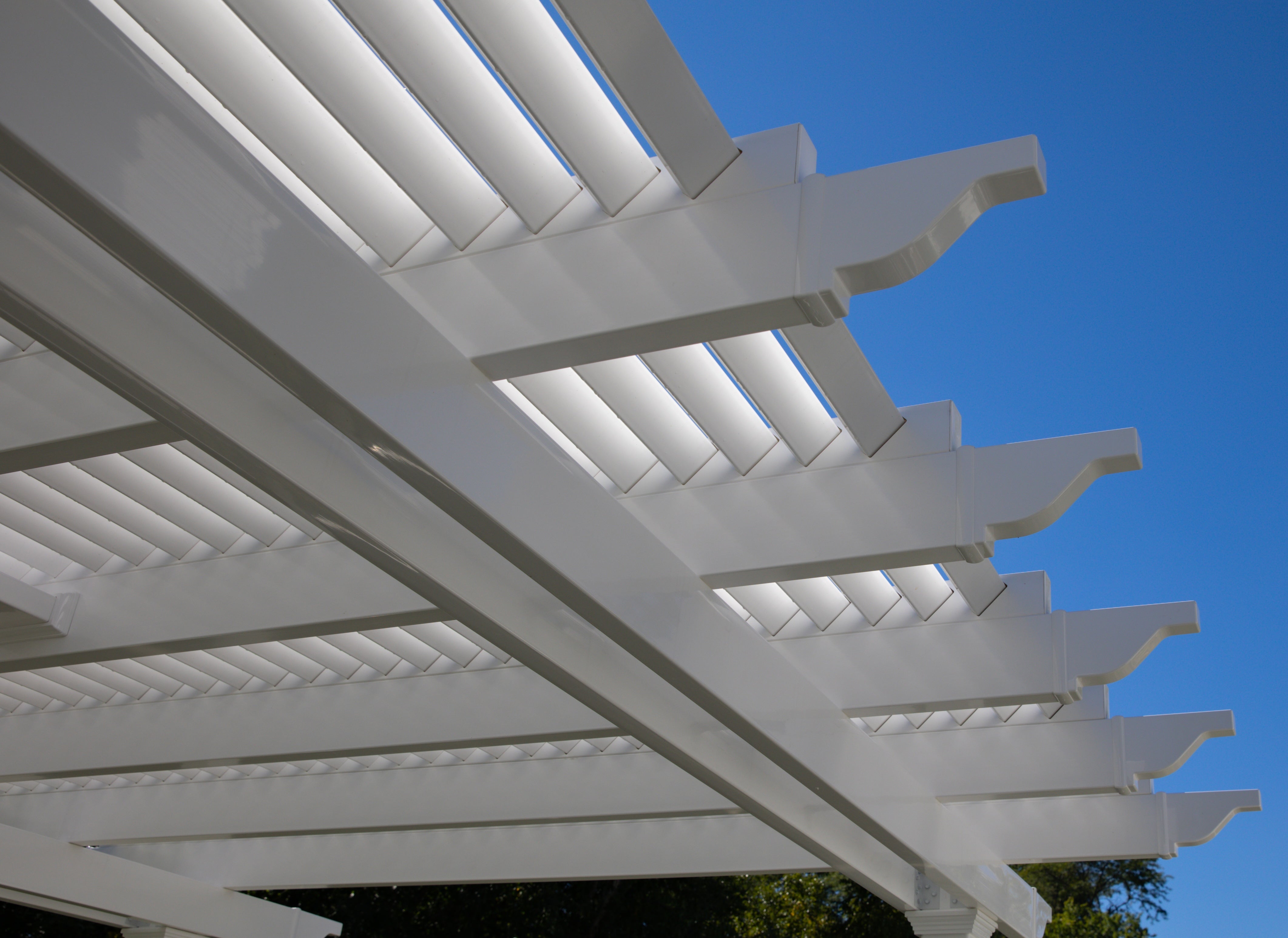
Material comparisons should account for the entire structure rather than its visible exterior alone. Our PVC pergolas combine vinyl and aluminum, so they occupy a different category from both exposed wood pergolas and structures with exposed aluminum surfaces.
Wood offers a natural appearance and can be painted or stained in many colors, but it typically requires periodic maintenance to protect its finish. Depending on the species and environment, exposed wood may also be vulnerable to rot, checking, warping, and insect damage.
A vinyl-exterior pergola avoids sanding, painting, staining, and sealing. It is therefore well suited to homeowners who value a clean architectural finish but do not want the recurring upkeep associated with exposed wood.
Both systems can use aluminum for strength, but their visible finishes differ. A fully exposed aluminum pergola has a metal exterior, while our construction places aluminum reinforcement inside premium vinyl sleeves.
The result combines a substantial vinyl appearance with the span capability and structural support of aluminum. The best choice depends on whether the homeowner prefers the look of exposed metal or the thicker profiles and finished surface of vinyl.
Vinyl and aluminum do not require the same refinishing schedule as exposed wood. The exterior is easy to clean, the internal aluminum does not rust, and there are no motorized roof mechanisms or moving louvers that require eventual component replacement.
Actual weather performance also depends on pergola dimensions, anchoring, installation conditions, and local requirements. Buyers should evaluate the complete structural system instead of choosing solely by the exterior material label.
Vinyl provides a crisp, finished appearance that complements many traditional, transitional, coastal, and contemporary homes. White creates a bright classic look, tan works naturally with warmer exterior palettes, and black provides stronger contrast.
Style also affects the visual result. Traditional pergolas can include decorative overhangs and end caps, while Modern designs use flush corners and clean rectangular lines.
A low initial price does not necessarily indicate the lowest long-term cost. Replacement, refinishing, repairs, and limited structural capability can change the value equation over the life of an outdoor structure.
An aluminum-reinforced PVC pergola is intended as a lasting home improvement. Its lifetime warranty, low-maintenance exterior, and permanent construction are especially relevant for homeowners planning to use the space for many years.
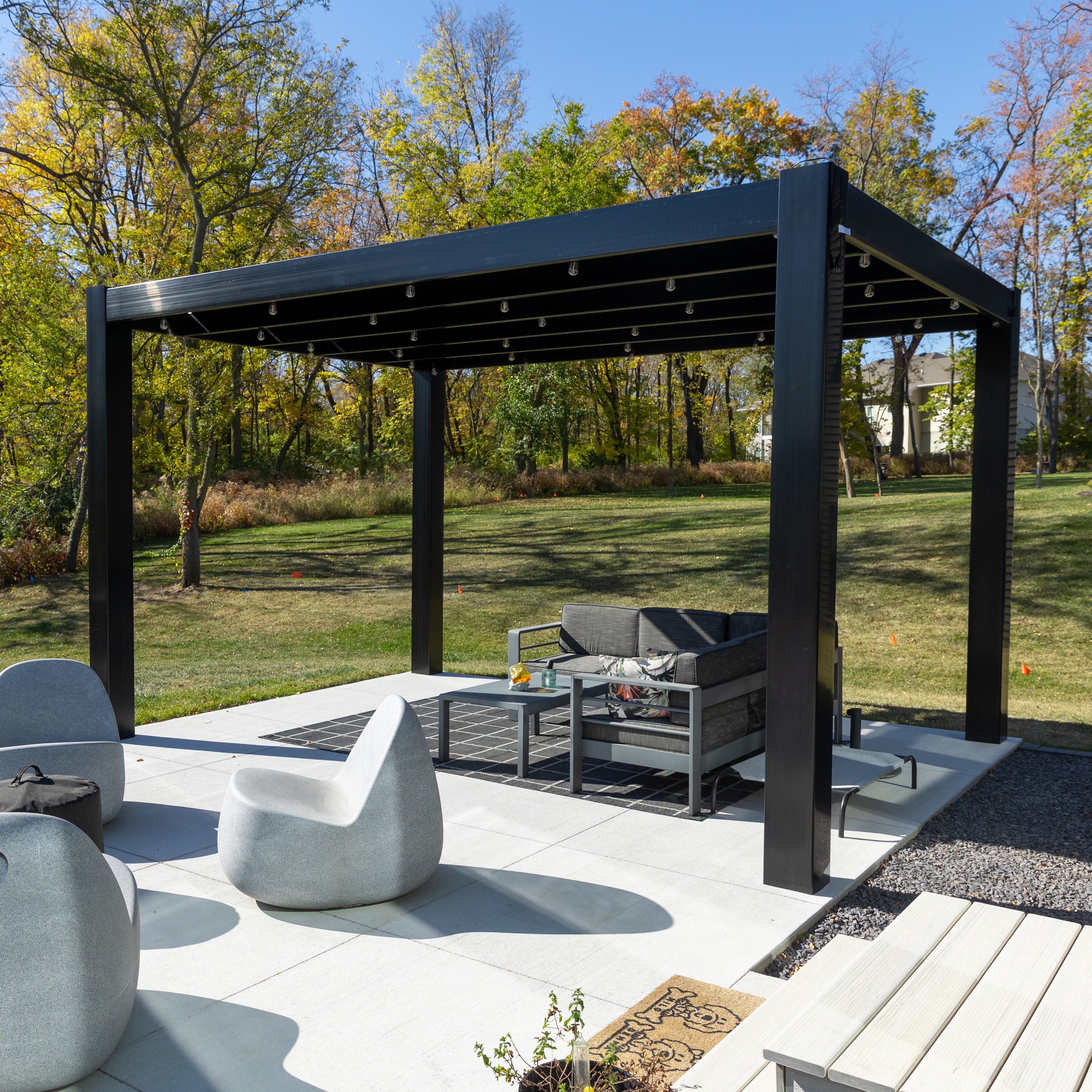
PVC pergola kits are available in several architectural configurations. Style, roof type, shade coverage, post design, and color can be selected to suit the home and the intended use of the covered area.
Traditional pergolas feature a familiar layered roofline and may include beam and rafter overhangs from 0 to 36 inches. Posts can be positioned at the corners or inset as much as 36 inches, allowing the roof to extend beyond the supporting columns.
Available post styles include 5-inch square, 7-inch square, and 10-inch round profiles, depending on the selected trim configuration. Scrolled, beveled, and flat end caps provide additional control over the final architectural character.
Modern PVC pergolas have square, flush corners without beam or rafter overhangs. Their posts remain at the corners, and the structure does not use decorative end caps.
Modern models use 7-inch square posts in white and tan, with a choice of including or omitting the lower trim ring. Black Modern pergolas use 8-inch square posts.
Traditional and Modern pergolas have fixed angled shade purlins, commonly called roof slats. Buyers can choose 50% shade with slats spaced 6 inches on center, 75% shade with 4-inch spacing, or 90% shade with 3-inch spacing.
These fixed slatted pergola roofs provide increasing levels of shade but are not rainproof. They contain no motors, moving louvers, retractable fabric, or adjustable roof components.
For full overhead coverage, rainproof patio covers replace the slatted roof with solid polycarbonate panels. White and bronze roof panels both provide 100% UV protection and can make the covered patio up to 15 degrees cooler.
These structures retain a premium vinyl exterior and aluminum-reinforced posts, beams, and rafters. They are often called patio covers rather than pergolas because their solid roofs are designed to block rain.
White, tan, and black vinyl colors are available across the main product styles. Optional fan mounts can be incorporated into Traditional, Modern, and rainproof structures when an overhead fan is part of the outdoor-space plan.
Optional hurricane brackets are available for Traditional pergolas and rainproof patio covers, but not Modern pergolas. Because electrical work and fan selection are site-specific, those components should be planned with a qualified installer or electrician.
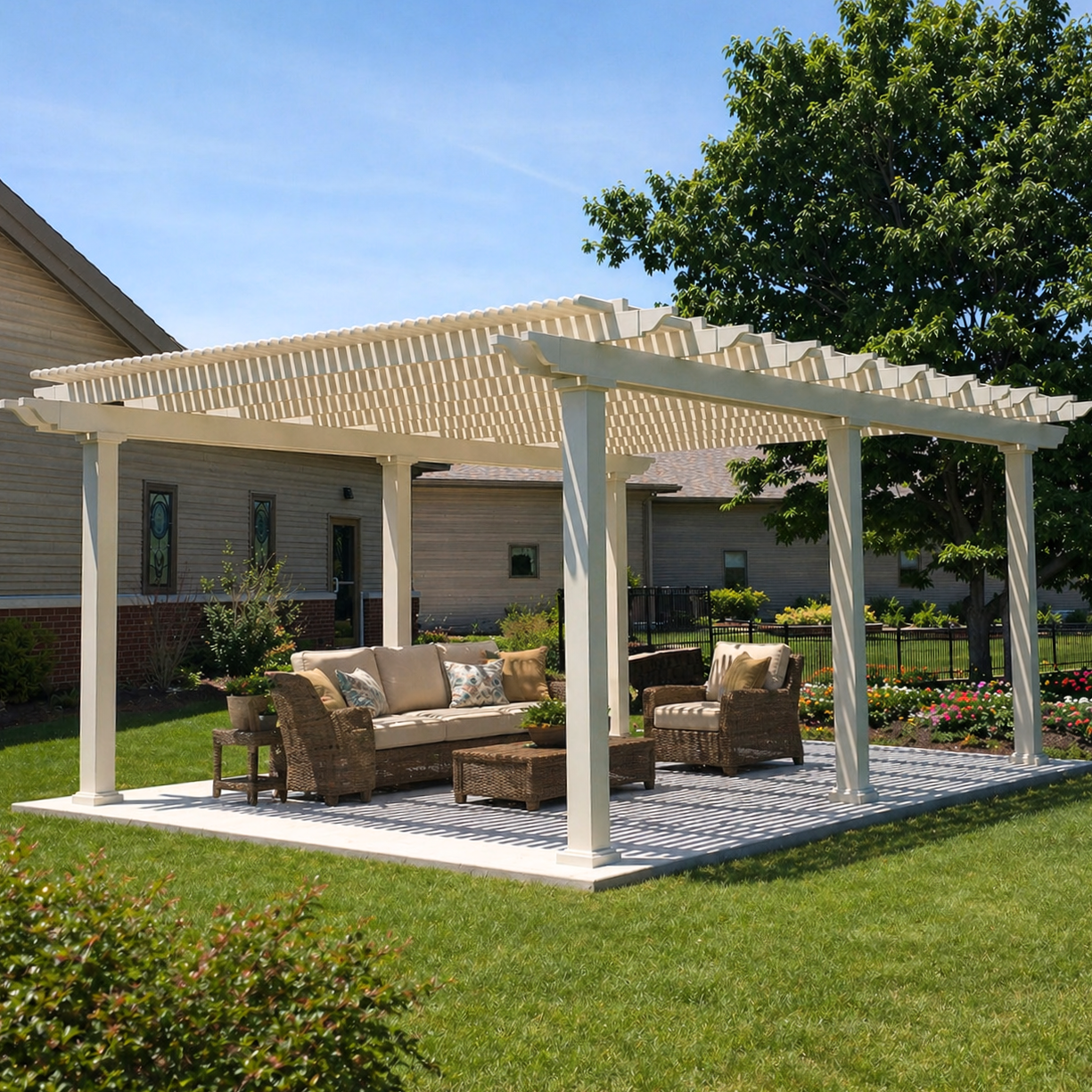
The right PVC pergola depends on how the outdoor area will be used, where supports can be placed, and whether the priority is partial shade or complete rain protection. Begin with the installation configuration, then select dimensions, roof coverage, style, and finish.
Freestanding pergolas use their own posts and can be positioned away from the house or beside a patio, pool, garden, or outdoor kitchen. They are useful when wall attachment is impractical or when the shade structure needs to stand independently within the landscape.
Attached PVC pergolas connect to a house or other suitable structure and use posts along the outer edge. This configuration can preserve more open floor space, but the mounting surface and attachment method must be appropriate for the structural loads.
Measure the usable patio or deck area rather than estimating from the furniture alone. Account for chairs pulled away from a table, circulation paths, doors, steps, grills, counters, pool edges, and any areas that must remain accessible.
Traditional pergolas offer the broadest size range, including layouts from 8 feet up to 44 feet in either direction when configured with the required number of posts. Modern pergolas are available up to 32 by 32 feet, while rainproof patio covers are available up to 32 by 20 feet.
Fifty-percent coverage creates an open roof with more visible sky and filtered sunlight. Seventy-five-percent coverage provides a stronger balance of shade and openness, while 90% coverage places the slats closest together for the greatest shade available from the fixed slatted roof.
Sun angle changes by season, time of day, and roof orientation, so a percentage does not mean the floor remains shaded at every moment. If the primary requirement is dependable rain protection rather than filtered shade, choose a solid polycarbonate roof.
Traditional pergolas work well when decorative overhangs, sculpted end caps, inset posts, or round columns complement the architecture. Modern pergolas are better suited to projects that call for straight lines, squared corners, and no roof overhangs.
Color should also be coordinated with the home’s trim, siding, masonry, windows, and other outdoor features. White is the most economical choice, while tan and black can create a more specific architectural relationship with the property.
PVC pergola kits are designed for either capable DIY installation or assembly by a contractor. Before ordering, confirm the mounting surface, anchor locations, structural attachment details, utility conflicts, and any applicable permit or engineering requirements.
The correct installation method depends on the selected model and site conditions. Buyers in high-wind areas should also determine whether optional hurricane brackets are appropriate before finalizing a Traditional pergola or rainproof patio cover.
PVC pergola pricing varies because these are configurable permanent structures rather than one-size-fits-all seasonal products. Size, structural layout, roof type, color, post style, and optional equipment all influence the final cost.
Width and depth are primary price factors because larger structures require more material and may need additional posts or structural bays. Freestanding and attached layouts can also use different quantities of posts and mounting components.
Roof selection matters as well. A fixed slatted roof and a rainproof polycarbonate roof use different materials and assemblies, while closer purlin spacing adds more slats to produce greater shade coverage.
Traditional and Modern models use different profiles and design details. Post size, trim configuration, decorative end caps, roof overhangs, fan mounts, and hurricane brackets may affect the total price when available for the chosen structure.
White is the most affordable vinyl color, followed by tan, with black carrying the highest cost. Current collection and product pricing should be used when comparing specific configurations.
A PVC pergola does not require periodic purchases of paint, stain, sealer, or sanding supplies. Owners also avoid paying for the recurring labor needed to strip and refinish a large exposed-wood structure.
The fixed-roof design has no motorized louvers, retractable canopy, or moving shade mechanism. Fewer mechanical components mean fewer parts that can wear out and require repair or replacement over time.
Thick aluminum reinforcement helps prevent the bending and bowing associated with lighter construction. Proper anchoring remains essential, and the installation must account for the structure’s size, location, exposure, and local requirements.
Traditional pergolas and rainproof patio covers can include hurricane brackets for locations that may experience winds of 80 MPH or more. When added, the brackets provide a lifetime wind-damage warranty. This option is not available for Modern pergolas.
Traditional, Modern, and eyebrow pergolas include a lifetime warranty. Rainproof patio covers include a lifetime warranty on the frame and a 10-year warranty on the polycarbonate roof.
The combination of a low-maintenance vinyl exterior, substantial aluminum reinforcement, useful shade, and permanent installation makes these structures a long-term home improvement—not a disposable pergola intended to last only a few seasons.
A PVC pergola is a pergola with a low-maintenance vinyl exterior. Our structures also contain aluminum reinforcement inside the weight-bearing components rather than relying on unsupported vinyl for structural strength.
Yes, PVC is a type of vinyl, and shoppers often use “PVC pergola” and “vinyl pergola” to describe the same product category.
No. Our Traditional, Modern, and rainproof pergolas have aluminum inserts inside the weight-bearing posts, beams, and rafters. The premium extruded vinyl forms the visible exterior.
No. The vinyl is colored throughout rather than painted, so it does not require painting, staining, sanding, or sealing.
Traditional and Modern pergolas have slatted roofs that provide shade but do not block rain. For rain protection, choose a solid-roof patio cover with white or bronze polycarbonate panels.
Slatted-roof pergolas are available with 50%, 75%, or 90% shade coverage. The corresponding shade-purlin spacing is 6, 4, or 3 inches on center.
Yes. Traditional, Modern, and rainproof structures are available in attached and freestanding configurations. Eyebrow pergolas are always wall-mounted using an included ledger board.
Yes, the kits are designed to be DIY-friendly, although customers may also hire a contractor. Review the assembly information and videos before deciding which approach is appropriate.
They are engineered for heavy winds when properly configured and installed. Optional hurricane brackets are recommended for Traditional pergolas and rainproof patio covers in areas that may experience winds of 80 MPH or more; they are not offered for Modern pergolas.
Traditional, Modern, and eyebrow pergolas have a lifetime warranty. Rainproof patio covers have a lifetime frame warranty and a 10-year roof warranty; see the frequently asked questions for additional details.


