

MADE IN THE USA
with American products
w/ American products


Home ▸ Permanent Pergolas
Permanent pergolas are built for homeowners who want a long-term outdoor structure rather than a temporary or decorative shade solution. Our permanent pergola kits combine aluminum-reinforced structural components with a maintenance-free premium vinyl exterior and are available with slatted roofs for 50%, 75% or 90% shade or solid polycarbonate roofs for rain protection. Choose from freestanding and attached configurations in traditional or modern styles, with sizes available for everything from compact patios to expansive outdoor living areas. [read more]


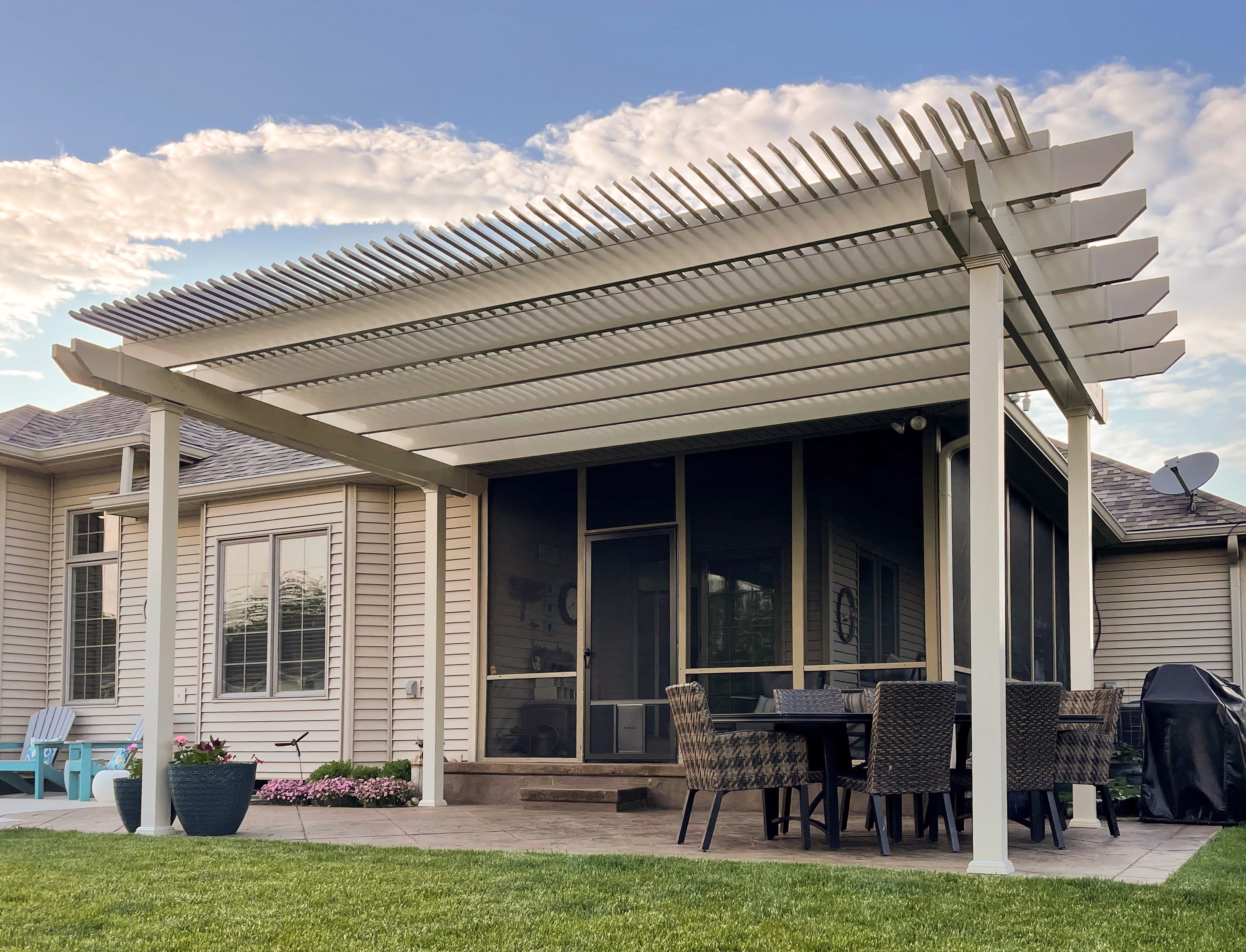
A permanent pergola is an outdoor structure designed to remain installed in a fixed location for long-term use. Unlike lightweight or seasonal pergolas that may be moved, disassembled or replaced after a relatively short period, a permanent pergola uses structural framing and secure installation to create lasting shade and define an outdoor living area.
The distinction starts with construction and installation. Our full-size permanent pergolas use aluminum inserts in all weight-bearing posts, beams and rafters, surrounded by premium extruded vinyl. The aluminum provides structural strength while the vinyl creates a finished exterior that does not require painting or staining.
A permanent structure must also be properly anchored for its installation site. Rather than functioning as movable patio furniture, it becomes a fixed part of the outdoor space and is intended to remain outdoors throughout the year.
Temporary pergolas are generally designed around portability, lower initial cost or seasonal use. Permanent pergolas prioritize structural strength, durability and long-term outdoor use instead. This distinction is especially important for homeowners who want to invest in a finished outdoor living space rather than replace a lightweight structure every few years.
A freestanding pergola supports itself with posts and can be positioned independently from the home, making it useful over patios, pools, outdoor kitchens and other detached spaces. An attached pergola connects to the house or another suitable structure and uses fewer posts along the attached side.
Both configurations can provide permanent shade. The better choice depends on the location of the outdoor space, the home's architecture and whether connecting the structure to the house makes sense for the project.
A pergola being supplied as a kit does not mean it is temporary. Our kits are professional-grade permanent structures designed to be assembled on site, either as a DIY project or by a contractor. The kit format simplifies ordering and installation while still providing aluminum-reinforced structural components intended for long-term use.
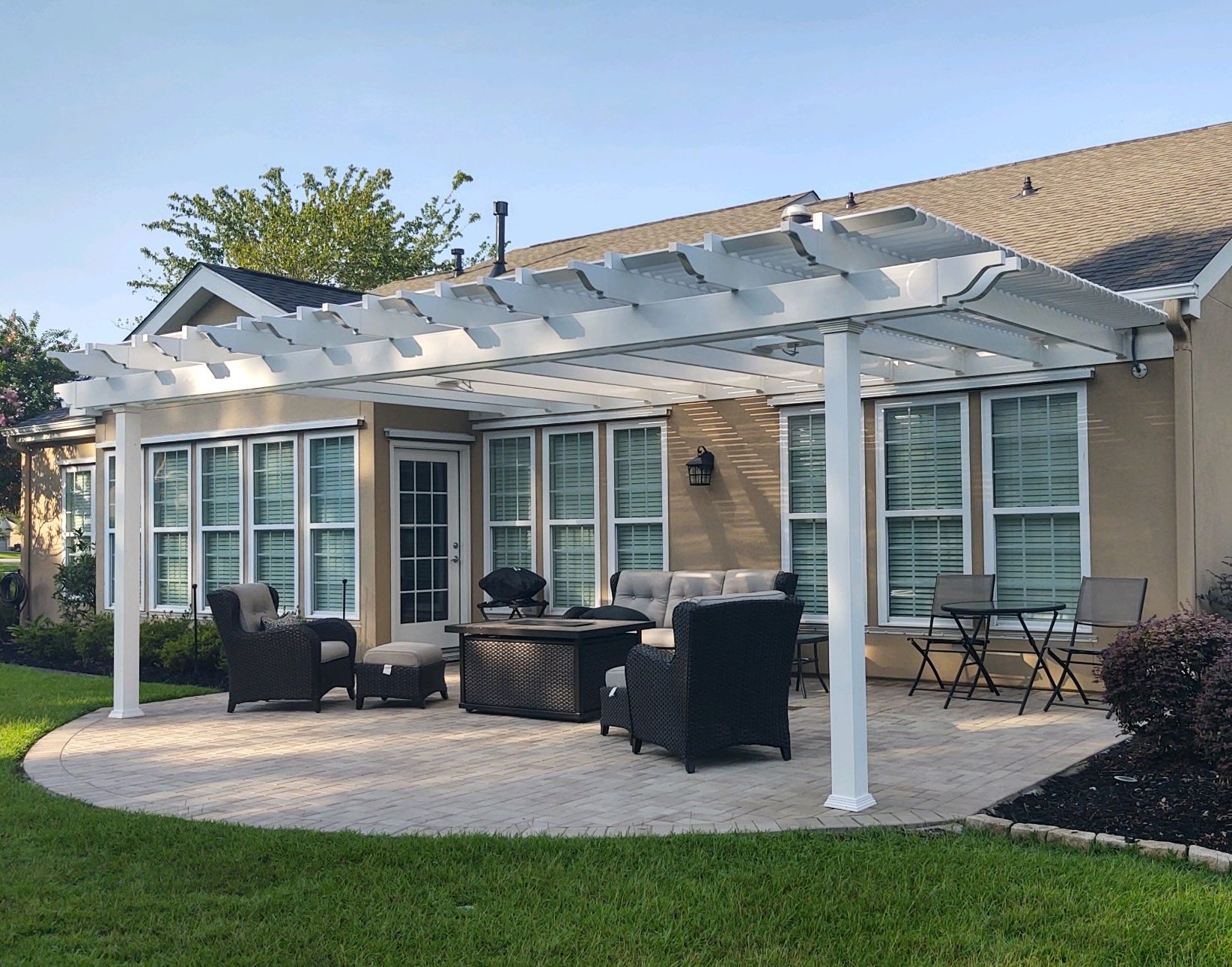
The primary advantage of a permanent pergola is that it turns shade into a lasting part of the outdoor living space. Instead of setting up temporary canopies or replacing lightweight structures, homeowners can create a dedicated area for dining, entertaining, relaxing or enjoying a pool or patio.
Traditional and modern pergolas use fixed angled roof slats rather than a purely decorative open framework. You can choose 50%, 75% or 90% shade coverage depending on how much sunlight you want to filter. For spaces where rain protection is also important, a solid-roof patio cover provides a different type of permanent coverage.
A permanent pergola is intended to withstand outdoor exposure as an installed structure. Heavy-duty aluminum reinforcement provides strength without requiring an excessively bulky frame, helping support longer spans between posts while maintaining a finished residential appearance.
Traditional pergolas and rainproof patio covers can also be ordered with optional hurricane brackets. These are recommended for areas that may experience winds of 80 mph or greater and add a lifetime wind-damage warranty to the pergola.
A permanent overhead structure visually establishes a patio, deck or poolside area as an outdoor room. This can make a large open space feel more intentional while providing useful shade where furniture, dining areas or gathering spaces are located.
Our premium extruded vinyl exterior is colored throughout rather than painted. It does not require the recurring sanding, staining or painting associated with many wood structures, making it especially well suited to homeowners who want a finished architectural structure without adding a major maintenance project.
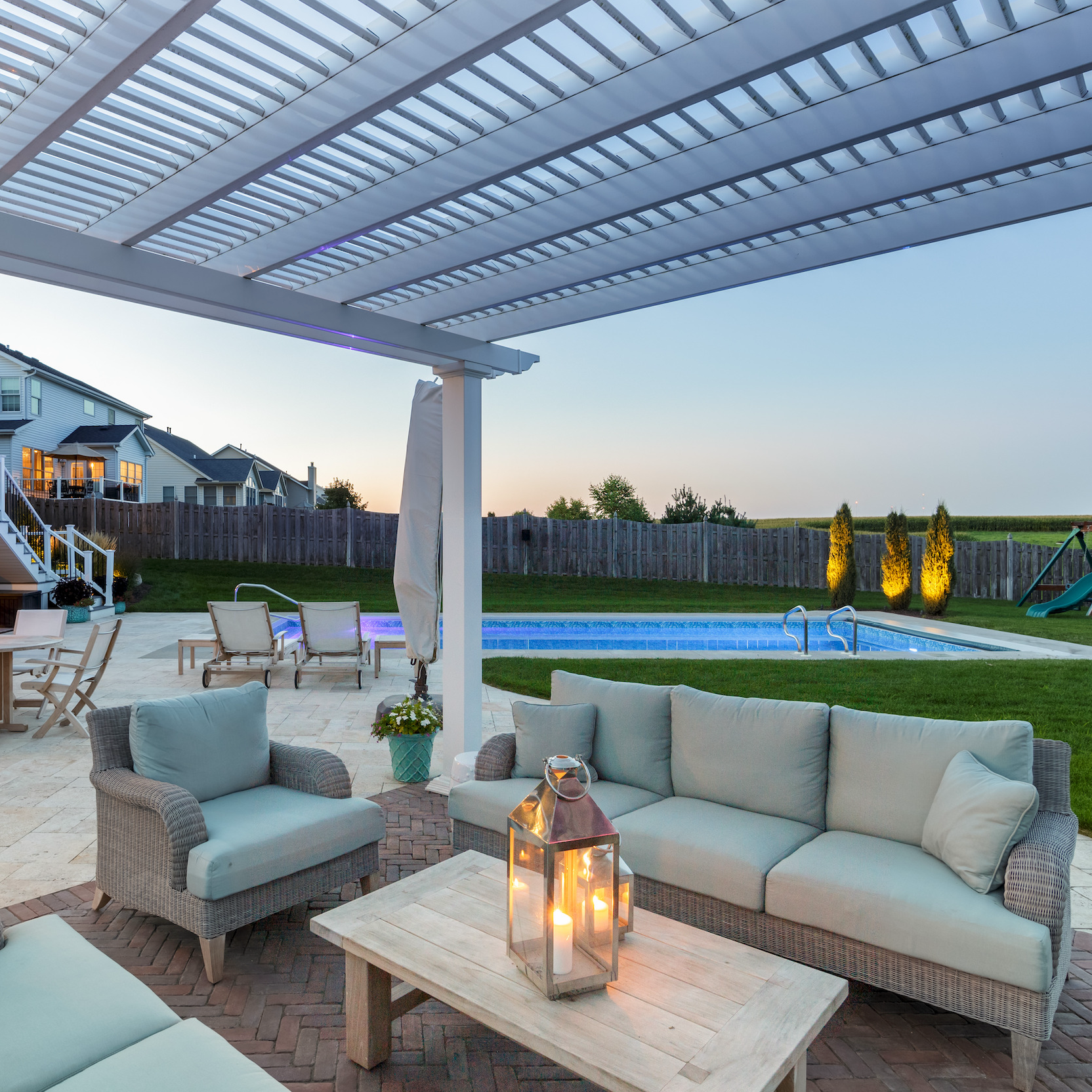
Material choice matters more for a permanent pergola than for a temporary structure because the frame and exterior remain exposed to outdoor conditions year after year. Our full-size pergolas combine structural aluminum with premium extruded vinyl so that strength and exterior finish do not have to come from the same material.
Our traditional, modern and fully covered pergolas use aluminum inserts in all weight-bearing structural components, including the posts, beams and rafters. Aluminum provides high strength while remaining relatively lightweight and rust-proof, allowing the structure to achieve substantial spans without relying on an excessive number of posts.
Although these are often described as aluminum pergolas, the visible exterior is vinyl; aluminum is the reinforcing structural material inside the primary components.
The exterior components use thick, premium extruded vinyl that is colored throughout rather than coated with paint. White, tan and black are available, with white being the most affordable color and black the most expensive. Unlike wood, the vinyl does not need routine painting, staining or sanding.
This combination makes vinyl pergolas particularly relevant for homeowners who like the finished appearance of a substantial permanent structure but want to minimize ongoing exterior maintenance.
Wood can be an appropriate material for a permanent pergola, particularly when a homeowner specifically wants natural wood grain. Its tradeoff is ongoing maintenance: exterior wood commonly requires periodic finishing to preserve its appearance and protect it from exposure.
An aluminum-reinforced vinyl pergola takes a different approach. Structural aluminum supplies the strength, while the vinyl exterior eliminates the need for painting and staining. The better material therefore depends on whether natural wood or lower maintenance is the higher priority.
Permanent structures benefit from components that resist common long-term problems such as corrosion, bending, cracking and deterioration. Our pergolas use heavy-duty aluminum reinforcement and thick extruded vinyl specifically to create a professional-grade structure rather than a short-life outdoor accessory. Full-size traditional and modern pergolas carry a lifetime warranty, as do the frames of our rainproof patio covers.
The term "permanent pergola" describes how the structure is built and installed, but it does not describe a single roof style. Comparing permanent pergolas with temporary pergolas, gazebos and solid patio covers helps determine which type of outdoor structure actually fits the intended use.
A temporary pergola generally makes the most sense when portability or a low initial purchase price is the priority. A permanent pergola is a better fit when the goal is a fixed architectural structure designed to remain part of the property for years.
The differences extend beyond anchoring. Structural materials, spans between posts, exterior durability and long-term maintenance all become more important when a pergola is intended to stay in place indefinitely.
Pergolas traditionally use an open or slatted overhead design, while gazebos typically have a solid roof. That makes a slatted pergola useful for filtered shade without creating the same fully covered environment as a gazebo.
For homeowners who want a pergola-style frame with complete overhead coverage, a permanent patio cover can provide the solid-roof alternative without switching to a conventional gazebo design.
A slatted pergola and a patio cover solve different coverage needs. Our slatted-roof pergolas provide 50%, 75% or 90% shade, but the slatted roofs are not rainproof. Our rainproof patio covers use solid polycarbonate roof panels when protection from rain is required.
The white and bronze polycarbonate roof options both provide 100% UV protection and can make the covered patio up to 15 degrees cooler. Choosing between the two structures therefore begins with a simple question: do you primarily want filtered shade, or do you need a fully covered outdoor area?
Our permanent pergolas use fixed roof systems. We do not offer motorized louvers, retractable canopies, canvas roofs or adjustable roof mechanisms. A fixed system has no motors or moving roof components that need to operate each time the shade configuration changes.
A permanent pergola is best suited to homeowners who already know where they want long-term shade or coverage and want that structure integrated into the outdoor space. Buyers primarily seeking portability, a temporary seasonal structure or a $500–$1,500 pergola are generally looking for a different product category.
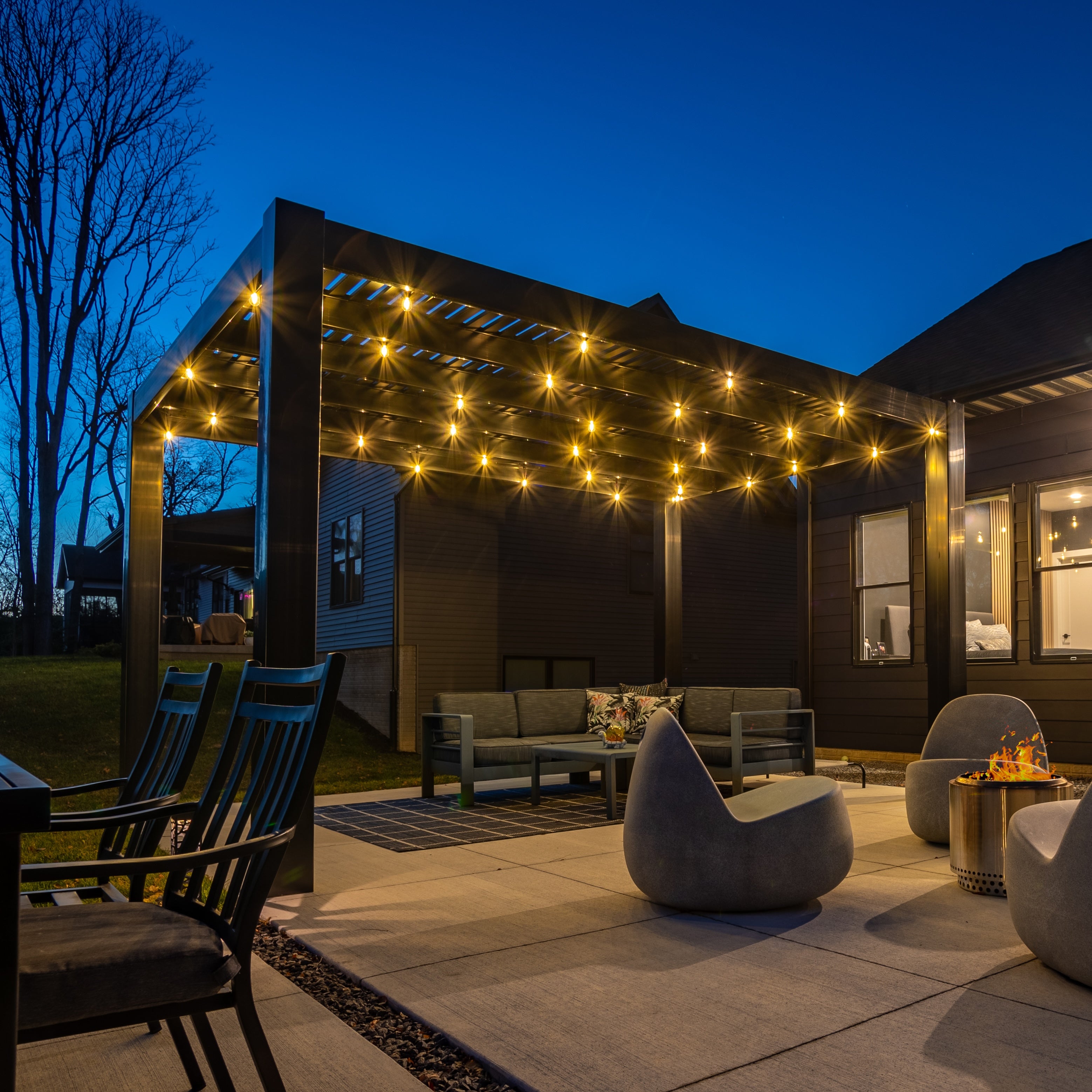
The right permanent pergola depends on more than its outside dimensions. Before ordering, consider where it will be installed, how the covered area will be used, how much shade or weather protection you need, and which architectural style fits the home.
Start with the usable area you want beneath the pergola rather than choosing dimensions solely by the available yard or patio space. Account for furniture, walking paths, outdoor kitchens, pool clearance and other permanent features. Our pergola size guide makes it possible to shop by specific width-and-depth combinations.
Traditional pergolas offer the broadest size range, with configurations extending to 44' x 44'. Modern pergolas are available up to 32' x 32', while rainproof patio covers are available in configurations up to 32' x 20'. The number of posts varies with the dimensions and configuration.
Freestanding pergolas work well when the desired shade area does not need to connect directly to the house. Attached pergolas are often a natural fit for patios and decks immediately outside the home because one side connects to the structure while posts support the opposite side.
Consider both appearance and installation conditions. The attachment point, available foundation locations and desired post positions can influence which configuration works best.
For filtered sunlight and airflow, choose a slatted pergola with 50%, 75% or 90% shade coverage. The angled slats are spaced 6 inches on center for 50% shade, 4 inches on center for 75% shade and 3 inches on center for 90% shade.
If the space needs dependable rain protection, choose a solid polycarbonate patio cover instead. Slatted pergolas provide real shade but are intentionally not rainproof.
Traditional pergolas can include beam and rafter overhangs, decorative end caps and inset posts for a more detailed architectural profile. Modern pergolas eliminate the overhangs and end caps, place posts at the corners and use square, flush lines for a contemporary appearance.
A permanent outdoor structure should be selected and installed with local conditions in mind. Traditional pergolas and patio covers can be equipped with optional hurricane brackets, which are recommended where winds may reach 80 mph or higher. Local code requirements, site conditions and proper anchoring should also be addressed before installation.
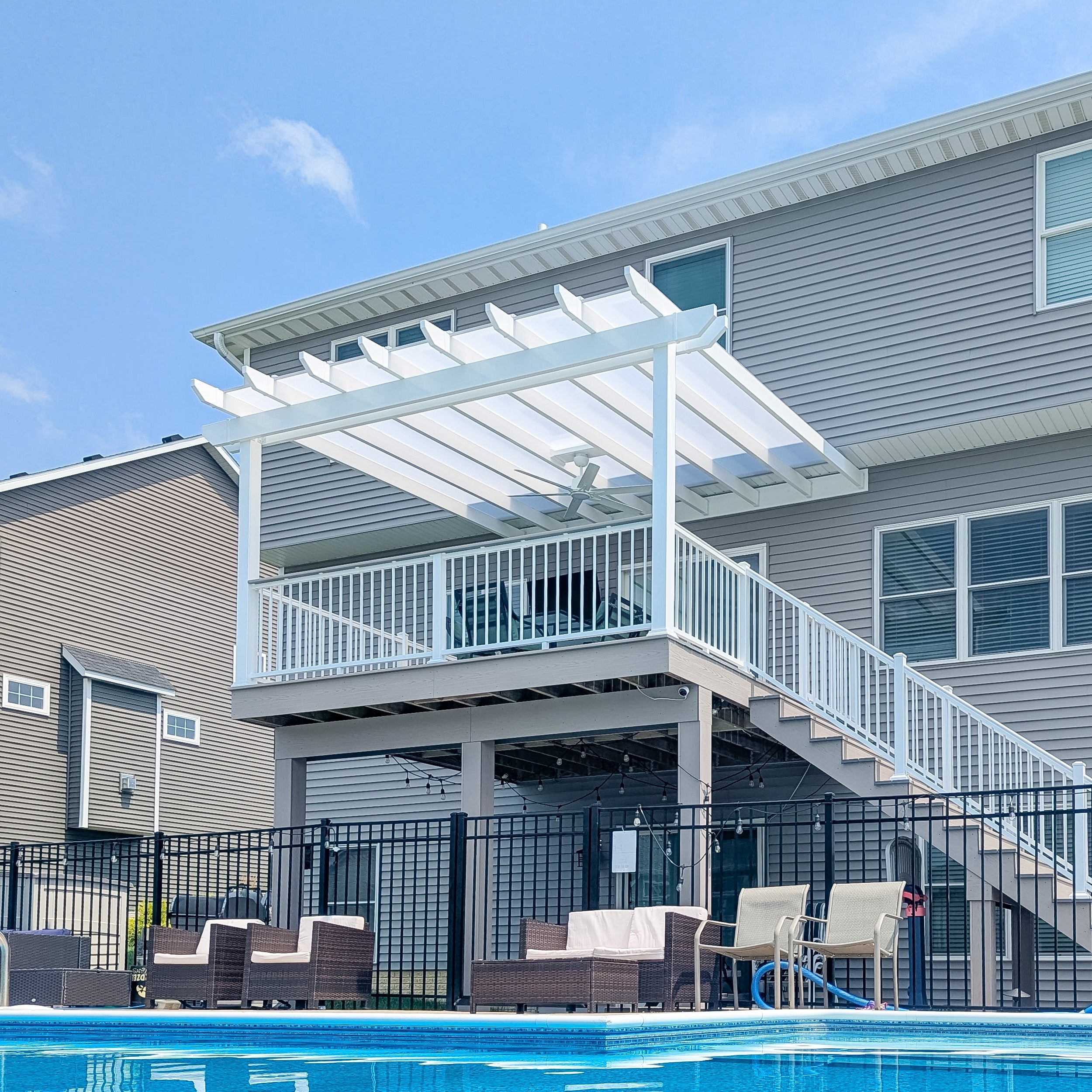
A permanent pergola can be configured around the amount of shade, architectural style and footprint a particular outdoor space requires. Available options vary by pergola type, so it is useful to choose the basic structure first and then refine its appearance and coverage.
Traditional and modern pergolas are available with fixed angled slats providing approximately 50%, 75% or 90% shade coverage. The three options let homeowners balance sunlight and shade without relying on retractable fabric or moving louvers.
Because the slats remain separated even at 90% coverage, these roofs should be selected for shade rather than rain protection.
For full overhead coverage, our permanent patio covers use a solid polycarbonate roof instead of pergola slats. Roof panels are available in white or bronze, and both options provide 100% UV protection and can make the patio below up to 15 degrees cooler.
The frame retains the aluminum-reinforced, vinyl-clad construction used in our traditional pergolas. The frame carries a lifetime warranty, while the polycarbonate roof carries a 10-year warranty.
Traditional pergolas provide the greatest range of decorative customization. Depending on the configuration, posts can be positioned at the corners or inset by as much as 36 inches. Beam and rafter overhangs can range from 0 to 36 inches, and scrolled, beveled or flat end caps are available.
Post choices include 5-inch square, 7-inch square and 10-inch round styles, with trim details varying by post. These options allow the same underlying permanent structure to work with different architectural styles.
Modern pergolas use a deliberately simpler configuration: posts remain at the corners, beams and rafters terminate flush without overhangs, and there are no decorative end caps. The result is a clean rectangular profile rather than the layered appearance of a traditional pergola.
Modern pergolas use 7-inch square posts in white and tan, with 8-inch square posts used for black pergolas. Optional lower trim is available.
White, tan and black vinyl are available across the primary pergola styles, with white being the lowest-cost color option. Optional fan mounts can also be incorporated into traditional, modern and fully covered structures when ceiling fans are part of the outdoor-space plan.
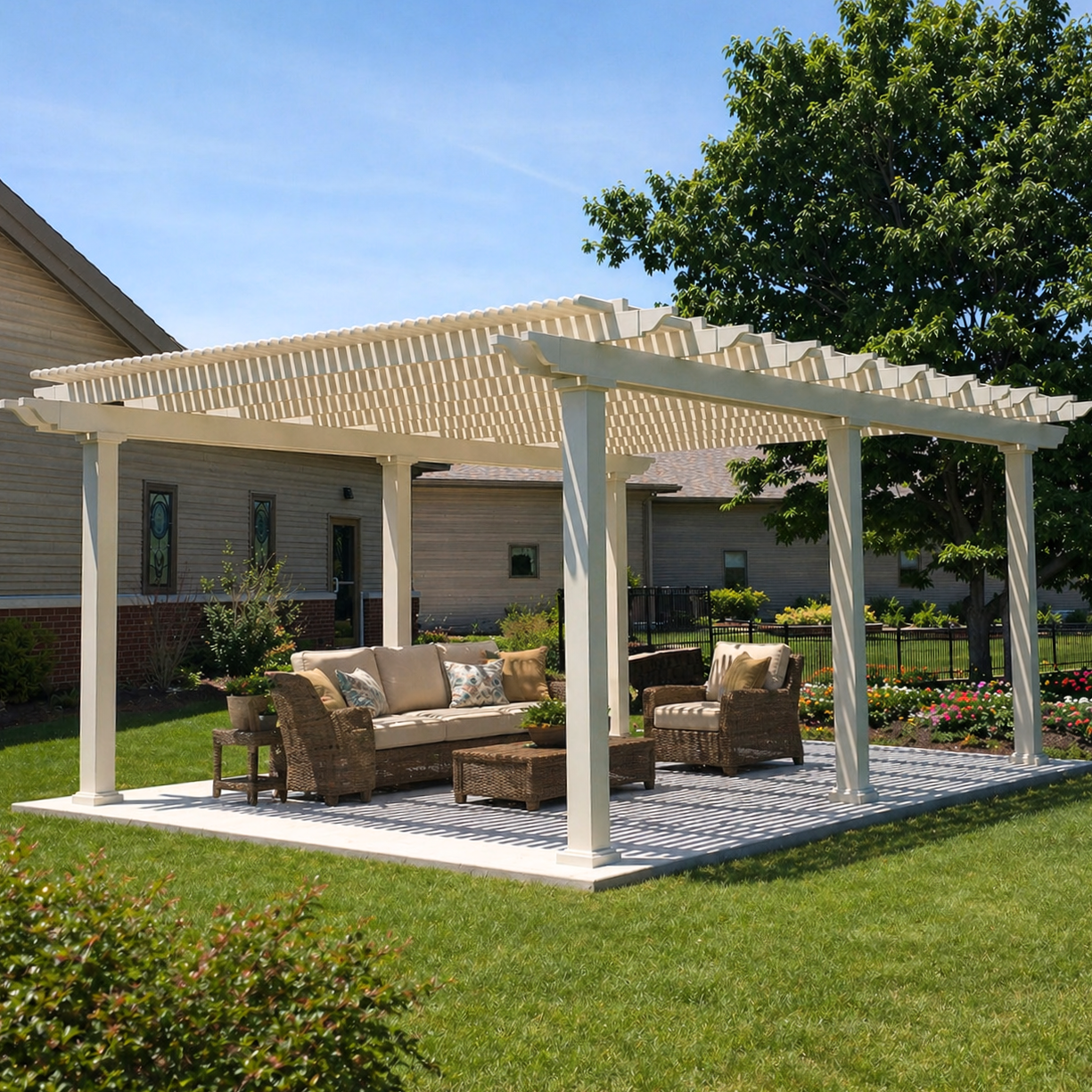
There is no single price for a permanent pergola because cost changes substantially with size, configuration, color, roof type and selected options. More useful than comparing purchase price alone is understanding what drives the cost and what the structure will require over its useful life.
Size is one of the largest variables because larger structures require more material and may require additional posts. Attached versus freestanding construction, traditional versus modern styling, vinyl color, post style, shade percentage and optional components can also affect the final price.
A solid polycarbonate patio cover is a different roof system from a slatted pergola and should be compared based on the additional rain protection it provides rather than shade percentage alone.
Our permanent pergolas are supplied as kits and designed to be DIY-friendly, but homeowners can also hire a contractor for installation. The appropriate route depends on the size and complexity of the structure, the installation surface, local requirements and the homeowner's construction experience.
Before deciding, review the available assembly information and installation videos to better understand what the project involves.
Proper anchoring is fundamental to a permanent installation. The exact installation requirements depend on the structure, site and supporting surface, so the location should be planned before ordering rather than treating anchoring as an afterthought.
Homeowners should also determine applicable local permitting, setback and structural requirements before installation. Requirements vary by jurisdiction and project.
The vinyl exterior eliminates recurring painting, staining and sanding. Routine ownership is primarily about keeping the exterior clean rather than periodically refinishing it, while the aluminum reinforcement is rust-proof.
This low-maintenance construction can be particularly valuable for large pergolas, where repeatedly refinishing numerous posts, beams, rafters and roof components would otherwise require substantial time and expense.
A professional-grade permanent pergola and a low-cost temporary pergola serve different purposes, so initial price alone does not provide a useful comparison. A permanent structure is purchased as a long-term improvement to an outdoor living space, with structural materials, maintenance requirements, warranty coverage and expected replacement needs all contributing to its overall value.
Our pergolas are made in the USA with American-sourced materials. Traditional pergolas, modern pergolas and eyebrow pergolas carry lifetime warranties; fully covered patio covers carry a lifetime frame warranty and a 10-year roof warranty.
A permanent pergola is a fixed outdoor structure designed for long-term installation rather than seasonal setup or portability. Permanent pergolas typically use structural framing and secure anchoring appropriate for the installation site.
Lifespan depends on materials, construction, installation and exposure. Sunset Pergola Kits' traditional, modern and eyebrow pergolas carry a lifetime warranty, while rainproof patio covers have a lifetime frame warranty and a 10-year roof warranty.
Not necessarily. Traditional and modern pergolas have fixed slatted roofs that provide 50%, 75% or 90% shade but are not rainproof. For rain protection, choose a permanent patio cover with a solid polycarbonate roof.
Yes. Traditional, modern and rainproof pergola/patio-cover kits are available in attached configurations as well as freestanding configurations. Eyebrow pergolas are always attached to a house or other structure.
Yes. Freestanding permanent pergolas use posts to support the structure independently from the house. Traditional, modern and rainproof patio-cover styles are available as freestanding structures.
All outdoor structures require some cleaning and care, but the premium extruded vinyl exterior used on our pergolas does not require painting, staining or sanding. The internal aluminum reinforcement is also rust-proof.
Not from Sunset Pergola Kits. Our pergolas use fixed slatted roofs or solid polycarbonate roofs; we do not offer motorized louvers, adjustable roofs, retractable canopies or canvas roof systems.
A pergola typically has an open or slatted roof that provides partial shade, while a patio cover has a solid roof for rain protection. Our slatted pergolas offer 50%, 75% or 90% shade, while our patio covers use solid polycarbonate roof panels.
Yes. The kits are designed to be DIY-friendly, although hiring a contractor is also an option. Review the pergola assembly information and videos before deciding which installation approach is appropriate for your project.
Permit requirements vary by location, pergola size, attachment method and local building rules. Check with your local building authority before installation to determine the permits, setbacks, footings or other requirements that apply to your property.


