

MADE IN THE USA
with American products
w/ American products


Home ▸ Pergolas With Fans
A pergola with one or more fans combines permanent outdoor shade with powered airflow for a more comfortable patio, deck or backyard living area. Our aluminum-reinforced vinyl pergolas are available with optional fan mounts and your choice of slatted shade or a solid rainproof roof. Choose from freestanding or attached configurations in traditional and modern styles. [read more]


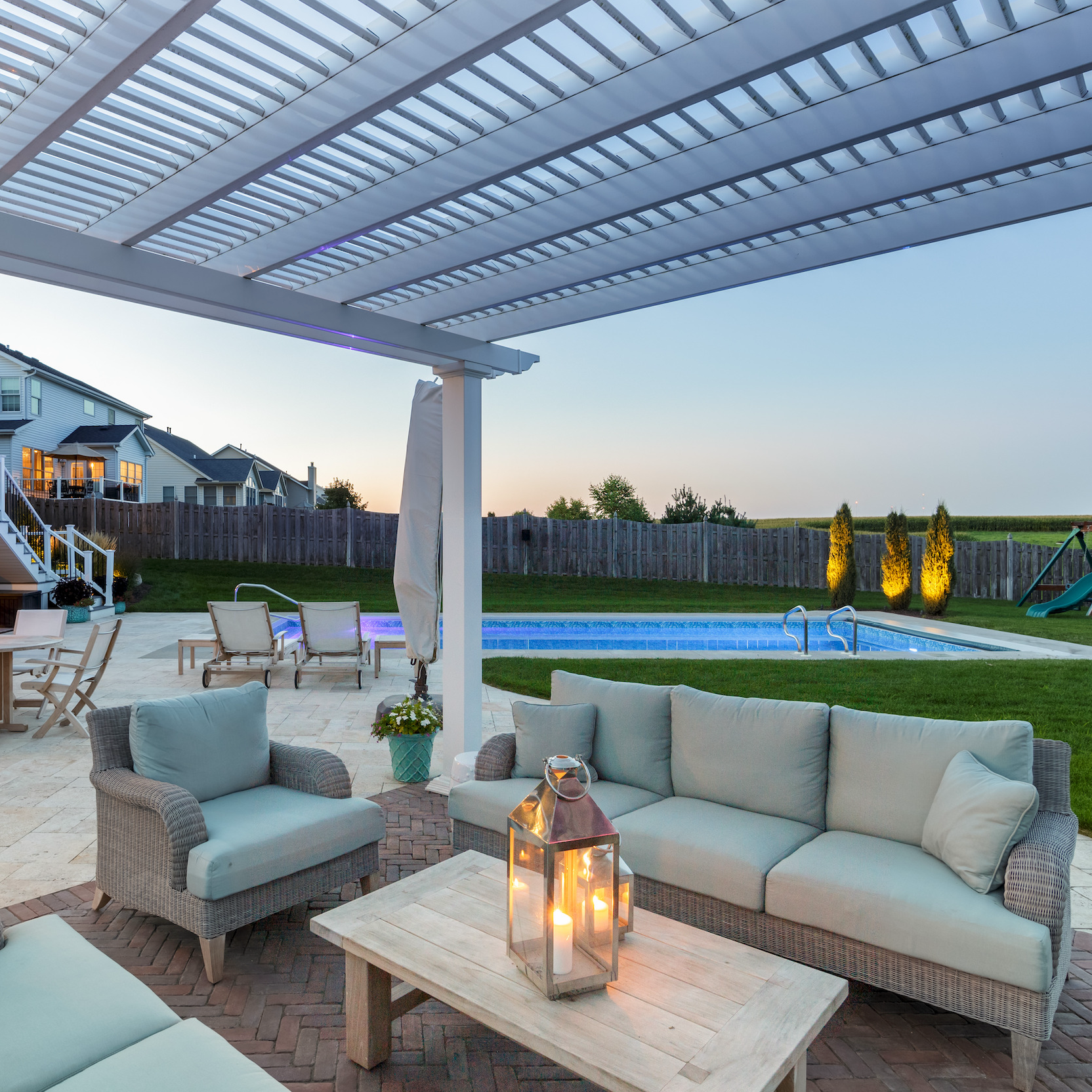
A pergola with a fan is a permanent outdoor shade structure configured with a structural mount for an outdoor ceiling fan. The pergola supplies the framework and shade, while the fan circulates air through the space below. This combination is especially useful over outdoor dining tables, conversation areas, kitchens and other frequently used patio spaces.
A fan should be attached to a purpose-built mount rather than fastened directly to a shade slat or unsupported piece of trim. Our traditional, modern and rainproof pergola systems offer fan mounts as optional add-ons, allowing the mounting location to be incorporated into the structure when the pergola is ordered.
The fan, wiring and controls must also be appropriate for the installation site. Electrical work should be planned before assembly so the mount, fan location, power supply and switching method can be coordinated.
Fan-ready generally means that the pergola has been configured with the structural mount needed to support a compatible fan. It does not mean that every ceiling fan or mounting method will work in every configuration. Fan dimensions, weight, mounting hardware, blade clearance and outdoor rating must still be checked before installation.
Optional fan mounts are available for our pergolas with slatted roofs and our rainproof patio covers. Slatted roofs provide fixed shade while remaining open to the sky, whereas the solid polycarbonate roof on a patio cover provides rain protection in addition to shade.
A full-size ceiling fan produces weight, vibration and rotational force, so the supporting structure matters. Our pergolas use aluminum inserts inside the weight-bearing posts, beams and rafters, surrounded by premium extruded vinyl. They are designed as permanent outdoor structures rather than lightweight, temporary canopies.
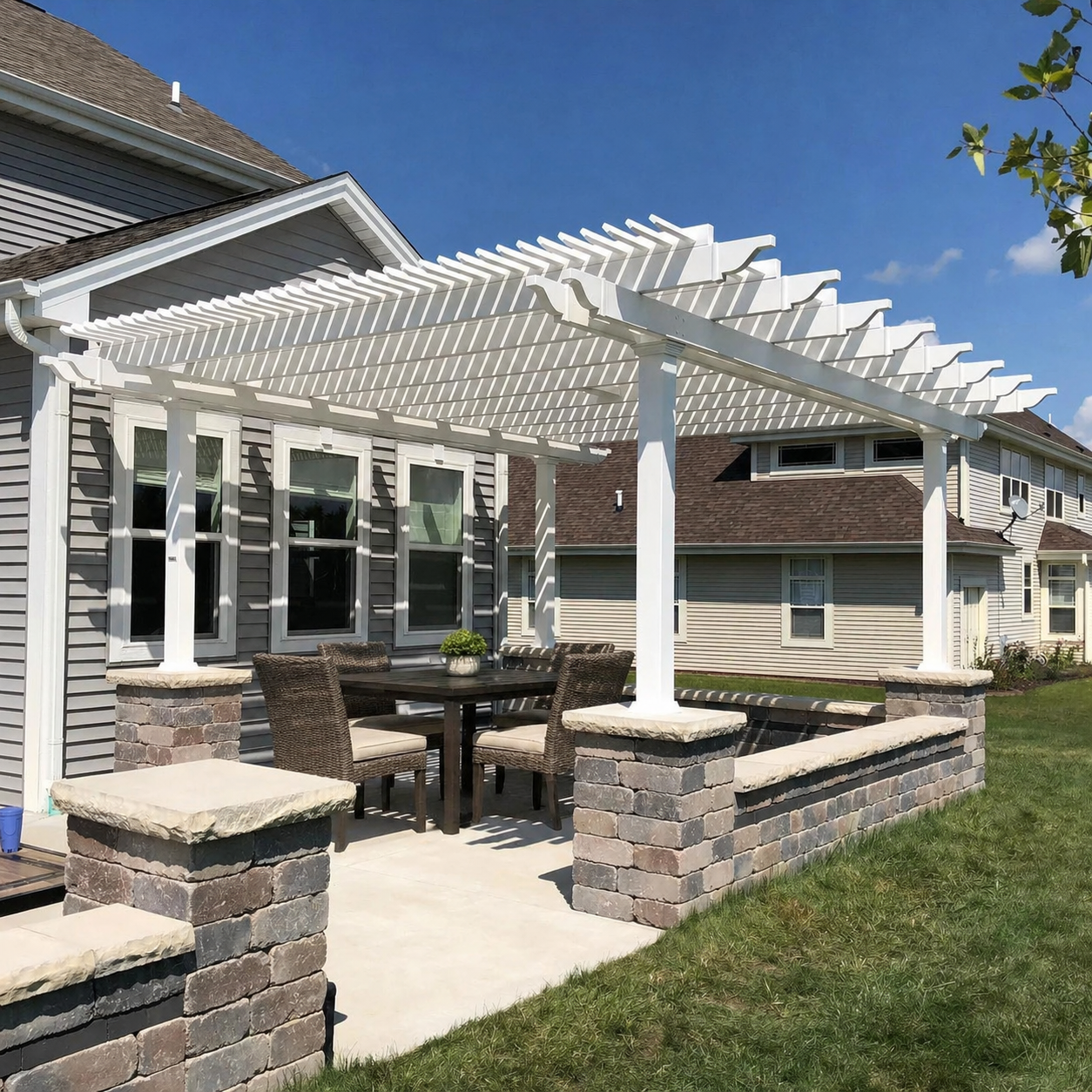
A pergola roof reduces direct sun exposure, while a ceiling fan creates noticeable air movement underneath it. Used together, these features can make an outdoor living area more comfortable without relying on a motorized or adjustable roof system.
A ceiling fan moves air throughout the occupied area below the structure. Although a fan does not lower the actual outdoor temperature, the moving air can help people feel cooler by increasing evaporation from the skin.
Shade addresses radiant heat from direct sunlight, while a fan addresses stagnant air. A pergola with both features can therefore provide a more complete comfort solution than an uncovered fan or a shade structure without powered airflow.
For a slatted pergola, customers can choose approximately 50%, 75% or 90% shade coverage. The fixed angled slats are spaced 6, 4 or 3 inches on center, respectively.
Overhead airflow is useful in outdoor dining, lounge and conversation areas because the fan does not consume floor space or require a portable stand. Centering the fan over the primary activity zone can distribute air where it provides the greatest benefit.
An outdoor fan with an integrated light can provide airflow and overhead illumination from one fixture. The fixture must be suitable for its degree of exposure, and the fan mount, electrical box and wiring method must be compatible with the selected unit.
A permanent shade structure with a fan can make a patio more useful during warm weather and still provide architectural definition throughout the year. Unlike wood, the extruded vinyl exterior does not require routine painting, staining or sanding.
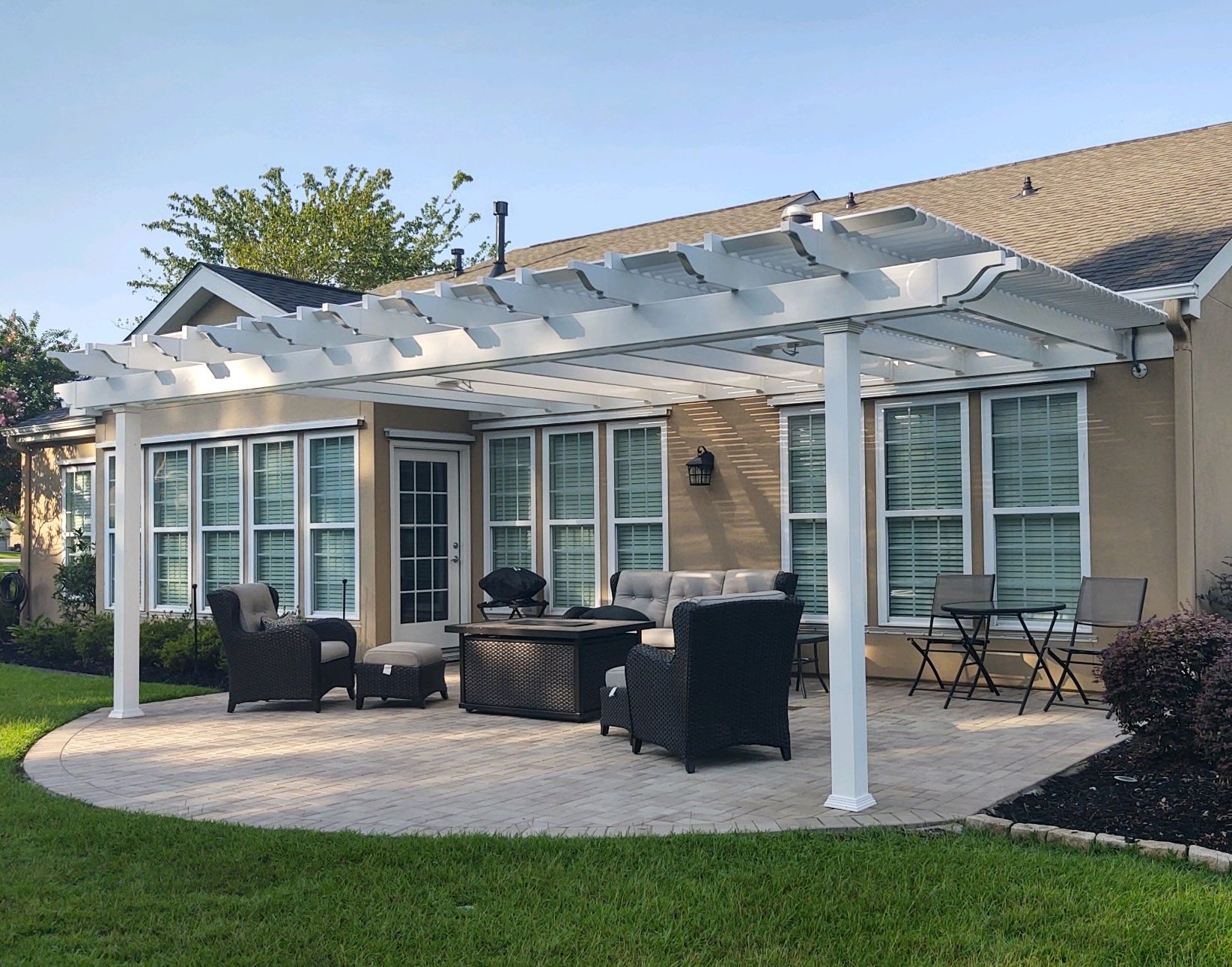
The best pergola configuration depends on the location, desired roof performance, architectural style and amount of usable space you want below it. Fan placement should be considered at the same time as pergola dimensions, posts and furniture—not after the structure has already been configured.
The roof should be large enough to shade the intended seating or dining area while providing suitable clearance around the fan. A compact pergola may need one centrally located fan, while a wide multi-zone structure may benefit from more than one fan mount.
Our traditional pergolas are available in configurations up to 44 by 44 feet, while modern designs are available up to 32 by 32 feet. Use our pergola size guide to compare available width-and-depth combinations.
Freestanding pergolas can create a defined outdoor room away from the house or cover a patio, poolside lounge or garden seating area. Because the structure stands independently, fan power must be routed to the installation location using an appropriate outdoor electrical method.
Attached pergolas connect to a house or another suitable structure and use fewer outer posts. They can provide a natural transition from an indoor living area to a fan-cooled patio, although the attachment and electrical plan must be appropriate for the building.
Traditional pergolas can include beam and rafter overhangs from 0 to 36 inches, inset posts and scrolled, beveled or flat end caps. Available post styles include 5-inch and 7-inch square posts as well as 10-inch round columns.
Modern pergolas use flush, squared-off corners with no beam or rafter overhangs. Their posts remain at the corners, creating a streamlined contemporary profile. Both styles are available in white, tan or black and can be ordered with an optional fan mount.
Choose a slatted pergola when the priority is fixed shade with an open-roof character. Choose a rainproof patio cover when the space also needs protection from rainfall. The solid polycarbonate panels are available in white or bronze; both provide 100% UV protection and can keep the covered patio up to 15°F cooler.
Identify where people will sit, dine or prepare food before choosing the fan location. The best position is generally above the area where airflow is needed most, provided the blades retain safe clearance from beams, rafters, slats, walls, furniture and other fixtures.
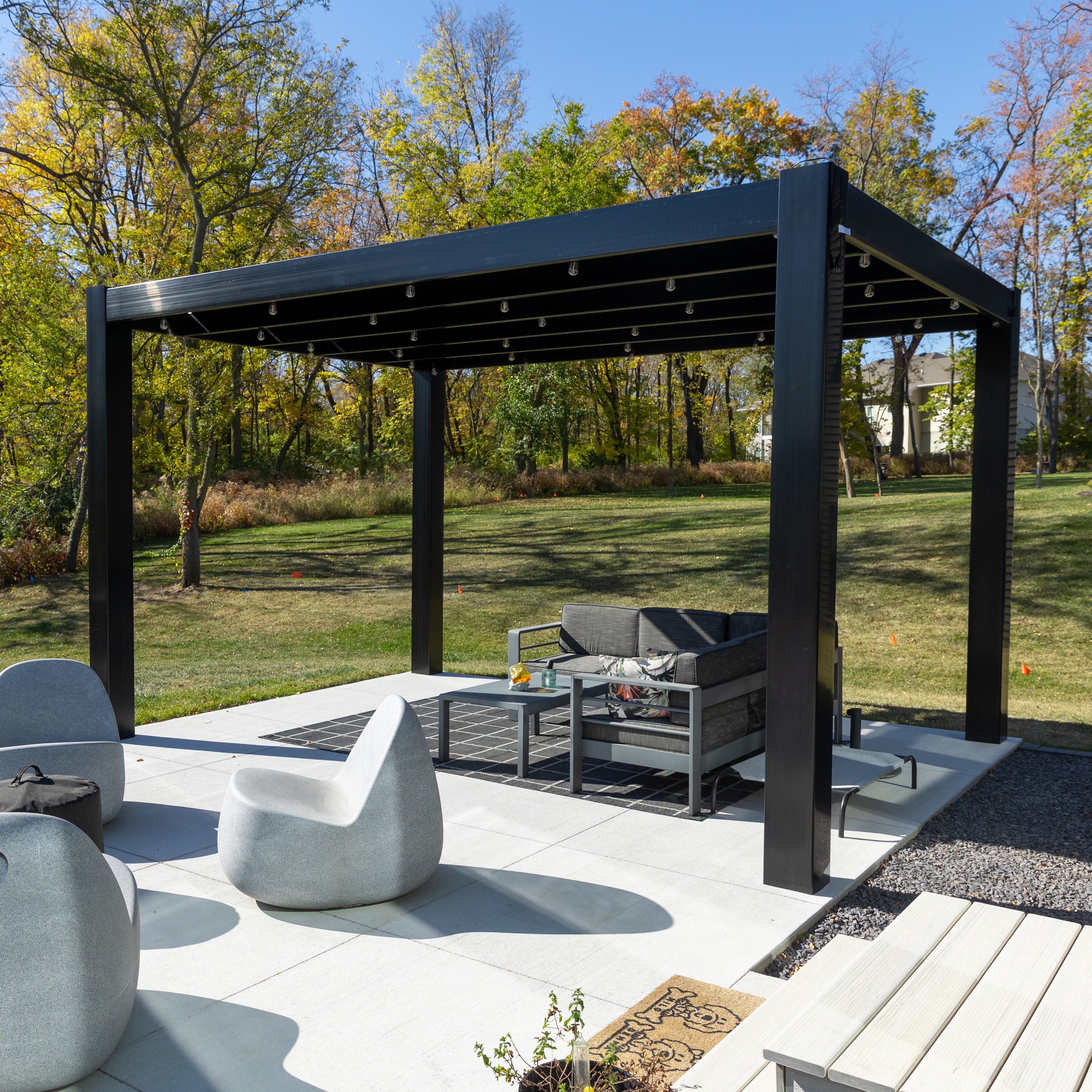
The fan mount is the connection between the ceiling fan and the pergola structure. Adding the mount during the initial pergola configuration helps establish the intended fan position and avoids relying on a shade slat or decorative component that was not designed as the primary mounting point.
Traditional pergolas can be ordered with one or more optional fan mounts, depending on the pergola configuration and layout. Their aluminum-reinforced frame supports long spans, while the fixed angled roof slats provide 50%, 75% or 90% shade coverage.
Traditional designs also provide the widest range of aesthetic customization, including optional overhangs, inset posts, multiple post styles and three decorative end-cap profiles.
Modern pergolas also offer optional fan mounts. These structures use aluminum inserts within the weight-bearing posts, beams and rafters, but their architectural appearance is different: posts sit at the corners, framing members meet at flush corners and there are no decorative end caps.
A solid-roof patio cover can shield the area below from rainfall, but the selected ceiling fan and electrical components must still have an outdoor rating appropriate for the installation. Exposure can vary depending on roof dimensions, fan position, wind-driven rain and the openness of the surrounding area.
Rainproof models have a lifetime frame warranty and a 10-year roof warranty. Optional hurricane brackets are also available and add a lifetime wind-damage warranty for winds of 80 MPH or higher.
The optional mount creates the structural location for the fan. It should not be treated as a substitute for a compatible fan-rated electrical box, suitable mounting hardware, code-compliant wiring or professional electrical work when required. Confirm the complete fan installation plan before assembly.
Eyebrow pergolas are shallow decorative structures installed above garages, doors or windows. They extend only 24 inches from the wall, with certain end-cap profiles adding another 9 inches, and are not the practical choice for creating an occupied outdoor room with a ceiling fan.
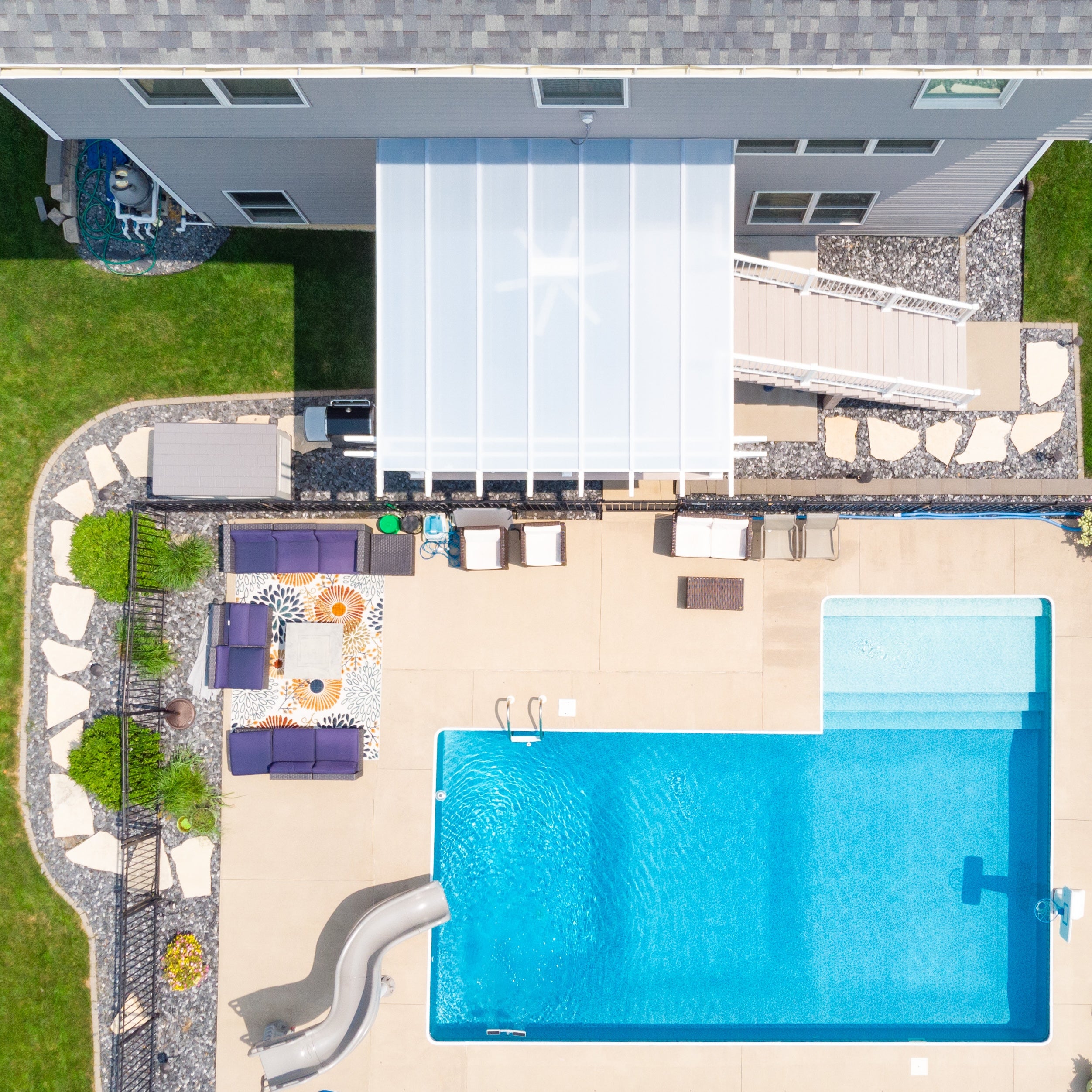
The pergola and fan must be planned as a complete system. Fan diameter, outdoor rating, mounting height and surrounding clearances all affect whether the finished installation will be safe, proportionate and useful.
Damp-rated fans are intended for covered locations where the fixture is protected from direct water exposure. Wet-rated fans are designed for more exposed outdoor conditions. Because a slatted pergola is open to rain, a wet-rated fan will generally be the appropriate category; beneath a solid roof, the correct rating depends on the fan’s actual exposure and applicable requirements.
The fan should be sized for the occupied area without placing its blades too close to posts, beams, rafters or walls. A larger fan can move air across a broader area, but sufficient roof width does not automatically guarantee adequate blade clearance. Compare the fan manufacturer’s dimensions and installation requirements with the pergola layout.
A low-profile fan keeps the blades closer to the mounting surface and may be helpful where vertical clearance is limited. A downrod can position the blades farther below beams or rafters, but it also reduces headroom. The correct choice depends on the pergola height, structural layout and fan manufacturer’s instructions.
Fan blades need unobstructed space above, below and around their full sweep. Account for roof slats, beams, rafters, nearby walls, hanging lights, tall furniture and anything else that could enter the fan’s operating area. Follow the fan manufacturer’s minimum clearance requirements and applicable electrical and building codes.
One centrally positioned fan may serve a compact dining or conversation area. Longer pergolas and layouts with separate dining, kitchen and lounge zones may work better with multiple fans. When more than one mount is planned, spacing should support balanced airflow while maintaining clearance around every fan.
Installing a pergola with a ceiling fan involves both structural assembly and electrical work. Plan these parts together before ordering the fan or beginning construction so that power, controls, mounting hardware and access are addressed in the correct sequence.
Mark the intended furniture layout and primary activity area, then identify a fan position that provides useful airflow and proper blade clearance. This position determines where the optional mount should be incorporated into the pergola configuration.
The wiring route depends on whether the pergola is freestanding or attached, where electrical power originates and how local codes require outdoor wiring to be protected. The path should be planned before the structure is assembled rather than improvised after the fan mount is in place.
Outdoor ceiling fans may use wall switches, pull chains, handheld remotes or compatible electronic controls. Select the control method before electrical installation so the necessary conductors, switches and receivers can be accommodated. Any control equipment used outdoors must be suitable for its location.
The fan, electrical box, wiring method, connectors and controls must be rated for their environment. A solid pergola roof can reduce direct exposure, but an outdoor patio remains subject to moisture, temperature changes and wind-driven weather.
Our pergola kits are designed for installation by capable homeowners or contractors, and assembly information and videos are available for planning. Electrical work should be completed by a licensed electrician whenever required by local code or when the installer is not qualified to perform it safely.
The total cost of a pergola with a fan depends on more than the ceiling fan itself. Pergola size, roof type, structural configuration, color, post count, customization, fan mounts, electrical access and installation labor can all affect the completed project price.
Larger structures generally require more material and may require additional posts. Traditional and modern pergolas also have different size ranges and design options. White is the most affordable vinyl color, while tan and black cost more, with black being the highest-priced option.
The optional structural fan mount adds to the pergola configuration, while the fan itself varies in price according to its size, outdoor rating, finish, controls and lighting features. If multiple fans are required, each mounting position and fixture should be included in the initial plan.
Electrical cost depends on the distance to an existing power source, the type of controls, access conditions and local requirements. A freestanding pergola located away from the house may require a more involved electrical route than an attached structure near existing service.
A lightweight temporary pergola may cost less initially, but it is not equivalent to an aluminum-reinforced permanent structure. Sunset Pergola Kits use thick structural aluminum inside premium extruded vinyl, allowing strong spans between posts while eliminating the need to paint, stain or sand the exterior.
A professionally planned pergola creates a defined outdoor living area and can add lasting usefulness to a patio or deck. Our pergolas are made in the USA with American-sourced materials and include a lifetime structural warranty. With no adjustable louvers, retractable canopy or motorized roof components, the structure also avoids moving roof parts that can wear out and require replacement.
Yes. A ceiling fan can be installed on a pergola when the structure includes a suitable fan mount and the fan has adequate clearance. The fan and electrical components must be rated for their level of outdoor exposure.
Our traditional, modern and rainproof pergolas offer a fan mount as an optional add-on. Select the outdoor fan, controls and electrical components separately according to the planned location and exposure.
Yes, but a slatted roof does not keep out rain. The fan should generally be wet-rated and installed with outdoor-rated electrical components suitable for direct weather exposure.
Yes. A fan can be mounted beneath a solid-roof rainproof patio cover. The correct outdoor rating still depends on the fixture’s location and potential exposure to moisture or wind-driven rain.
Yes. Optional fan mounts are available on traditional pergolas, modern pergolas and fully covered patio covers. They are not a practical feature for shallow eyebrow pergolas.
Use an outdoor-rated ceiling fan appropriate for the location. Wet-rated fans are intended for direct weather exposure, while damp-rated fans require protection from direct water.
Clearance requirements vary by fan. Follow the manufacturer’s specifications for blade height and distance from walls, beams, rafters, roof slats, lights and other obstructions.
Yes. A large or multi-zone pergola may use multiple fan mounts, provided each fan has adequate clearance and the structure and electrical plan are configured accordingly.
Yes. A capable homeowner or contractor can assemble the pergola, while a licensed electrician can complete the wiring and fan connection. Review the pergola assembly resources before coordinating the work.
A fan does not reduce the actual outdoor temperature. It moves air, which can help occupants feel cooler, especially when the fan is combined with shade from the pergola roof.


