

MADE IN THE USA
with American products
w/ American products


Home ▸ Outdoor Roof Structures
Outdoor roof structures create permanent shade, weather protection, or architectural definition for patios, decks, pools, and other outdoor living areas. Our pergola kits pair aluminum-reinforced structural components with a premium extruded vinyl exterior for long-term strength with minimal maintenance. Choose a slatted pergola with 50%, 75%, or 90% shade coverage, or a fully covered patio structure with a rainproof polycarbonate roof. [read more]


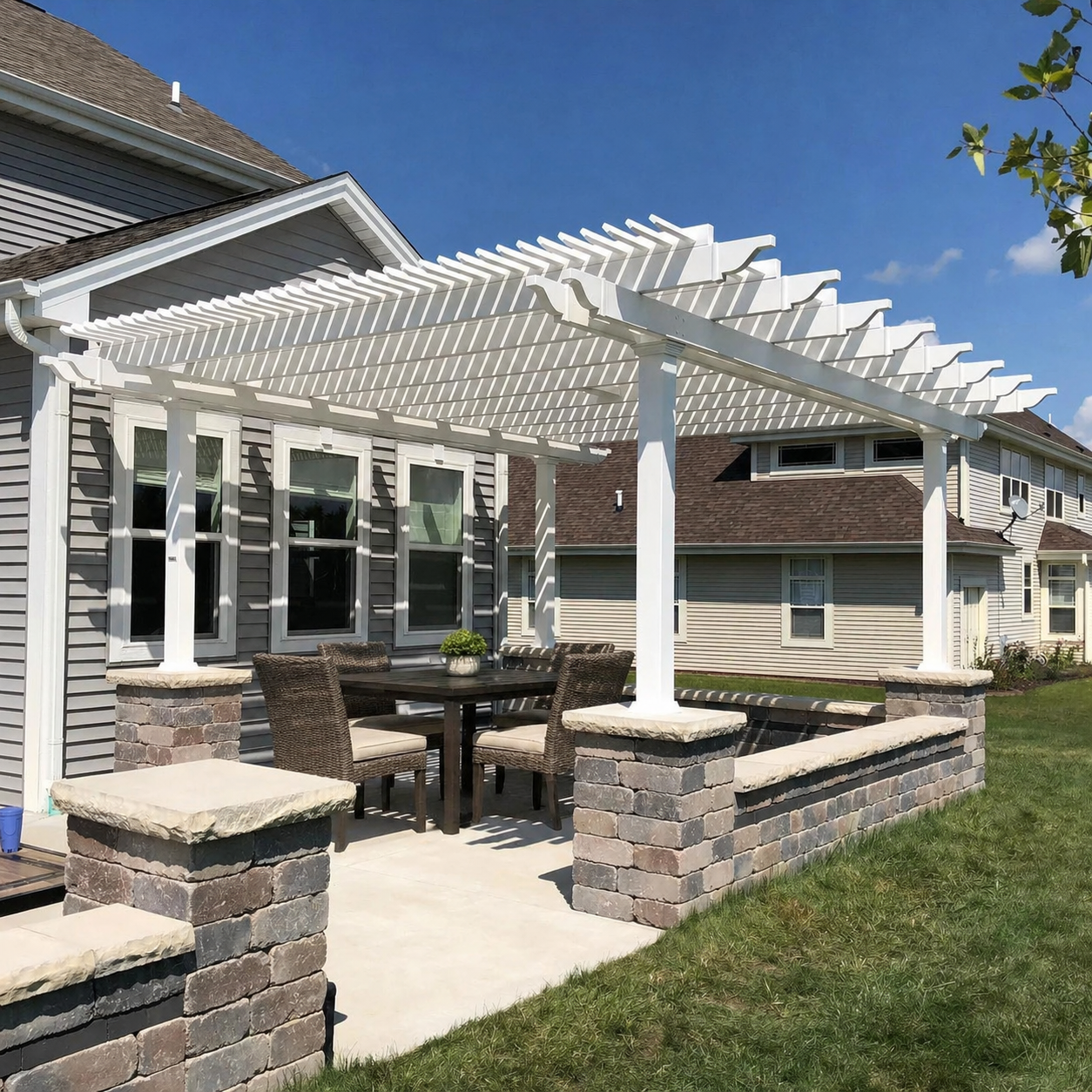
Outdoor roof structures are permanent structures designed to create shade, shelter, or a defined outdoor living area. The term can describe several designs, including pergolas with slatted roofs and patio covers with solid roofs, so the right structure depends largely on how much overhead coverage you need.
An outdoor roof structure generally combines supporting posts or attachment points with beams, rafters, and an overhead roof or shade system. Unlike temporary canopies, these structures are intended to become a lasting part of a patio, deck, pool area, or other outdoor space.
Our structures use aluminum reinforcement in their weight-bearing components and a premium extruded vinyl exterior. This creates a professional-grade structure without the recurring painting, staining, or sanding associated with wood.
A permanent outdoor roof structure is anchored and built for long-term use rather than seasonal setup and storage. It is a better fit for homeowners who want the structure to function as part of the property's outdoor architecture instead of as temporary patio equipment.
Sunset Pergola Kits are permanent structures designed for DIY or contractor installation. They are made in the USA with America-sourced materials and carry long-term warranties appropriate to the specific product.
Open or slatted roofs provide shade while maintaining the distinctive open character of a pergola. Our traditional and modern pergolas use fixed angled slats and are available with approximately 50%, 75%, or 90% shade coverage; these roofs are not rainproof.
For rain protection, a rainproof patio cover uses solid polycarbonate roof panels instead. These structures provide complete overhead coverage rather than filtered shade.
Outdoor roof structures can cover dining tables, conversation areas, outdoor kitchens, poolside seating, hot tubs, and other gathering spaces. Attached structures can extend usable outdoor space directly from a home, while freestanding designs can establish a separate destination elsewhere on the property.
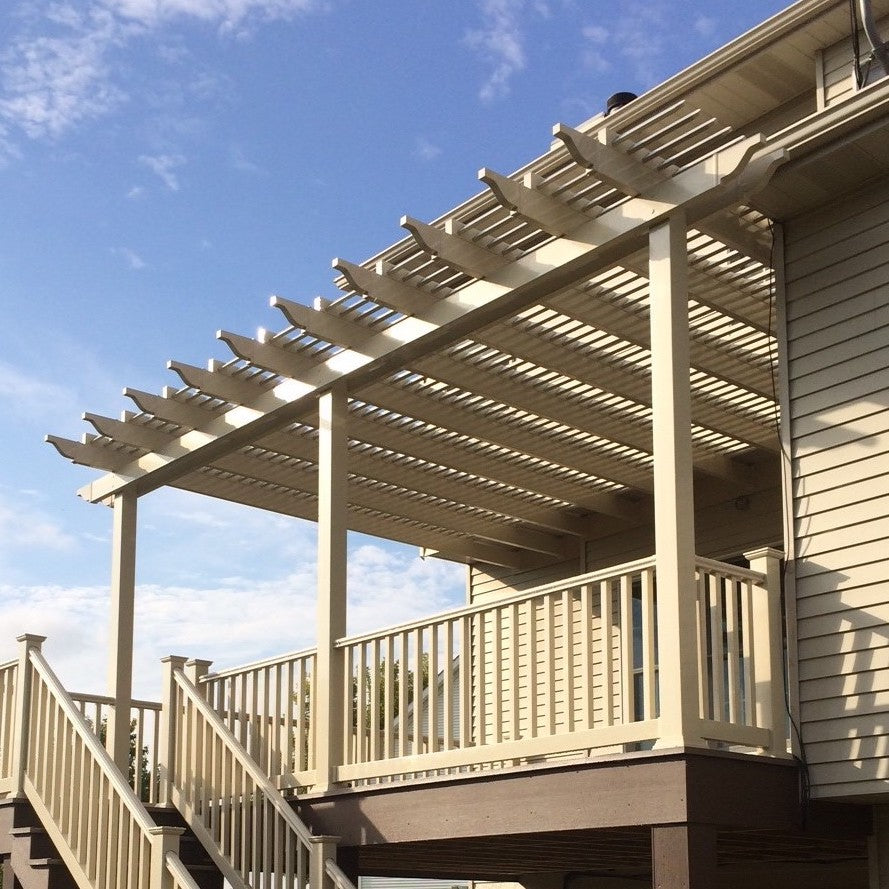
Outdoor roof structures vary significantly in both appearance and function. For our product line, the most important distinctions are traditional versus modern pergola styling, slatted versus solid roofing, and freestanding versus attached installation.
Traditional pergolas combine fixed angled roof slats with architectural details such as optional beam and rafter overhangs and scrolled, beveled, or flat end caps. Posts can be positioned at the corners or inset by as much as 36 inches, depending on the configuration.
These pergolas are available in freestanding and attached designs, with configurations extending from compact 8-foot structures to large multi-post structures reaching up to 44 feet in width and depth.
Modern pergolas provide the same 50%, 75%, or 90% fixed slatted shade options in a cleaner contemporary form. Posts sit at the corners, while beams and rafters terminate flush without decorative end caps or overhangs.
The result is a squared-off silhouette that works particularly well with contemporary homes and outdoor spaces where simple architectural lines are preferred.
A solid-roof patio cover is the appropriate option when protection from rain is more important than maintaining an open pergola roof. Our patio covers use white or bronze solid polycarbonate roof panels that provide 100% UV protection and can make the covered patio up to 15 degrees cooler.
The frame retains traditional pergola styling and can be configured as either freestanding or attached. The frame carries a lifetime warranty, while the polycarbonate roof carries a 10-year warranty.
Eyebrow pergolas are shallow architectural structures designed to attach to a building rather than create a full-size outdoor room. They have a 24-inch rafter depth, five fixed shade purlins, and are available in 4-foot increments from 4 to 60 feet long.
Unlike the full-size structures, eyebrow pergolas are always attached using an included ledger board and are not available as freestanding structures.
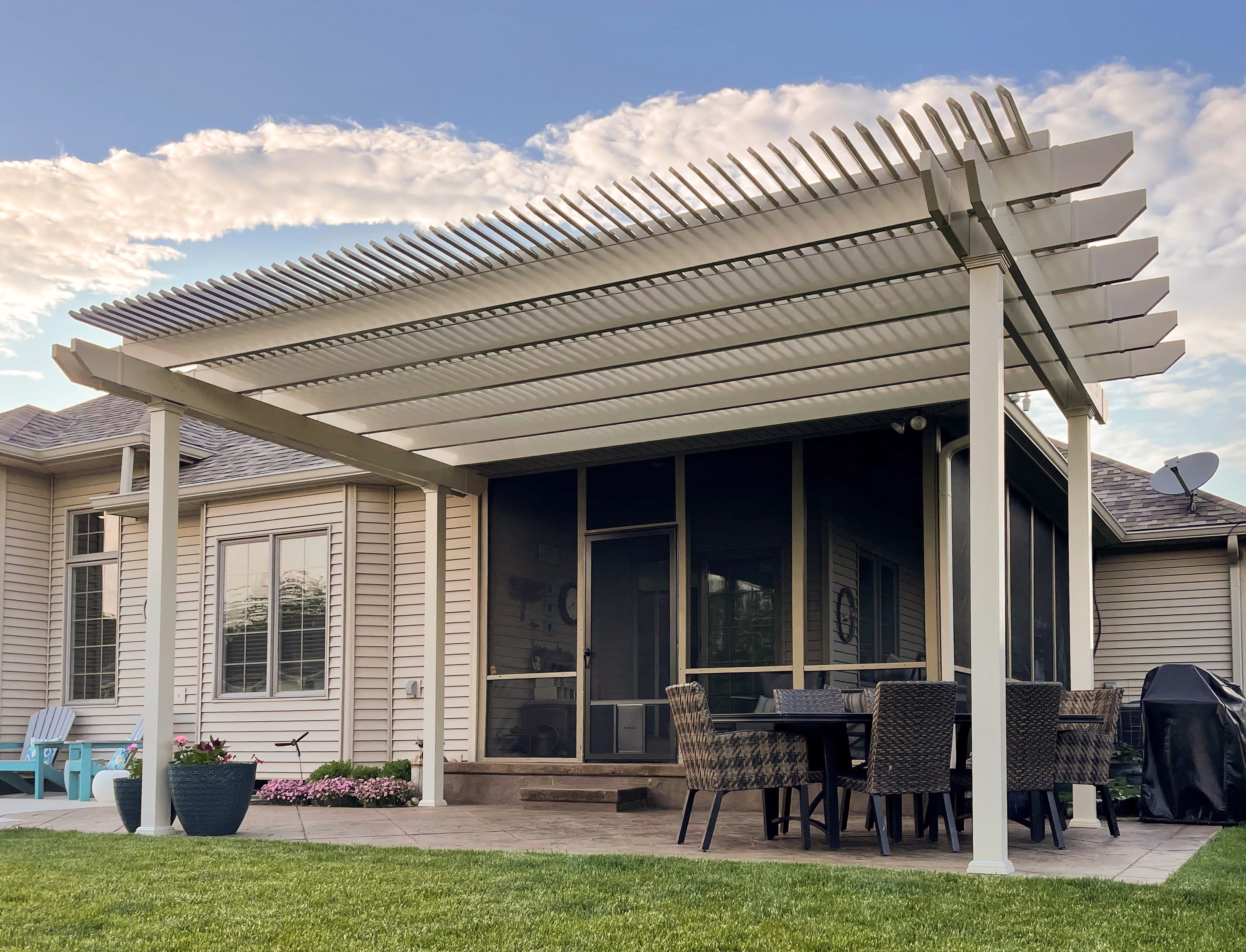
The primary benefit of an outdoor roof structure is functional coverage: it can make an exposed outdoor area more comfortable and useful while giving the space greater architectural definition. The amount and type of protection depend on whether you select a slatted shade roof or a solid rainproof roof.
A pergola does not need to be merely decorative. Fixed angled roof slats can provide substantial shade while preserving the open-air appearance associated with a pergola.
Our traditional and modern pergolas are available with 50%, 75%, or 90% shade coverage. Closer slat spacing increases the amount of overhead shade without introducing motors, louvers, or other moving roof components.
If the goal is protection from rain rather than shade alone, a solid polycarbonate roof provides full overhead coverage. Both white and bronze roof panels provide 100% UV protection and can make the patio beneath them up to 15 degrees cooler.
A solid roof can be particularly useful above outdoor dining, seating, and other areas where rain would otherwise interrupt use of the space.
Posts, beams, rafters, and overhead coverage establish a visual boundary around an outdoor space without enclosing it with walls. This can help a large patio, pool deck, or backyard feel more deliberately organized into areas for dining, relaxing, or entertaining.
Wood structures typically require periodic refinishing to maintain their appearance. The extruded vinyl exterior on our structures does not require painting, staining, or sanding and is easy to clean.
The vinyl is colored throughout rather than simply coated or painted on the surface. Beneath it, heavy-duty aluminum reinforcement provides structural strength without the rust concerns associated with exposed steel.
The phrase “outdoor roof structure” describes a broad category rather than one specific construction style. Understanding how pergolas and patio covers differ—and how both differ from other backyard structures—makes it easier to select the appropriate amount of coverage.
A pergola is one type of outdoor roof structure. Pergolas traditionally use an open or slatted overhead design rather than a completely solid roof, although the term “pergola with roof” is sometimes also used when referring to solid-roof patio covers.
Our pergolas with slatted roofs use fixed angled slats with three spacing options. They provide real shade but should not be selected when a rainproof roof is required.
The practical difference is overhead coverage. A slatted pergola filters sunlight and preserves an open-air feeling, whereas a patio cover has a solid roof designed to keep rain out of the covered area.
For homeowners primarily concerned with shade, a slatted pergola may provide the desired balance of coverage and openness. For outdoor areas that need dependable overhead rain protection, a solid polycarbonate patio cover is the more appropriate configuration.
A gazebo is typically a freestanding structure with a solid roof and a distinct pavilion-like footprint. Pergolas can be either attached or freestanding and are commonly characterized by their post-and-beam construction and slatted overhead design.
Sunset Pergola Kits does not offer conventional gazebo kits. Our solid-roof alternative is a freestanding or attached patio cover built around an aluminum-reinforced, vinyl-clad frame.
Louvered, motorized, and retractable systems change the position or presence of overhead coverage using moving components. Our outdoor roof structures use fixed roof systems instead: angled slats for shade or solid polycarbonate panels for rain protection.
A fixed design removes the need for motors and moving roof components that can eventually require service or replacement. Buyers specifically seeking adjustable louvers or retractable canopies should choose a different type of system.
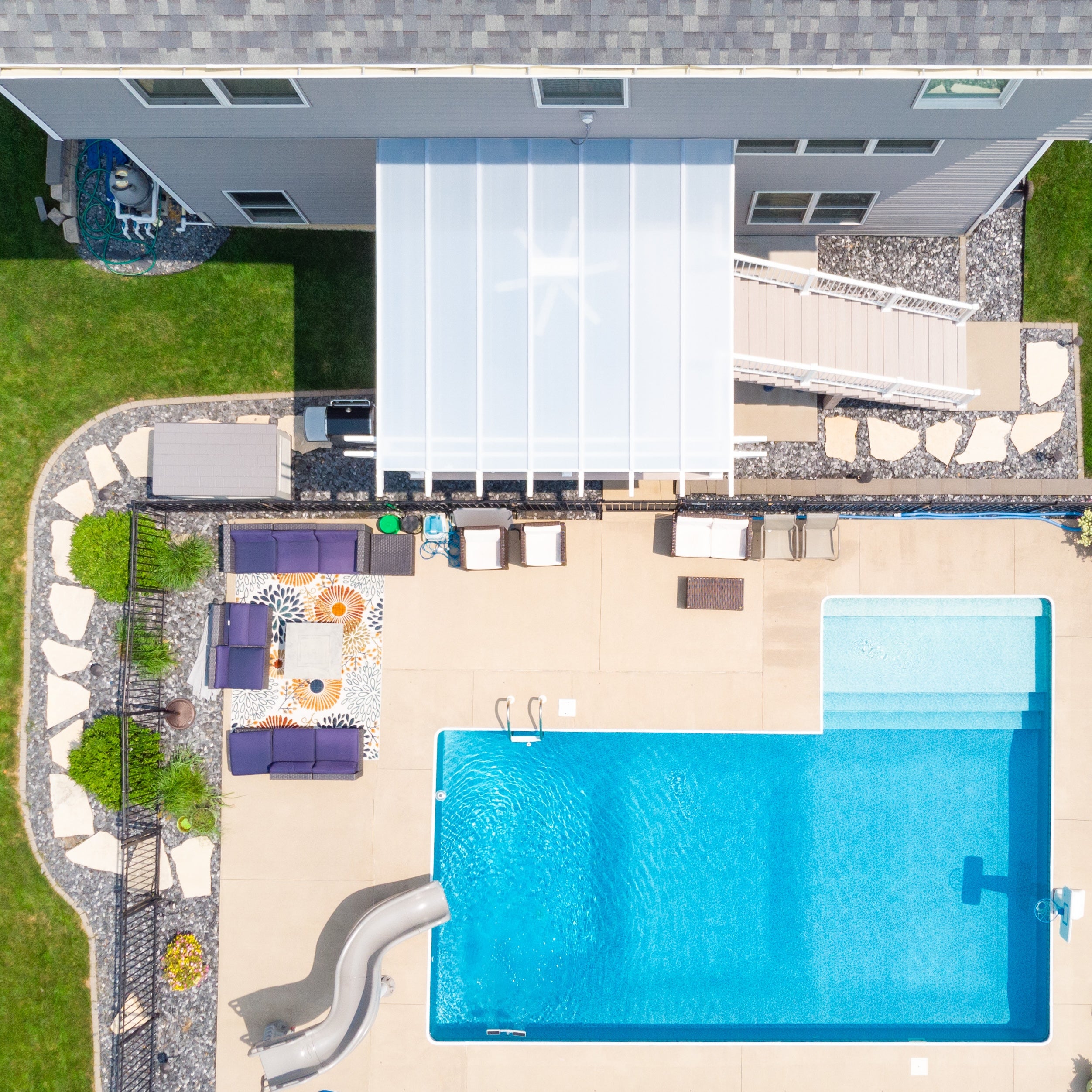
The best outdoor roof structure starts with function rather than appearance alone. Determine the level of weather protection you need, where the structure will be installed, and how much usable area it needs to cover before comparing decorative details.
Start with the roof. If the goal is comfortable shade while retaining an open pergola appearance, choose a slatted structure and then select 50%, 75%, or 90% coverage. If the space needs to remain covered during rain, choose a solid polycarbonate patio cover instead.
A freestanding pergola can create a defined outdoor area independently of the house, making it useful over detached patios, pool areas, and other gathering spaces. Posts provide the structure's support without relying on a wall attachment.
An attached structure uses the building along one side and can create a natural transition from indoor to outdoor living space. Full-size traditional, modern, and rainproof designs are available in both configurations; eyebrow pergolas are attached only.
Measure the intended width and depth and consider where posts can be anchored without interfering with doors, walkways, furniture, or other features. Also distinguish between the overall roof dimensions and the usable area inside the posts, particularly when selecting traditional designs with optional overhangs or inset posts.
For dimension-specific shopping, you can browse pergola kits by width and depth to compare footprints appropriate for your available space.
A dining table, conversation area, outdoor kitchen, hot tub, or group of pool loungers may require very different footprints. Plan for the furniture itself plus comfortable circulation around it rather than choosing dimensions based only on the size of the patio.
A permanent outdoor structure must be selected and installed with local conditions in mind. Our heavy-duty aluminum reinforcement allows the structure to resist bowing and bending while supporting longer spans between posts.
Traditional pergolas and rainproof patio covers can also be ordered with hurricane brackets, which are recommended for areas that ever experience winds of 80 mph or higher. Adding the hurricane brackets provides a lifetime wind damage warranty on those eligible structures.

Once the basic structure and roof type are established, dimensions, shade density, color, posts, and architectural details can be selected to fit the property. Available choices vary between traditional, modern, rainproof, and eyebrow configurations.
Traditional and modern pergolas use fixed angled shade purlins, commonly called roof slats. The three spacing options are 6 inches on center for approximately 50% shade, 4 inches on center for approximately 75% shade, and 3 inches on center for approximately 90% shade.
Because the slats are fixed, these pergolas contain no motors or adjustable roof mechanisms. Even the 90% shade configuration remains a slatted roof and is not rainproof.
Rainproof patio covers replace the slatted roof with solid polycarbonate panels. Panels are available in white or bronze, and both provide 100% UV protection and can make the covered patio up to 15 degrees cooler.
The solid roof is the key functional distinction between these patio covers and the traditional or modern shade pergolas.
Full-size structures use aluminum inserts in the weight-bearing posts, beams, and rafters. The heavy-duty aluminum provides structural strength while remaining rust-proof and lightweight enough to accommodate longer spans between posts.
A premium extruded vinyl exterior surrounds the frame. The vinyl is thick and colored throughout rather than painted, providing a low-maintenance exterior designed to resist discoloration, deformation, and cracking in demanding outdoor conditions.
Full-size structures are available in white, tan, or black vinyl, with white being the most affordable and black the most expensive. Traditional pergolas and patio covers can include beam and rafter overhangs and scrolled, beveled, or flat end caps, while modern pergolas use flush corners without overhangs or end caps.
Traditional pergolas offer several square and round post styles and allow posts to be inset as much as 36 inches. Rainproof patio covers allow up to a 24-inch post inset. Modern pergola posts remain at the corners and use square posts for a cleaner contemporary profile.
Optional fan mounts are available on full-size traditional, modern, and rainproof structures. Available options differ by model, so structural and aesthetic selections should be made within the configuration offered for the specific product.

The cost of an outdoor roof structure depends on more than its basic footprint. Size, roof type, structural configuration, color, post count, and optional features all affect the final price, so comparing structures on upfront price alone can overlook meaningful differences in construction and expected service life.
Larger structures require more structural material and may require additional posts. Attached and freestanding layouts also use different configurations, while solid polycarbonate roofing introduces different materials than a slatted shade roof.
Color and selected options can affect price as well. White vinyl is the most economical of our three colors, followed by tan, while black is the highest-priced color option.
Low-cost seasonal pergolas and canopies serve a different purpose from a permanent outdoor roof structure. A professional-grade structure uses more substantial structural components, permanent anchoring, and materials selected for years of exterior exposure.
For homeowners evaluating long-term value, replacement frequency and ongoing maintenance should be considered alongside initial purchase price.
The vinyl exterior eliminates recurring painting, staining, and sanding. There are also no motorized louvers or retractable roof components to maintain or replace.
That simplicity is particularly relevant when comparing long-term ownership costs with wood structures that require refinishing or adjustable roof systems that depend on motors and moving mechanisms.
Traditional, modern, and eyebrow pergola structures carry a lifetime warranty. Rainproof patio covers have a lifetime warranty on the frame and a 10-year warranty on the polycarbonate roof.
The goal is a permanent addition rather than a consumable outdoor product that is expected to be replaced after a few seasons. For homeowners planning to keep and use an outdoor living area long term, construction quality, maintenance requirements, warranty coverage, and usable shade or weather protection are all relevant parts of value.
An outdoor roof structure is a permanent structure that provides shade, shelter, or overhead definition for an outdoor area. Examples include slatted pergolas and solid-roof patio covers.
A fixed slatted pergola is a practical option when shade is the primary goal. Sunset Pergola Kits offers 50%, 75%, and 90% shade configurations using fixed angled roof slats.
A solid-roof rainproof patio cover is the appropriate choice when overhead rain protection is required. Its polycarbonate roof provides complete coverage rather than the partial coverage of pergola slats.
Slatted pergola roofs are not rainproof, including the 90% shade configuration. For rain protection, choose a solid polycarbonate patio cover rather than a slatted pergola.
Yes. Traditional pergolas, modern pergolas, and rainproof patio covers are available in attached configurations. Eyebrow pergolas are also attached structures, while full-size product lines are available in both attached and freestanding versions.
Full-size structures use aluminum reinforcement in weight-bearing posts, beams, and rafters with a premium extruded vinyl exterior. The vinyl is colored throughout and does not require painting, staining, or sanding.
No. Sunset Pergola Kits does not offer louvered, motorized, retractable, or canvas roof systems. Roofs are either fixed angled slats or solid polycarbonate panels, depending on the product.
Yes. The kits are designed to be DIY-friendly, although homeowners can also hire a contractor for installation. See the assembly information and videos for more information about installation.
Available dimensions depend on the product family and number of posts. Traditional pergolas can reach up to 44 feet by 44 feet in certain multi-post configurations, while modern pergolas reach up to 32 feet by 32 feet and rainproof patio covers up to 32 feet by 20 feet.
Sunset Pergola Kits are available in white, tan, and black vinyl. White is the most affordable color option, while black is the most expensive.


