

MADE IN THE USA
with American products
w/ American products


Home ▸ Mini Pergolas
Mini pergolas bring permanent shade and architectural definition to compact patios, decks, courtyards, and other focused outdoor spaces. Choose a freestanding or attached design with a slatted roof for 50%, 75%, or 90% shade, or select a solid polycarbonate roof when rain protection is the priority. Every kit combines a premium extruded-vinyl exterior with aluminum-reinforced structural components for lasting, low-maintenance performance. [read more]


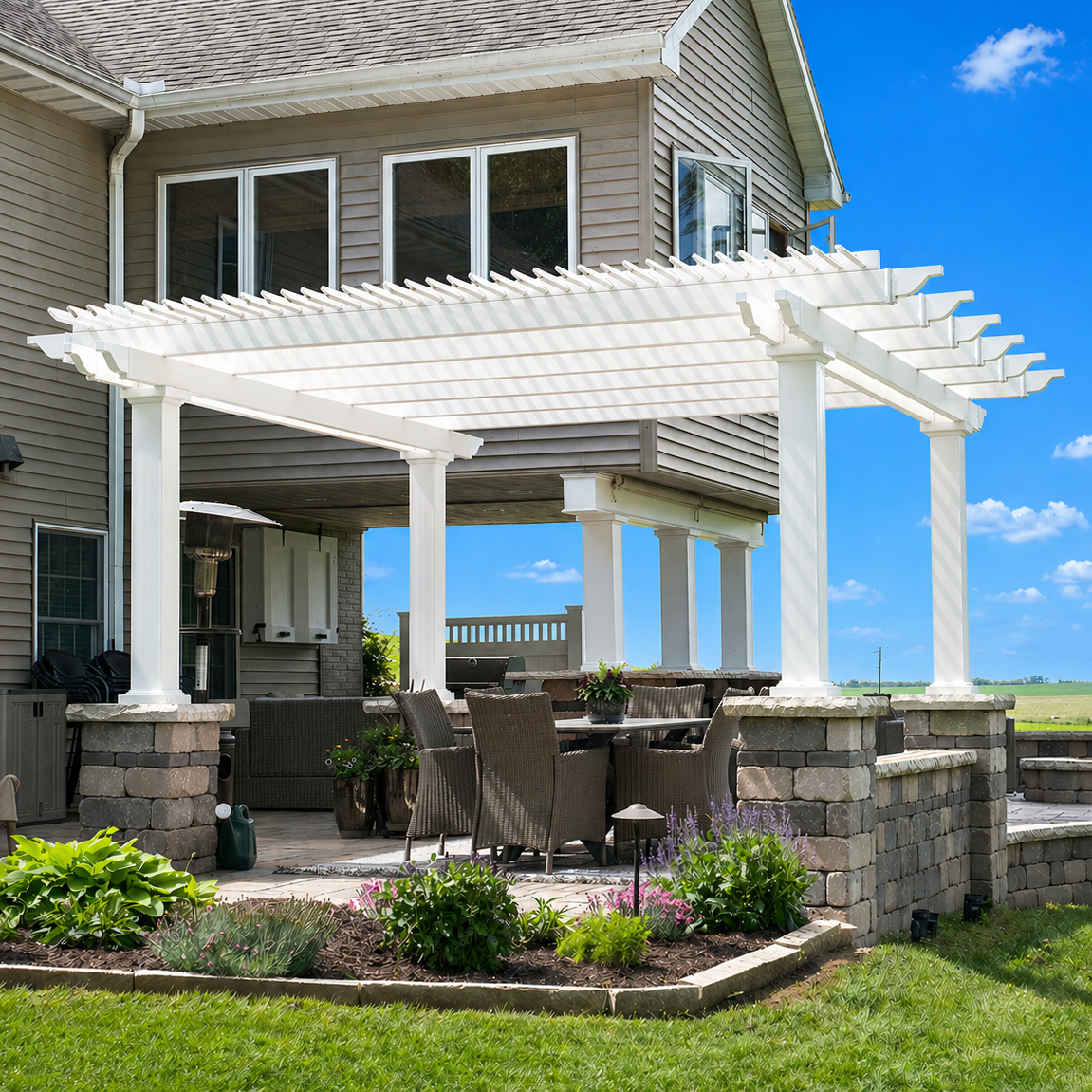
Mini pergolas are permanent outdoor structures sized to create useful shade and definition in a relatively compact area. Rather than describing one fixed dimension, “mini” generally refers to a pergola whose footprint and proportions suit a small patio, deck, courtyard, garden area, or targeted architectural application.
The main difference is the amount of space covered—not the quality or purpose of the structure. A compact pergola can use the same aluminum-reinforced components, premium extruded vinyl, fixed roof slats, and permanent mounting approach as a larger structure.
A smaller footprint usually serves one defined activity, such as a conversation set, dining table, hot tub, or pair of lounge chairs. Larger pergolas are more likely to accommodate multiple furniture zones.
Our standard Traditional and Modern pergolas begin at 8 feet by 8 feet. The best dimensions depend on the mounting area, furniture arrangement, desired roof coverage, and whether decorative overhangs extend beyond the post footprint. Use our pergola size guide to compare available widths and depths.
A freestanding pergola is supported independently and can be positioned away from the home or beside it. An attached pergola connects to a suitable house or structure and typically uses fewer posts along the attached side, which can help preserve usable floor space on a compact patio.
These are professional-grade structures intended for permanent installation. They are not pop-up shelters, lightweight decorative frames, or temporary canopies. The structural system is designed to provide lasting shade while becoming an integrated part of the property.

A well-sized mini pergola gives a small outdoor area a clear purpose without making it feel crowded. The goal is to cover the activity area while retaining comfortable circulation around furniture, doors, steps, and other fixed features.
A compact pergola can turn an open patio or courtyard into a defined outdoor room. Fixed angled slats create meaningful shade while preserving the open-air character people expect from a pergola.
On a deck or beside a pool, a mini pergola can focus coverage over a seating or lounging area rather than the entire surface. The post layout, mounting points, and clear walking paths should be considered before selecting the final dimensions.
Smaller square or near-square footprints work well for one centered furniture grouping. Plan enough room for chairs to pull out and for people to move around the table or seating arrangement without contacting the posts.
When the purpose is primarily architectural, an eyebrow or garage pergola may be the better match. This wall-mounted style has a 24-inch rafter depth, uses five shade purlins, and is available in lengths from 4 to 60 feet in 4-foot increments.
If the space must stay covered during rain, select a compact patio cover with a solid polycarbonate roof rather than a slatted pergola. White and bronze roof panels both provide 100% UV protection and can make the covered patio up to 15 degrees cooler.
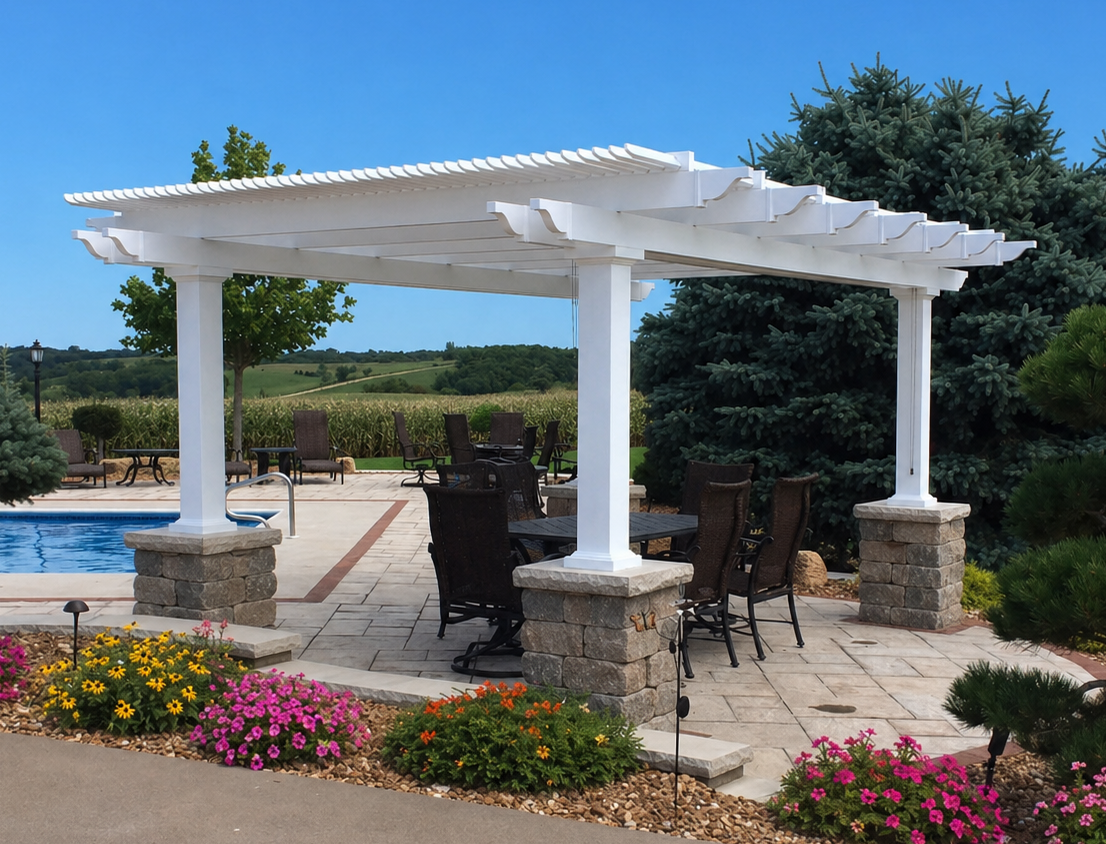
The right mini pergola is sized around both the available site and the way the covered area will be used. Measurements should account for the roof, posts, furniture, mounting conditions, and the clearance needed to use the space comfortably.
Record the usable width and depth, then note nearby walls, rooflines, doors, windows, stairs, utilities, and property restrictions. Do not assume that the patio dimensions automatically equal the appropriate pergola dimensions.
Posts need suitable mounting locations and must not interfere with circulation. Traditional pergola posts can sit at the corners or be inset by up to 36 inches, while Modern pergola posts remain at the corners. Rainproof patio-cover posts may be inset by up to 24 inches.
Lay out the intended table, chairs, lounge furniture, grill, or hot tub before finalizing the structure. Include the space needed to pull out chairs, open doors, access equipment, and walk between the furniture and posts.
Traditional mini pergolas may have beam and rafter overhangs from 0 to 36 inches. Rainproof patio covers allow overhangs from 0 to 24 inches. Modern pergolas have flush corners without beam or rafter overhangs, which creates a clean roof boundary in a tight space.
Standard sizes simplify comparison, but a custom dimension may fit a constrained area more precisely. Begin with the space and intended use, then choose the closest configuration rather than selecting a pergola solely by its nominal footprint.

Style determines the pergola’s proportions and detailing, while the roof determines whether the structure provides shade or rain protection. Choose the roof function first, then refine the appearance and installation configuration.
Traditional pergolas can include decorative beam and rafter overhangs, scrolled, beveled, or flat end caps, and corner or inset posts. Those choices make it possible to tailor both the roof outline and the visual weight of a compact structure.
Modern pergolas have square, flush corners with no beam or rafter overhangs. Their posts remain at the corners, creating a precise contemporary profile that can work especially well beside modern architecture.
Both Traditional and Modern slatted-roof pergolas are offered in freestanding and wall-mounted configurations. Freestanding designs provide location flexibility, while attached designs create a direct transition from the house to the shaded area.
Fixed angled roof slats are available in 50%, 75%, or 90% shade configurations. The purlins are spaced 6 inches, 4 inches, or 3 inches on center, respectively. These roofs provide real shade but are not rainproof and do not open, close, or rotate.
For continuous overhead coverage, explore rainproof patio covers with solid white or bronze polycarbonate panels. Both panel colors provide 100% UV protection; this fixed roof system is distinct from a louvered, motorized, or retractable roof.
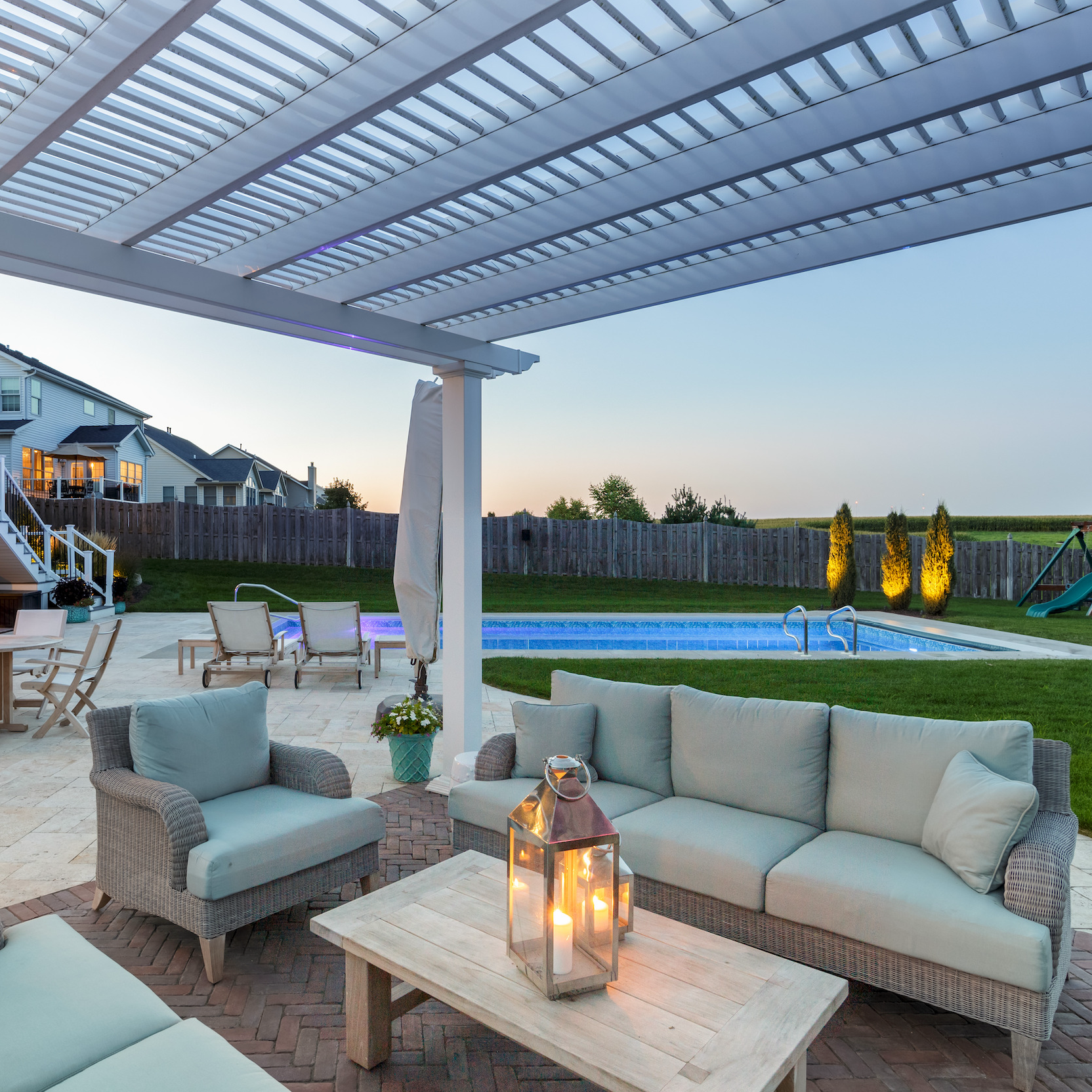
Mini pergolas should be evaluated as structural outdoor improvements, not merely by their compact dimensions. Material thickness, internal reinforcement, roof construction, mounting, and warranty coverage all influence long-term performance.
Traditional, Modern, and rainproof systems use aluminum inserts in all weight-bearing posts, beams, and rafters. The rust-proof aluminum frame supplies strength without the weight of an equivalent solid structural member, helping the pergola span farther between posts.
The exterior is thick, premium extruded vinyl that is colored throughout rather than painted. It does not require painting, staining, or sanding and can be cleaned easily, making these vinyl pergolas a practical alternative to wood for homeowners who prioritize low maintenance.
Slatted roofs use fixed angled purlins, while rainproof models use fixed polycarbonate panels. There are no motors or adjustable louvers to operate, service, or replace. Canvas and retractable canopy systems are not offered.
Hurricane brackets are available for Traditional pergolas and rainproof patio covers and are recommended where winds may reach 80 MPH or more. Adding the brackets includes a lifetime wind-damage warranty. Modern pergolas do not offer hurricane brackets.
Each pergola type is made in the USA using American-sourced materials. Traditional, Modern, and eyebrow pergolas have a lifetime warranty; rainproof patio covers include a lifetime frame warranty and a 10-year roof warranty.
A compact footprint does not necessarily mean a temporary product. Mini pergolas differ from umbrellas, awnings, canopies, and patio covers in how they mount, how they manage weather, and whether they are intended to remain part of the property.
An umbrella is portable and can be closed or moved, but its coverage depends on fabric and a central or offset support. A mini pergola is permanently mounted, uses structural posts and beams, and defines the outdoor area even when it is not being occupied.
A retractable awning projects fabric from a wall and relies on moving hardware. An attached mini pergola uses a fixed roof and permanent posts. Sunset Pergola Kits does not offer fabric, motorized, or retractable systems.
A pop-up canopy is intended for temporary use and easy relocation. A mini pergola is a lasting home improvement built around aluminum reinforcement, premium vinyl, permanent mounting, and a structural warranty.
The clearest distinction is overhead coverage. A pergola’s fixed slats provide partial shade while remaining open to rain. A small patio cover uses solid polycarbonate panels to provide a rainproof roof and full UV protection.
Choose a mini pergola when the goal is to establish a dedicated outdoor area with lasting materials and minimal routine maintenance. Portable shade is more appropriate when low initial cost, seasonal removal, or frequent repositioning matters more than permanence.

The price and long-term value of a mini pergola depend on more than its square footage. The configuration, roof, color, post style, attachment method, structural options, and site requirements should all be considered before comparing designs.
Key price factors include width and depth, attached or freestanding construction, Traditional or Modern styling, slatted or solid roofing, color, post selection, and optional accessories. White vinyl is the most affordable color, tan is another option, and black is the most expensive.
Traditional models offer 5-inch square, 7-inch square, or 10-inch round posts, depending on the selected trim configuration. Modern models use 7-inch square posts—or 8-inch square posts in black—and do not use decorative end caps. Traditional models offer scrolled, beveled, or flat end caps.
Choose 50%, 75%, or 90% shade when partial sun control and an open roof are appropriate. Choose a solid polycarbonate roof when rain protection and 100% UV protection are required. Roof selection should be based on function, not appearance alone.
Optional fan mounts are available for Traditional, Modern, and rainproof configurations. Hurricane brackets are offered for Traditional pergolas and rainproof patio covers but not Modern pergolas. Eyebrow pergolas use their own wall-mounted configuration and do not use posts.
A permanent, aluminum-reinforced pergola costs more than a lightweight temporary kit, but it is designed to remain part of the home. Low-maintenance vinyl, structural reinforcement, no motorized parts, and lifetime frame coverage reduce the need for refinishing or short replacement cycles.
The kits are designed for DIY-friendly assembly and may also be installed by a contractor. Review the assembly information and videos, verify local permit and code requirements, and confirm that the mounting surfaces and attachment points are suitable before ordering.
A mini pergola is a permanent pergola with a compact footprint or a focused architectural purpose. The term does not identify one universal size; Sunset Pergola Kits’ standard Traditional and Modern pergolas begin at 8 feet by 8 feet.
Traditional, Modern, and rainproof configurations begin at 8 feet by 8 feet. An eyebrow pergola kit may be as short as 4 feet long and has a 24-inch rafter depth.
Yes. Traditional, Modern, and rainproof mini pergolas are available in attached configurations. Eyebrow pergolas are always attached with an included ledger board.
Yes. Traditional, Modern, and rainproof designs can be freestanding. Compare the available freestanding pergolas when the structure will not connect to a wall.
Slatted-roof pergolas are not rainproof. For rain protection, choose a model with a solid white or bronze polycarbonate roof.
Traditional and Modern pergolas are available with fixed slats configured for 50%, 75%, or 90% shade. A solid-roof patio cover provides continuous overhead coverage instead.
No. The premium extruded-vinyl exterior is colored throughout and does not require painting, staining, or sanding.
No. The available roof systems are fixed angled slats or solid polycarbonate panels; louvered, motorized, canvas, and retractable systems are not offered.
Yes. The kits are designed for DIY-friendly assembly, although a contractor can also install them. Always verify local permit, code, foundation, and attachment requirements first.
Traditional, Modern, and eyebrow pergolas include a lifetime warranty. Rainproof patio covers include a lifetime warranty on the frame and a 10-year warranty on the polycarbonate roof.


