

MADE IN THE USA
with American products
w/ American products


Home ▸ Low-Maintenance Pergolas
Low-maintenance pergolas provide lasting outdoor shade without the painting, staining, sanding, and frequent upkeep associated with wood structures. Our American-made pergola kits combine a premium extruded-vinyl exterior with heavy-duty aluminum reinforcement for strength, weather resistance, and easy cleaning. Choose a fixed slatted roof for 50%, 75%, or 90% shade coverage or a solid polycarbonate roof for rain protection. [read more]


A low-maintenance pergola is built from materials that resist common outdoor deterioration without requiring recurring refinishing. Construction quality is equally important because a lasting structure needs both an easy-care exterior and dependable structural support.
Premium extruded vinyl does not require painting, staining, or sealing. Because the vinyl used on our pergolas is colored throughout rather than coated with a surface layer of paint, routine care generally consists of occasional cleaning instead of periodic refinishing.
Our full-size pergolas have aluminum inserts inside every weight-bearing post, beam, and rafter. This heavy-duty reinforcement provides structural strength and longer spans between posts while remaining rust-proof, making these structures both durable and relatively easy to own.
Fixed slats and solid polycarbonate roof panels avoid the motors, hinges, tracks, and other moving components found in adjustable roof systems. Fewer moving parts mean fewer mechanisms that can wear out, jam, or eventually require replacement.
“Maintenance-free” describes the vinyl exterior’s freedom from painting, staining, and sanding, but every permanent outdoor structure should still be cleaned and inspected periodically. Owners should remove accumulated debris and check the anchoring, connections, roof components, and surrounding drainage as appropriate for the site.
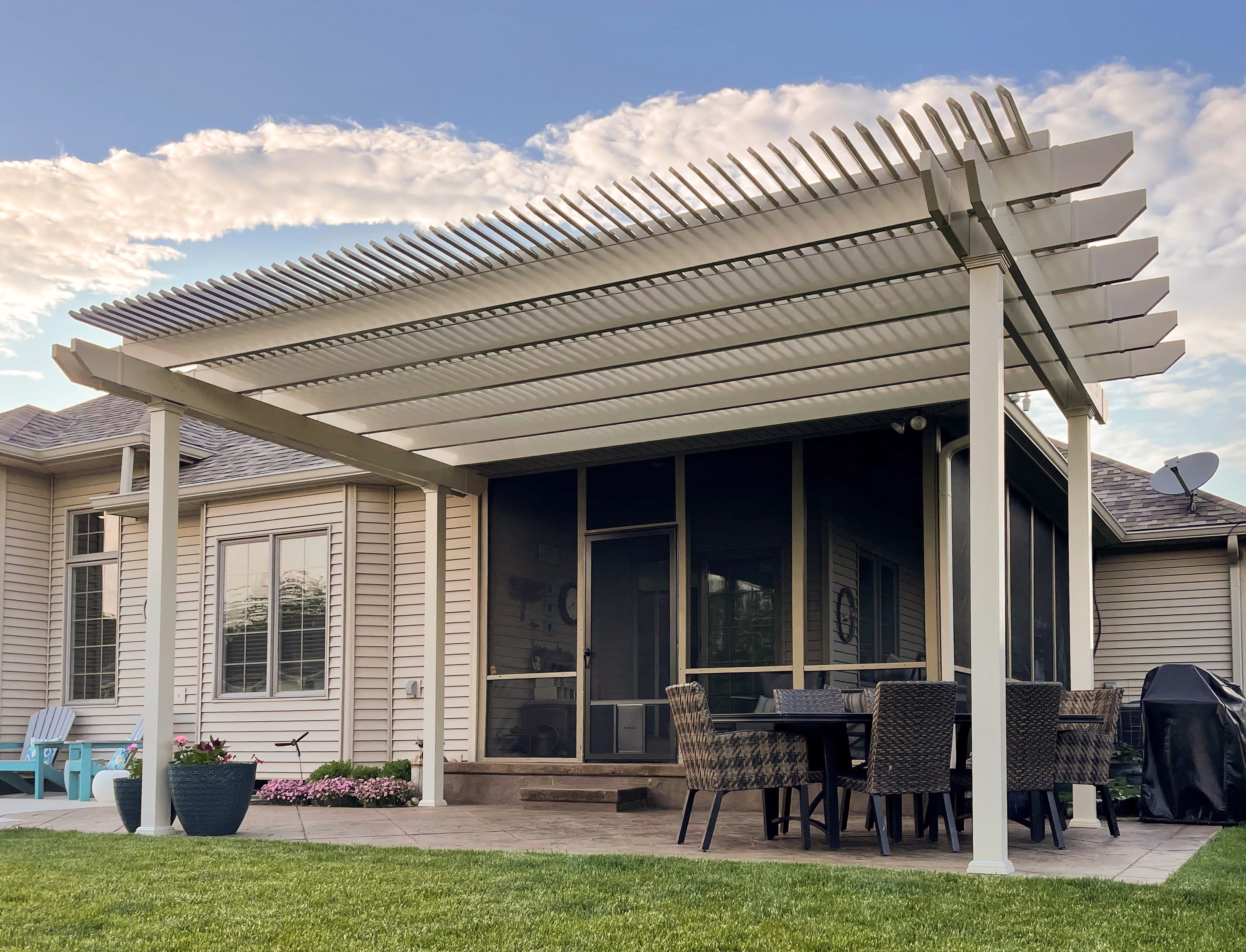
Low-maintenance pergolas are especially useful for homeowners who want a permanent outdoor improvement without adding a demanding refinishing schedule. The right material combination reduces routine work while preserving the appearance and usefulness of the structure.
A vinyl exterior eliminates the recurring surface treatments normally required by a wood pergola. Owners can spend less time scraping, sanding, staining, sealing, or repainting exposed structural components.
Vinyl and aluminum do not rot or become a food source for wood-damaging insects. This makes an aluminum-reinforced vinyl pergola particularly suitable for homeowners concerned about moisture, termites, or long-term material deterioration.
Dirt, pollen, dust, and other surface buildup can generally be removed from the vinyl exterior using water and a mild cleaning solution when needed. Cleaning frequency depends on the local climate, nearby vegetation, and exposure to airborne debris.
These pergolas are designed as professionally engineered, permanently installed shade structures rather than temporary patio accessories. Durable materials, substantial reinforcement, and a lifetime frame warranty support long-term use and can make the structure a meaningful improvement to the outdoor living space.
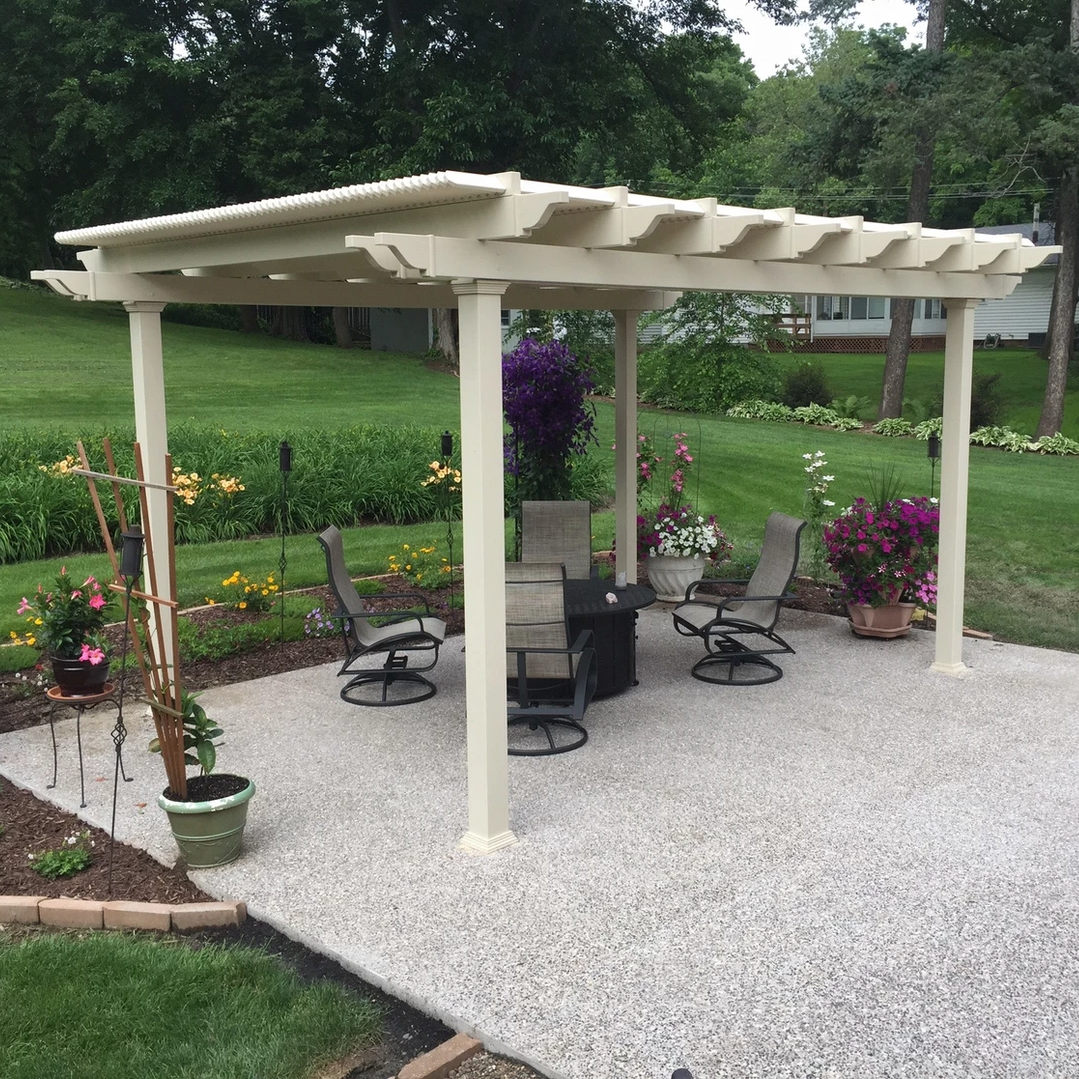
The amount of upkeep a pergola requires depends heavily on its exterior material and internal construction. Vinyl, aluminum, and wood can all form outdoor structures, but they differ substantially in appearance, maintenance requirements, and long-term performance.
Vinyl does not need to be painted or stained and is easy to wash when surface dirt accumulates. Quality matters: thick, premium extruded vinyl that is colored throughout is better suited to permanent outdoor use than a thin shell or merely painted exterior.
Aluminum resists rust and provides a strong structural material with relatively low upkeep. Our pergolas use heavy-duty aluminum reinforcement inside the weight-bearing components, combining the structural advantages associated with aluminum-reinforced pergolas with the finished appearance of extruded vinyl.
Wood provides a natural appearance but typically needs periodic staining, sealing, or painting to help manage moisture exposure, weathering, and color changes. Maintenance intervals vary by wood species, finish, climate, and exposure, so wood is usually a more labor-intensive choice.
For buyers prioritizing minimal upkeep without sacrificing structural strength, a vinyl exterior over aluminum-reinforced weight-bearing components offers a practical balance. It provides a finished architectural appearance, eliminates recurring refinishing, and supports the longer spans expected from a permanent pergola.
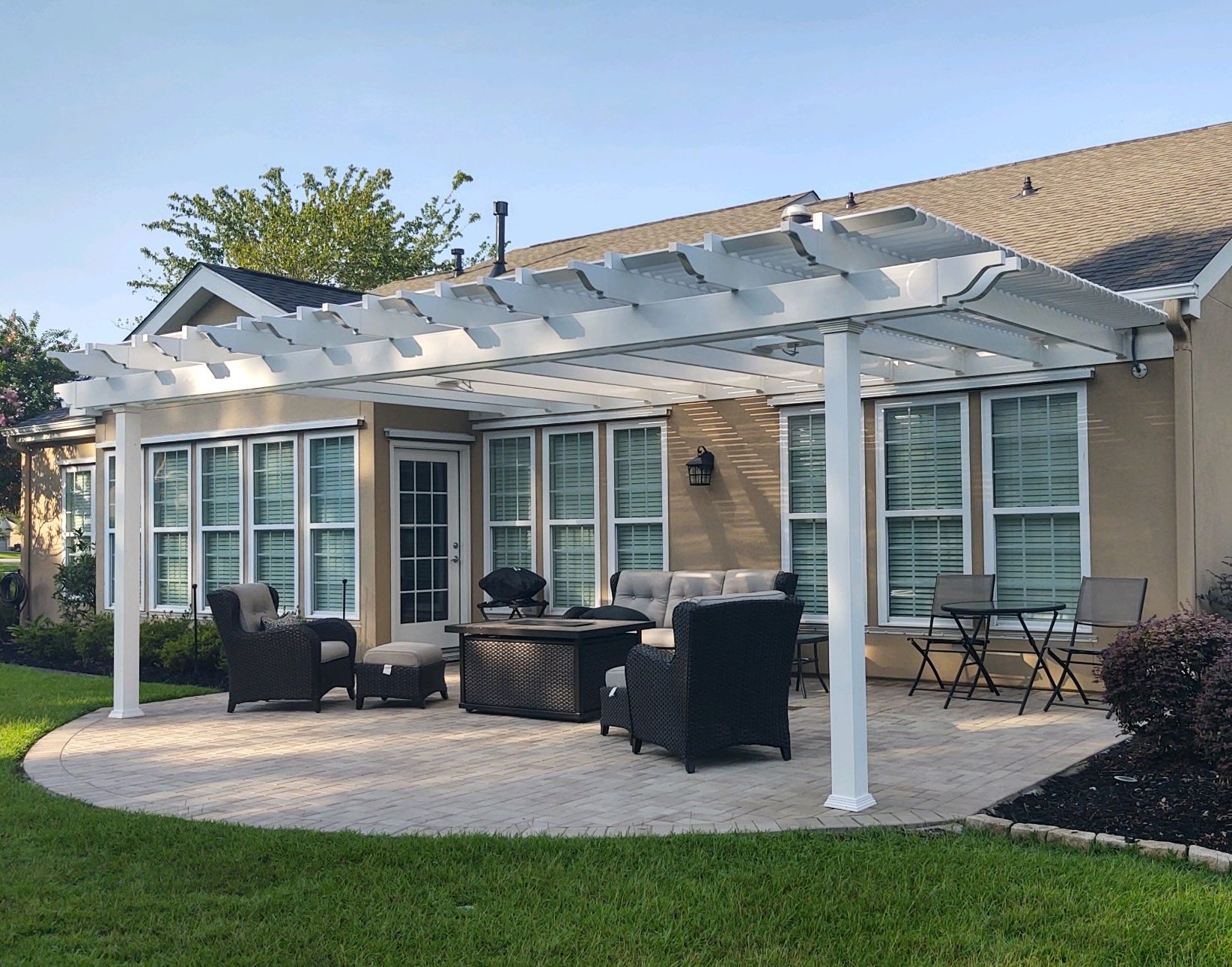
Material labels alone do not establish quality. When comparing low-maintenance pergolas, examine how the structure is reinforced, how its color is produced, whether its roof relies on moving parts, and what protection the manufacturer provides.
Vinyl that is colored throughout is not dependent on an applied paint layer for its finished color. Our pergolas use thick extruded vinyl in white, tan, or black, so the exterior does not require painting as part of normal ownership.
Full-size traditional, modern, and rainproof models include aluminum inserts in their weight-bearing posts, beams, and rafters. Thicker reinforcement helps the pergola resist bowing and bending while permitting wider spans and fewer visual interruptions from posts.
A low-care exterior should be paired with an installation appropriate for a permanent outdoor structure. Pergolas must be properly anchored to a suitable foundation or attached to an appropriate supporting structure according to the applicable plans, site conditions, and local requirements.
Traditional and modern pergola frames carry a lifetime warranty. Optional hurricane brackets are available for traditional pergolas and rainproof patio covers; they are recommended where winds can reach 80 mph or more and add a lifetime wind-damage warranty. Hurricane brackets are not offered on modern models.
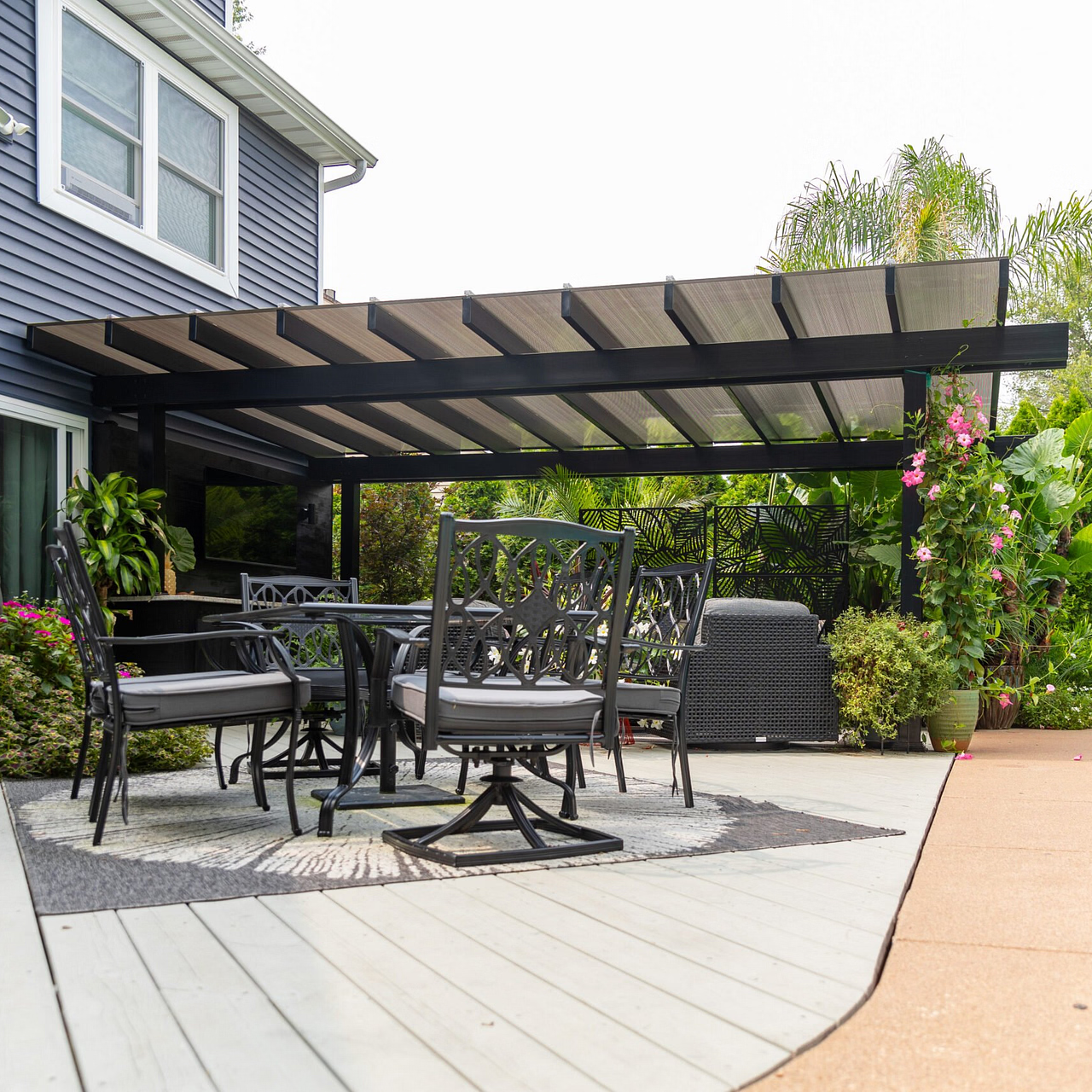
The best roof depends on whether the primary goal is filtered shade or protection from rain. Both available roof systems are fixed, avoiding the additional maintenance and mechanical complexity of motorized or retractable assemblies.
Traditional and modern pergolas use fixed, angled shade purlins, commonly called roof slats. Buyers can select 50% coverage with slats spaced 6 inches on center, 75% coverage with 4-inch spacing, or 90% coverage with 3-inch spacing. These slatted-roof pergolas provide substantial shade but are not rainproof.
For a fully covered outdoor area, rainproof patio covers use solid polycarbonate panels. White and bronze panels are available; both provide 100% UV protection and can make the covered patio up to 15 degrees cooler.
Fixed slats and solid roof panels have no motors or adjustable louvers that must operate repeatedly outdoors. We do not offer louvered, motorized, retractable, or canvas roof systems, making these pergolas best suited to homeowners who prefer a dependable fixed configuration.
Leaves and other debris should be removed when necessary, particularly from solid roofs and drainage paths. Periodic visual inspection can also identify debris accumulation, obstructed runoff, or unusual damage before it affects the surrounding patio area.
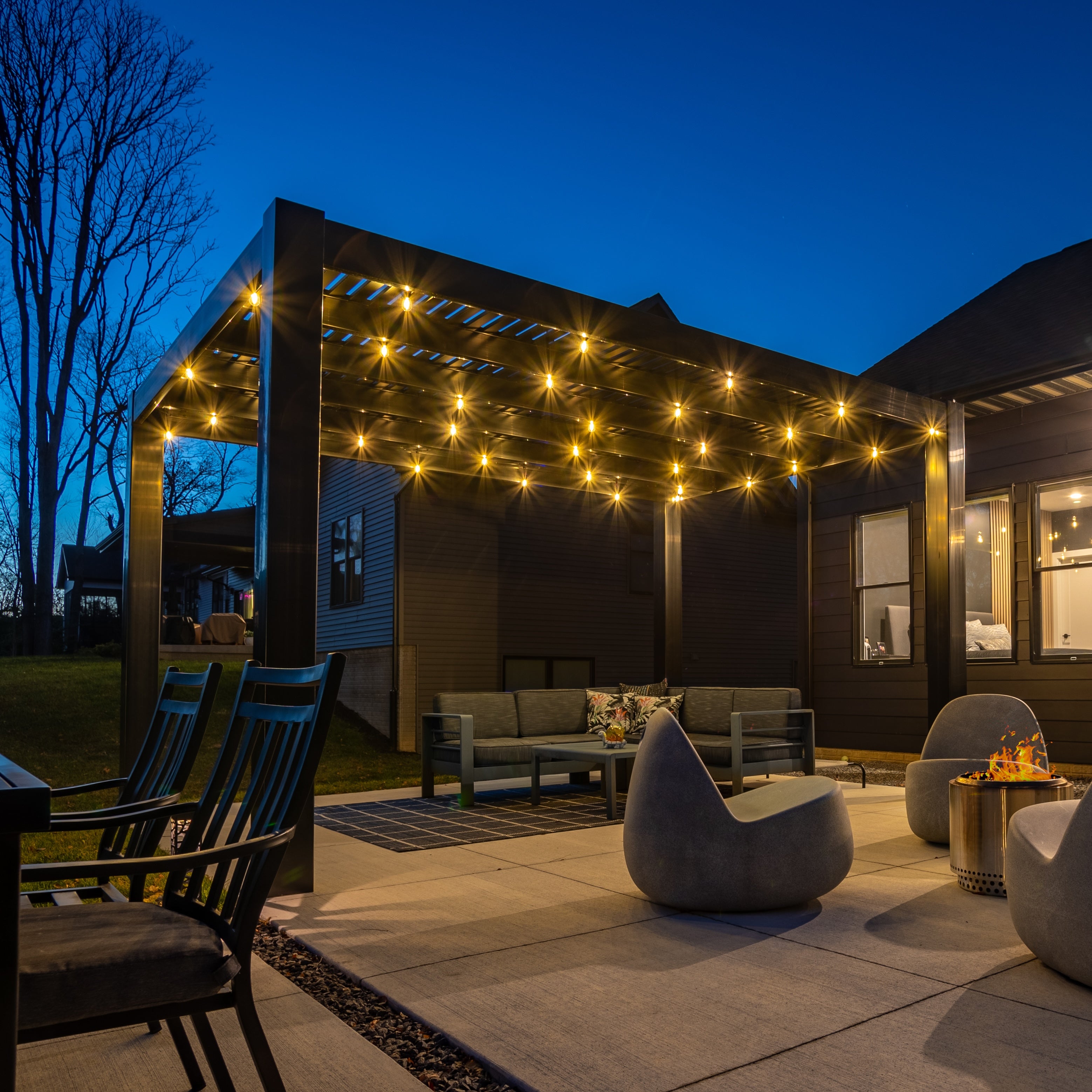
Choosing a pergola involves more than selecting an exterior color. Installation type, architectural style, roof coverage, dimensions, and post placement determine how well the structure fits the home and the intended outdoor use.
Freestanding pergolas can create a defined outdoor room away from the house or over an existing patio, poolside area, or garden space. Attached pergolas connect to a house or another suitable structure and can extend shade directly from the building while using fewer exterior posts.
Traditional pergolas can include beam and rafter overhangs, decorative end caps, and posts inset from the corners. Modern pergolas have flush square corners, no beam or rafter overhangs, no decorative end caps, and posts located at the corners.
Choose fixed slats when the priority is airflow and partial-to-dense shade. Choose a solid polycarbonate roof when the space needs protection from rain as well as UV exposure. A slatted pergola should not be treated as a substitute for a rainproof patio cover.
Measure the usable patio area, furniture arrangement, walking paths, doors, windows, rooflines, and installation surface before choosing dimensions. Traditional pergola posts can be inset as much as 36 inches, while rainproof patio-cover posts can be inset up to 24 inches; modern posts remain at the corners.
The kits are designed to be DIY-friendly, but the appropriate approach depends on the pergola’s size, attachment method, installation surface, and the installer’s experience. Larger structures and house-attached installations may make professional installation the more practical choice.
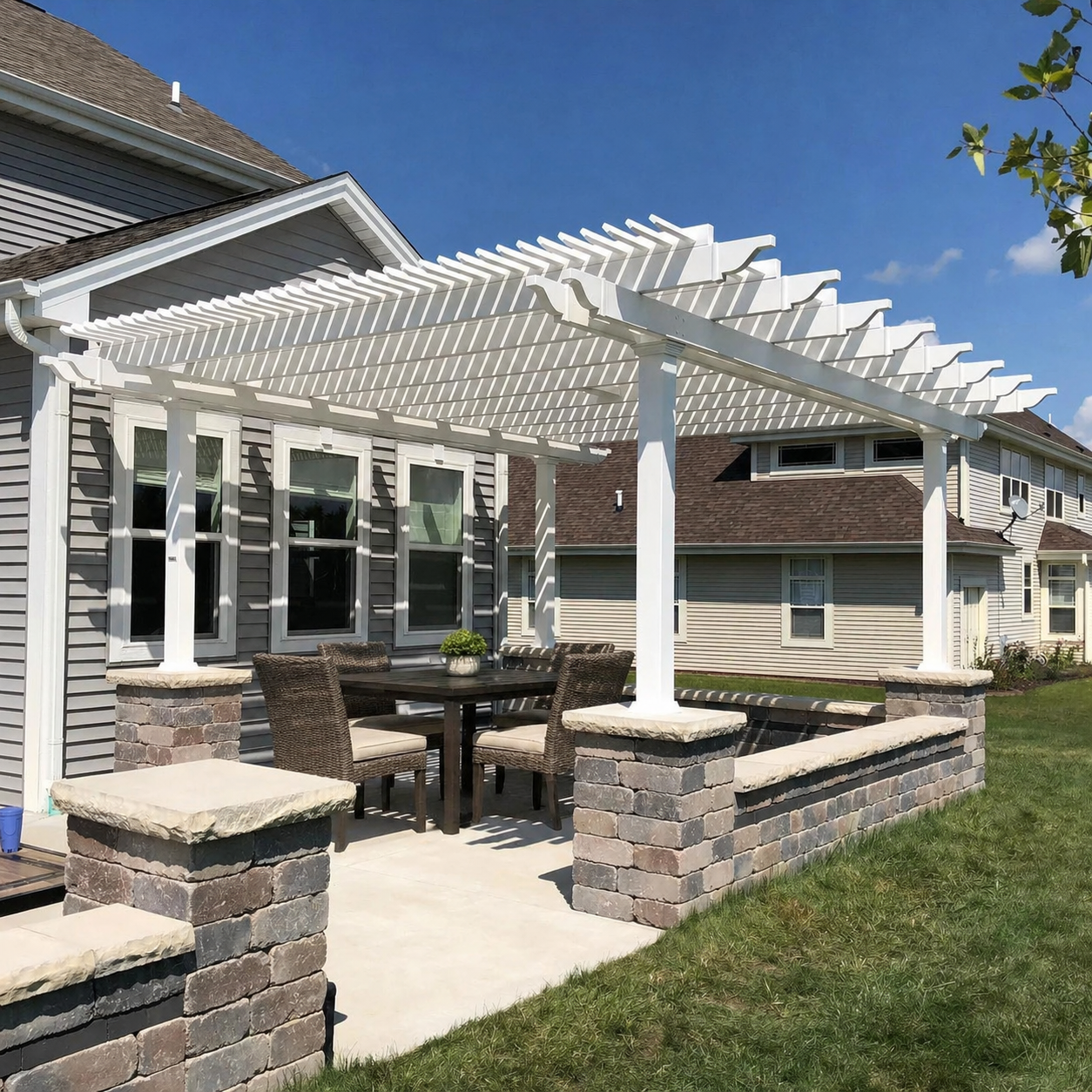
Low maintenance does not require a one-size-fits-all structure. Available configurations allow the pergola to complement the home’s architecture and provide the appropriate amount of shade or weather protection without introducing high-maintenance materials.
Traditional models offer 0- to 36-inch beam and rafter overhangs, corner or inset post placement, and scrolled, beveled, or flat end caps. Post choices include 5-inch or 7-inch square posts and 10-inch round posts, with trim configurations varying by post style.
Modern models use a clean, flush-edged design with square corner posts and no decorative end caps. White and tan models use 7-inch square posts, while black modern pergolas use 8-inch square posts.
White, tan, and black vinyl colors are available, with white generally being the most affordable and black the most expensive. Traditional and modern slatted roofs can be configured for 50%, 75%, or 90% shade coverage, while solid-roof models offer white or bronze polycarbonate panels.
Optional fan mounts are available for full-size pergolas and patio covers. Traditional and rainproof models can also be ordered with optional hurricane brackets for qualifying high-wind protection; modern pergolas do not have this bracket option.
The cost of a permanent pergola depends on its dimensions, configuration, roof system, color, number of posts, and selected options. Evaluating only the lowest initial price can overlook future refinishing, repair, and replacement requirements.
Larger spans require more material and may require additional posts or connected structural sections. Attached and freestanding layouts also use different quantities of posts and attachment components, so two pergolas with similar overall dimensions may not have the same price.
Slatted roofs vary by the amount of shade selected, while fully covered models use solid polycarbonate panels and related roof components. Denser slat spacing and rainproof construction use more material than lighter shade configurations.
White is the most affordable vinyl color, followed by tan, with black typically carrying the highest price. Post style, decorative details, fan mounts, and hurricane brackets can also affect the final kit cost.
A professionally engineered pergola with premium vinyl and substantial aluminum reinforcement will generally cost more than a lightweight temporary pergola. Its value proposition comes from permanent construction, useful shade or rain protection, a lifetime frame warranty, and the absence of recurring painting, staining, and sanding.
These kits are intended for homeowners seeking a lasting outdoor structure rather than a $500–$1,500 temporary pergola. The most appropriate comparison includes expected service life, structural quality, maintenance demands, warranty coverage, and how well the finished structure complements the home.
A pergola with a color-through extruded-vinyl exterior, aluminum structural reinforcement, and a fixed roof system requires very little routine maintenance. It does not need painting, staining, or sanding.
Vinyl pergolas do not require refinishing, but occasional washing and routine inspection are still advisable. Dirt, pollen, and environmental buildup can usually be removed with water and a mild cleaner.
Our pergolas use thick extruded vinyl that is colored throughout rather than painted. It does not require repainting and is designed to resist discoloration, deformation, and cracking during long-term outdoor exposure.
Strength depends on the specific design and materials. Our full-size pergolas use heavy-duty aluminum inserts in every weight-bearing post, beam, and rafter to provide structural support beneath the vinyl exterior.
Remove loose debris and wash the vinyl with water and a mild cleaning solution when needed. Avoid abrasive tools or harsh chemicals that could unnecessarily damage the finished surface.
Yes, but only when it has a solid roof. Our rainproof patio covers use solid polycarbonate panels; traditional and modern slatted pergolas provide shade but are not rainproof.
Traditional, modern, and rainproof models are available in both freestanding and attached configurations. Eyebrow pergolas are always attached using an included ledger board.
No. We do not offer motorized, louvered, retractable, or canvas roof systems. Our fixed roof designs avoid moving components that can wear out or require mechanical repairs.
Yes, the kits are designed for DIY-friendly assembly, although installation difficulty varies by size and configuration. Review the assembly information and videos before deciding whether to install it yourself or hire a contractor.
Traditional, modern, and eyebrow pergolas have a lifetime warranty. Rainproof patio covers have a lifetime frame warranty and a 10-year roof warranty; qualifying traditional and rainproof models ordered with hurricane brackets also receive a lifetime wind-damage warranty.


