

MADE IN THE USA
with American products
w/ American products


Home ▸ Heavy-Duty Patio Covers
Heavy-duty patio covers provide permanent rain and sun protection with an aluminum-reinforced frame, a maintenance-free vinyl exterior, and a solid polycarbonate roof. Available in freestanding and house-attached configurations, these American-made covers are built for homeowners who want a long-lasting outdoor structure rather than a temporary canopy or adjustable roof system. Choose white or bronze roof panels, both of which provide 100% UV protection and can help keep the covered patio up to 15°F cooler. [read more]


A heavy-duty patio cover is a permanently installed outdoor structure designed to provide dependable overhead protection from rain and direct sunlight. Unlike a lightweight canopy, its strength comes from a reinforced load-bearing frame, permanent anchoring, and materials selected for long-term outdoor exposure.
For this collection, “heavy-duty” refers to a structural system with aluminum inserts inside all weight-bearing posts, beams, and rafters. The aluminum provides strength while allowing practical spans between posts, and the exterior is wrapped in thick, premium extruded vinyl that does not require painting, staining, or sanding.
A solid polycarbonate roof distinguishes these rainproof patio covers from open or slatted pergolas. The fixed roof panels create continuous overhead coverage for patios, seating areas, outdoor kitchens, and other spaces where protection from rainfall is a priority.
These covers are intended for permanent installation rather than seasonal setup and storage. They do not use canvas, retractable fabric, motors, or adjustable louvers, so there are no moving roof components that must be operated or routinely replaced.
A solid-roof cover works well where a homeowner wants a defined outdoor living area that can remain useful during rain or intense sun. Common applications include decks, poolside seating, dining patios, outdoor kitchens, hot-tub areas, and detached entertaining spaces.

The frame determines whether a patio cover can function as a lasting part of the property. These systems combine internal aluminum reinforcement with a durable vinyl exterior, creating a strong structure without the recurring finish maintenance associated with exposed wood.
Aluminum inserts reinforce every weight-bearing post, beam, and rafter. The rust-proof metal frame supplies structural strength while remaining relatively lightweight, helping the system achieve longer spans between posts without relying on a bulky solid-material frame.
Material thickness matters because a patio cover must resist bowing, bending, and movement over time. The heavier structural components used in these systems support professional-grade spans and give the cover the rigidity expected from a permanent outdoor structure.
The aluminum frame is enclosed in thick extruded vinyl that is colored throughout rather than surface-painted. It will not rust and does not need paint or stain; routine cleaning is generally all that is required to maintain the exterior.
Each patio cover is made in the USA with America-sourced materials. For buyers comparing imported kits with a permanent residential structure, the origin and construction quality are meaningful parts of long-term durability and replacement value.
A heavy-duty frame must be connected to an appropriate foundation or supporting structure. The correct anchors, footings, attachment details, and local permit requirements depend on the installation surface, cover dimensions, site exposure, and applicable building codes.

The fixed polycarbonate roof is designed for homeowners who need more than partial shade. It provides continuous rain coverage, blocks UV rays, and creates a more consistently protected space beneath the structure.
Solid polycarbonate panels form the weather-protective roof surface. Because the panels cover the roof rather than leaving open spaces between slats, the area below can remain sheltered during rainfall when the cover is correctly assembled and installed.
Both available panel colors provide 100% UV protection. This makes the covered area more comfortable for everyday use and helps limit direct ultraviolet exposure to people, furniture, and other items beneath the roof.
Customers can choose white or bronze polycarbonate panels. White creates a brighter-looking roof surface, while bronze provides a darker visual effect; both choices deliver the same stated UV protection and rainproof function.
The solid roof blocks direct overhead sun and can help make the patio beneath it up to 15°F cooler. Actual comfort will also depend on the property’s orientation, time of day, ambient temperature, airflow, and nearby reflective surfaces.
A rainproof roof keeps rainfall from passing directly through the covered area, but the water still needs to move away from the structure and foundation. Site planning should account for roof slope, drainage, landscaping, and the location of doors, walkways, and neighboring surfaces.
The right outdoor structure depends on whether the main goal is rain protection, adjustable exposure, partial shade, or temporary shelter. A heavy-duty polycarbonate patio cover is most appropriate when permanent coverage and low maintenance matter more than an opening or retracting roof.
A solid-roof patio cover is rainproof and produces continuous overhead shade. A pergola with a slatted roof uses fixed angled slats to provide 50%, 75%, or 90% shade coverage, but the open roof is not rainproof. Slatted pergolas are an alternative for homeowners who prefer filtered sunlight and airflow rather than complete weather coverage.
Retractable awnings extend and close as needed, while these patio covers remain fixed in place. Sunset Pergola Kits does not offer retractable or motorized systems; the fixed design eliminates motors and moving roof components that can wear out or require replacement.
Canvas canopies are often chosen for portability or temporary seasonal use. A reinforced vinyl-and-aluminum patio cover is instead designed to become a permanent improvement to the outdoor space and does not use a fabric roof that must be removed, tensioned, or replaced.
A louvered system uses adjustable roof blades to vary sun exposure and may include motorized components. These covers use fixed solid polycarbonate panels and are intended for buyers who prioritize dependable rain coverage, simplicity, and the absence of moving parts. Louvered and adjustable roofs are not offered.
Wood structures can provide a substantial appearance but normally require periodic staining, painting, or sealing. These vinyl-exterior patio structures retain the strength of an internal aluminum frame while avoiding routine refinishing.
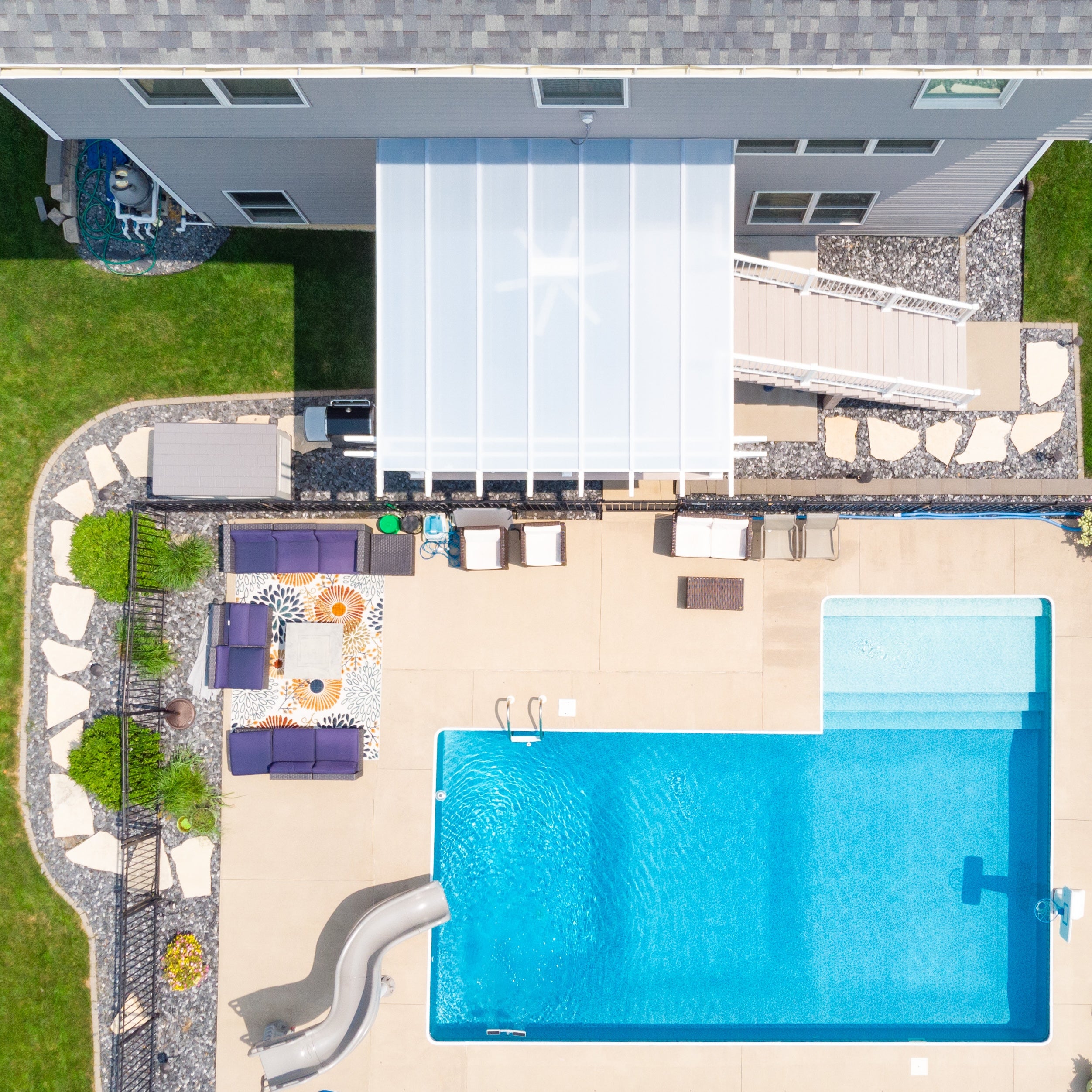
Choosing a cover begins with the placement of the outdoor living area, the dimensions that need protection, and the conditions at the installation site. Configuration decisions should be made before settling on colors or decorative details because they determine the basic footprint and support layout.
An attached cover connects to the house or another suitable structure and uses support posts along the outer edge. A freestanding cover supports itself independently and can be placed away from the home. Compare the full collection of attached outdoor structures with freestanding configurations based on the patio’s location and the suitability of the proposed attachment surface.
Measure both the width and the distance the cover must project over the patio. The roof should protect the intended activity zone, but its posts and edges must also work with doors, windows, steps, walkways, property clearances, and surrounding landscaping.
Begin with the usable area beneath the roof rather than the patio’s total dimensions alone. Dining chairs need clearance when pulled out, lounge groupings need circulation space, and grills or outdoor kitchens must be positioned according to appliance and fire-safety requirements.
Open yards, coastal settings, elevated decks, and properties exposed to storms may place greater wind demands on a cover. Hurricane brackets are recommended where winds may reach 80 mph or more; adding them includes a lifetime wind-damage warranty. Local code requirements and site-specific structural needs should still be confirmed before installation.
Because this is a permanent structure, a permit or local review may be required. Before ordering, confirm that the slab, footings, deck framing, or attachment wall can support the proposed cover and that its dimensions satisfy local setbacks and height rules.
Heavy-duty patio covers can be configured for compact seating areas or substantially larger outdoor rooms. The available size range, number of posts, roof-panel color, frame color, and finish details allow the structure to be matched to the property without adding motorized or retractable mechanisms.
Four-post freestanding covers are available from 8 to 20 feet in width and from 8 to 20 feet in depth. Larger six-post designs extend from 24 to 32 feet in width while maintaining an available depth of 8 to 20 feet. The four-post freestanding patio cover suits many single-zone patios, while the six-post version accommodates broader layouts.
Two-post attached covers range from 8 to 20 feet along the supporting structure and project 8 to 20 feet outward. For wider spaces, three-post attached covers span 24 to 32 feet along the structure with projections from 8 to 20 feet.
The extruded vinyl frame is available in white, tan, or black, with white as the most affordable and black as the highest-priced option. Solid polycarbonate roof panels are offered in white or bronze, allowing the roof appearance to be coordinated or contrasted with the frame and home exterior.
Posts can be located at the corners or inset by as much as 24 inches. Available profiles include 5-inch square posts with a lower trim ring, 5-inch square posts with upper and lower trim rings, and 7-inch square posts with upper and lower trim rings.
Beam and rafter overhangs can range from 0 to 24 inches. Scrolled, beveled, and flat end caps provide different traditional finishing details, and optional fan mounts can be incorporated when an overhead fan is part of the project plan.
Optional hurricane brackets strengthen the cover for demanding wind conditions and are recommended for areas that may experience winds of 80 mph or more. When included, they add a lifetime wind-damage warranty to the patio cover.
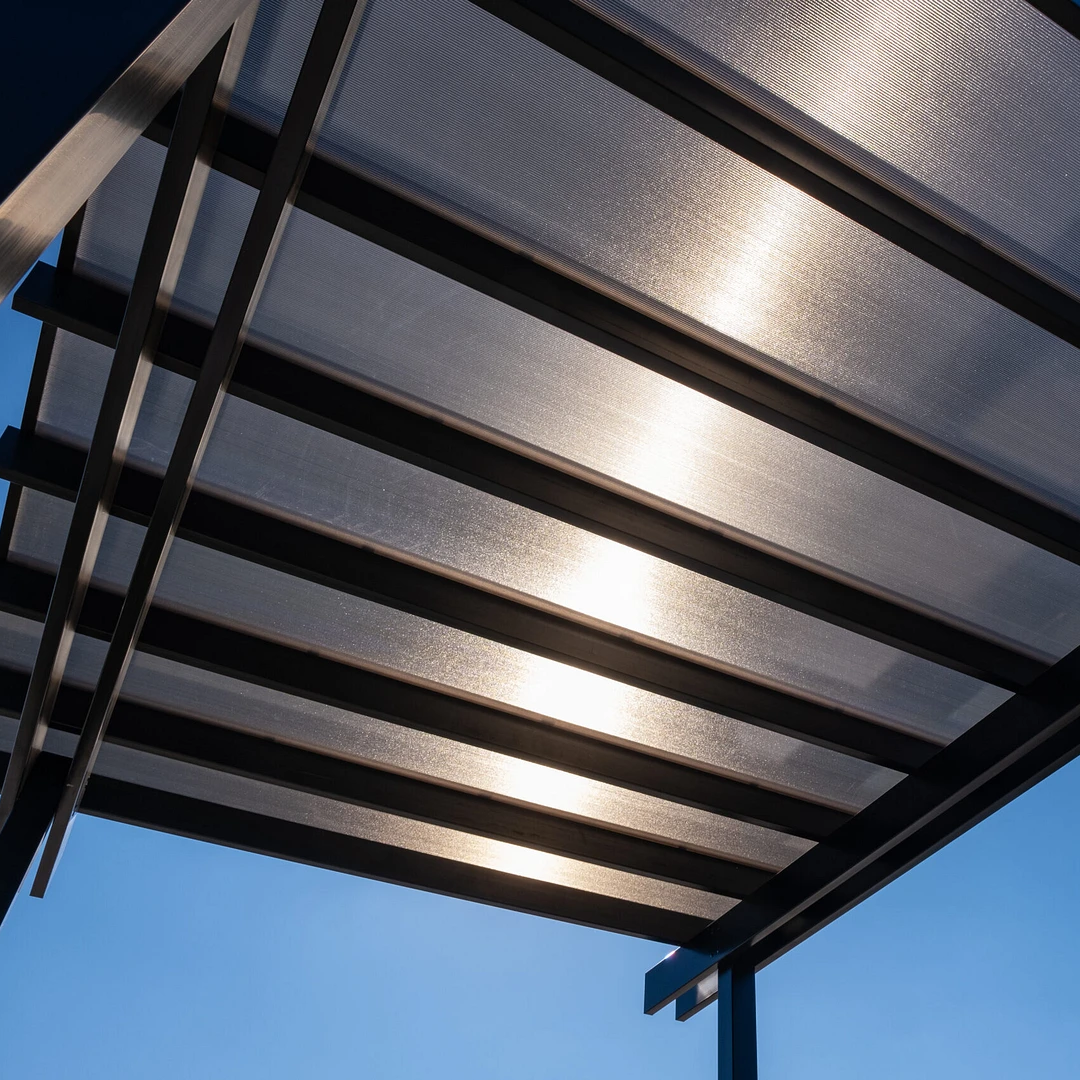
The meaningful cost of a permanent patio cover includes more than the kit itself. Size, configuration, finish selections, site preparation, permits, anchors, labor, and electrical work can all affect the completed project price and should be considered together.
Larger dimensions generally require more structural and roofing material, and wide covers may need additional posts. Frame color, post style, decorative details, fan mounts, and hurricane brackets can also change the price. White vinyl is the most economical frame color, while black is the most expensive.
The product price does not necessarily include every site-specific expense. A realistic project budget may need to account for freight, concrete or footings, attachment preparation, permits, tools, professional labor, and electrical work for an approved fan installation.
The kits are designed to be DIY-friendly, so capable homeowners can complete installation with appropriate tools, preparation, and help. A contractor may be the better choice for large covers, attached installations, elevated decks, complex foundations, or projects subject to engineered and permitting requirements. Review the assembly information and videos before deciding which route fits the project.
The extruded vinyl exterior does not need painting, staining, or sanding, and the aluminum reinforcement will not rust. Periodic cleaning and inspection of the roof, anchors, fasteners, and drainage path help protect the installation without the recurring refinishing costs associated with wood.
The structural frame has a lifetime warranty, while the solid polycarbonate roof has a 10-year warranty. Optional hurricane brackets add a lifetime wind-damage warranty, which is particularly relevant for customers in areas that may experience winds of 80 mph or more.
A well-planned heavy-duty cover creates a defined, weather-protected outdoor room rather than serving as a short-life seasonal purchase. Its long-term value comes from durable construction, useful rain protection, minimal finish maintenance, and a design intended to remain part of the property.
A heavy-duty patio cover uses reinforced load-bearing components, permanent anchoring, and durable exterior materials. These covers have aluminum inserts inside the posts, beams, and rafters, with a thick extruded vinyl exterior.
Yes. The solid polycarbonate roof is designed to provide rainproof overhead coverage when the patio cover is correctly assembled and installed.
Yes. Both the white and bronze polycarbonate roof panels provide 100% UV protection and can help make the covered patio up to 15°F cooler.
Yes. Fully covered patio covers are available in attached configurations with two or three outer support posts. They are also available as independent freestanding patio covers.
Freestanding models range from 8 by 8 feet to 32 by 20 feet, depending on post count. Attached models range from 8 feet to 32 feet along the structure and project from 8 to 20 feet.
Yes. Posts may be positioned at the corners or inset by up to 24 inches, subject to the selected dimensions and structural configuration.
They use aluminum-reinforced structural components and offer optional hurricane brackets. The brackets are recommended where winds may reach 80 mph or more and add a lifetime wind-damage warranty, but local codes and site conditions must still be evaluated.
No. The extruded vinyl is colored throughout and does not require painting, staining, or sanding. It can be cleaned as needed.
The frame includes a lifetime warranty, and the polycarbonate roof includes a 10-year warranty. See the main product FAQs for additional warranty and ordering information.
No. These patio covers use fixed solid polycarbonate panels. Louvered, retractable, canvas, and motorized roof systems are not offered.


