

MADE IN THE USA
with American products
w/ American products


Home ▸ Covered Deck Pergolas
Covered deck pergolas create a permanent outdoor structure over a deck, with options ranging from slatted roofs for substantial shade to solid roofs for complete rain protection. Our aluminum-reinforced vinyl pergolas are available in attached and freestanding configurations, with traditional and modern designs to complement different homes and deck layouts. Choose the size, style, and level of coverage that fits how you want to use your deck. [read more]


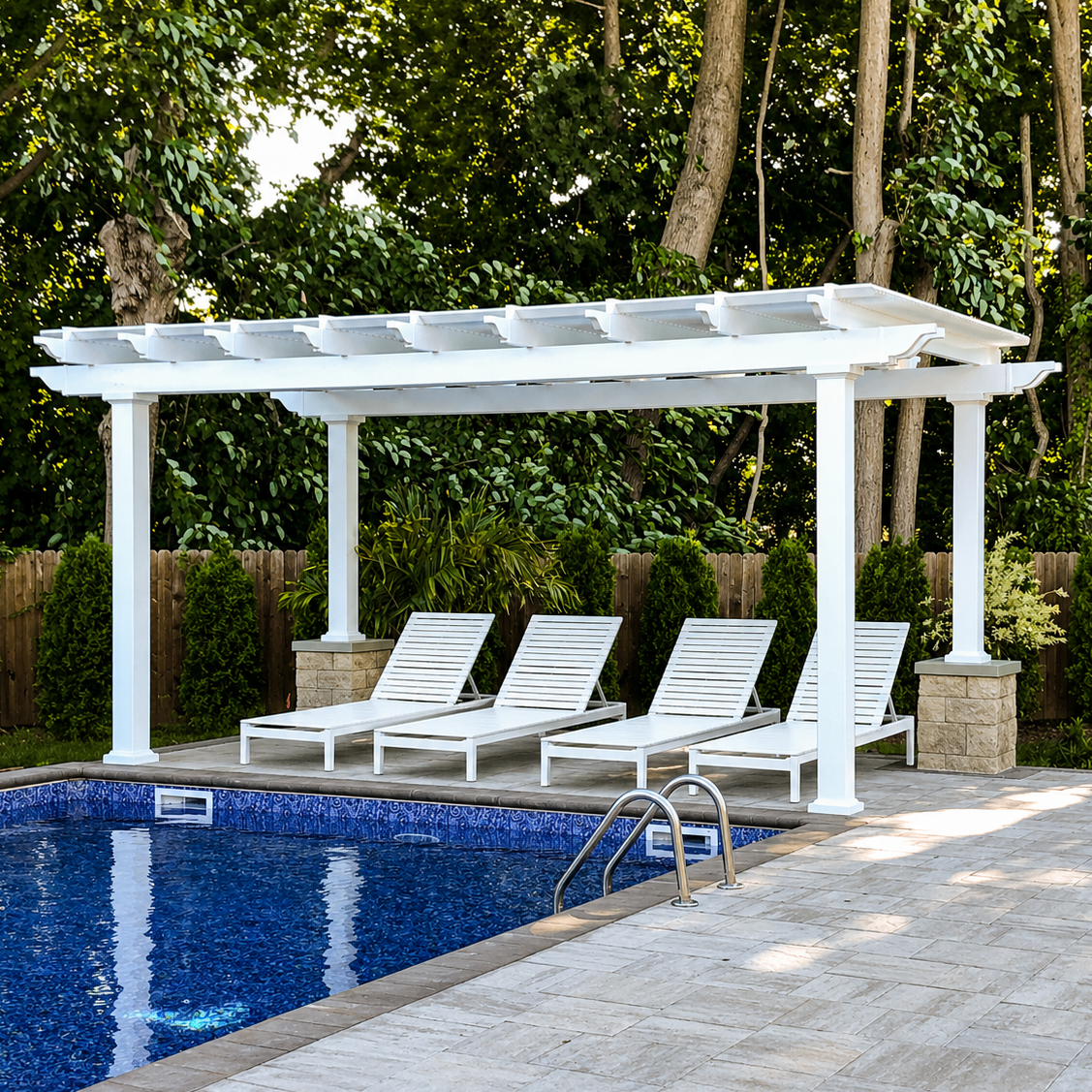
A covered deck pergola is a permanent overhead structure designed to provide shade or weather protection over a deck. The term can describe both pergolas with fixed roof slats and structures with a solid roof, so the most important distinction is the type and amount of coverage you need.
A pergola does not need a solid roof to provide meaningful overhead coverage. Traditional and modern pergolas use fixed angled slats that create shade while retaining the open character associated with a pergola. At Sunset Pergola Kits, these roofs are available with approximately 50%, 75%, or 90% shade coverage.
If you need complete overhead protection from rain, a solid roof is the appropriate option. Our rainproof patio covers use solid polycarbonate roof panels rather than pergola slats.
A pergola with a slatted roof is primarily a shade structure. Fixed angled slats reduce direct sun while allowing air and some light through the roof, but they are not rainproof. Increasing the number of slats increases the amount of shade below the structure.
A solid polycarbonate roof provides full overhead coverage from rain and 100% UV protection. White and bronze roof panels are available, and both are designed to make the covered area up to 15 degrees cooler.
An attached pergola connects to the house or another suitable structure on one side and uses posts to support the opposite side. This configuration can work especially well when the deck begins directly outside the home and you want the overhead structure to feel integrated with it.
A freestanding pergola supports itself independently with posts. It can be positioned over a deck without attaching the pergola frame to the house, making it useful for decks where the desired covered area is separated from the exterior wall or where a freestanding configuration is preferred.
Our covered deck pergolas are permanent structures rather than temporary shade canopies. Weight-bearing posts, beams, and rafters are reinforced with aluminum on traditional and modern pergolas, while a premium extruded vinyl exterior provides the finished surface without requiring routine painting or staining.
These are fixed-roof systems. We do not offer retractable canopies, adjustable louvers, or motorized roofs.

The right roof depends on what you expect the pergola to do. For shade, a fixed slatted roof lets you choose the level of coverage. For rain protection, a solid polycarbonate roof turns the structure into a fully covered outdoor area.
Our 50% shade option uses fixed angled purlins, commonly called roof slats, spaced 6 inches on center. It provides noticeable shade while maintaining a more open roof and allowing more light through than the higher-coverage configurations.
The 75% configuration places the roof slats 4 inches on center. It provides a middle ground for homeowners who want substantially more shade without moving to the densest slatted-roof configuration.
For the greatest shade available from our traditional and modern pergolas, the 90% configuration uses slats spaced 3 inches on center. It creates a much more heavily shaded deck while remaining a slatted—and therefore not rainproof—roof.
When the objective is keeping rain off the deck rather than primarily reducing sun exposure, choose a solid-roof patio cover. These structures use polycarbonate roof panels in white or bronze, both providing 100% UV protection and full overhead rain protection.
Start with the problem you want the roof to solve. Choose a slatted pergola when shade and an open-air feel are the priorities. Choose a solid roof when keeping the deck dry during rain is essential. A 90% shade pergola provides substantial shade, but it should not be treated as a substitute for a rainproof roof.
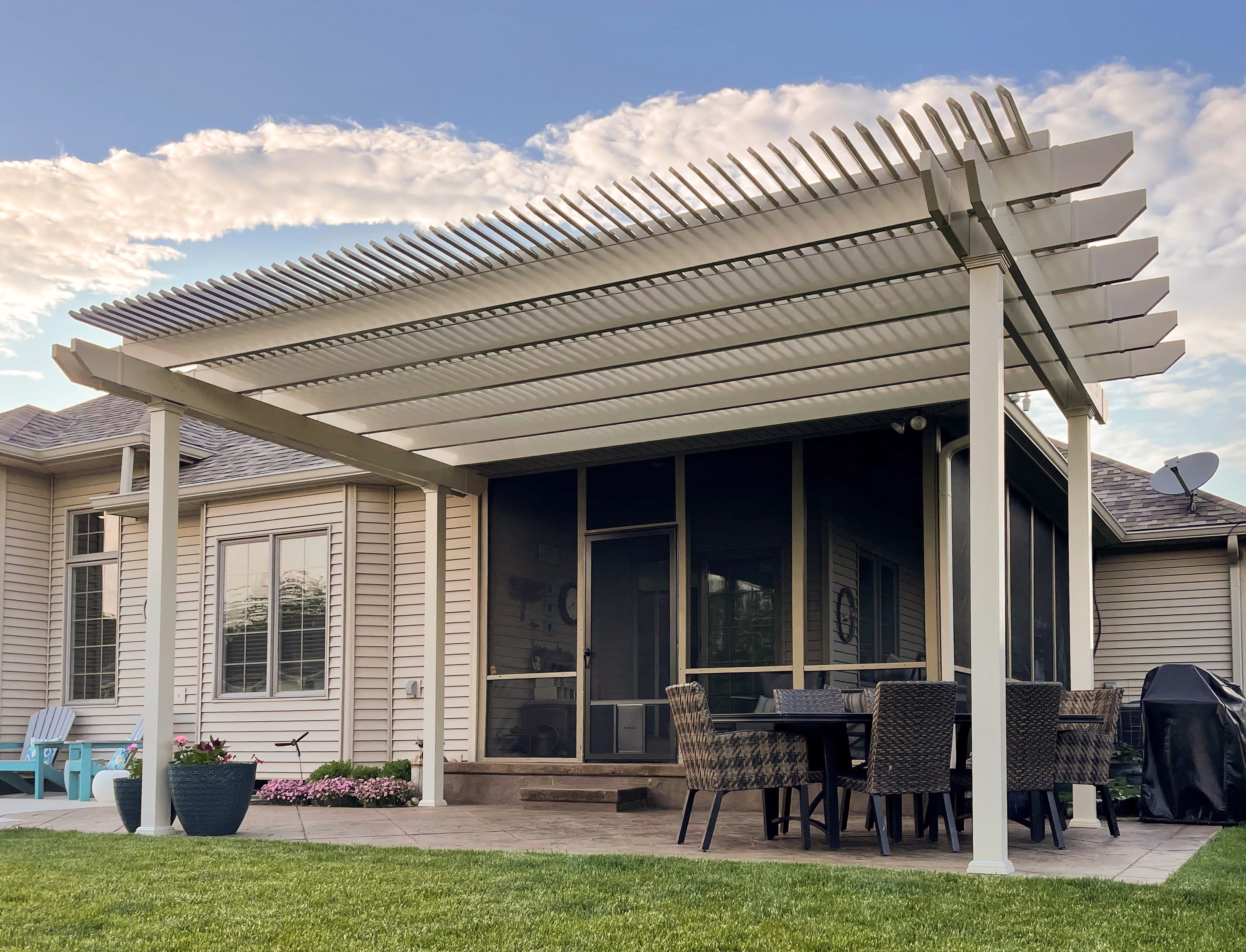
Adding overhead coverage can make an exposed deck more comfortable and useful. The specific benefit depends heavily on whether you choose a slatted shade roof or a fully covered rainproof roof.
A permanent slatted pergola can provide meaningful shade rather than serving only as a decorative framework. With 50%, 75%, and 90% shade configurations, you can match the roof density to the amount of sun reduction you want.
If weather protection is the priority, a solid-roof patio cover creates a rainproof area over the deck. This can make an outdoor dining, seating, or gathering area usable during conditions that would leave an uncovered deck exposed.
A pergola establishes a clear architectural zone without enclosing the deck with walls. The structure can visually organize a dining table, lounge furniture, or another primary gathering area while keeping the space connected to the rest of the deck.
A professionally designed permanent pergola is fundamentally different from a temporary canopy or lightweight seasonal shade product. Aluminum reinforcement provides structural strength, while the extruded vinyl exterior creates a finished appearance designed for long-term outdoor use.
Unlike wood, the vinyl exterior does not require painting, staining, or sanding. Because the color runs throughout the extruded vinyl rather than being applied as a painted surface, ongoing finish maintenance is minimal.
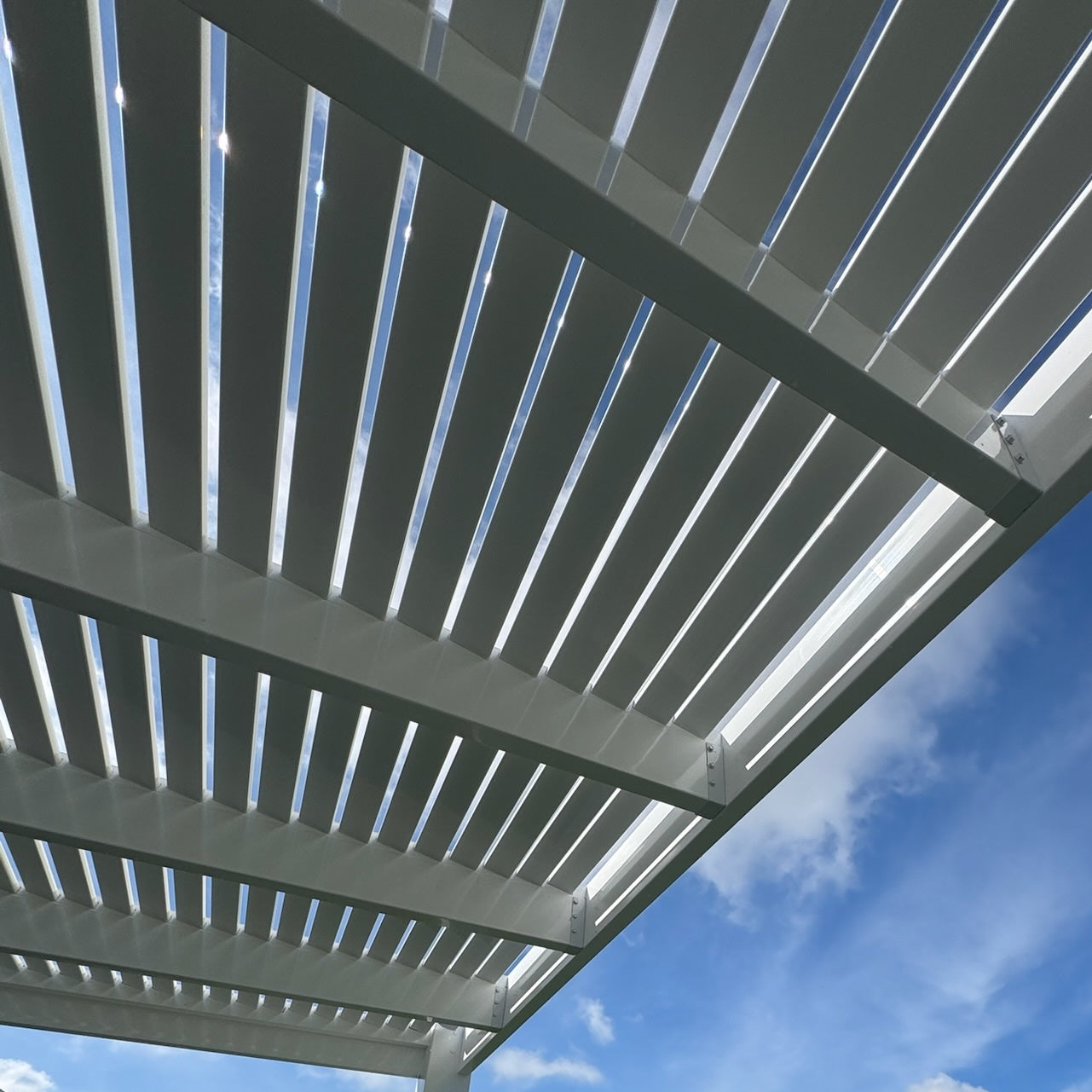
Choosing a covered deck pergola starts with the usable dimensions of the deck, followed by roof coverage, attachment method, style, and post placement. Working through those decisions in that order makes it easier to narrow the available configurations.
Measure the portion of the deck you actually want beneath the structure rather than assuming the pergola should match the entire deck. Account for stairs, doors, railings, furniture circulation, and any areas you intentionally want to leave uncovered. You can also shop pergolas by width and depth when comparing footprints.
Decide whether the primary objective is moderate shade, substantial shade, maximum slatted-roof shade, or rain protection. That determines whether a 50%, 75%, or 90% slatted pergola—or a solid-roof patio cover—is the better starting point.
Attached pergolas can integrate the covered area directly with the home and require fewer posts along the house side. Freestanding pergolas are independently supported and can be positioned without attaching the pergola frame to the house.
Post locations matter because they affect furniture arrangements, walkways, views, railings, and usable floor space. Traditional pergolas allow posts at the corners or inset by as much as 36 inches. Solid-roof patio covers allow up to 24 inches of inset, while modern pergola posts remain at the corners.
Our traditional pergola configurations span from compact 8-by-8-foot structures to much larger multi-post designs reaching as large as 44 by 44 feet in applicable configurations. Modern pergolas are available in configurations reaching up to 32 by 32 feet, while solid-roof patio covers reach up to 32 by 20 feet. The appropriate configuration depends on both dimensions and whether the structure is attached or freestanding.
“Deck cover” can describe several very different structures. Comparing them by roof function, permanence, maintenance, and appearance helps clarify whether a slatted pergola or solid-roof structure better fits the project.
The biggest difference is the roof. A traditional or modern pergola has fixed angled slats that provide shade but allow rain through. A patio cover has a continuous polycarbonate roof designed to keep the area underneath dry.
If you primarily want shade while retaining the distinctive appearance of a pergola, a slatted roof is usually the relevant category. If the project requires complete overhead rain protection, a patio cover addresses that requirement directly.
A retractable awning uses movable fabric or similar material to extend and retract shade. Our pergolas instead use permanent posts, beams, rafters, and fixed roofing components. There are no retractable or motorized roof mechanisms.
Both can create a defined outdoor area, but a pergola is characterized by its post-and-beam architecture and, in the traditional sense, an open or slatted roof. Pergolas can also be attached directly to a house, whereas gazebos are commonly designed as freestanding structures.
A slatted pergola preserves more of an open-air relationship between the deck and sky while providing controlled shade. A solid overhead structure prioritizes continuous coverage. Homeowners comparing the two should decide whether shade or complete weather protection is the more important requirement before focusing on aesthetics.
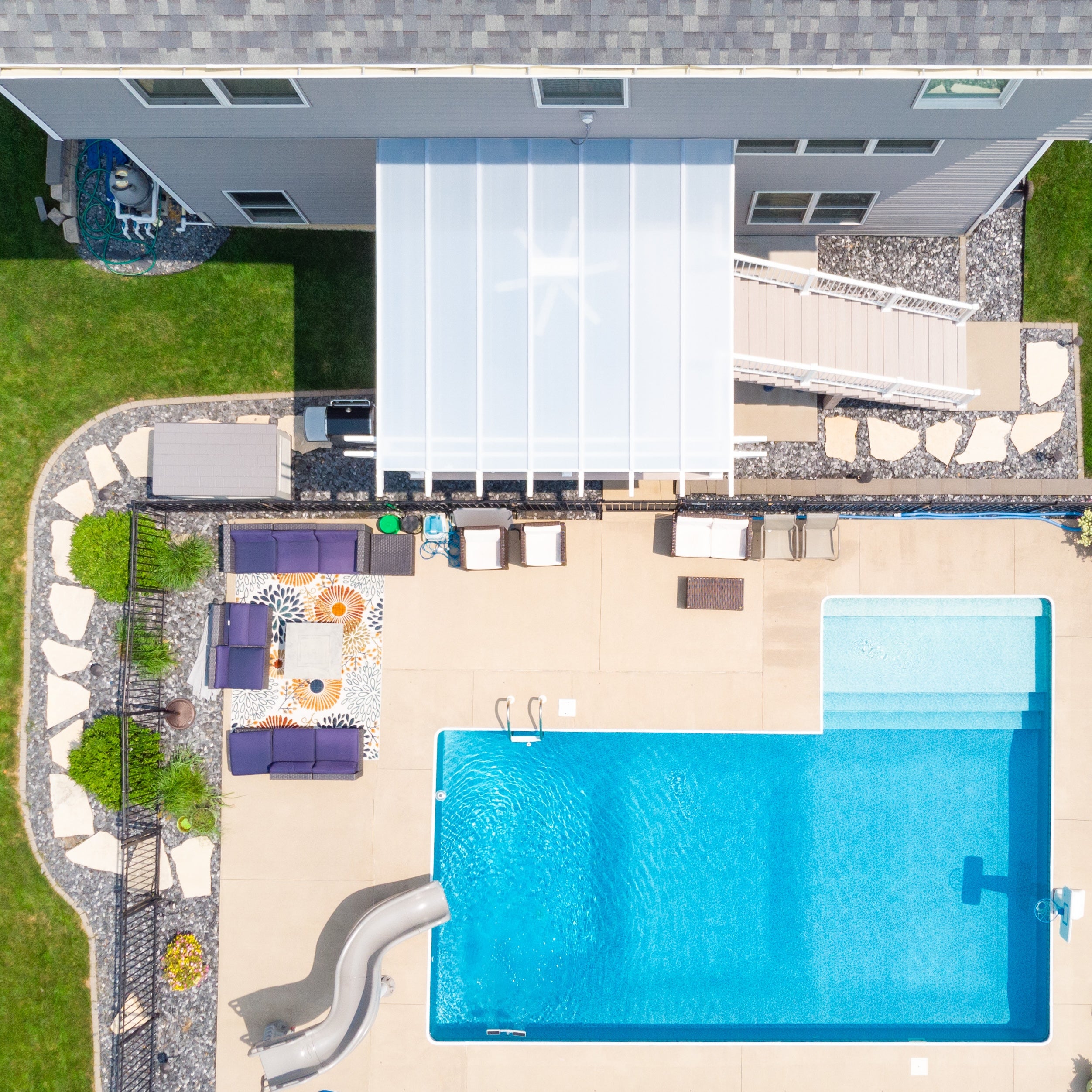
A permanent deck pergola has to do more than look appropriate for the home. Structural materials, roof design, post configuration, finishes, and architectural details all influence how the finished structure performs and looks.
Our traditional and modern pergolas use aluminum inserts in all weight-bearing posts, beams, and rafters. The heavy-duty aluminum reinforcement provides structural strength while allowing longer spans between posts than a less substantial frame.
The structural frame is finished with premium extruded vinyl, making these vinyl pergolas low maintenance without sacrificing the strength provided by the internal aluminum reinforcement. The vinyl is colored throughout rather than simply painted on the surface and does not require routine staining or painting.
Traditional pergolas can include beam and rafter overhangs from 0 to 36 inches, inset posts, several post styles, and scrolled, beveled, or flat end caps. This provides more opportunity to adjust architectural detailing around a traditional or transitional home.
Modern pergolas use flush square corners with no beam or rafter overhangs and no decorative end caps. Posts remain at the corners, producing a cleaner contemporary profile.
White, tan, and black vinyl are available, with white being the most affordable and black the most expensive. Traditional pergolas offer 5-inch square, 7-inch square, and 10-inch round post options depending on the selected trim configuration. Modern pergolas use square posts, with 7-inch posts for white and tan and 8-inch posts for black.
Optional fan mounts are available for traditional, modern, and solid-roof structures. Hurricane brackets are also available for traditional pergolas and rainproof patio covers and are recommended in areas that ever experience winds of 80 mph or higher. Adding hurricane brackets provides a lifetime wind damage warranty on those eligible structures.
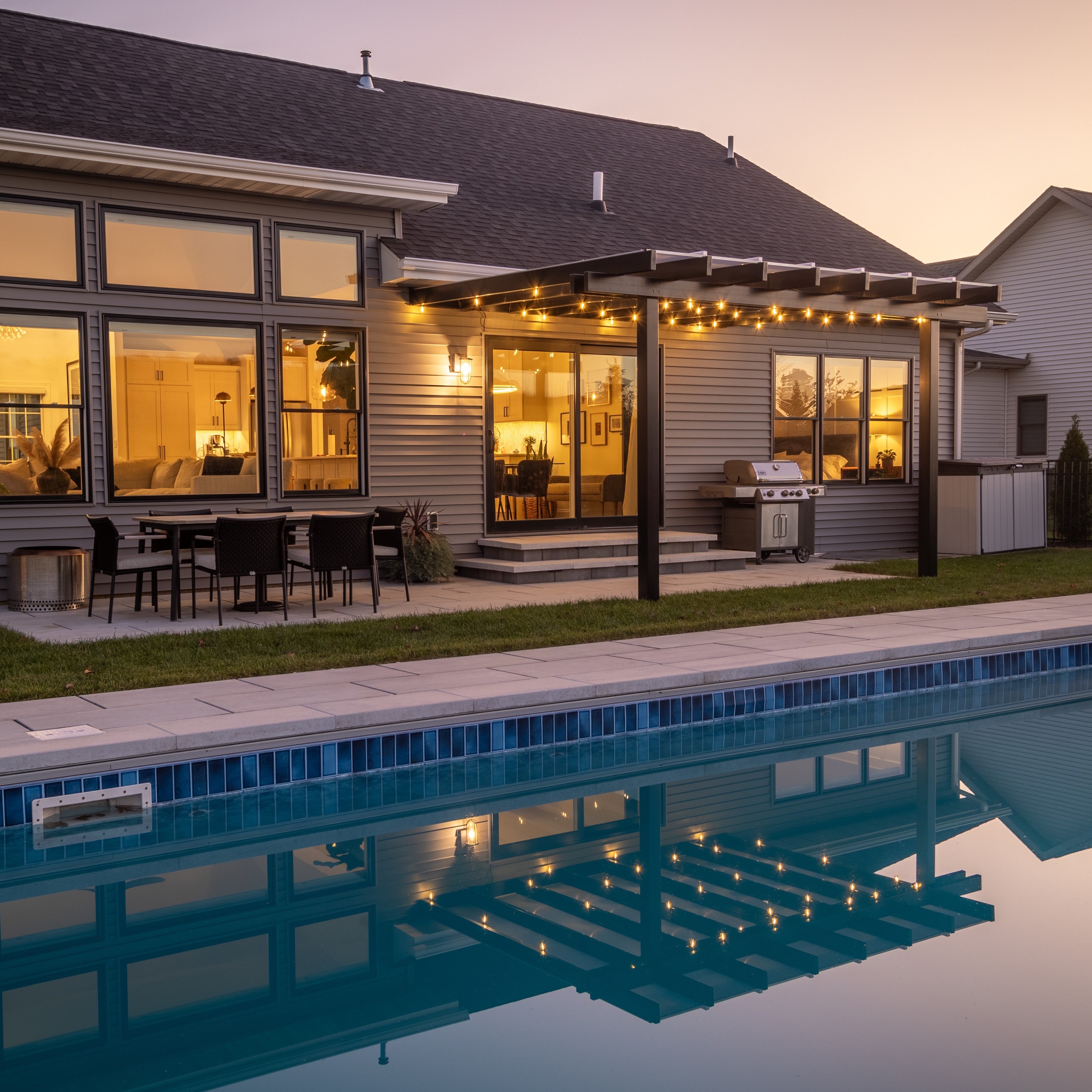
The total value of a deck pergola depends on more than its initial purchase price. Size, roof type, structural configuration, color, customization, installation requirements, and expected service life all matter when comparing permanent outdoor structures.
A pergola can be incorporated into many deck projects, but the supporting structure and attachment points must be suitable for the loads involved. Because decks vary in framing, height, construction, and condition, structural and anchoring requirements should be evaluated for the individual project rather than assuming the deck boards themselves provide adequate support.
Our kits are designed to be DIY-friendly, but homeowners can also hire a contractor. See our assembly information and videos for more detail about how the systems are put together.
Size is one of the primary cost variables because larger structures require more material and may require additional posts. Roof type and shade density also matter, as do color and selected options. White is the most affordable vinyl color, followed by tan, with black being the highest-priced option.
A solid polycarbonate roof is a different system from a slatted shade roof, so shoppers comparing prices should first determine whether they need shade or rain protection. Comparing structures with different roof functions solely on upfront price can obscure what each system is designed to provide.
A permanent pergola should also be evaluated by the maintenance it requires over its service life. The vinyl exterior eliminates recurring painting, staining, and sanding, while the aluminum reinforcement is rust-proof. With no motorized roof mechanisms or moving louvers, there are also fewer mechanical components associated with the roof system.
Traditional and modern pergolas include a lifetime warranty. Fully covered patio covers have a lifetime warranty on the frame and a 10-year warranty on the polycarbonate roof. Traditional pergolas and patio covers equipped with the optional hurricane brackets also receive a lifetime wind damage warranty.
Our pergolas are made in the USA using American-sourced materials and are designed as professional-grade permanent outdoor structures rather than inexpensive temporary pergolas. For homeowners investing in a substantial deck and outdoor living area, material quality, structural strength, maintenance requirements, and longevity are important parts of the overall value calculation.
Yes, a pergola can often be installed over an existing deck, provided the deck and supporting structure can accommodate the required loads and anchoring. The appropriate attachment method depends on the deck's construction and should be evaluated for the specific project.
Only a solid-roof system is rainproof. Slatted pergolas with 50%, 75%, or 90% shade coverage provide shade but allow rain through. For rain protection, see our solid-roof patio covers.
Among our slatted pergolas, the 90% shade configuration provides the greatest shade, using fixed angled slats spaced 3 inches on center. A solid polycarbonate roof provides complete overhead coverage rather than partial slatted shade.
Yes. Traditional, modern, and rainproof patio-cover designs are available in attached configurations as well as freestanding configurations. Browse our attached pergolas for wall-mounted options.
Available sizes depend on style and configuration. Traditional pergolas can reach up to 44 by 44 feet in applicable multi-post configurations, modern pergolas up to 32 by 32 feet, and rainproof patio covers up to 32 by 20 feet. You can browse pergolas by size to compare dimensions.
Material alone does not determine structural strength. Our pergolas combine a premium extruded vinyl exterior with aluminum reinforcement in the weight-bearing structural components, providing the low-maintenance benefits of vinyl with a strong internal frame.
No. The premium extruded vinyl exterior is colored throughout and does not require routine painting, staining, or sanding. Normal cleaning is generally all that is needed to maintain the exterior finish.
No. Our pergola roofs are fixed. We offer slatted roofs with 50%, 75%, or 90% shade coverage and solid polycarbonate roofs for rain protection, but we do not offer motorized louvers, adjustable roofs, retractable canopies, or canvas systems.
Yes. The kits are designed for DIY-friendly installation, although a contractor can also perform the installation. Review the assembly information and installation videos before deciding which approach is appropriate for your project.
Traditional and modern pergolas have a lifetime warranty. Rainproof patio covers have a lifetime warranty on the frame and a 10-year warranty on the roof. Eligible traditional pergolas and patio covers fitted with hurricane brackets also receive a lifetime wind damage warranty.


