

MADE IN THE USA
with American products
w/ American products


Home ▸ Clear Patio Covers
Clear patio covers provide full overhead weather protection while using polycarbonate roofing instead of a traditional opaque roof system. Our permanent rainproof patio covers pair a solid polycarbonate roof with an aluminum-reinforced, premium vinyl structure and are available in white or bronze roof panels. Both panel options provide 100% UV protection and can make the covered patio up to 15 degrees cooler. [read more]


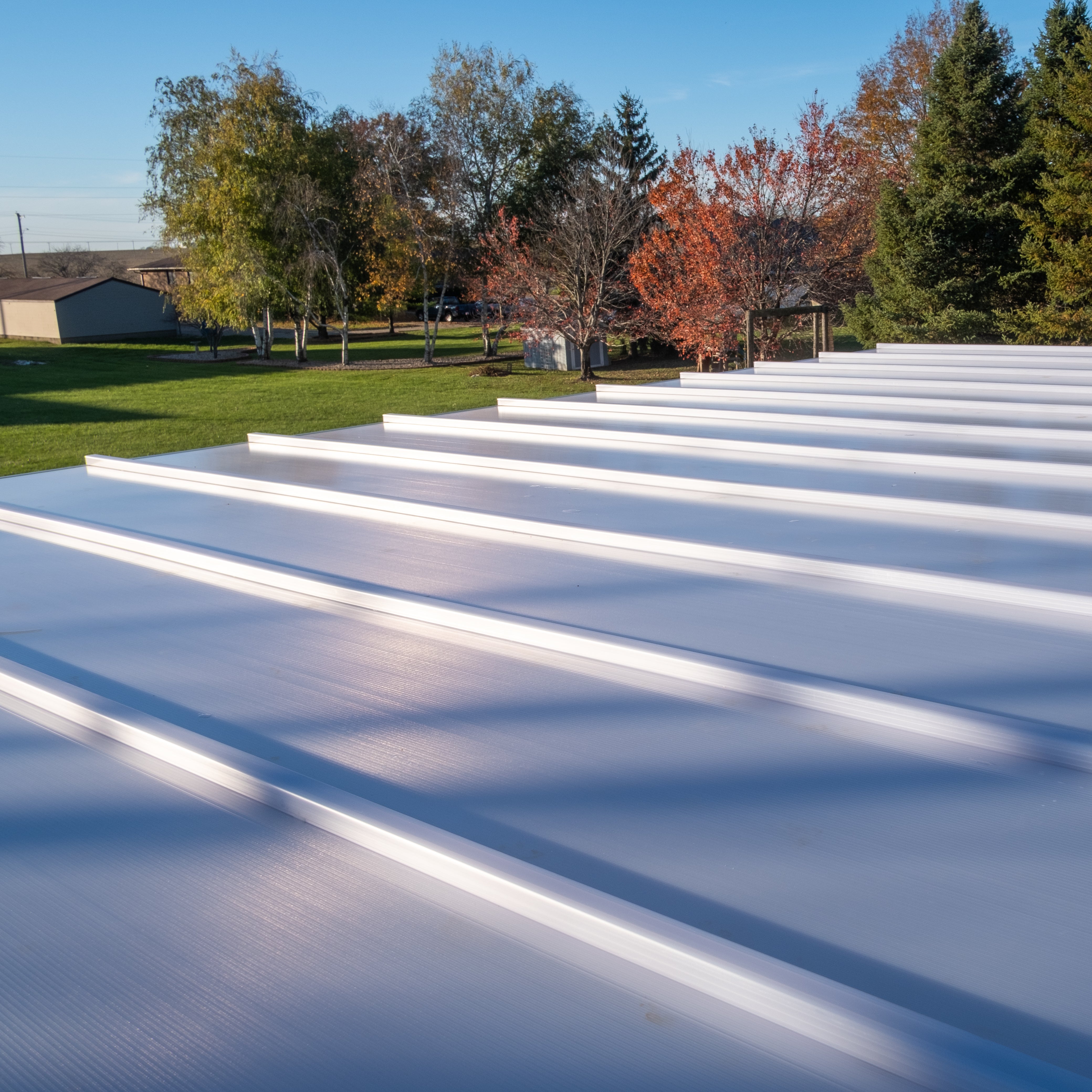
Clear patio covers are commonly understood as patio roof systems that use polycarbonate or another light-transmitting roofing material rather than a conventional opaque roof. At Sunset Pergola Kits, our fully covered patio covers use solid polycarbonate roof panels in white or bronze. They are designed as permanent rainproof structures rather than temporary canopies, retractable roofs, or decorative shade covers.
The defining feature of these patio covers is the solid polycarbonate roof. Unlike an open pergola roof, the panels create continuous overhead coverage designed to keep rain from passing through the roof while providing 100% UV protection. Both white and bronze roof panels can also make the covered patio up to 15 degrees cooler.
Terms such as “clear patio cover,” “transparent patio cover,” and “polycarbonate patio cover” are often used when homeowners are looking for an alternative to a conventional opaque patio roof. It is important to distinguish the search terminology from the actual product: our polycarbonate roof panels are offered in white or bronze, not a fully transparent, glass-like clear panel.
These patio covers are designed for permanent installation. Weight-bearing posts, beams and rafters contain aluminum reinforcement, while the exterior is premium extruded vinyl that does not require painting, staining or sanding. This construction is intended for homeowners seeking a long-term outdoor improvement rather than a lightweight seasonal cover.
A solid-roof patio cover can either connect to a house or stand independently. Attached structures work well when the goal is to extend protected outdoor space directly from the home, while freestanding configurations can create a separate covered area elsewhere on a patio, deck or other suitable installation surface.
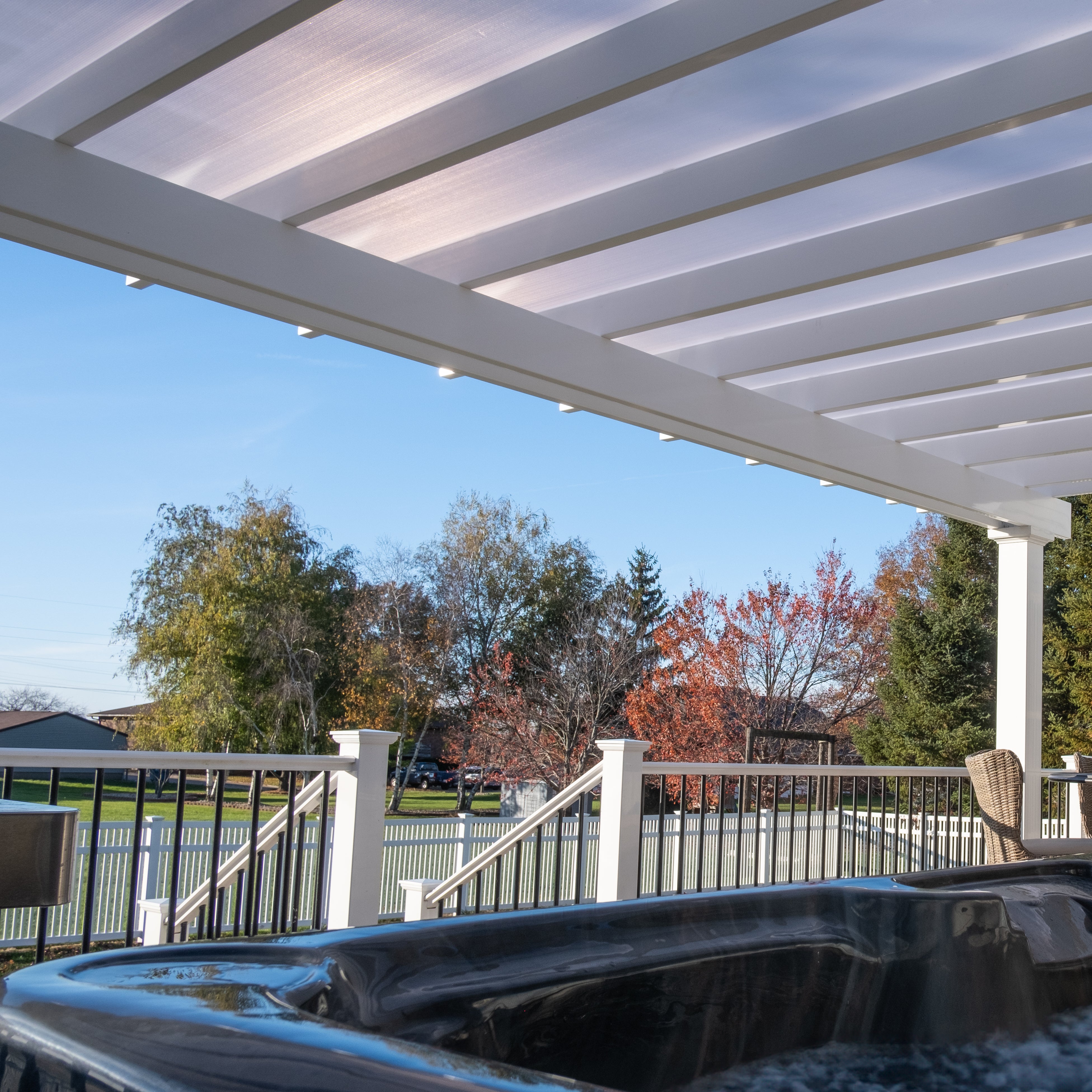
The primary advantage of a polycarbonate patio cover is the combination of complete overhead coverage, UV protection and a durable permanent structure. For homeowners comparing clear patio covers with open-roof pergolas, the most important difference is usually whether the space needs rain protection or primarily shade.
A solid polycarbonate roof prevents rain from passing directly through the patio cover. This makes the system a better fit than a slatted pergola when the primary goal is creating an outdoor area that remains covered during wet weather.
Both available roof panel colors provide 100% UV protection. This gives the patio a fully covered roof while addressing UV exposure rather than relying on spaced roof slats to create partial shade.
The white and bronze polycarbonate roof options can make the patio beneath the cover up to 15 degrees cooler. Actual comfort will still depend on conditions such as outdoor temperature, sun angle, airflow and the location of the structure.
The structural frame is wrapped in premium extruded vinyl that is colored throughout rather than painted on the surface. It does not require the recurring painting, staining or sanding associated with many wood structures and is easy to clean.
A permanent patio cover is fundamentally different from a temporary canopy or inexpensive seasonal shelter. The combination of aluminum-reinforced structural components, a maintenance-free vinyl exterior and a solid roof is intended for long-term use as part of the home's outdoor living space.
The terminology can be confusing because “clear patio cover” usually describes a solid-roof system made with polycarbonate or another light-transmitting roofing material. The more meaningful comparison is often between a solid polycarbonate patio cover and a slatted pergola, since each creates a distinctly different type of outdoor space.
A solid polycarbonate roof provides continuous overhead coverage and is rainproof. A pergola with a slatted roof intentionally leaves spaces between its fixed angled slats, so it provides shade but is not designed to keep rain out.
If keeping the patio covered during rain is a priority, choose a solid-roof patio cover. If rain protection is unnecessary and the priority is controlling the amount of shade while retaining the character of an open pergola, our slatted traditional and modern pergolas are available with approximately 50%, 75% or 90% shade coverage.
Polycarbonate provides an alternative to building a patio roof from conventional opaque roofing materials. Our system uses white or bronze polycarbonate panels and combines the roof with an aluminum-reinforced vinyl structure. The roof panels provide 100% UV protection and can make the patio up to 15 degrees cooler.
Our patio covers use a fixed solid roof. We do not offer motorized louvers, retractable canopies or adjustable roof systems. A fixed system eliminates the motors and moving roof components found in adjustable systems and is appropriate for homeowners who want permanent overhead coverage.
A solid patio roof is not automatically the right choice for every project. If your primary objective is architectural shade rather than rain protection, a traditional pergola can provide 50%, 75% or 90% shade coverage while preserving the open appearance of a slatted roof.

The performance of a permanent clear patio cover depends on more than the roof panel alone. The roof, structural frame and exterior materials work together to create a system designed for long-term outdoor installation.
Two polycarbonate roof colors are available: white and bronze. Both provide a solid rainproof roof, 100% UV protection and the ability to make the covered patio up to 15 degrees cooler. Choosing between them is primarily a matter of the appearance you want for the finished structure.
Aluminum inserts reinforce all weight-bearing posts, beams and rafters. The heavy-duty, rust-proof aluminum provides structural strength while remaining lightweight enough to allow longer spans between posts than a less capable structural system might permit.
The aluminum structure is finished with thick, premium extruded vinyl. The vinyl is colored throughout rather than simply surface-painted and is designed to resist discoloration, deformation and cracking while eliminating the need for routine painting or staining. Homeowners specifically comparing material systems can also explore our vinyl pergola structures.
The patio covers are designed as permanent structures for demanding outdoor conditions. Optional hurricane brackets are recommended in areas that ever experience winds of 80 MPH or higher; adding the hurricane brackets also adds a lifetime wind damage warranty to the pergola.
The patio-cover frame carries a lifetime warranty, while the polycarbonate roof carries a 10-year warranty. The structures are made in the USA using American-sourced materials.
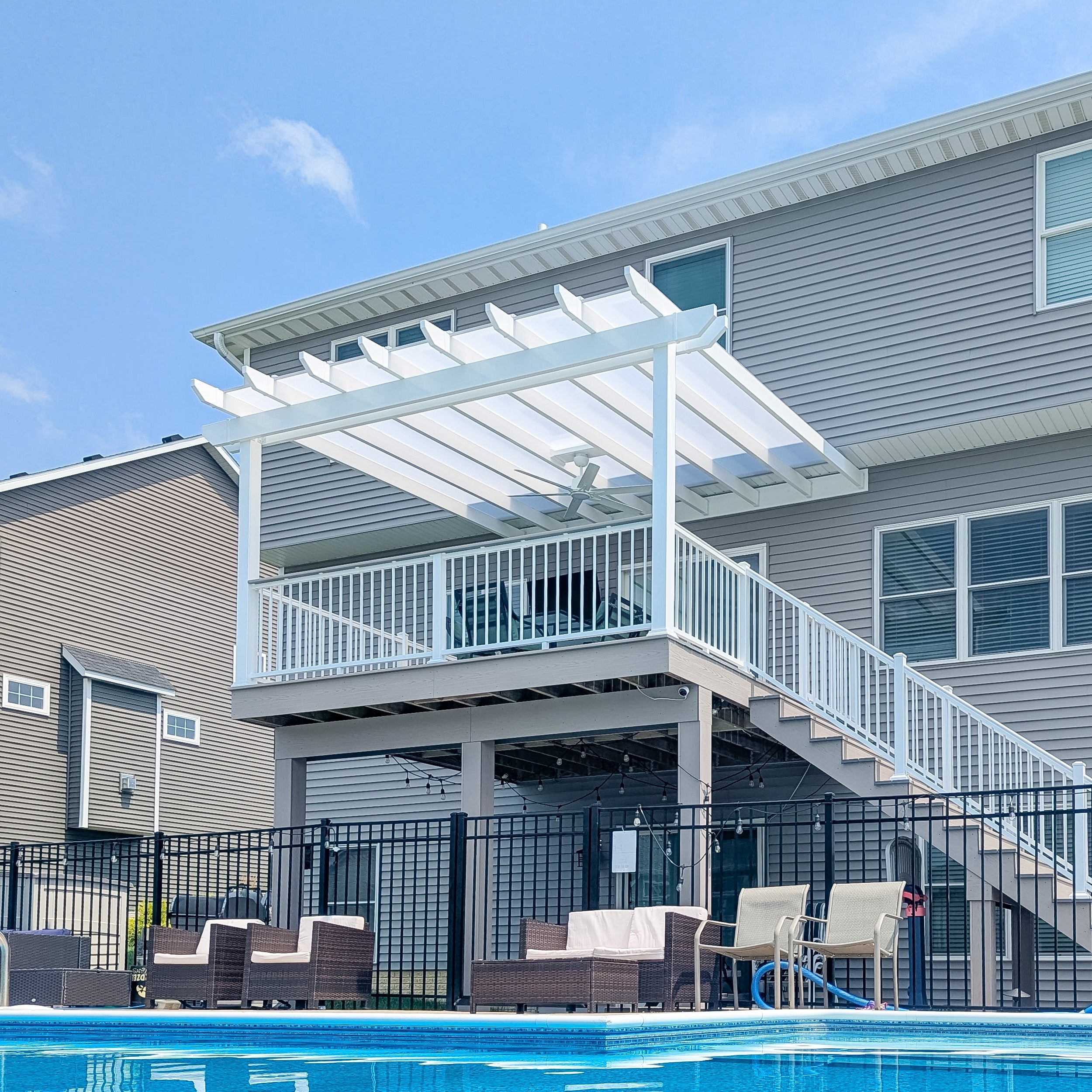
Choosing a patio cover starts with the location and required footprint, then moves to installation configuration, roof color and structural details. Because these are permanent structures, it is worth planning around the finished outdoor space rather than simply choosing the largest size that will fit.
Measure both the width of the area you want to cover and the distance the roof needs to project over the patio. Our standard solid-roof configurations range from 8 to 32 feet in width and from 8 to 20 feet in depth, depending on whether the structure is attached or freestanding and how many posts are required. You can also shop pergolas by dimensions when comparing footprints.
An attached patio cover connects directly to the house or another suitable structure and uses fewer front support posts for comparable sizes. Freestanding patio covers use posts on both sides and can be positioned independently of the house. The better configuration depends on where you want the covered area and whether attachment to the building is appropriate for the project.
Depending on the size and configuration, patio-cover posts can be located at the corners or inset by up to 24 inches. Post placement affects both the visual proportions of the structure and usable clearance around furniture, walkways and other features below the roof.
Wind and other local conditions should be considered before ordering and installing any permanent outdoor structure. Hurricane brackets are available for our solid-roof patio covers and are recommended for locations that ever experience winds of 80 MPH or higher.
These patio covers are DIY-friendly and may be assembled by the homeowner or installed by a contractor. Because requirements vary by location and project, homeowners should determine applicable permitting, structural and installation requirements before beginning construction. Detailed assembly information and videos are available for installation planning.
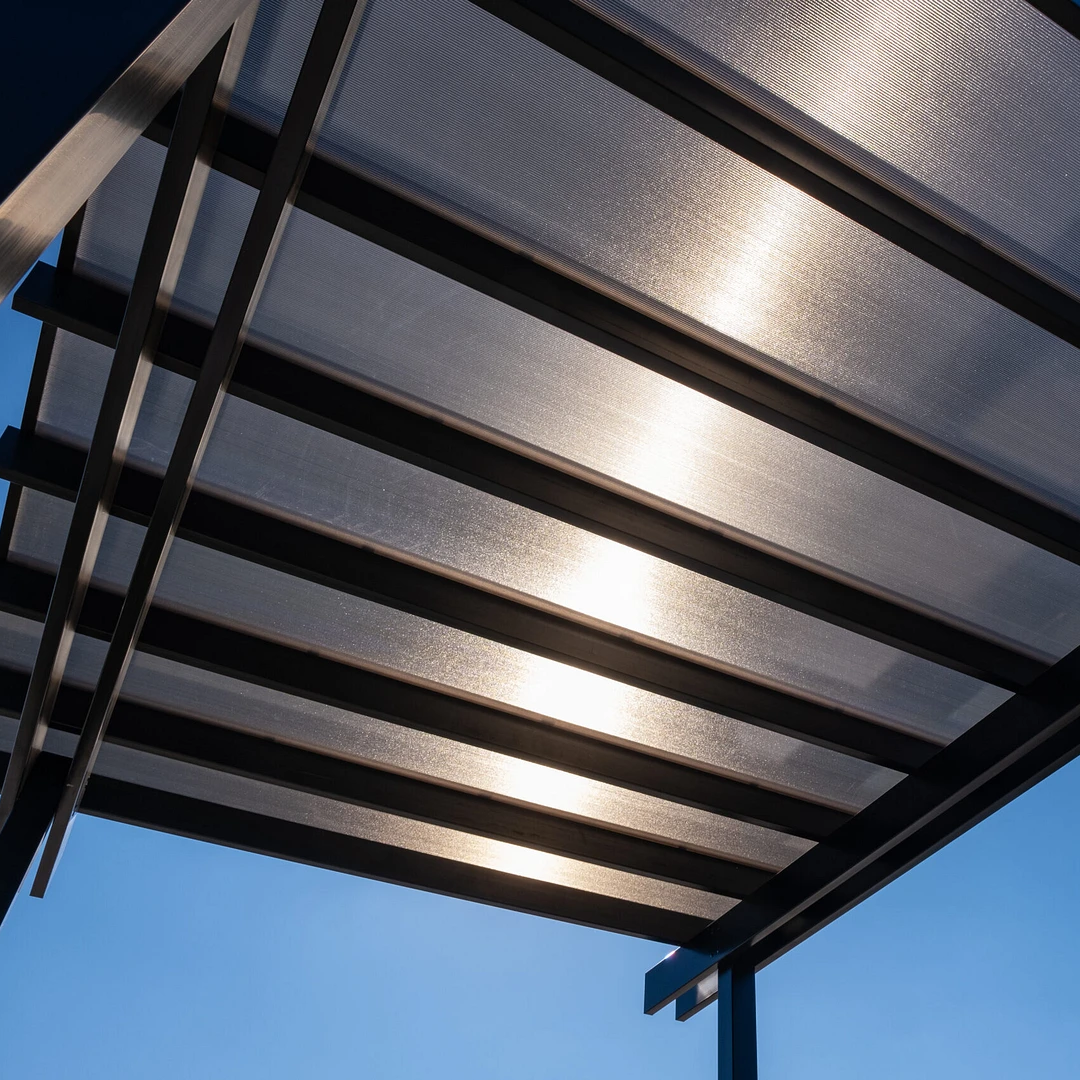
Although the solid polycarbonate roof defines the patio-cover system, the supporting structure can be configured in different sizes, colors and architectural details. These choices allow the cover to be planned around both the dimensions of the patio and the appearance of the home.
Four-post freestanding patio covers are available from 8 to 20 feet wide and 8 to 20 feet deep. Larger six-post versions are available from 24 to 32 feet wide and 8 to 20 feet deep. This allows a solid-roof structure to cover anything from a relatively compact seating area to a substantially wider outdoor living space.
Two-post attached covers are available from 8 to 20 feet along the attachment side and 8 to 20 feet out from the structure. Larger three-post attached versions extend from 24 to 32 feet along the house while maintaining an 8-to-20-foot projection. An attached rainproof patio cover is especially useful when the goal is to create continuous coverage immediately outside the home.
The premium extruded vinyl exterior is available in white, tan or black. White is the most affordable frame color, while black is the highest-priced option. These colors affect the appearance of the structural frame and are separate from the white or bronze choices available for the polycarbonate roof panels.
Available post styles include 5-inch square posts with a lower trim ring, 5-inch square posts with upper and lower trim rings, and 7-inch square posts with upper and lower trim rings. Beam and rafter ends can be finished with scrolled, beveled or flat end caps.
Traditional-style patio covers can be configured with beam and rafter overhangs from 0 to 24 inches. Optional fan mounts are also available, allowing the structure to be planned for a ceiling fan where the installation and electrical setup are appropriate.
The cost of a permanent clear patio cover depends on its dimensions, configuration, frame color and selected options. Rather than comparing these structures only with inexpensive temporary covers, it is more useful to consider the materials, structural design, maintenance requirements and expected service life of the complete system.
Larger patio covers require more structural and roofing material and may require additional posts. Attached and freestanding designs also use different structural configurations, so two covers with similar dimensions may not have identical pricing.
Frame color is one pricing variable: white is the most affordable vinyl color, followed by tan, with black being the most expensive. Post styles, fan mounts, hurricane brackets and other selected configuration details can also affect the final price.
Initial purchase price is only one part of long-term value. The extruded vinyl exterior requires no painting, staining or sanding, while the aluminum reinforcement is rust-proof. For homeowners comparing permanent outdoor structures, avoiding recurring refinishing can be an important consideration over years of ownership.
These systems are designed for homeowners looking for a professional-grade permanent structure, not a $500–$1,500 temporary pergola or canopy. The aluminum-reinforced frame, premium vinyl exterior and solid polycarbonate roof are intended to become a lasting part of the home's outdoor living space.
Homeowners can assemble the patio cover themselves or hire a contractor. The ability to choose the installation approach gives buyers flexibility when planning the overall project cost while retaining the same permanent patio-cover system.
A clear patio cover generally refers to a patio roof that uses polycarbonate or another light-transmitting roofing material instead of conventional opaque roofing. Sunset Pergola Kits uses solid polycarbonate roof panels available in white or bronze rather than fully transparent, glass-like clear panels.
Yes, a solid polycarbonate patio cover is designed to provide continuous overhead rain protection. This differs from our slatted pergolas, which provide shade but are not rainproof.
Yes. Both the white and bronze polycarbonate roof panels offered on our patio covers provide 100% UV protection.
Our white and bronze polycarbonate roof panels can make the covered patio up to 15 degrees cooler. Actual temperatures depend on weather, sun exposure, airflow and other site conditions.
No. Our patio-cover roof panels are available in white or bronze and should not be described as fully transparent like clear glass. Shoppers using “clear patio covers” as a general search term should consider the actual panel appearance when selecting a roof.
Yes. Solid-roof patio covers are available in both attached and freestanding configurations. Attached models are available up to 32 feet along the attachment side and up to 20 feet out from the structure, depending on configuration.
Our four-post freestanding patio covers are available up to 20' x 20'. Six-post freestanding models can be as large as 32' x 20'. See the large freestanding rainproof patio cover for larger configurations.
The structural vinyl exterior is available in white, tan or black. Solid polycarbonate roof panels are available in white or bronze.
Yes. The patio-cover kits are designed to be DIY-friendly, although homeowners can also hire a contractor. Review the assembly information and videos when planning installation.
The structural frame has a lifetime warranty, and the solid polycarbonate roof has a 10-year warranty. Optional hurricane brackets also add a lifetime wind damage warranty to the pergola.


