

MADE IN THE USA
with American products
w/ American products


Home ▸ Back Porch Roof Kits
Back porch roof kits create permanent shade or rain protection over a porch while giving homeowners more control over size, style, and configuration than a one-size-fits-all cover. Choose from aluminum-reinforced structures with maintenance-free vinyl exteriors and either fixed slatted roofs for 50%, 75%, or 90% shade or solid polycarbonate roofs for full rain protection. Kits are available in attached and freestanding configurations for a wide range of back porch layouts. [read more]


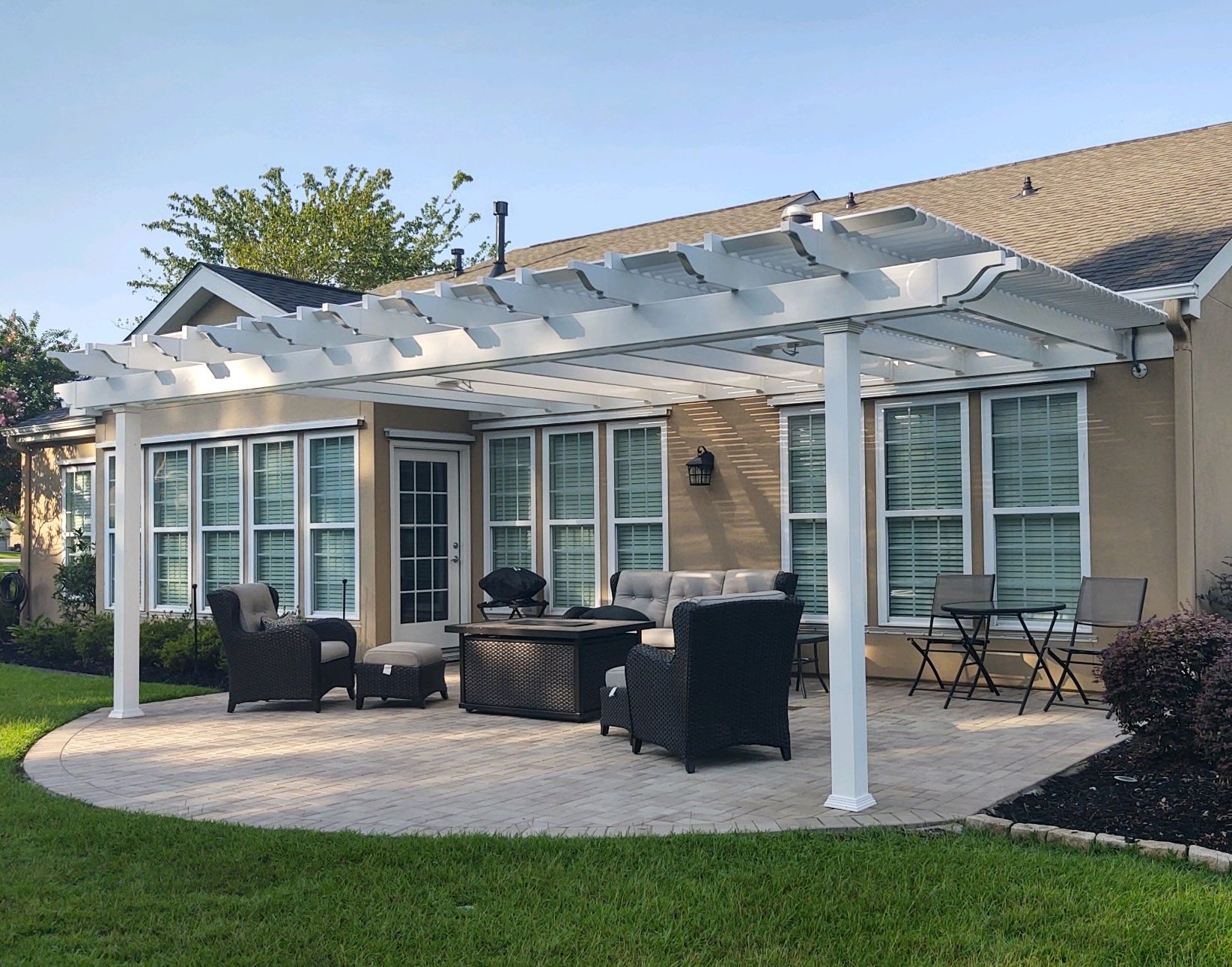
A back porch roof kit is a pre-engineered outdoor structure designed to create permanent overhead coverage for a porch or adjacent outdoor living area. Depending on the roof design, that coverage can provide substantial shade while remaining open to the sky or create a fully covered, rainproof space. Sunset Pergola Kits uses aluminum-reinforced structural components with a premium extruded vinyl exterior for a permanent, low-maintenance alternative to temporary porch covers.
The exact components depend on the model and configuration, but the primary structure includes the posts, beams, rafters, and roof components required for the selected design. Weight-bearing components are reinforced with aluminum, while the exterior surfaces use thick extruded vinyl that is colored throughout rather than painted.
Homeowners can choose between slatted pergola roofs and solid polycarbonate roofs, as well as different sizes, colors, post styles, and other configuration options depending on the model.
A slatted pergola roof uses fixed angled slats to create shade while maintaining the open character associated with a pergola. Traditional and modern pergolas are available with 50%, 75%, or 90% shade coverage. These roofs are designed for shade and are not rainproof.
A rainproof patio cover uses solid polycarbonate roof panels instead. These roofs provide full overhead coverage, 100% UV protection, and can make the patio beneath them up to 15 degrees cooler.
These back porch roof kits are intended for permanent installation rather than seasonal use. The combination of an aluminum-reinforced frame and maintenance-free vinyl exterior is designed for homeowners who want a long-term outdoor structure rather than a lightweight canopy that is regularly removed or replaced.
The kits are designed to be DIY-friendly, but they can also be installed by a contractor. The best approach depends on the size and configuration of the structure, the installation surface, attachment requirements, local building requirements, and the homeowner's construction experience. Assembly information and videos are available on the installation and assembly page.
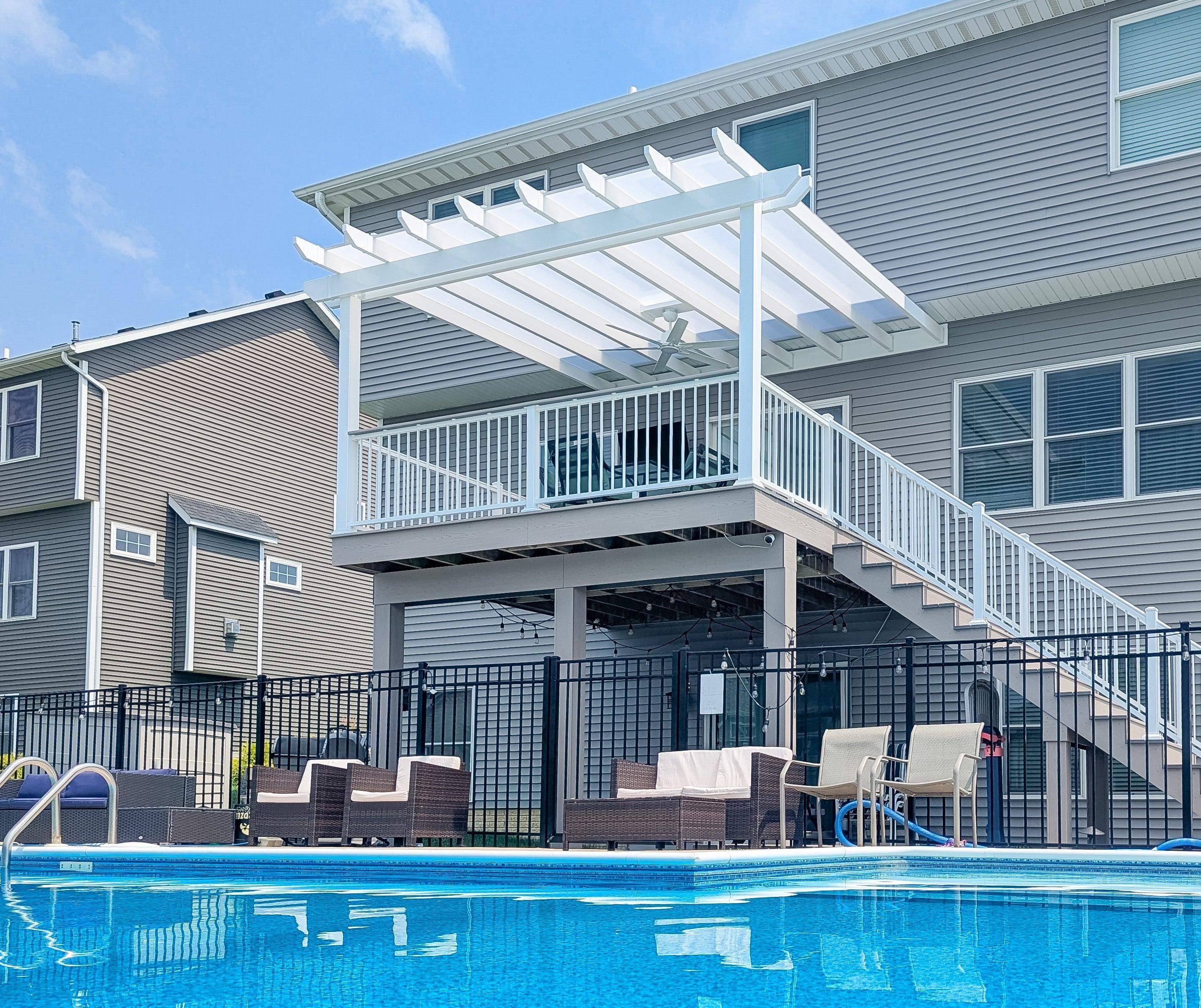
The right back porch roof can make an exposed outdoor area substantially more useful. The key is choosing the type of coverage that matches the problem you want to solve: slatted roofs prioritize shade and an open-air feel, while solid roofs add protection from both sun and rain.
Traditional and modern pergola roofs use fixed angled slats and are available with approximately 50%, 75%, or 90% shade coverage. This allows homeowners to choose how much overhead coverage they want rather than treating all back porches the same.
A porch that already receives moderate shade may benefit from a more open 50% configuration, while a space exposed to stronger direct sun may call for 75% or 90% coverage. Because the slats are fixed rather than motorized, there are no moving roof components to operate or maintain.
If keeping the back porch dry is the priority, a solid polycarbonate patio cover is the appropriate roof type. Unlike a slatted pergola, its continuous roof is designed to provide rain protection.
Polycarbonate roof panels are offered in white or bronze. Both provide 100% UV protection and can make the covered patio area up to 15 degrees cooler.
Overhead coverage can also reduce direct exposure of porch furniture and other items to sun, while a solid roof adds protection from rainfall. The amount of protection depends on roof type, porch orientation, wind-driven weather, and the position of items beneath the structure.
A substantial roof structure can visually define the porch as an outdoor room and make the transition between the home and backyard feel more intentional. Instead of adding a temporary seasonal canopy, a permanent pergola or patio cover becomes part of the home's outdoor architecture.
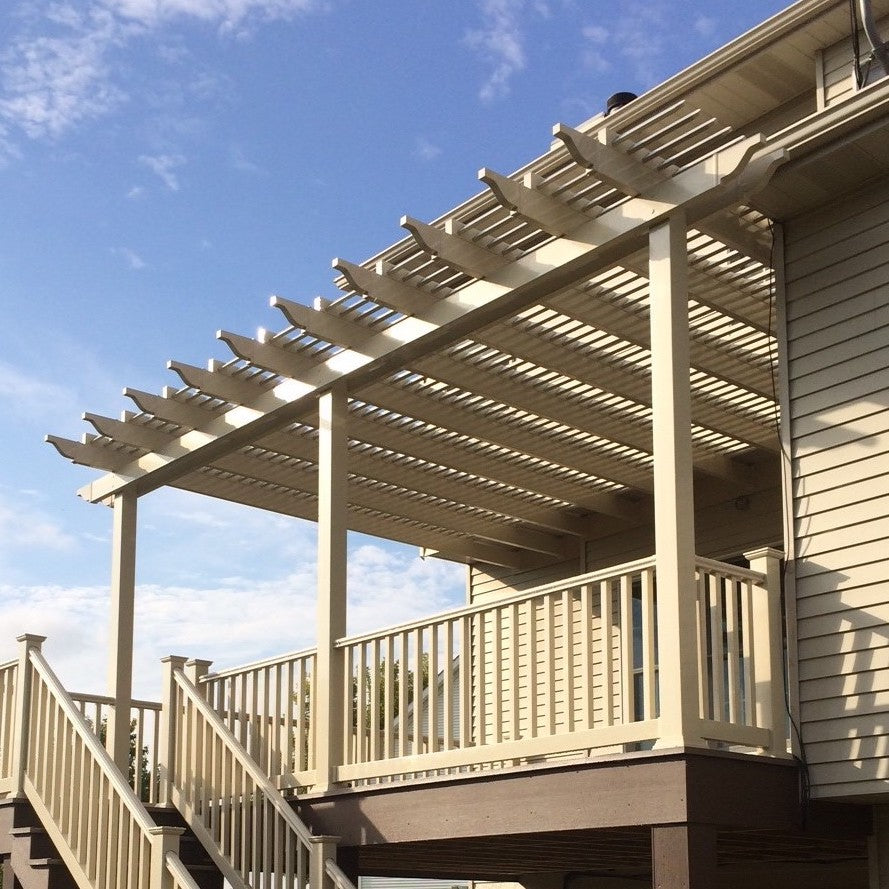
Choosing a back porch roof kit starts with the porch itself: its dimensions, relationship to the house, desired amount of coverage, and how the finished space will be used. Roof type and structural configuration should be decided before appearance details such as post style and decorative end caps.
Measure both the width of the area you want to cover and the distance the roof needs to project outward. Also consider where posts can be located without interfering with stairs, doors, furniture arrangements, walkways, or other features around the porch.
Traditional pergolas provide especially broad sizing flexibility. Depending on post count and configuration, they can range from 8 feet up to 44 feet in either dimension. Homeowners can also shop pergola kits by dimensions when the required footprint is already known.
This is the most important roof decision. Choose a slatted pergola roof if the primary objective is shade while retaining an open-air feel. Choose a solid polycarbonate roof if the goal is a fully covered back porch that can provide protection from rain.
Slatted models offer 50%, 75%, or 90% shade coverage. The solid-roof patio covers use white or bronze polycarbonate panels and are rainproof.
The roof must work with the physical conditions around the porch. Consider door and window locations, existing rooflines, usable headroom, attachment areas, and the location of supporting posts before selecting a final configuration.
Traditional pergola posts can be positioned in the corners or inset by up to 36 inches. Patio-cover posts can be inset up to 24 inches. Modern pergola posts remain at the corners.
Traditional models use beam and rafter overhangs and can be configured with scrolled, beveled, or flat end caps. Modern models use square, flush corners without beam or rafter overhangs or decorative end caps. Both use aluminum-reinforced structural components and premium extruded vinyl exteriors.
For a back porch where architectural detailing is important, compare the full selection of traditional pergolas and modern pergolas before deciding.
A permanent porch structure should be selected and installed with local wind, weather, building-code, and permitting requirements in mind. Traditional pergolas and solid-roof patio covers can be ordered with optional hurricane brackets, which are recommended when the area ever experiences winds of 80 MPH or higher. Adding hurricane brackets provides a lifetime wind damage warranty on those applicable models.
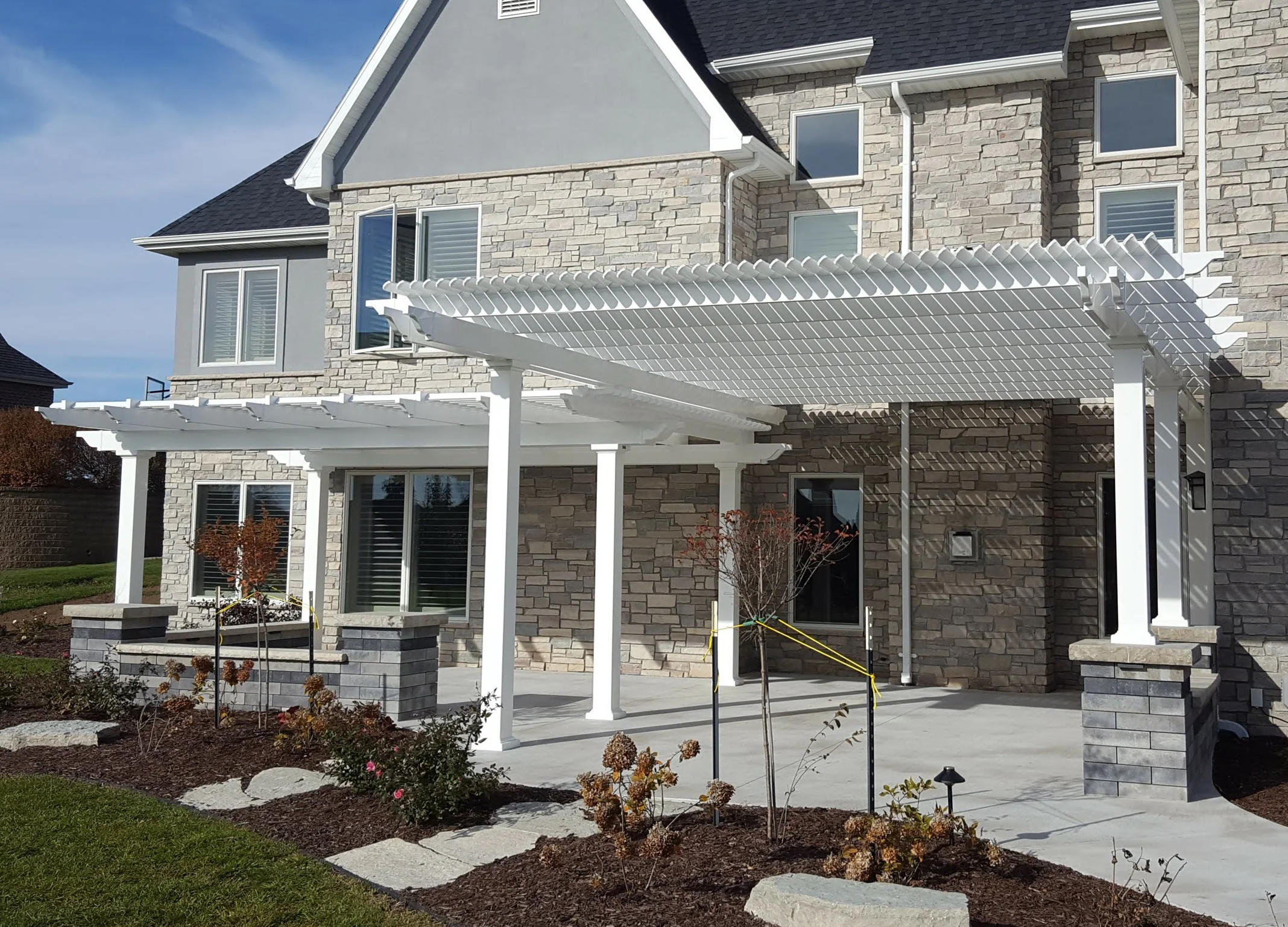
Back porch roof kits can solve different problems depending on how they are configured. Attachment method determines how the structure relates to the house, while roof type determines whether the space receives partial shade or full overhead weather coverage.
An attached structure connects to the house or another suitable structure and uses posts along the outer side. This can create a natural extension of the home's outdoor living space while reducing the number of posts required compared with a comparable freestanding configuration.
A freestanding structure supports itself with posts rather than relying on the house for one side of the structure. This can be useful when attachment is undesirable or when the roof needs to sit independently over a porch, patio, or other outdoor area. Compare the available attached pergolas and freestanding configurations based on the conditions at your home.
Solid and slatted roofs serve different purposes. A solid polycarbonate roof is the choice for a fully covered, rainproof porch. A slatted roof is intended to create substantial shade while allowing the space to retain the appearance and openness of a pergola.
A slatted roof should not be selected with the expectation that it will keep the porch dry. Even the 90% shade configuration remains a slatted structure rather than a waterproof roof.
Traditional pergolas have a more detailed profile, with optional beam and rafter overhangs and a choice of scrolled, beveled, or flat end caps. They also allow posts to be inset from the corners and are available in larger maximum sizes than modern models.
Modern pergolas eliminate the overhangs and decorative end caps in favor of square, flush corners. Posts remain in the corners, creating a clean contemporary geometry.
Start with function rather than appearance. If the porch needs reliable overhead rain protection, focus on solid-roof patio covers. If shade and an open outdoor atmosphere are more important, a pergola with a fixed slatted roof may be the better fit. After establishing the appropriate roof type, compare attachment method, dimensions, style, color, and post configuration.
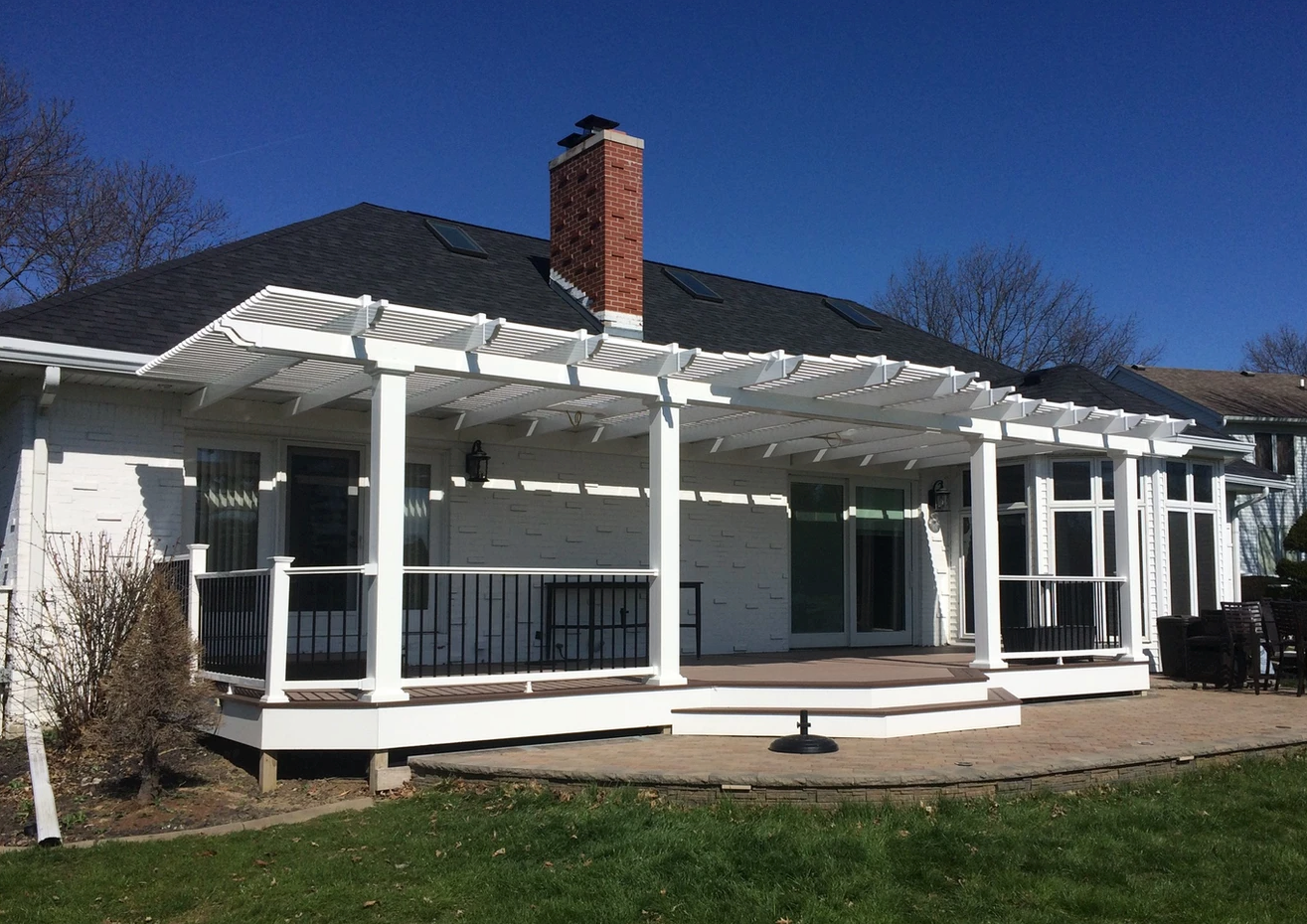
A permanent back porch roof has to function as an outdoor structure year after year, so construction and material quality matter as much as appearance. Sunset Pergola Kits combines structural aluminum reinforcement with a thick extruded vinyl exterior to provide strength without the routine refinishing associated with exposed wood.
The weight-bearing posts, beams, and rafters in traditional, modern, and fully covered models contain aluminum reinforcement. The heavy-duty aluminum provides structural strength while remaining relatively lightweight, allowing longer spans between posts than would otherwise be practical.
Aluminum is also rust-proof, making it well suited to a permanent outdoor structure exposed to changing weather conditions.
The aluminum structure is wrapped in premium extruded vinyl. The vinyl is colored throughout rather than simply receiving a painted outer surface, so there is no recurring need to paint, stain, or sand the structure.
This combination is an important distinction when comparing vinyl pergolas with wood porch structures. It provides the finished appearance of an architectural outdoor structure while minimizing ongoing exterior maintenance.
Traditional and modern pergolas use fixed angled roof slats. Three spacing configurations provide 50% shade with slats spaced 6 inches on center, 75% shade at 4 inches on center, or 90% shade at 3 inches on center.
Solid-roof patio covers use polycarbonate panels instead of shade slats. Homeowners can choose white or bronze roof panels; both provide 100% UV protection and a fully covered, rainproof roof.
White, tan, and black vinyl are available, with white being the most affordable and black the most expensive. Traditional pergolas provide the broadest post selection, including 5-inch square, 7-inch square, and 10-inch round options, depending on configuration. Fully covered patio covers offer 5-inch and 7-inch square post options, while modern pergolas use square posts with a more streamlined design.
Traditional pergolas can also be configured with beam and rafter overhangs from 0 to 36 inches, while solid-roof patio covers allow overhangs from 0 to 24 inches. Scrolled, beveled, and flat end-cap styles are available on these designs.
Optional fan mounts are available on traditional, modern, and solid-roof models. Traditional pergolas and rainproof patio covers can also be equipped with hurricane brackets for high-wind areas. Hurricane brackets are recommended where winds may reach 80 MPH or higher and add a lifetime wind damage warranty to the applicable pergola or patio cover.
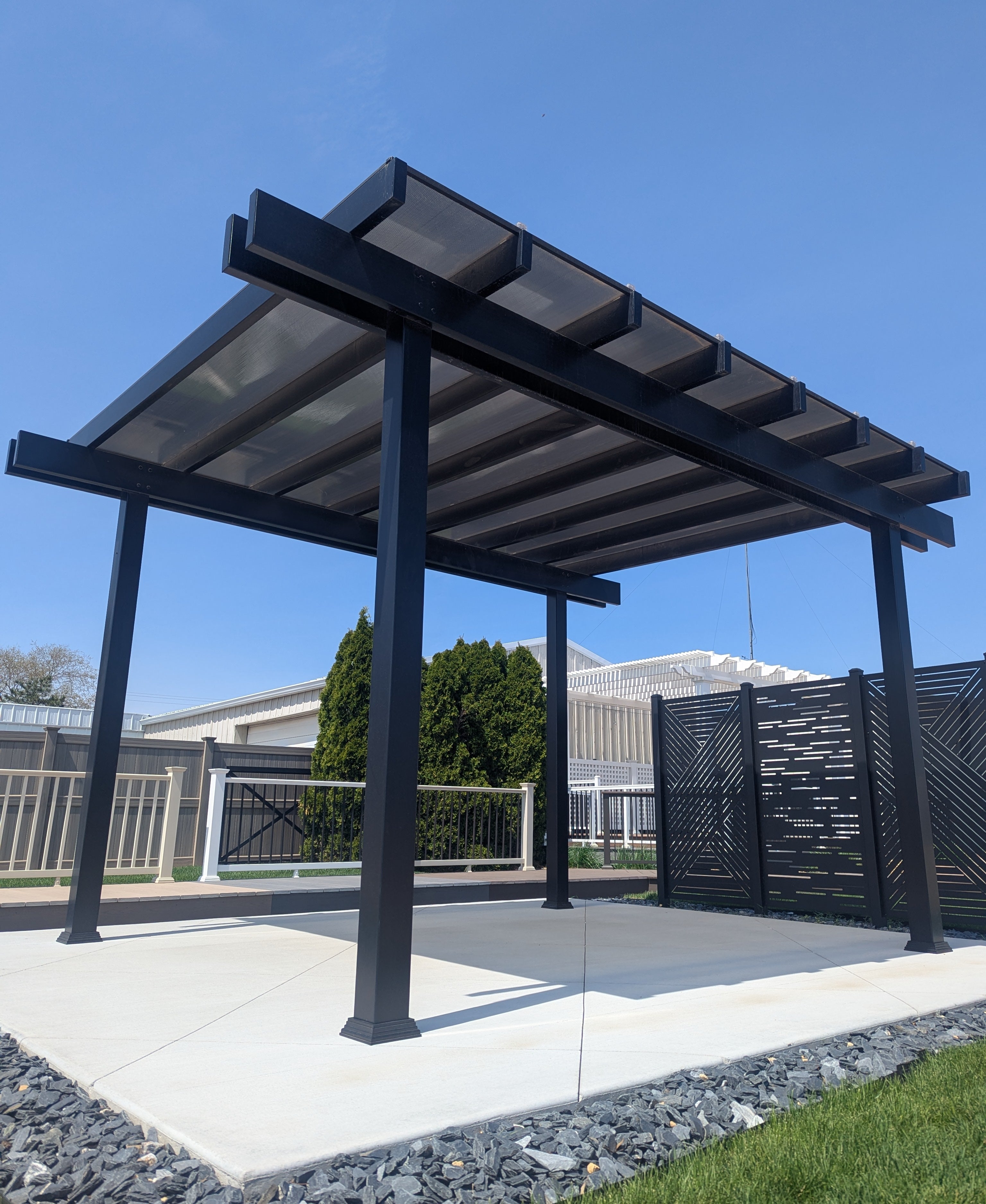
There is no single ideal back porch roof size or price because both depend on the footprint and configuration of the project. The useful comparison is not simply the initial price of one structure against another, but what the selected roof provides in coverage, construction, maintenance requirements, and expected service life.
For an attached roof, consider both the width running along the house and the distance the roof projects outward over the porch. Traditional attached pergolas can cover dimensions ranging from 8 feet up to 44 feet depending on orientation and post configuration. Modern attached models can reach up to 32 feet, while attached solid-roof patio covers are available up to 32 feet along the structure and up to 20 feet outward.
Freestanding traditional models can reach up to 44 by 44 feet with the appropriate multi-post configuration. Freestanding modern pergolas reach up to 32 by 32 feet, while freestanding solid-roof patio covers reach up to 32 by 20 feet.
Size is an important cost factor because larger structures require more material and, depending on dimensions, additional posts and structural components. Roof type, vinyl color, post style, decorative details, shade coverage, fan mounts, and applicable wind options can also affect the final configuration and price.
Initial price is only one component of long-term value. A wood porch roof or pergola may require periodic painting or staining, while the extruded vinyl exterior on these kits does not require either. Aluminum reinforcement is also rust-proof and eliminates the need to maintain exposed structural steel.
These kits are designed for homeowners looking for professional-grade permanent shade or roof structures, not the $500–$1,500 temporary pergola category. The aluminum-reinforced construction, thick extruded vinyl, permanent installation, and U.S. manufacturing place them in a different product category from lightweight seasonal structures.
Traditional and modern pergolas include a lifetime warranty. Solid-roof patio covers include a lifetime warranty on the frame and a 10-year warranty on the polycarbonate roof. The structures are made in the USA using American-sourced materials and are designed as long-term additions to an outdoor living space rather than consumable products that are expected to be replaced every few years.
“Back porch roof” can describe several very different types of products. Comparing them by function makes it easier to determine whether a permanent pergola or solid patio cover fits the project better than an awning, retractable canopy, louvered system, or site-built roof.
An awning generally projects outward from a building to create overhead coverage without the post-and-beam architecture of a pergola or patio cover. A pergola or solid-roof patio cover creates a more substantial outdoor structure supported by an aluminum-reinforced frame and posts.
The appropriate choice depends on whether the goal is simply overhead coverage or the creation of a defined, permanent outdoor living structure.
A pergola can function as a back porch roof when shade is the primary objective, but the terminology can be confusing. Traditional and modern pergolas use fixed angled slats and are not rainproof. A “pergola with a solid roof” is more commonly described as a patio cover and uses continuous polycarbonate panels to provide rain protection.
Homeowners who specifically want an open shade structure can compare pergolas with slatted roofs.
Retractable and louvered roofs use moving components to alter the amount of overhead coverage. Sunset Pergola Kits does not offer motorized, retractable, or adjustable louvered systems. Roof slats on traditional and modern pergolas are fixed, while the polycarbonate patio-cover roof is permanently covered.
A fixed design has no roof motors or moving mechanisms that need to operate correctly for the structure to provide its intended shade or coverage.
A site-built porch roof is constructed from individually sourced building materials according to a project-specific design. A kit packages a defined structural system and compatible components, making it possible for an experienced homeowner or contractor to assemble the structure without designing every component from scratch.
Regardless of which approach is chosen, homeowners should verify foundation, attachment, permitting, and local building requirements for their specific property before installation.
For substantial shade with an open-air feel, choose a fixed slatted pergola and select the appropriate shade percentage. For a back porch that needs overhead rain protection, choose a solid polycarbonate patio cover. If adjustable louvers, retractable fabric, or motorized operation are essential requirements, a different product category will be necessary.
The best roof depends on the desired coverage. A fixed slatted pergola roof is appropriate for shade and an open-air feel, while a solid polycarbonate patio cover is better when the porch needs rain protection.
Solid polycarbonate patio cover kits are rainproof. Traditional and modern pergola roofs use fixed angled slats and are designed for shade, not rain protection.
Yes. Traditional pergolas, modern pergolas, and solid-roof patio covers are available in attached configurations. Whether attachment is appropriate for a specific home depends on the structure and installation conditions.
Yes. Traditional pergolas, modern pergolas, and solid-roof patio covers are also available as freestanding structures, allowing the roof to be supported independently rather than attached to the house.
Traditional and modern pergola kits offer 50%, 75%, or 90% shade coverage. The corresponding shade-slat spacing is 6, 4, or 3 inches on center.
Traditional, modern, and solid-roof models use aluminum reinforcement in the weight-bearing posts, beams, and rafters with a premium extruded vinyl exterior. The vinyl is colored throughout and does not require painting or staining.
Yes. The kits are designed to be DIY-friendly, although homeowners can also hire a contractor. Installation requirements vary by size, configuration, attachment method, site conditions, and local codes; see the assembly information and videos for additional guidance.
Available sizes depend on the model. Traditional pergolas offer the broadest range, reaching up to 44 by 44 feet in certain freestanding configurations, while solid-roof patio covers are available up to 32 by 20 feet. Use the pergola size guide to browse by dimensions.
The extruded vinyl exterior is designed to be virtually maintenance-free and does not require painting, staining, or sanding. Routine cleaning may still be needed to remove normal outdoor dirt and debris.
No. Sunset Pergola Kits does not offer motorized louvers, adjustable roof systems, retractable canopies, or canvas roofs. Pergola roof slats are fixed, while rainproof patio covers use a fixed solid polycarbonate roof.


