

MADE IN THE USA
with American products
w/ American products


Home ▸ Aluminum-Frame Pergolas
Our aluminum frame pergolas combine a heavy-duty aluminum-reinforced structure with a maintenance-free extruded vinyl exterior for a permanent outdoor shade solution. Choose from traditional or modern slatted-roof pergolas with 50%, 75%, or 90% shade coverage, or select a fully covered patio cover with a solid polycarbonate roof for rain protection. All of our pergolas are made in the USA with America-sourced materials and backed by a lifetime warranty on the pergola frame. [read more]


An aluminum frame pergola is a permanent outdoor structure built with aluminum-reinforced weight-bearing components and designed to provide functional shade or weather protection. Our pergolas use aluminum inserts inside the structural components while the exterior is finished with thick, premium extruded vinyl that does not require painting, staining, or sanding.
Our traditional and modern pergolas use aluminum inserts in the posts, beams, and rafters—the components responsible for carrying the structural load. This aluminum reinforcement provides high strength with relatively low weight, allowing for longer spans between posts while maintaining a substantial, permanent structure.
Although commonly described as aluminum pergolas, our structures are technically aluminum-reinforced vinyl pergolas: the structural components contain aluminum reinforcement and the exterior is premium extruded vinyl. The vinyl is colored throughout rather than painted only on the surface, so there is no paint or stain to maintain.
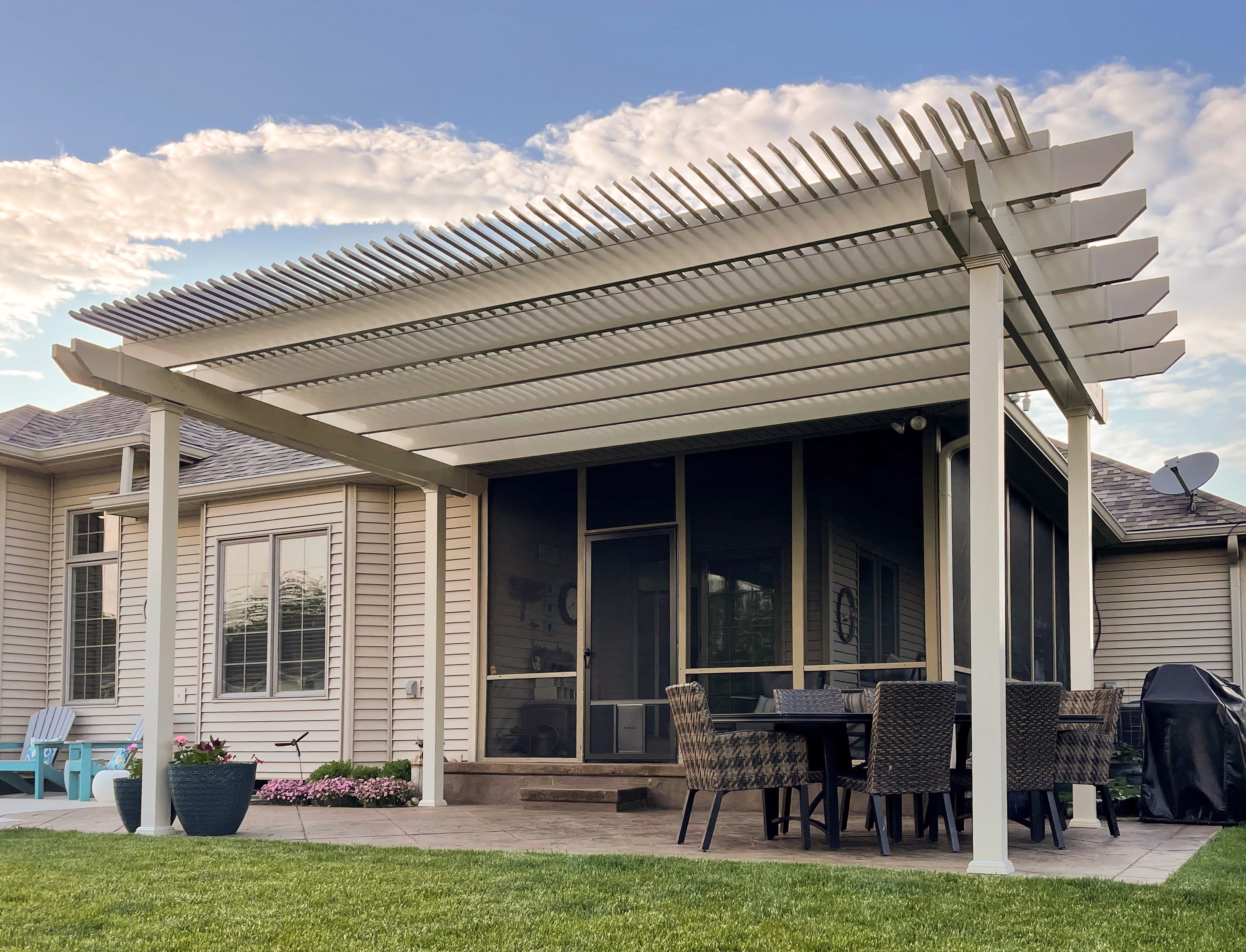
Traditional and modern pergolas use fixed angled roof slats, also called shade purlins, to provide open-air shade. You can choose 50%, 75%, or 90% shade coverage based on the spacing of the slats. These roofs are designed for shade, not rain protection.
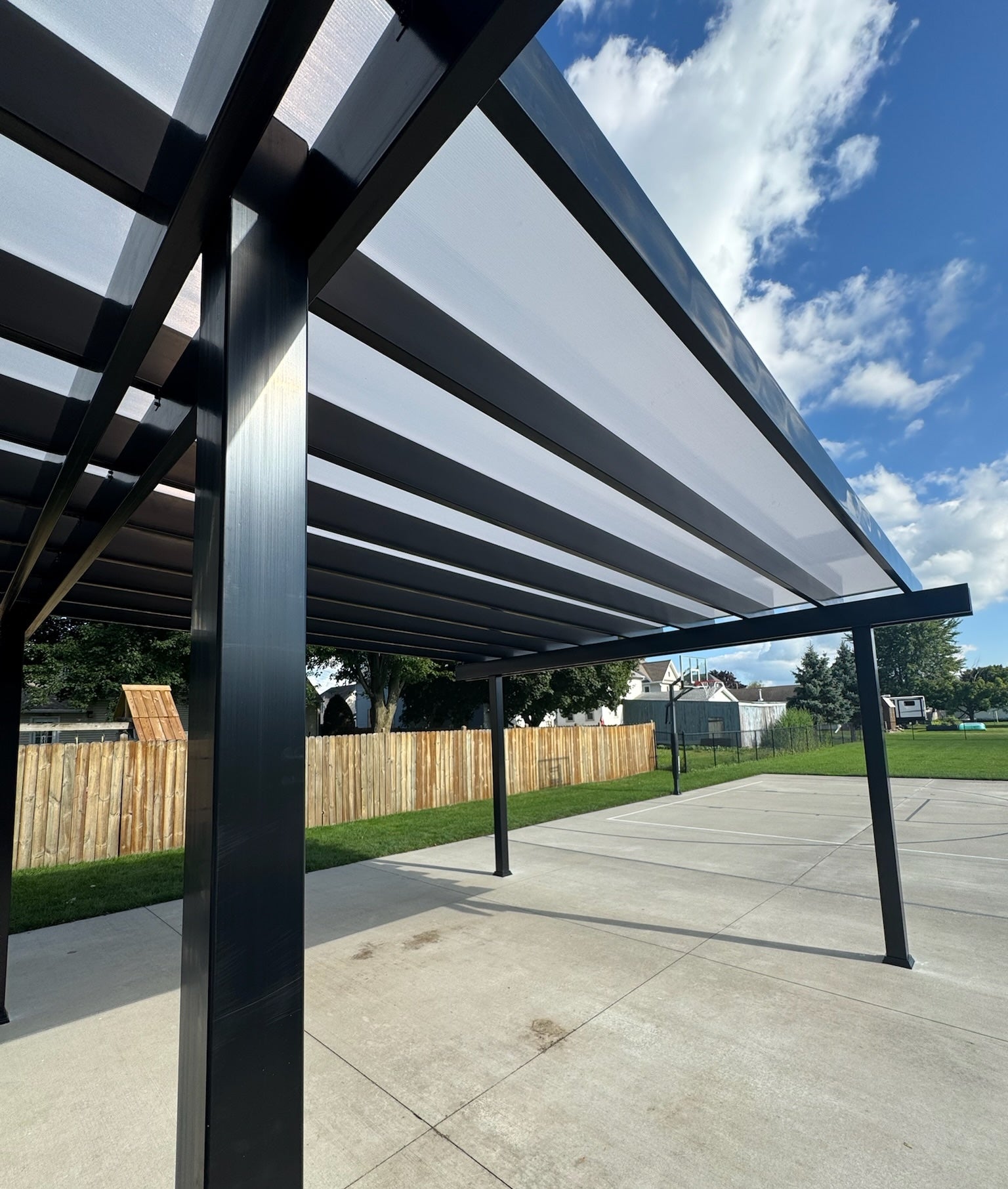
For a completely covered outdoor area, our rainproof patio covers use solid polycarbonate roof panels. These are often called covered pergolas or pergolas with a solid roof, but patio cover is the more common term for this type of structure.
Our pergola kits are designed for permanent installation on a properly prepared site. They are intended to provide functional, long-term shade or weather protection rather than serve as temporary decorative structures.
An aluminum-reinforced pergola is designed to solve several common problems associated with outdoor structures, including maintenance, structural strength, and long-term durability. The combination of aluminum reinforcement and extruded vinyl creates a permanent shade structure without many of the maintenance requirements associated with wood.
The aluminum reinforcement is located inside the weight-bearing structural components, including posts, beams, and rafters on traditional and modern pergolas. The thicker aluminum reinforcement provides strength for longer spans between posts and helps resist bowing, bending, and structural deformation.
Aluminum is naturally rust-proof, making it well suited to permanent outdoor construction. The exterior extruded vinyl is also designed to withstand outdoor exposure without requiring paint or stain, providing a low-maintenance finish for the life of the structure.
The premium extruded vinyl exterior is colored throughout rather than painted as a surface coating. Routine maintenance does not involve sanding, staining, or repainting; cleaning the exterior is generally all that is required to keep the structure looking its best.
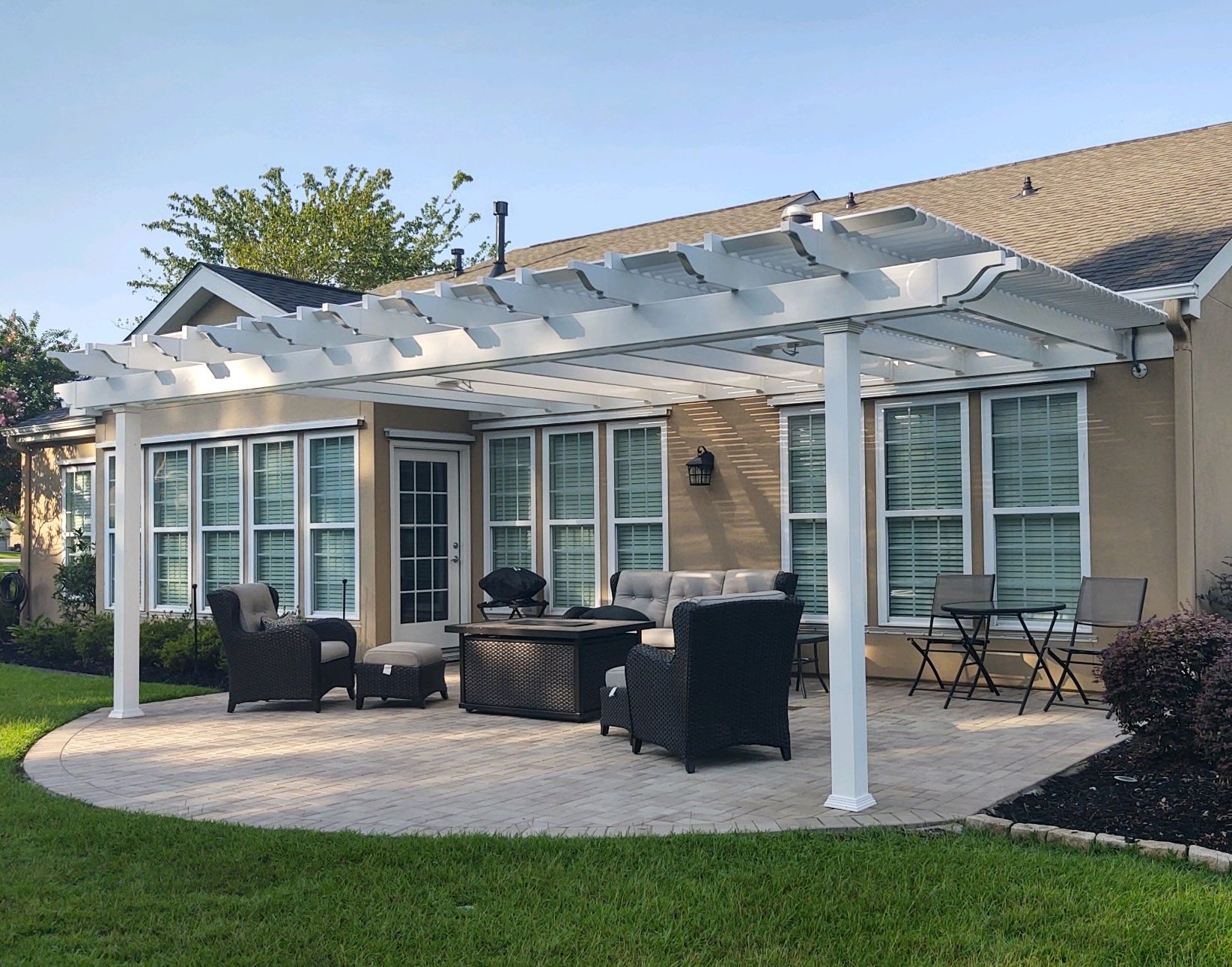
Traditional and modern pergolas are designed to provide meaningful shade rather than simply create a decorative overhead framework. Three fixed slat-spacing choices provide approximately 50%, 75%, or 90% shade coverage, allowing homeowners to choose the amount of sunlight they want beneath the pergola.
These pergolas are built as permanent outdoor structures rather than inexpensive temporary products intended for replacement after a few seasons. A lifetime frame warranty supports the long-term design, while optional hurricane brackets are available on traditional pergolas and patio covers for areas that experience winds of 80 MPH or more.
Material choice affects a pergola's maintenance requirements, structural performance, appearance, and expected service life. When comparing an aluminum frame pergola with wood, vinyl-only, or other construction methods, it is important to look beyond the visible exterior and consider what provides the structural strength.
Wood pergolas can provide a traditional appearance, but wood typically requires ongoing maintenance such as staining, sealing, or painting. Our aluminum-reinforced pergolas use a maintenance-free extruded vinyl exterior, eliminating the need for routine staining or painting while providing aluminum reinforcement inside the structural components.
The exterior appearance does not necessarily reveal how a pergola is constructed internally. Our pergolas combine an extruded vinyl exterior with aluminum reinforcement in the load-bearing structure, providing substantially different structural characteristics from a pergola made entirely from vinyl without internal aluminum reinforcement.
Not all aluminum pergola frames are constructed the same way. The thickness and placement of the aluminum reinforcement affect structural strength, span capability, and resistance to bending. Our heavier-duty aluminum reinforcement is designed to support longer spans between posts while creating a permanent structure engineered for demanding outdoor conditions.
Lower-priced temporary pergolas can make sense for shoppers seeking an inexpensive short-term solution. A permanent aluminum-reinforced pergola is better suited to homeowners who want a substantial structure intended to remain in place for years, provide functional shade, and complement a high-quality home, deck, or patio.
Our aluminum-reinforced pergolas are available in multiple configurations so you can choose the structure, roof coverage, dimensions, and architectural details that fit your outdoor space. Options vary by pergola type, so review the individual product specifications before ordering.
Traditional pergolas feature beam and rafter overhangs, optional decorative end caps, and posts that can be positioned in corners or inset up to 36 inches. Modern pergolas have a clean contemporary appearance with square flush corners, no beam or rafter overhangs, no end caps, and posts positioned in the corners.
Explore our traditional pergolas for a more classic architectural style or browse our modern pergolas for a streamlined contemporary design.
Traditional and modern pergolas use fixed angled slats with three spacing choices. Six-inch on-center spacing provides approximately 50% shade, four-inch spacing provides approximately 75% shade, and three-inch spacing provides approximately 90% shade. These are fixed slatted roofs and are not retractable, louvered, or motorized.
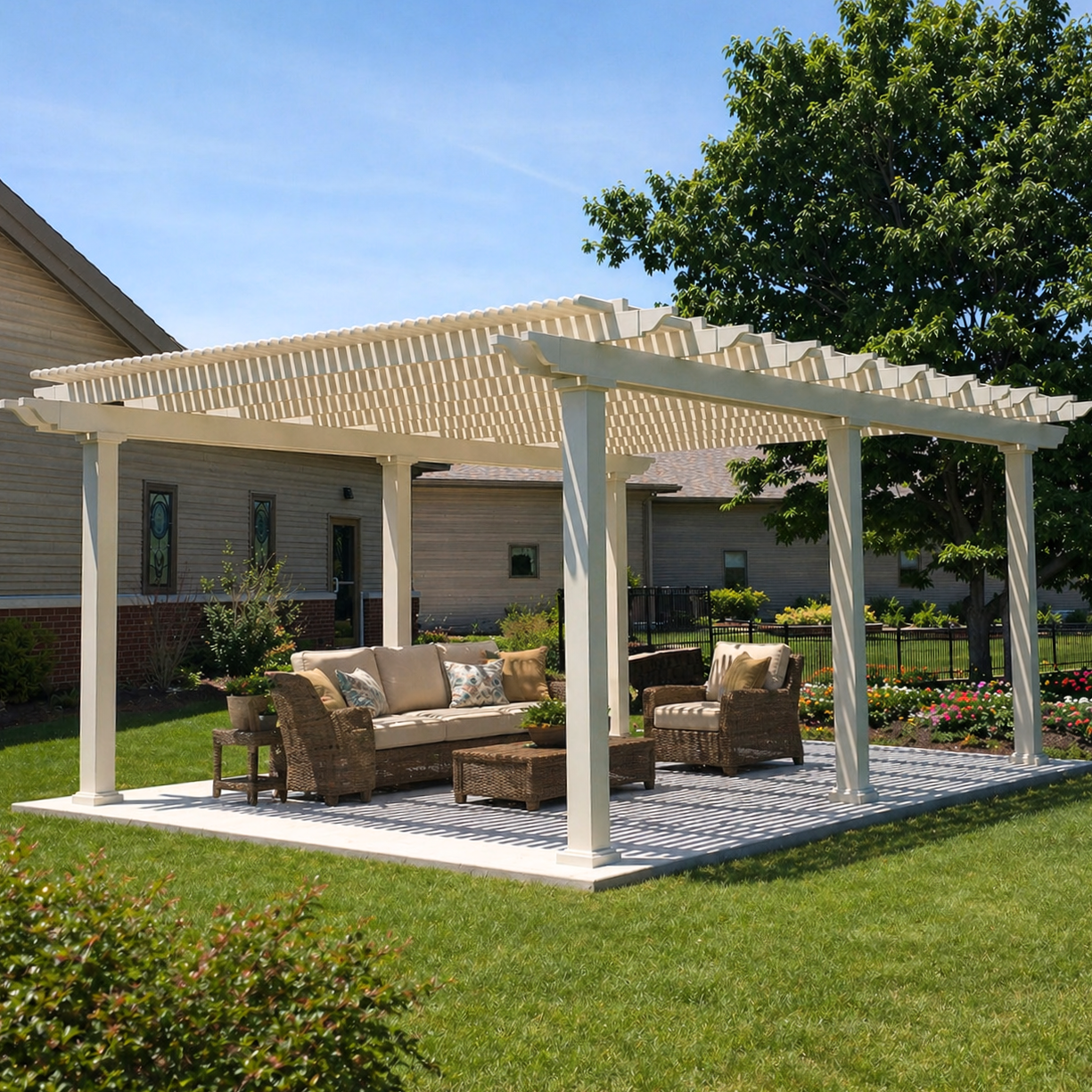
Traditional and modern pergolas are available as either freestanding structures or attached to a house or other suitable structure. An attached design can extend an existing outdoor living area, while a freestanding pergola can be positioned independently on a patio, deck, or other appropriate installation area.
See our freestanding pergolas and attached pergolas to compare these configurations.
Traditional, modern, and fully covered structures are available in white, tan, or black extruded vinyl. White is the most affordable color option, while black is the most expensive. Post styles and trim details vary by product type, including several square post configurations and, on traditional and patio cover models, a 10-inch round post option where specified.
Optional fan mounts are available on traditional pergolas, modern pergolas, and patio covers. Hurricane brackets are available on traditional pergolas and patio covers and are recommended for areas that experience winds of 80 MPH or more. Adding hurricane brackets provides a lifetime wind-damage warranty on the pergola, subject to the applicable warranty terms.
The right aluminum frame pergola depends primarily on the space available, the amount of shade or weather protection you need, and the architectural style you prefer. Start with the intended footprint and installation method, then select the roof configuration and design details that fit the property.
Available dimensions vary by pergola type and post configuration. Traditional freestanding pergolas range from smaller 8-by-8-foot configurations to structures up to 44 by 44 feet, while modern pergolas range from 8 by 8 feet to configurations up to 32 by 32 feet. Fully covered patio covers and eyebrow pergolas have their own size ranges.
For help comparing available dimensions, use our pergola size guide to shop by width and depth.
An attached pergola is designed to connect to a house or another suitable structure and can extend an existing patio or deck. A freestanding pergola stands independently and can provide shade wherever the site allows for proper permanent installation. Eyebrow/garage pergolas are the exception: they are always attached using the included ledger board.
For open-air pergolas, consider how much sunlight you want to filter. The 50% configuration allows more sunlight through, while 75% provides greater shade and 90% provides the most shade available with the fixed slatted roof. If you need protection from rain rather than filtered sunlight, choose a fully covered patio cover with a solid polycarbonate roof.
Traditional pergolas are suited to homeowners who want beam and rafter overhangs, optional decorative end caps, and more flexibility in post placement. Modern pergolas use clean square lines, flush corners, corner-mounted posts, and no decorative end caps for a contemporary appearance.
These are permanent structures and require appropriate site preparation and secure installation. The kits are designed to be DIY-friendly, but homeowners can also hire a qualified contractor for installation. Review the assembly information and videos before ordering so you can evaluate the installation process and site requirements.
The cost of an aluminum frame pergola varies according to its size, configuration, design, roof type, color, post style, and selected options. Because these structures are engineered and configured for individual outdoor spaces, comparing only the initial purchase price can overlook important differences in materials, durability, maintenance, and expected service life.
Size is one of the primary factors affecting price because larger structures require more structural components and may require additional posts. Other factors include traditional versus modern design, freestanding versus attached installation, vinyl color, post style, overhangs, shade coverage, and optional features such as fan mounts or hurricane brackets where available.
A slatted pergola and a fully covered patio cover serve different purposes. Slatted roofs provide adjustable levels of fixed shade through different purlin spacing, while solid polycarbonate roofs provide rainproof coverage. Patio covers also include a 10-year roof warranty in addition to a lifetime frame warranty.
The purchase price of the kit is separate from any contractor installation costs. Our pergolas are designed to be DIY-friendly for homeowners who are comfortable with the assembly process, while professional installation is an option for those who prefer to have a contractor handle the work.
A permanent pergola should be evaluated over its expected ownership period rather than solely by its initial cost. Aluminum reinforcement, a thick extruded vinyl exterior, minimal maintenance requirements, and a lifetime frame warranty are intended to provide long-term value without the recurring painting, staining, or sanding associated with many wood structures.
Our pergolas are designed for homeowners who want a permanent, professional-grade outdoor structure rather than a temporary or disposable shade product. The combination of aluminum-reinforced structural components, premium extruded vinyl, American manufacturing, and long-term warranty coverage distinguishes these pergolas from lower-cost alternatives.
We use substantial aluminum reinforcement in the weight-bearing components of traditional and modern pergolas rather than relying on vinyl alone for structural strength. The design is intended to provide high strength, longer spans between posts, and resistance to bowing, bending, and breaking under demanding outdoor conditions.
The vinyl exterior is extruded and colored throughout rather than painted as a thin surface layer. It is designed to resist discoloration, deformation, and cracking while eliminating the need for painting, staining, or sanding. The result is a virtually maintenance-free exterior that is easy to clean.
Our pergola kits are made in the USA using America-sourced materials. This domestic manufacturing approach is part of the product's positioning as a permanent, professional-grade structure rather than an inexpensive imported temporary pergola.
Traditional, modern, and eyebrow/garage pergolas include a lifetime warranty. Fully covered patio covers include a lifetime warranty on the frame and a 10-year warranty on the polycarbonate roof. Review the applicable warranty terms for the specific configuration you are considering.
Our pergolas use fixed roof systems rather than motorized, retractable, or adjustable louvered mechanisms. That means there are no motors or moving roof parts to operate or replace. Traditional and modern pergolas provide fixed slatted shade, while patio covers use solid polycarbonate roof panels for rain protection.
An aluminum frame pergola is an outdoor structure with aluminum reinforcement in its weight-bearing structural components. Our traditional and modern pergolas use aluminum inserts inside the posts, beams, and rafters, with a premium extruded vinyl exterior.
Our pergolas are aluminum-reinforced rather than entirely aluminum. The structural components contain aluminum reinforcement, while the exterior is premium extruded vinyl. This construction combines structural aluminum strength with a maintenance-free vinyl exterior.
Our extruded vinyl exterior does not require painting, staining, or sanding. Routine cleaning is generally all that is needed to maintain the exterior, making the structures virtually maintenance-free.
Traditional and modern pergolas have fixed slatted roofs designed for shade and are not rainproof. For full rain protection, choose a rainproof patio cover with a solid polycarbonate roof.
Traditional and modern pergolas are available with approximately 50%, 75%, or 90% shade coverage. The difference comes from fixed slat spacing of 6, 4, or 3 inches on center, respectively.
Yes. Traditional and modern pergolas are available in both attached and freestanding configurations. Eyebrow/garage pergolas are always attached using the included ledger board.
Size availability depends on the pergola type and configuration. Traditional, modern, and patio cover models have defined size ranges and post configurations, while eyebrow/garage pergolas can be ordered in lengths from 4 to 60 feet in 4-foot increments.
No. Our pergolas do not use motorized, retractable, or adjustable louvered roof systems. Traditional and modern models use fixed slatted roofs, while patio covers use solid polycarbonate panels.
Yes. Our pergola kits are designed to be DIY-friendly, although some homeowners choose to hire a contractor. Review the assembly information and installation videos before beginning a project.
Traditional, modern, and eyebrow/garage pergolas have a lifetime warranty. Fully covered patio covers have a lifetime warranty on the frame and a 10-year warranty on the polycarbonate roof. See our frequently asked questions for additional product information.


