

MADE IN THE USA
with American products
w/ American products


If you're considering a permanent outdoor shade structure, understanding what a freestanding pergola is can help you decide whether it belongs in your backyard. The term describes how the structure is supported, but that distinction affects where it can go, how you can use it, and what installation involves. This guide explains the defining features of a freestanding pergola, the outdoor experiences it can create, and the practical considerations that determine whether it's right for your project.
A freestanding pergola is an outdoor structure supported entirely by its own posts and framework, without relying on a house, garage, or other building for structural support. Also called a standalone pergola or self-supporting pergola, it typically consists of vertical posts, horizontal beams, rafters, and an overhead roof structure.
The defining characteristic is structural independence. A freestanding pergola carries its own structural loads through its posts and supporting framework rather than transferring part of that support to an existing building.
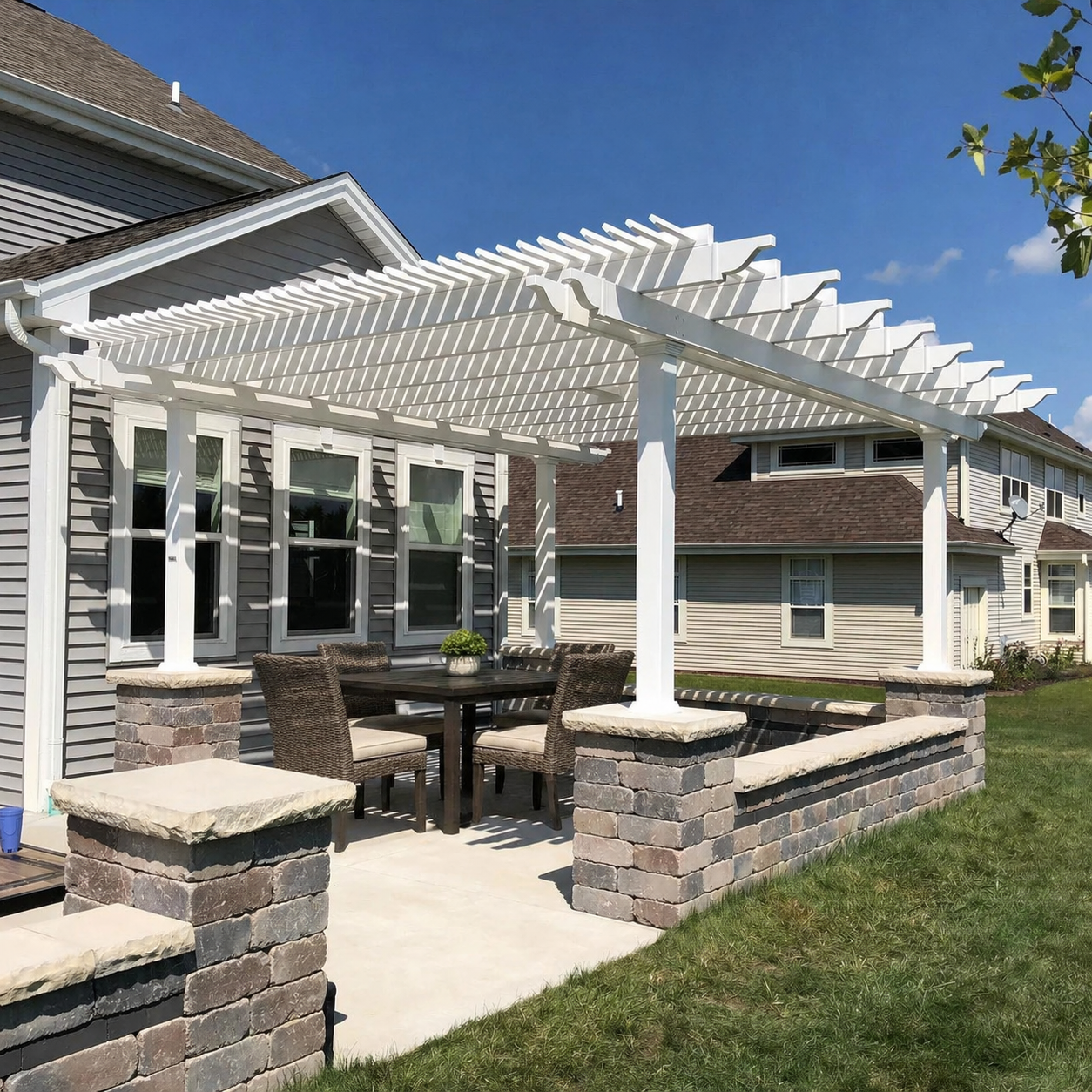 A common misunderstanding is that a freestanding pergola simply rests on the ground and can be moved whenever convenient. That's not how permanent freestanding pergolas are intended to work.
Although the structure doesn't attach to a building, its posts must be securely anchored to an appropriate supporting surface or foundation. The anchoring system helps keep the structure stable and transfers loads into the supporting ground or foundation.
This distinction matters when evaluating a pergola for your home:
A freestanding pergola can stand well away from your home or relatively close to it. Its classification depends on how it is supported, not simply how far it sits from a building.
Four posts are common for smaller and moderately sized freestanding pergolas, but larger structures may require six or nine posts to support longer or wider configurations.
The number of posts depends on the pergola's dimensions, structural design, and engineering. A larger freestanding pergola doesn't stop being freestanding simply because it needs additional posts.
For homeowners, this means the term describes a structural arrangement rather than one specific size, shape, or appearance.
One of the most appealing benefits of a freestanding pergola is its ability to establish a recognizable outdoor living area without requiring walls.
The overhead structure visually defines a space, helping an ordinary section of patio, deck, or backyard feel like an intentional extension of your home's living environment.
Unlike a fully enclosed room, the experience remains connected to the outdoors. Breezes, natural light, garden views, and the surrounding landscape remain part of the setting.
Imagine an outdoor dining table beneath a freestanding pergola, with seating arranged for family dinners or weekend entertaining.
The overhead framework establishes a visual boundary around the dining area, making it feel like a destination rather than simply furniture placed on an open patio.
A slatted pergola can provide shade during sunny meals while maintaining an open-air atmosphere. If dining outdoors during rain is important, however, a solid-roof configuration deserves consideration.
A freestanding pergola can also define an outdoor seating area with sofas, lounge chairs, or a conversation grouping.
This works particularly well when you want a separate place to relax without completely disconnecting from the surrounding yard.
The pergola provides an architectural focal point, while the furniture and landscaping establish how the area is used.
For example, a seating group positioned beneath a pergola can create a distinct gathering area within a larger backyard that also contains an uncovered patio or lawn.
Freestanding pergolas are especially useful where the desired gathering space isn't immediately beside the house.
Beside a swimming pool, a pergola can define a shaded seating or conversation area. In a landscaped backyard, it can establish a separate destination for reading, relaxing, or entertaining guests.
The advantage isn't simply that the structure provides overhead shade. It's that the pergola can create a purposeful outdoor zone in a location where a homeowner wants people to gather.
When exploring possibilities, browsing examples of freestanding pergolas can help you visualize how different configurations establish these independent outdoor spaces.
Not every freestanding pergola provides the same protection from sunlight or rain. The roof design determines much of the experience beneath the structure, so it's important to distinguish between a slatted shade roof and a solid roof before deciding whether a pergola meets your needs.
Traditional and modern pergolas commonly feature overhead slats, also called shade purlins, that filter direct sunlight while leaving openings between them.
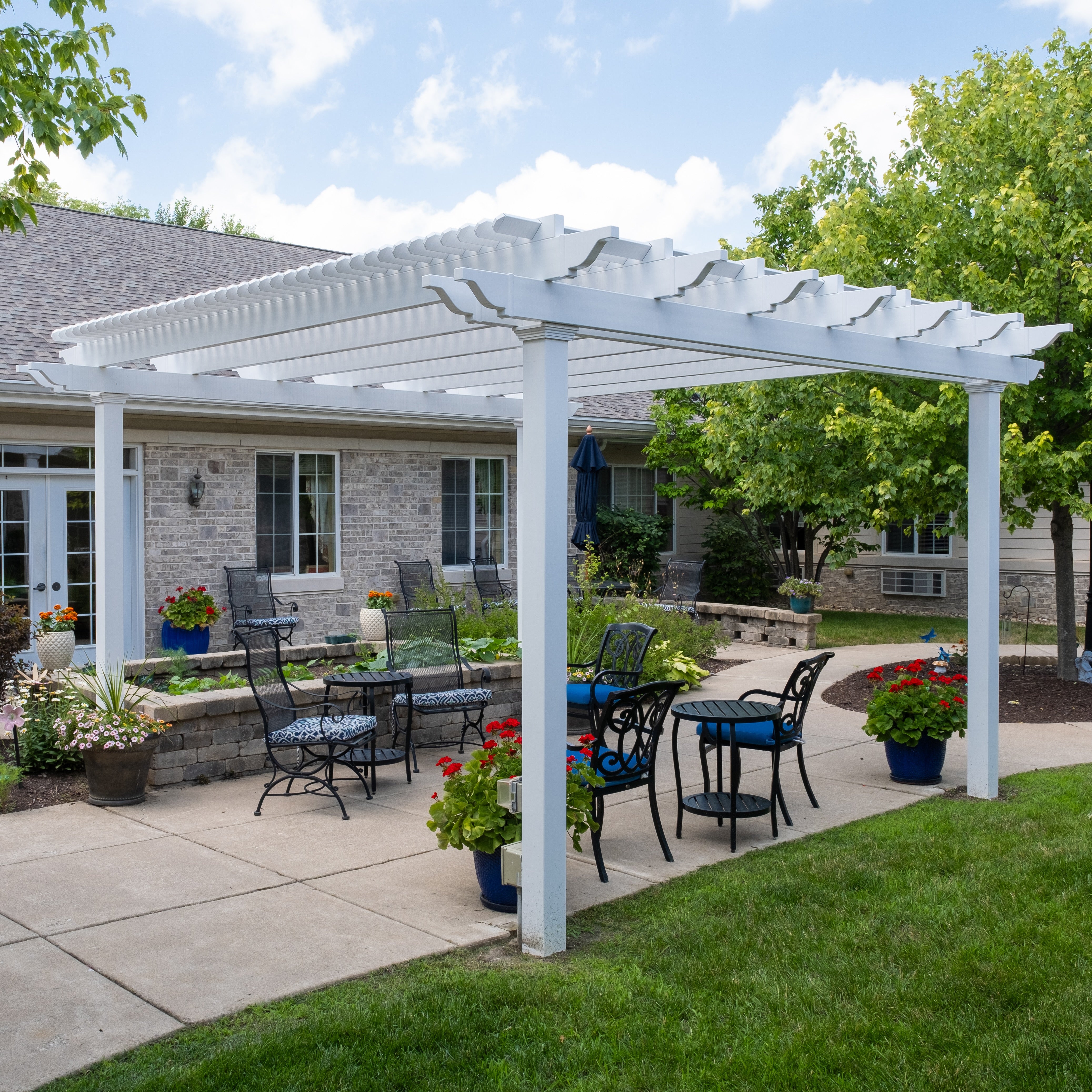 At Sunset Pergola Kits, traditional and modern pergolas are available with three fixed slat-spacing options:
These percentages describe the shade coverage provided by the slat configurations. They do not guarantee that the same percentage of a patio will remain shaded throughout the day.
The sun's angle changes, and sunlight can enter beneath the roof from the sides. The actual shade experienced at a particular time depends on the sun's position and the surrounding environment.
Just as importantly, a slatted pergola is not rainproof. Water can pass through the openings between the roof slats, even with the densest available shade configuration.
For homeowners primarily interested in sun protection and an open outdoor atmosphere, a pergola with a slatted roof may provide the intended experience.
If keeping the area beneath the structure dry during ordinary rainfall is essential, a freestanding structure with a solid roof is a more appropriate category to explore.
Sunset Pergola Kits offers rainproof patio covers featuring solid polycarbonate roofing rather than open shade slats.
These patio covers are available in freestanding configurations, meaning they retain independent structural support while providing a fully covered overhead area.
The solid polycarbonate roof panels are available in white or bronze, allowing homeowners to choose the appearance they prefer.
However, a solid roof doesn't transform the structure into an enclosed room. The sides remain open, so wind-driven rain and other outdoor conditions can still affect the area beneath the cover.
The practical distinction is straightforward:
| Consideration | Slatted Freestanding Pergola | Freestanding Rainproof Patio Cover |
|---|---|---|
| Primary purpose | Provide overhead shade | Provide overhead shade and rain protection |
| Roof construction | Fixed, spaced shade slats | Solid polycarbonate panels |
| Rain protection | Not rainproof | Rainproof overhead roof |
| Outdoor atmosphere | Open, filtered-light experience | Covered outdoor experience |
| Best suited for | Homeowners primarily seeking shade and open-air enjoyment | Homeowners who also want to use the covered area during rainfall |
If your primary goal is creating a pleasant shaded gathering space during good weather, a slatted pergola may be sufficient. If your plans depend on keeping a dining table or seating area protected from rain, the roof distinction becomes much more important.
Because a freestanding pergola doesn't require structural support from a building, it offers flexibility in establishing an outdoor living area.
That flexibility is one of its principal benefits, but it comes with an important qualification: you have flexibility in choosing the installation location, not in moving the structure after installation.
A freestanding pergola can establish a gathering area on a patio, deck, or another suitable part of the property without requiring the pergola's roof to connect to the house.
This makes the concept particularly appealing when the ideal outdoor living area is separated from the home's exterior walls.
For example, a homeowner might want a shaded lounge area beside a pool rather than directly outside the back door. Another might prefer a freestanding dining area surrounded by landscaping.
In both situations, independent support allows the structure to define its own outdoor space.
However, the ability to install a pergola in a particular location still depends on whether that site can safely accommodate the structure.
A permanent freestanding pergola needs an appropriate support and anchoring arrangement.
The fact that it doesn't attach to the house doesn't eliminate structural considerations. The supporting surface or foundation must be suitable for the pergola's design and the loads it is expected to experience.
Before committing to a permanent installation, homeowners should understand that:
These considerations don't make a freestanding pergola inherently complicated. They simply distinguish a permanent outdoor improvement from a temporary shade accessory.
Once installed, the pergola becomes a fixed feature of the property. Homeowners should therefore choose the intended location with long-term use in mind.
Freestanding describes the support arrangement, but it doesn't specify the materials, appearance, or roof design. Those characteristics depend on the particular product.
Sunset Pergola Kits offers permanent freestanding structures built with aluminum-reinforced structural components and premium extruded vinyl exteriors.
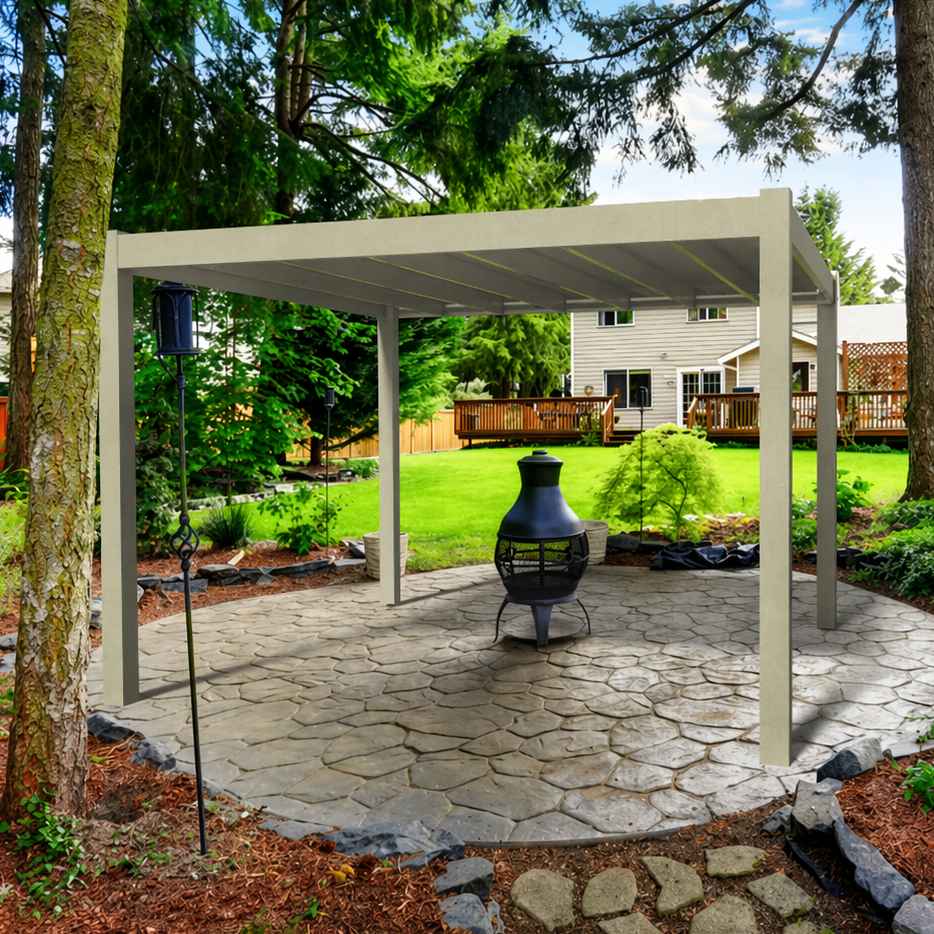 The company's freestanding pergolas use aluminum inserts within the weight-bearing structural components, including posts, beams, and rafters.
This aluminum reinforcement provides the underlying structural framework, while the vinyl exterior creates the finished appearance.
The combination is intended for permanent outdoor installation rather than temporary seasonal use.
For homeowners evaluating a long-term outdoor improvement, the distinction between the internal structural components and exterior finish is worth understanding. The pergola's appearance is only one part of its construction.
Sunset Pergola Kits uses premium extruded vinyl that is colored throughout rather than painted on the surface.
Unlike wood finishes that may require periodic painting or staining, the vinyl exterior doesn't require either treatment.
That makes the material particularly appealing to homeowners who want a finished outdoor structure without taking on recurring painting or staining projects.
The company's pergolas are available in white, tan, and black, providing options for coordinating with different home exteriors and outdoor environments.
Homeowners exploring the material itself can review the available vinyl pergola configurations to see how the construction is used across different styles.
Sunset Pergola Kits offers three principal freestanding design families:
Traditional and modern freestanding pergolas are backed by lifetime warranties. Freestanding rainproof patio covers carry a lifetime warranty on the frame and a 10-year warranty on the roof.
All three product families are made in the USA.
These differences demonstrate an important point: choosing a freestanding pergola doesn't require choosing one particular architectural style or roof type.
Instead, homeowners can first decide whether independent structural support makes sense for their project, then evaluate the available designs based on appearance, intended use, and desired protection.
Before choosing a specific pergola, it's worth confirming that the freestanding concept matches what you actually want from your outdoor space.
The following questions provide a practical way to evaluate that fit.
A freestanding pergola is a strong candidate when you want to establish a lasting outdoor destination rather than provide occasional temporary shade.
It makes sense for homeowners who expect to use the same patio, seating area, or gathering space regularly over the years.
If you need a structure that can be relocated frequently, a permanently anchored pergola is unlikely to meet that expectation.
Freestanding pergolas generally create outdoor rooms without enclosing their sides.
This is a benefit when you want an inviting space that remains connected to the backyard, landscaping, and surrounding views.
However, it also means the structure doesn't provide the controlled indoor environment of a fully enclosed room.
If your project requires enclosed walls, comprehensive protection from outdoor conditions, or indoor-style climate control, a typical open-sided freestanding pergola won't satisfy those requirements by itself.
Think about the conditions in which you expect to use the space.
If your main objective is comfortable outdoor seating with overhead shade during sunny weather, a slatted pergola may be appropriate.
If you want a covered dining or gathering area that remains usable during ordinary rainfall, a solid-roof patio cover is more closely aligned with that goal.
Neither configuration makes an open-sided outdoor area completely weatherproof.
Because a permanent pergola requires anchoring, its location should support how you intend to use the outdoor area over time.
Consider whether the intended space is genuinely where you want to dine, relax, or gather, rather than simply an available patch of ground.
You don't need to finalize every installation detail to determine whether the freestanding concept is appropriate. But you should be comfortable with the idea of establishing a fixed outdoor living area.
A freestanding pergola is likely worth exploring if most of the following statements describe your project:
If these statements align with your plans, the next useful step is to explore freestanding configurations that match your intended activity and protection requirements.
If several statements don't fit, clarify those expectations before selecting a product. Doing so can prevent you from purchasing a structure that doesn't deliver the outdoor experience you had in mind.
A freestanding pergola is defined by its independent structural support, but its real value comes from creating a permanent outdoor space where you want to spend time. It can establish an inviting area for dining, relaxing, or gathering without requiring attachment to an existing building.
The key is understanding what the structure will—and won't—provide. Permanent anchoring is part of the installation, open sides preserve the outdoor atmosphere, and the roof determines whether you're getting shade alone or overhead rain protection.
If that combination matches your plans, explore Sunset Pergola Kits' freestanding pergola collection to compare available configurations. If keeping the area dry is essential, consider a freestanding rainproof patio cover as your next step.
No. Freestanding means the pergola supports itself without attaching to another building. Permanent freestanding pergolas require secure anchoring and are not designed to be moved around the yard after installation.
Yes. A freestanding pergola can be positioned close to a house while remaining structurally independent. Its classification depends on whether it relies on the building for support, not the distance between them. The installation must still accommodate appropriate anchoring and site conditions.
No. Freestanding pergolas can be installed on suitable patios, decks, or other properly supported locations. The important requirement is an appropriate foundation or supporting surface and secure anchoring, not whether the surrounding area is grass, concrete, or another material.
No. Freestanding pergolas with slatted roofs provide shade but allow rain to pass through. For overhead rain protection, consider a freestanding rainproof patio cover with a solid polycarbonate roof. Open sides can still allow wind-driven rain to reach furniture.
No. Freestanding pergolas typically have open sides that preserve views, airflow, and an outdoor atmosphere. The overhead structure defines the living area without creating a fully enclosed room.
Yes. Larger freestanding pergolas may use six or nine posts, depending on their dimensions and structural design. Sunset Pergola Kits offers freestanding configurations with different post counts to accommodate various sizes. Additional posts do not change the structure's freestanding classification.


