

MADE IN THE USA
with American products
w/ American products


How much does a rainproof patio cover cost once it's fully installed and ready to use? The price displayed for a patio cover kit is an important starting point, but it may represent only part of the investment in a permanent outdoor structure. This guide explains how to build a realistic project budget, identify expenses beyond the kit itself, and compare quotes without overlooking costs that could change your final total.
The total cost of a rainproof patio cover depends on both the structure you purchase and the work required to install it at your property. A kit price alone cannot establish what your finished project will cost.
Total installed project cost = patio cover kit + delivery + applicable taxes + site preparation and foundations + installation labor + required approvals and engineering + drainage + selected accessories and electrical work.
Not every project requires every expense. However, each category should be checked before you treat a price as your complete budget.
Use the following worksheet to separate confirmed expenses from costs that still need investigation.
| Budget Item | What to Verify | Status / Amount |
|---|---|---|
| Patio cover kit | Current price for the exact size, configuration, finish, and selected options | __________ |
| Delivery | Shipping charges and any separately priced delivery services | __________ |
| Sales tax | Applicable tax based on the purchase and delivery location | __________ |
| Foundations and anchoring | Footings, concrete work, anchors, and preparation required for the site | __________ |
| Installation labor | Assembly, positioning, attachment, and other installation services | __________ |
| Permits and engineering | Applicable approvals, structural documentation, and professional services | __________ |
| Drainage | Any needed water-management components or site modifications | __________ |
| Optional accessories | Selected product add-ons and their installation | __________ |
| Electrical work | Qualified electrical installation for any planned powered accessories | __________ |
| Total project budget | Sum of confirmed costs, with unresolved items identified separately | __________ |
For each line, record whether the cost is included, separately priced, confirmed unnecessary, or still unknown. An item included in another quote should not be counted twice. An unknown expense should not be entered as zero.
Two homeowners purchasing the same patio cover could have different installed costs because their properties require different preparation or installation work. One may have a suitable installation location with straightforward access, while another may need new foundations, attachment preparation, or drainage modifications.
Likewise, a contractor's installed estimate may include services that another contractor excludes. A higher quoted total does not necessarily mean the underlying structure is more expensive.
Start with a current, dated price for the configuration you want. You can review available rainproof patio cover kits to establish that initial product cost, then investigate the expenses necessary to complete the installation at your property.
Polycarbonate patio cover cost depends partly on the specifications of the structure itself. Before comparing prices, establish which options are included in each quote.
Sunset Pergola Kits offers permanent rainproof patio covers with aluminum-reinforced structural components, premium extruded vinyl exteriors, and solid polycarbonate roofing. Several configuration choices can change the product being quoted.
 The dimensions of a patio cover are fundamental pricing inputs. A larger structure generally requires different quantities or dimensions of structural and roofing materials, so a price for one size should not be assumed to apply to another.
Sunset Pergola Kits offers the following rainproof configurations:
When requesting prices, specify both dimensions and the appropriate support-post configuration. Different post counts may affect the kit price as well as the amount and location of foundation or anchoring work.
An attached patio cover connects to an existing building or structure, while a freestanding patio cover stands independently.
The two configurations have different structural requirements and installation considerations. An attached cover may involve wall-side preparation and verification of a suitable attachment location. A freestanding cover requires support and anchoring appropriate to its independent structure.
Neither configuration should automatically be assumed to have the lower total installed cost. Compare the actual kit price and the work required at your property.
Sunset Pergola Kits offers white, tan, and black vinyl frame finishes. White is the most affordable frame color, while black is the most expensive. The actual price difference should be confirmed for your selected configuration rather than estimated using an assumed percentage.
The solid polycarbonate roof panels are available in white or bronze. Verify whether your preferred panel color changes the quoted price.
The roof panels provide rain protection, while the vinyl exterior avoids the periodic painting or staining associated with some other materials. Those ownership characteristics may matter when evaluating the long-term investment, but they do not replace a current purchase quote.
Additional quote inputs may include post styles, decorative end caps, beam or rafter overhangs, optional fan mounts, and hurricane brackets.
For rainproof covers, Sunset Pergola Kits offers optional hurricane brackets, with an associated lifetime wind-damage warranty when those brackets are added. Confirm whether the brackets are appropriate for your location and what their addition costs.
A fan mount is another optional product accessory. It should not be confused with the separate electrical work necessary to install and power a fan.
The practical rule is simple: get a quote for the exact structure and accessories you intend to purchase, rather than using the base price of a different configuration.
The most important expenses beyond the kit are often determined by the installation site. Even when two properties use identical covers, their preparation and installation requirements may differ.
 A permanent patio cover needs an appropriate structural support and anchoring arrangement. The cost depends on what the existing site can safely accommodate and what the applicable design and local requirements specify.
An existing concrete patio does not necessarily provide an adequate foundation for the cover's posts. Its thickness, condition, underlying support, and suitability for the proposed anchoring system may need evaluation.
Depending on the findings, separately priced work could include:
Ask the installer to identify which supporting work is necessary and whether it is included in the installation estimate.
An attached patio cover introduces another potential expense: establishing a suitable connection to the existing building.
Depending on the property, the installer may need to evaluate the wall's structural conditions, exterior finishes, weatherproofing, and attachment details. Necessary preparation or modifications should be identified before installation begins.
A straightforward attachment at one home does not establish the cost or feasibility of an attachment at another.
The practical difficulty of reaching the installation location can affect labor and equipment costs.
For example, an easily accessible backyard may present different handling requirements than an elevated deck or a patio with restricted access. Large components may also require a handling plan appropriate to their dimensions and the property.
Provide installers with photographs, measurements, access information, and any known restrictions so their estimates reflect the actual job.
A solid polycarbonate roof provides rain protection beneath the cover, but the project must also account for where water goes after it reaches the roof.
Site conditions may call for additional drainage or water-management components. The need and scope should be confirmed for the actual installation instead of assuming particular gutters, downspouts, or site drainage modifications are included with every kit.
If a contractor proposes drainage work, ask for the components and installation services to be identified separately. This makes it easier to distinguish the cover's purchase price from surrounding improvements.
Local building authorities may require permits, inspections, or structural documentation for a permanent patio cover. Requirements can depend on the location, installation type, and project details.
Ask the relevant building department and installer what documentation or approvals apply to your specific project. If engineering or other professional services are needed, determine who is responsible for providing them and whether the cost is included.
Do not assume that a kit's engineered construction eliminates every local approval or documentation requirement.
Installing a patio cover yourself can reduce or eliminate certain paid assembly-labor expenses. However, the kit price and many site-specific expenses remain regardless of who performs the assembly.
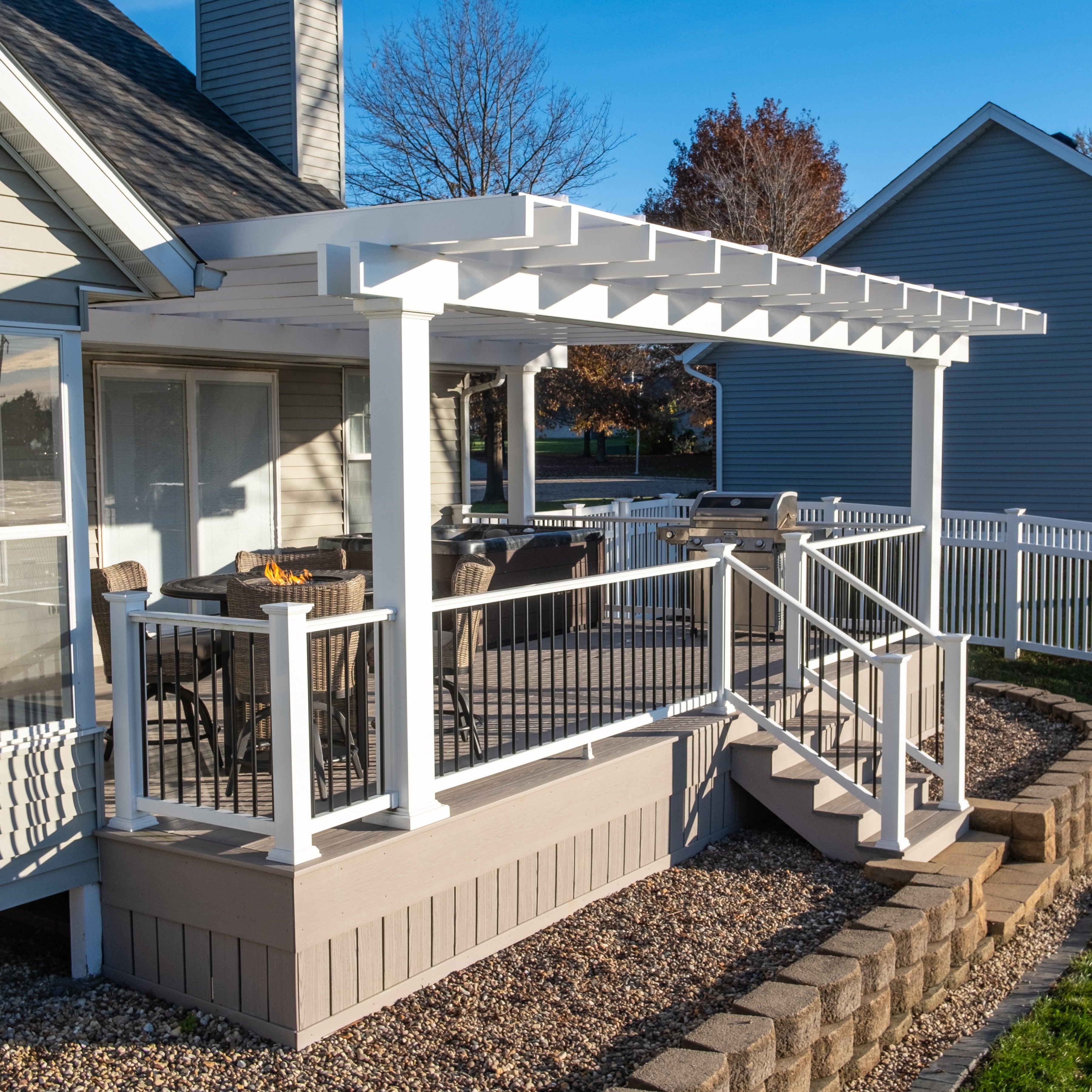 Sunset Pergola Kits offers patio covers suitable for DIY or contractor installation, but actual installation requirements should be evaluated for the chosen structure and property.
DIY budgeting may still need to account for:
DIY also requires accounting for your own time and the practical demands of handling and assembling the structure. Avoid assigning a universal installation duration or labor saving without evidence for the specific project.
Sunset Pergola Kits provides assembly information and videos that can help you understand the installation process before deciding how to budget for labor.
Use the same kit configuration, foundation assumptions, and finished-project scope for both approaches.
| Expense | DIY Budget | Contractor Budget |
|---|---|---|
| Kit, delivery, and taxes | __________ | __________ |
| Foundations and anchoring | __________ | __________ |
| Assembly labor | Personal time / any paid help | __________ |
| Tools and equipment | __________ | Included / excluded / unknown |
| Permits and engineering | __________ | __________ |
| Drainage and electrical work | __________ | __________ |
| Confirmed total | __________ | __________ |
| Unpriced requirements | __________ | __________ |
A professional quote may bundle several services into one amount, while a DIY estimate separates them across suppliers and trades. Ask for enough detail to determine whether the two budgets actually describe the same finished result.
The lowest quoted price is not necessarily the lowest complete project cost. Estimates become useful for comparison only when they cover the same product specifications, installation responsibilities, and site conditions.
Before comparing two estimates, confirm these details:
If one quote includes foundations and drainage while another excludes them, do not compare their totals without adjusting for those differences.
Suppose you receive a confirmed kit quote, a separate foundation estimate, and an installation-labor estimate. You can add those amounts, along with verified delivery charges, taxes, and other required expenses, to establish the portion of the project that is actually priced.
But if drainage or electrical work has not yet been evaluated, the resulting sum is a provisional subtotal, not a complete installed-project price.
For a defensible budget range, obtain estimates for the same defined scope. If contractors identify legitimate alternatives or uncertain conditions, use their documented pricing to establish the possible outcomes.
For example, a foundation contractor might identify different amounts depending on the condition of existing concrete. Those documented alternatives can help establish a conditional range. An arbitrary allowance unsupported by an actual assessment cannot provide the same confidence.
A contingency may be appropriate when identified site conditions could change the work required. Its amount should reflect the actual uncertainties rather than an invented universal percentage.
Distinguish between an allowance for a known uncertainty and an expense that has not been investigated at all. If a necessary item is unpriced, obtain an estimate rather than relying on a contingency to conceal the missing information.
Once the product configuration and property requirements are understood, you can turn separate estimates into a budget suitable for making a purchase decision.
Prepare the following before treating your budget as complete:
A confirmed project total includes all known, required expenses for a clearly defined scope, supported by current prices or estimates. Where an identified uncertainty remains, it should be documented separately.
A provisional project total includes verified expenses but still depends on unresolved work, missing prices, or assumptions that have not been confirmed.
For a premium permanent installation, the second figure may be useful for preliminary planning, but it should not be mistaken for a reliable final budget.
When you are ready to price the structure itself, review the available solid-roof patio cover configurations and obtain clarification of exactly what the selected kit price includes. Then use your site-specific estimates to complete the comparison.
The most useful answer to "How much does a rainproof patio cover cost?" is a complete, itemized budget for the finished project—not simply a displayed kit price. Size, configuration, finishes, foundation conditions, installation approach, and local requirements all contribute to the amount you may ultimately spend.
Start with current pricing for a rainproof patio cover, identify the work your property requires, and obtain separate estimates where needed. Once every required expense is either priced or clearly identified as unresolved, you can compare your options with much greater confidence.
No. A patio cover kit price represents the specified product and whatever the seller explicitly includes. Delivery, taxes, foundations, installation labor, permits, drainage, and other work may be additional. Always confirm the quoted scope before treating a price as your total project budget.
Yes. Record delivery and applicable sales tax separately until the seller confirms whether they are included in the quoted price. This prevents missing expenses or accidentally counting the same charges twice.
Yes. Existing concrete or paving does not automatically establish that the surface can support and anchor a permanent patio cover. The installation site may require evaluation, additional footings, specialized anchors, or modifications. Obtain a site-specific assessment before assuming no foundation expense is necessary.
No. A fan mount is an accessory associated with the patio cover structure. Electrical installation involves separate wiring and other work necessary to power a fan. If you plan to add a fan, confirm the accessory price and any required electrical work independently.
No. DIY installation may reduce paid assembly labor, but it does not automatically eliminate permits, inspections, engineering, or other local requirements. Confirm the applicable requirements with your building authority regardless of who installs the cover.
First determine what drainage work your property actually requires. Then obtain a separate price for any necessary work missing from one estimate. Compare both proposals using the same finished-project scope instead of comparing their original totals directly.
Yes. Mark an expense as unknown until its necessity and price have been established. Use zero only when you have confirmed that no separate expense applies. Otherwise, your budget may underestimate the true installed cost.


