

MADE IN THE USA
with American products
w/ American products


Are polycarbonate patio covers good for everyday outdoor living? The answer depends on what you expect from a permanent roof over your patio, deck, or outdoor entertaining area. Understanding the main polycarbonate patio cover pros and cons can help you decide whether the combination of overhead rain protection, natural daylight, and relatively low-maintenance construction is worth the tradeoffs in sound, appearance, and ongoing roof care.
A polycarbonate patio cover combines a solid overhead roof with an outdoor living structure. Unlike a fully enclosed room, it protects the area directly beneath the roof from falling rain while generally leaving the surrounding space open to fresh air.
The most useful way to evaluate this design is to consider each advantage alongside its practical limitation.
| Potential Advantage | Important Limitation | What It Means for Homeowners |
|---|---|---|
| Overhead rain protection | Wind-driven rain can enter through open sides. | Useful for covered outdoor activities, but not equivalent to an enclosed, weather-sealed room. |
| Natural daylight | Light transmission and perceived brightness depend on the panels and surrounding conditions. | Appealing if you want a covered patio that still feels connected to daylight. |
| UV protection | UV protection does not automatically establish how cool the space will feel. | Evaluate UV protection and thermal comfort as separate performance characteristics. |
| Permanent outdoor coverage | The roof creates a lasting visual presence and is not retractable. | Best for homeowners who want a dedicated covered area rather than an occasionally shaded space. |
| Low-maintenance framing | Roof panels still require cleaning and occasional inspection. | Less exterior finishing work does not mean the entire structure is maintenance-free. |
| Long-term ownership potential | Panel condition, warranty coverage, and eventual replacement needs must be considered separately. | Evaluate the frame and roof as distinct components of the investment. |
For homeowners prioritizing overhead shelter and daylight, the advantages can be compelling. For someone who needs complete weather isolation, exceptionally quiet rainfall conditions, or a roof that never needs attention, the limitations may carry more weight.
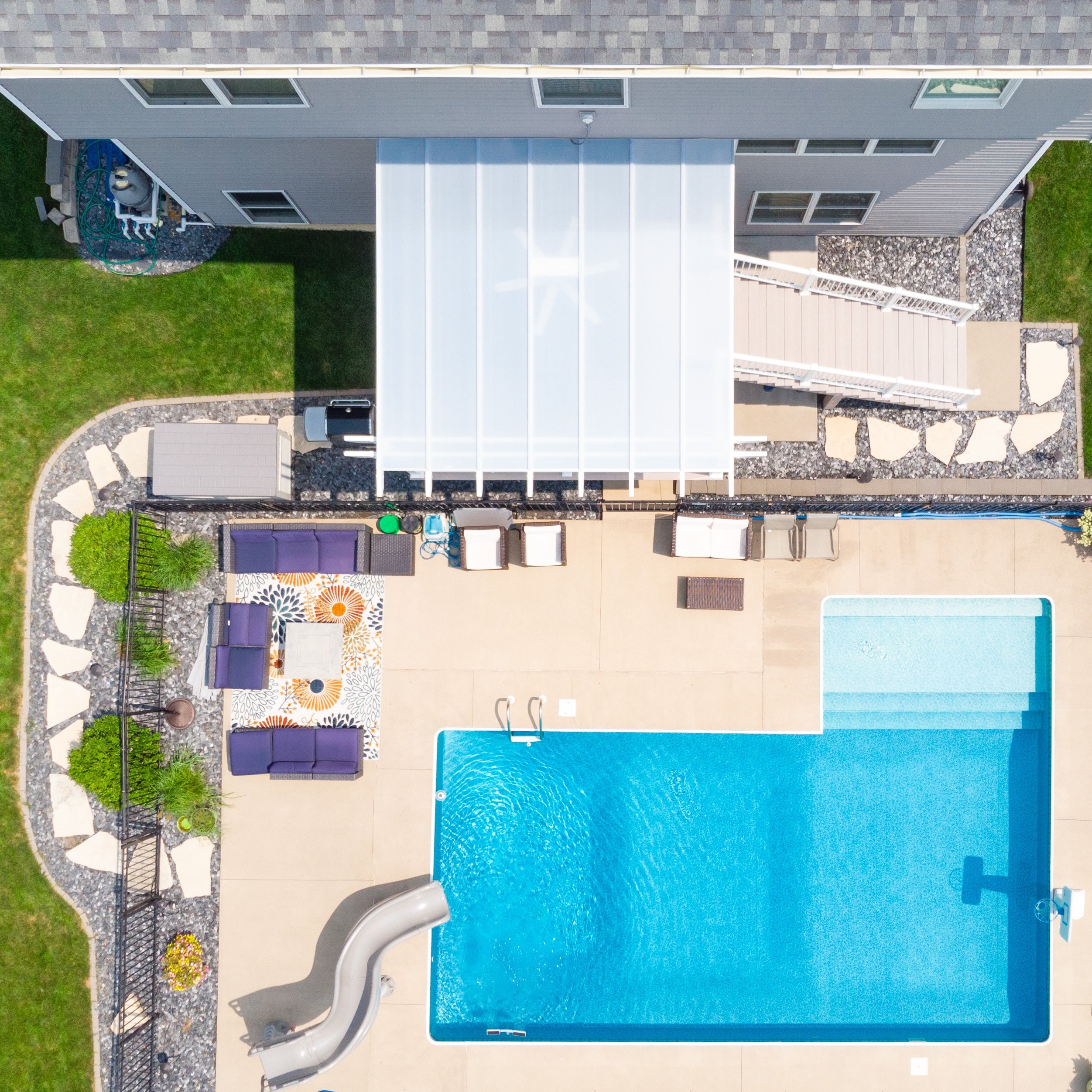 One of the biggest advantages of a polycarbonate patio roof is the ability to use an outdoor living area when conditions are less than ideal.
A solid roof provides a physical barrier against rain falling from above. This can make a covered patio more practical for everyday activities such as relaxing outdoors, enjoying a meal, or spending time with family when a passing shower would otherwise send everyone inside.
The benefit is particularly meaningful when the patio is part of an established outdoor living space. Instead of treating the area as something usable only during ideal weather, homeowners can enjoy a more dependable overhead shelter.
However, the roof does not control every aspect of the weather.
Wind-driven rain can reach furniture, flooring, and other items near exposed edges. Depending on the direction and intensity of a storm, moisture may travel farther beneath the cover than expected.
The practical distinction: A polycarbonate patio cover provides overhead rain protection, not a guarantee that everything beneath it will remain dry during every storm.
Another important benefit is the ability of polycarbonate roofing to transmit light while providing overhead coverage.
For homeowners who enjoy a bright patio, this can be a major part of the appeal. A covered seating area can retain a sense of openness during daylight hours without leaving occupants completely exposed to overhead rainfall.
That experience matters because the goal of a patio cover is often to improve outdoor living rather than recreate an indoor room.
Still, a light-transmitting roof should not be confused with an invisible roof. Panel appearance, available sunlight, surrounding buildings, landscaping, and personal sensitivity to brightness all influence the experience.
Before purchasing, consider whether you want your patio to feel noticeably bright during the day or whether a more subdued atmosphere is essential to your enjoyment.
A permanent patio cover becomes part of the home's outdoor architecture. Its overhead structure is always present, including when the weather is pleasant and additional shelter is unnecessary.
That consistency is an advantage if you want a dedicated outdoor room-like gathering area with predictable overhead coverage.
It can be a disadvantage if your ideal patio experience involves an unobstructed view of the sky or the flexibility to remove overhead coverage whenever you choose.
The key question is not simply whether a solid roof provides useful protection. It is whether you want that protection to be a permanent feature of the space.
Comfort is one of the most frequently misunderstood aspects of polycarbonate patio covers. Daylight transmission, UV protection, temperature reduction, and rainfall sound describe different characteristics. A favorable claim about one does not automatically establish performance in the others.
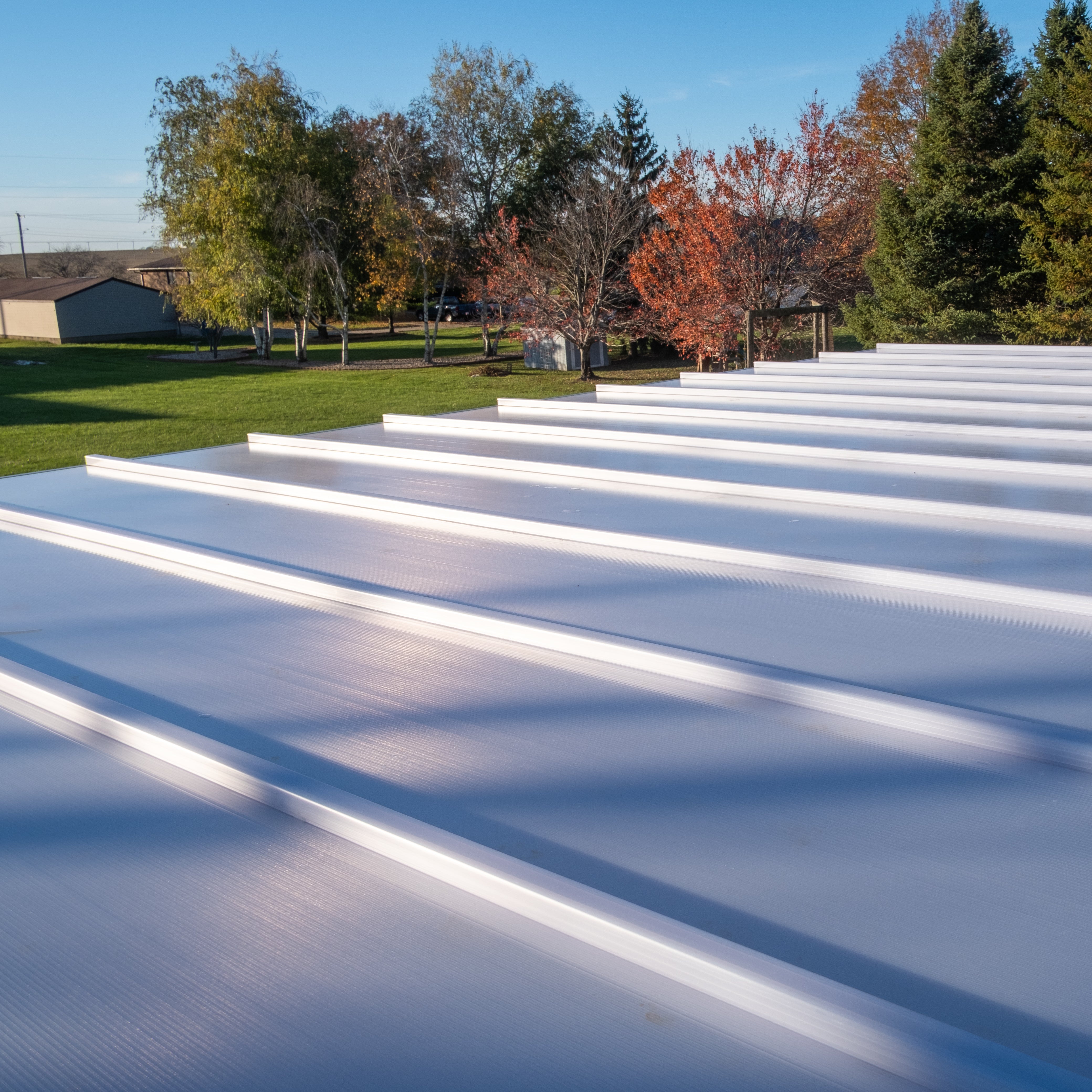 Sunset Pergola Kits offers solid polycarbonate roof panels in white and bronze. Both are specified as providing 100% UV protection, and the product information describes the covered patio as potentially being up to 15 degrees cooler.
These are two distinct performance claims.
UV protection concerns the roof's ability to block ultraviolet radiation. It does not, by itself, tell you how much visible light or solar heat passes through the panels.
Cooling performance concerns the temperature experienced beneath the cover. Actual results can vary with sunlight, surrounding surfaces, airflow, weather, and how temperature is measured.
Importantly, an up-to-15-degree cooling claim is not a guarantee that every covered patio will be 15 degrees cooler than an uncovered area.
Homeowners who consider cooling a deciding factor should request the supporting test conditions, including the measurement location, comparison conditions, and applicable roof-panel specifications.
The same principle applies to UV performance: confirm what the stated protection rating measures and the documentation supporting it.
A polycarbonate roof can offer valuable overhead protection without making an open-air patio behave like an air-conditioned room.
Rain striking a solid overhead surface creates sound. With polycarbonate roofing, the perceived noise depends on factors such as rainfall intensity, panel construction, installation details, and the surrounding environment.
Some homeowners enjoy hearing rainfall while sitting beneath a covered patio. Others find repeated impact sounds distracting, particularly when trying to have conversations or relax quietly.
Neither preference is inherently right or wrong.
If your patio will be used frequently during rain, or if you are particularly sensitive to overhead noise, try to hear a comparable installed roof during actual rainfall before committing to the material.
Product photographs cannot communicate acoustic comfort, and a general description such as "quiet" or "noisy" is not a reliable substitute for firsthand experience.
A comfortable outdoor space depends on more than the roof itself.
For example, a homeowner may appreciate the roof's UV protection and rain coverage but still find the patio warmer than expected during certain weather conditions. Another may love the daylight but dislike the sound of heavy rain overhead.
Instead of treating comfort as one overall rating, identify which specific experiences matter most:
If your decision depends on a precise cooling result or a particular level of acoustic comfort, obtain evidence that addresses that requirement before purchasing.
A permanent patio cover should be evaluated as a long-term part of the property. That means looking beyond its appearance when newly installed and considering what ownership will require over time.
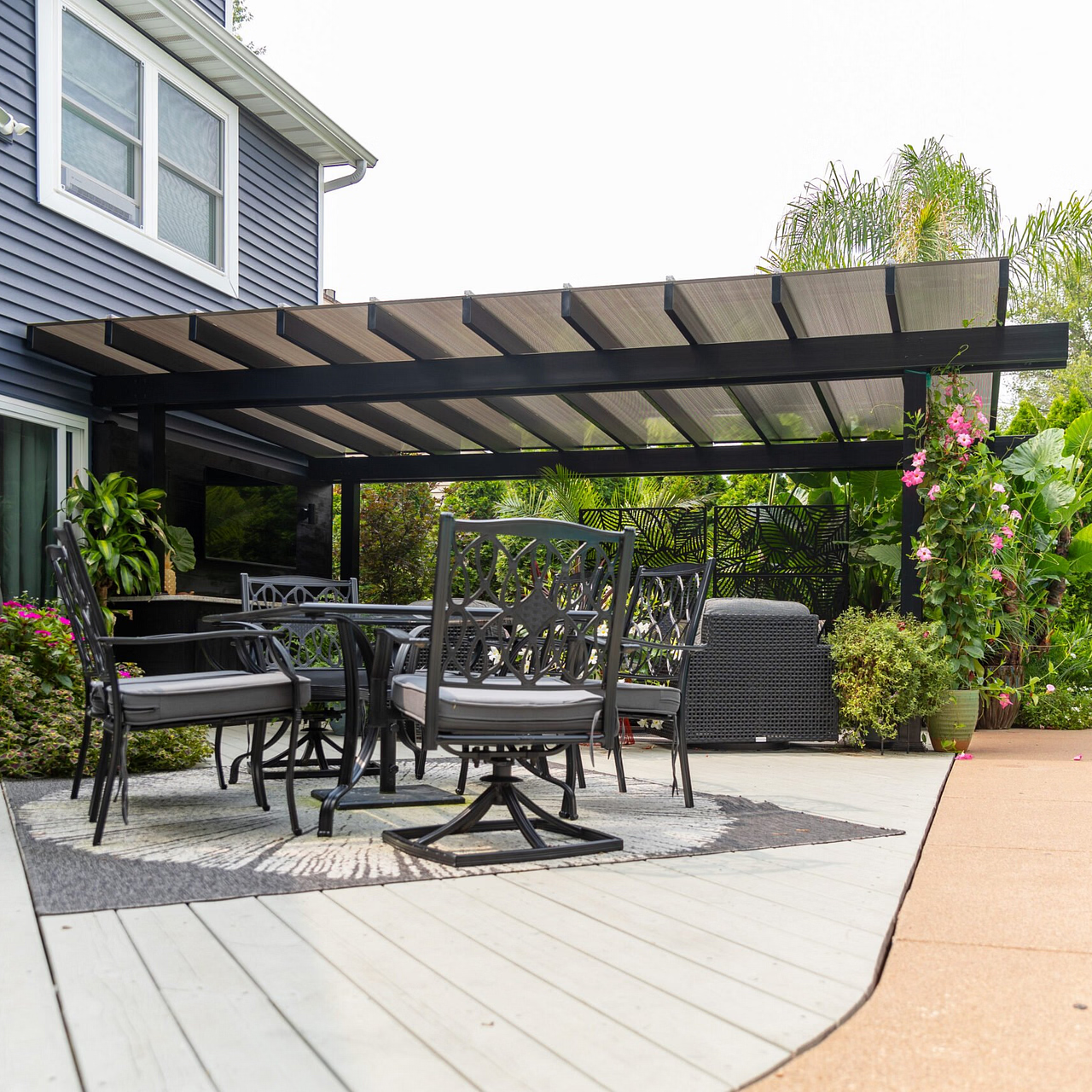 Sunset Pergola Kits patio covers use aluminum-reinforced structural components with a premium extruded vinyl exterior.
The vinyl is colored throughout rather than painted, eliminating the need for routine painting or staining to maintain the frame's finish.
For homeowners who want an attractive permanent structure without recurring exterior refinishing projects, this is a meaningful ownership benefit.
The aluminum-reinforced construction also provides the structural foundation for a substantial outdoor installation.
However, the frame and roof should not be treated as identical materials with identical maintenance requirements.
A low-maintenance frame does not mean the entire patio cover can be ignored indefinitely.
Roof panels are exposed to outdoor conditions, including airborne dirt, pollen, leaves, and other debris. Keeping the roof looking attractive may require periodic cleaning and attention to accumulated material.
Cleaning methods matter because the wrong products or tools can potentially damage a roof surface.
Before installation, obtain the specific panel manufacturer's care instructions. Confirm which cleaners and cleaning methods are approved, along with any restrictions on abrasive materials or surface treatments.
Homeowners should also understand how the roof can be safely accessed for inspection or cleaning. Do not assume polycarbonate panels are safe to walk on.
The ownership distinction: Eliminating painting and staining can substantially reduce frame maintenance, but it does not eliminate the need to care for the roof.
Polycarbonate roof appearance is another consideration, especially for homeowners who place a high value on architectural finishes and visual consistency.
Questions about yellowing, cloudiness, scratching, and other surface changes deserve attention before purchasing.
Not all polycarbonate panels have identical formulations, protective treatments, or manufacturer specifications. The possibility and extent of visible changes should therefore be evaluated using documentation for the actual roofing product.
If long-term appearance is especially important, request information about the panel's protective features, cleaning restrictions, and any applicable coverage for discoloration or deterioration.
It is also worth examining installed roofs in realistic lighting rather than judging the material exclusively from polished marketing photographs.
Sunset Pergola Kits provides a lifetime warranty on the patio-cover frame and a 10-year warranty on the polycarbonate roof.
These different warranty periods are important because the structure contains components with different materials and coverage terms.
A 10-year roof warranty does not establish that the panels will need replacement after 10 years. Likewise, a lifetime frame warranty should not be interpreted as a guarantee that every component will remain unchanged or require no attention.
Warranty duration and expected service life are separate concepts.
Before purchasing, review the written warranty documentation to understand what is covered, what exclusions apply, and whether labor, replacement materials, or other expenses are included.
For a premium permanent installation, clarity about future responsibilities is just as valuable as the warranty headline.
The best way to evaluate the advantages and disadvantages of polycarbonate patio covers is to compare them with the way you actually intend to use your outdoor space.
Consider these three common homeowner situations.
Likely a good fit.
You have an attractive patio or deck and want to use it more consistently. Overhead rain protection matters, but you also appreciate natural light and do not want the space to feel completely enclosed.
You are comfortable with the idea that wind-driven rain can occasionally reach exposed areas, and you understand that roof panels will require some care.
In this situation, a permanent polycarbonate patio cover aligns well with your priorities.
The remaining questions involve confirming the appearance, comfort characteristics, and ownership requirements of the specific roof you are considering.
Potential fit, but more evidence is needed.
You want a covered outdoor space for quiet conversations, reading, or relaxing. You appreciate the roof's other benefits but are concerned that rainfall sounds could become irritating.
Because acoustic comfort is subjective and installation-dependent, this concern should not be dismissed.
Try to experience a comparable roof during rainfall or obtain reliable product-specific acoustic information.
If the sound is unacceptable to you, the other benefits may not compensate for that disadvantage.
Generally not a good fit for that expectation.
You want to leave moisture-sensitive furnishings outdoors during storms and expect the space to remain dry regardless of wind direction.
A solid polycarbonate roof can block rainfall from above, but an open-sided patio cover cannot provide the same environmental separation as a fully enclosed room.
If complete weather isolation is nonnegotiable, a conventional open-sided patio cover does not satisfy that requirement on its own.
Before deciding, write down the conditions that would make the patio cover successful for your household.
When the essential benefits clearly outweigh the limitations, you can begin evaluating available rainproof patio covers with greater confidence.
At that stage, choosing the appropriate installation and layout becomes a separate decision. First establish that the roof itself suits your expectations; then determine which specific patio-cover configuration works for your property.
Polycarbonate patio covers are a good choice for homeowners who value permanent overhead rain protection, natural daylight, and a comfortable connection to the outdoors. Their advantages are particularly appealing when paired with durable, low-maintenance framing.
The disadvantages matter just as much: open sides cannot guarantee a completely dry patio, rainfall sound may affect enjoyment, and roof panels require appropriate care. Cooling claims, long-term appearance, and warranty coverage should also be evaluated using product-specific information.
If those tradeoffs fit your priorities, explore the available rainproof patio covers and use your personal checklist to guide the next stage of your decision. If an important comfort or ownership question remains unresolved, answer it before making a permanent investment.
No. A solid polycarbonate roof provides overhead rain protection, but an open-sided patio cover remains exposed to wind, outdoor temperatures, and wind-driven rain. It should not be considered equivalent to a fully enclosed, weather-sealed room.
No. Premium extruded vinyl framing eliminates the need for painting and staining, but polycarbonate roof panels can accumulate dirt, pollen, leaves, and other debris. Follow the panel manufacturer's approved cleaning instructions to avoid damaging the roof surface.
No. Sunset Pergola Kits describes its polycarbonate patio covers as potentially making the patio up to 15 degrees cooler, but that is not a guaranteed temperature reduction. Actual conditions depend on sunlight, airflow, surrounding surfaces, weather, and measurement methods. Request supporting performance information if cooling is a deciding factor.
Yes. Visible light transmission and ultraviolet protection are different characteristics. Sunset Pergola Kits specifies 100% UV protection for both its white and bronze polycarbonate roof panels. Buyers should review the applicable product documentation to understand the stated rating and its measurement conditions.
No. A 10-year warranty identifies a period of specified warranty coverage, not a guaranteed roof lifespan or scheduled replacement date. Sunset Pergola Kits provides a 10-year roof warranty and a lifetime frame warranty. Review the written terms to understand coverage, exclusions, and owner responsibilities.
No. Product photos can help you evaluate appearance and architectural style, but they cannot reliably demonstrate rainfall noise, actual cooling performance, or long-term panel condition. Review product specifications, request supporting documentation, and examine comparable installed roofs whenever possible. You can also browse the Sunset Pergola Kits photo gallery for additional visual examples.


