

MADE IN THE USA
with American products
w/ American products


When comparing a permanent vs portable pergola, the most important question is whether you want a lasting outdoor living space or a shelter you can move or remove. A permanently anchored freestanding pergola can become an established feature of your patio, pool area, or backyard lounge. A portable pergola or seasonal shelter serves a different purpose: providing temporary coverage without the same commitment to a fixed location. Understanding how these choices differ in structural design, weather considerations, setup, and ownership will help you select the right category for your property.
The clearest distinction between a permanent pergola and a portable pergola is how you intend to use the structure over time. Before comparing materials, appearance, or price, determine whether relocation is a genuine requirement.
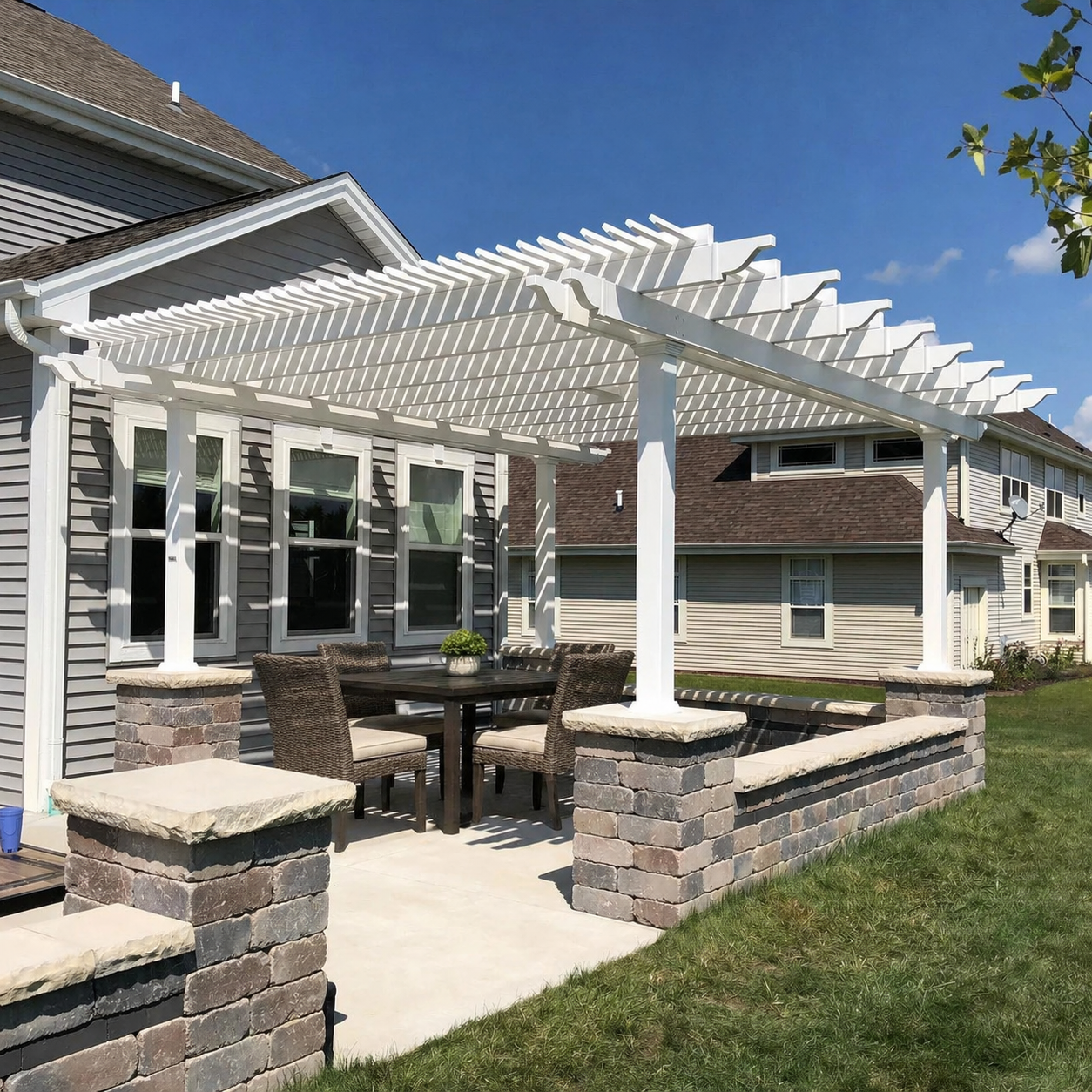
A permanent freestanding pergola is designed to remain installed in a designated location. It stands independently rather than relying on attachment to the house, making it suitable for outdoor living areas positioned away from the home's exterior walls.
For example, imagine a backyard with an established dining patio overlooking a swimming pool. The homeowners want a shaded gathering area that complements the landscaping, accommodates outdoor furniture, and remains available throughout the years.
In this situation, the ability to move the pergola offers little practical value. A permanent structure is likely the more appropriate category because the location and intended use are already established.
 A portable pergola or temporary pergola structure is intended for a different ownership pattern. Depending on the product, it may be designed for relocation, periodic assembly and disassembly, or removal when not in use.
Portable products vary considerably. Some are designed for relatively convenient movement, while others require substantial disassembly before they can be relocated. A product described as portable is not necessarily effortless to move.
Temporary shelters may be especially practical when:
In these circumstances, the flexibility of a movable backyard pergola may outweigh the advantages of a permanent installation.
Nearly any assembled structure can potentially be dismantled with sufficient effort. However, that does not make it a portable product.
A permanent pergola is designed around an installed configuration and a fixed location. Removing it may involve disconnecting structural components and anchors, and reinstallation may require replacement hardware, additional work, or manufacturer guidance.
By contrast, a genuinely portable shelter should have manufacturer instructions that accommodate its intended movement, takedown, or reassembly.
Practical decision: If you expect the structure to remain in the same location for years, prioritize permanent construction. If moving or removing it is part of your normal usage plan, prioritize a product specifically designed for that purpose.
The difference between a fixed pergola and a portable pergola goes beyond whether the structure can be moved. Each category is designed around different installation and ownership expectations.
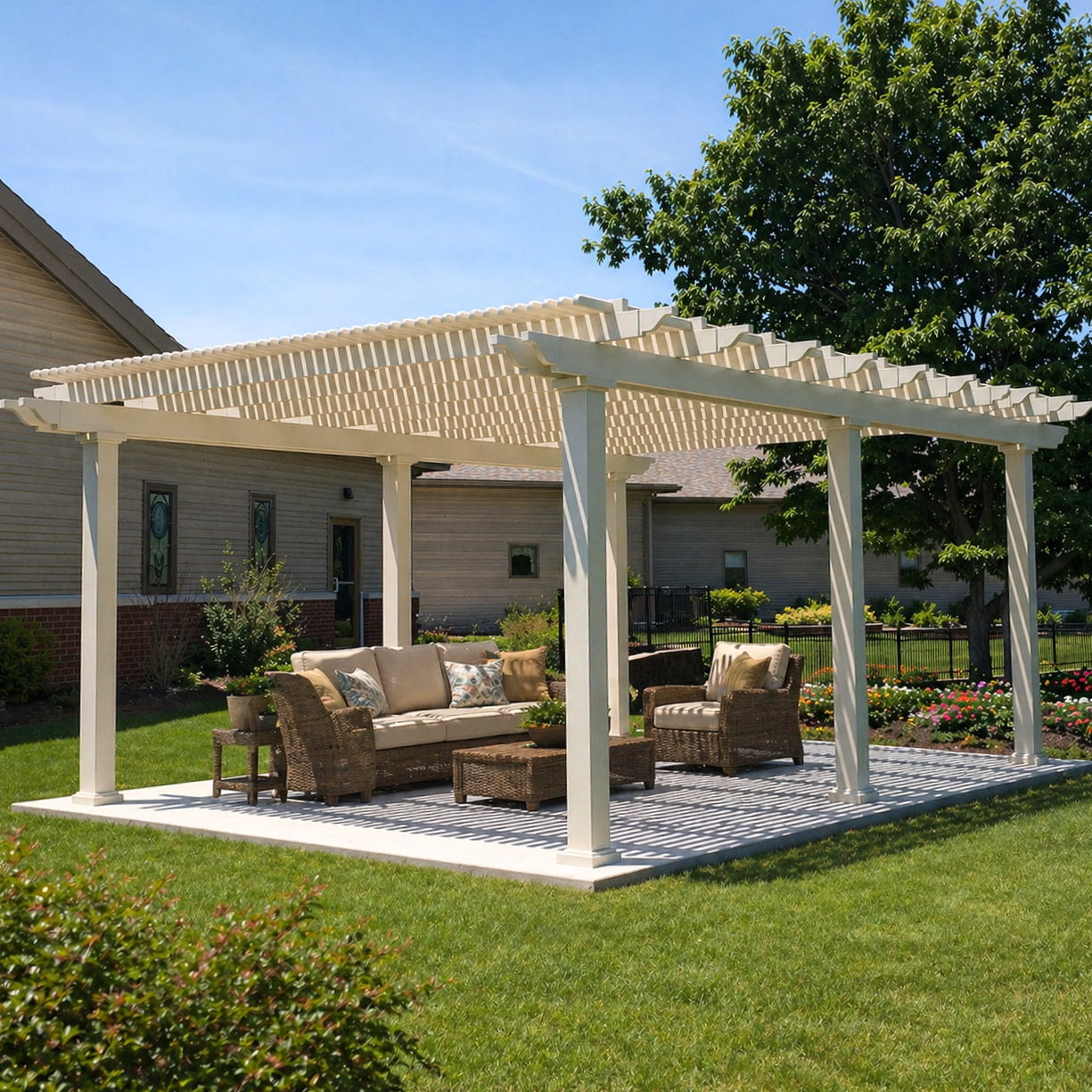
A permanently anchored pergola is designed to maintain an established structural configuration at its intended location. Its posts, beams, rafters, connections, and anchoring arrangements must work together as part of the installed structure.
Permanent freestanding pergolas do not require attachment to the house for their primary support. However, being freestanding does not mean they can simply be placed on the ground without appropriate anchoring.
The installation must follow the manufacturer's requirements and account for the conditions at the intended site.
At Sunset Pergola Kits, our permanent freestanding pergola kits feature aluminum-reinforced structural components with premium extruded vinyl exteriors. Aluminum reinforcement is incorporated into the weight-bearing posts, beams, and rafters.
This construction is intended for a lasting outdoor installation rather than repeated relocation or temporary seasonal assembly.
A portable label should never be interpreted as permission to leave a shelter unsecured.
Depending on its design, a temporary pergola may require specific anchoring, securing hardware, or other precautions during use. Some products also require removal under particular weather conditions.
These requirements are determined by the individual manufacturer and product design, not simply by whether the shelter is advertised as portable.
Before purchasing a seasonal pergola shelter, determine:
The important distinction is structural intent: a permanent pergola is designed around remaining installed, while a portable shelter is designed around some degree of temporary use or mobility. Neither category eliminates the need for appropriate securing.
One common mistake in a permanent pergola vs temporary pergola comparison is assuming that a heavier or permanently installed structure must automatically be safer in severe weather.
Weight and permanence alone do not establish a product's wind resistance or suitability for a particular location.
 A pergola's ability to withstand environmental exposure depends on its complete structural system, including the frame, connections, anchoring, configuration, and installation conditions.
When evaluating either category, look for manufacturer documentation addressing:
Do not assume that a portable shelter is safe in wind simply because it has substantial weight. Likewise, do not assume that a permanent pergola has unlimited weather resistance because it is anchored.
Structural reinforcement is an important consideration when evaluating permanent pergolas, but buyers should distinguish construction features from documented performance limits.
Sunset Pergola Kits uses aluminum-reinforced posts, beams, and rafters in its traditional and modern pergolas. This provides a structural framework beneath the premium vinyl exterior.
For traditional pergolas, optional hurricane brackets are available. Sunset Pergola Kits recommends these brackets for locations that experience winds of 80 mph or higher, and the option includes a lifetime wind damage warranty subject to applicable terms.
However, the 80 mph recommendation should not be interpreted as a universal wind rating for every pergola configuration. Buyers should verify the applicable product documentation, installation requirements, and warranty provisions.
Hurricane brackets are not offered for Sunset Pergola Kits' modern pergolas, so the availability of this option should not be assumed across all product styles.
A sheltered backyard and an exposed outdoor location may present different conditions, even when the pergolas being considered appear similar.
Before choosing a permanent structure, evaluate the intended location and obtain the manufacturer information needed to determine whether the proposed configuration is appropriate.
Local requirements may also affect a permanent installation. Rather than assuming a freestanding structure is exempt from review, confirm any applicable requirements with the appropriate local authority.
The objective is not to identify which category sounds stronger. It is to select a product whose documented requirements are compatible with the intended use and location.
The purchase price is only one part of the permanent vs portable pergola decision. Each category creates different responsibilities after the initial purchase.
For a shelter designed to be removed between uses or seasons, ownership may involve repeated assembly, disassembly, cleaning, inspection, and storage.
How demanding these tasks become depends on the particular product. A shelter designed for convenient takedown may require relatively little effort, while a larger portable structure could involve multiple components and more substantial work.
Before purchasing, consider whether you have:
Storage deserves particular attention. A seasonal shelter that seems convenient during summer may become inconvenient if it occupies valuable garage or storage space for the rest of the year.
A permanent pergola generally involves more deliberate planning before installation.
You need to select a suitable location, determine the intended configuration, address installation requirements, and decide whether the structure fits your long-term outdoor living plans.
Once installed, however, a permanent pergola does not ordinarily require seasonal dismantling simply to remain part of the backyard.
For homeowners who use their outdoor living areas frequently, avoiding repeated setup and storage can be a meaningful advantage.
Sunset Pergola Kits offers permanent pergolas that can be installed by capable DIY homeowners or professional contractors. Buyers can review the available assembly information and videos when evaluating the installation commitment.
 A temporary shelter and a permanent pergola may also differ in their intended service life and maintenance requirements.
Rather than assuming every portable product is short-lived or every permanent structure lasts indefinitely, compare the actual materials, manufacturer care instructions, replacement-part availability, and warranty coverage.
Sunset Pergola Kits' permanent pergolas feature premium extruded vinyl exteriors that do not require painting or staining. Their aluminum-reinforced structural components are designed for long-term outdoor use.
Traditional and modern pergolas carry lifetime warranties, subject to their applicable terms. As with any warranty, buyers should review what is covered, what is excluded, and whether particular installation or maintenance conditions apply.
A lifetime warranty does not automatically mean that every weather event, installation issue, or form of damage is covered.
A permanent pergola can become an established architectural and functional feature of a property's outdoor living space.
For homeowners creating a coordinated patio, poolside lounge, or outdoor entertaining area, that integration may be an important part of the project's appeal.
However, the presence of a permanent pergola does not guarantee a particular increase in resale value. Any financial benefit depends on the property, local market, buyer preferences, installation quality, and other circumstances.
It is more useful to evaluate the structure based on how well it supports your own long-term enjoyment of the property than to assume a specific financial return.
The best choice becomes clearer when you connect the structure's intended purpose to your actual outdoor living habits.
The following comparison highlights situations where a permanent freestanding pergola or portable shelter is more likely to make sense.
| Homeowner Situation | More Suitable Category | Why It Fits |
|---|---|---|
| Established patio used regularly for dining and entertaining | Permanent freestanding pergola | The structure can remain part of a dedicated outdoor living area without recurring seasonal setup. |
| Poolside lounge intended to remain in one location | Permanent freestanding pergola | A fixed structure can be planned around the seating layout, landscaping, and long-term use. |
| Shade needed in different parts of the property | Portable pergola or shelter | Relocation is a genuine functional requirement. |
| Occasional gatherings requiring temporary shade | Portable or seasonal shelter | A permanent installation may be unnecessary for infrequent use. |
| Outdoor space still being redesigned | Portable shelter initially | Temporary coverage preserves flexibility until the final layout is established. |
| Dedicated backyard retreat intended for long-term use | Permanent freestanding pergola | The structure can become an integrated feature of the completed outdoor environment. |
A permanent structure is generally the stronger choice when you have already decided where your outdoor living area belongs and expect to use that location for years.
For example, a homeowner creating an upscale backyard dining area may want the pergola to coordinate with the patio's dimensions, furniture arrangement, and surrounding landscaping.
In this situation, choosing a temporary structure primarily because it costs less initially may overlook the homeowner's actual objective: creating an established outdoor space.
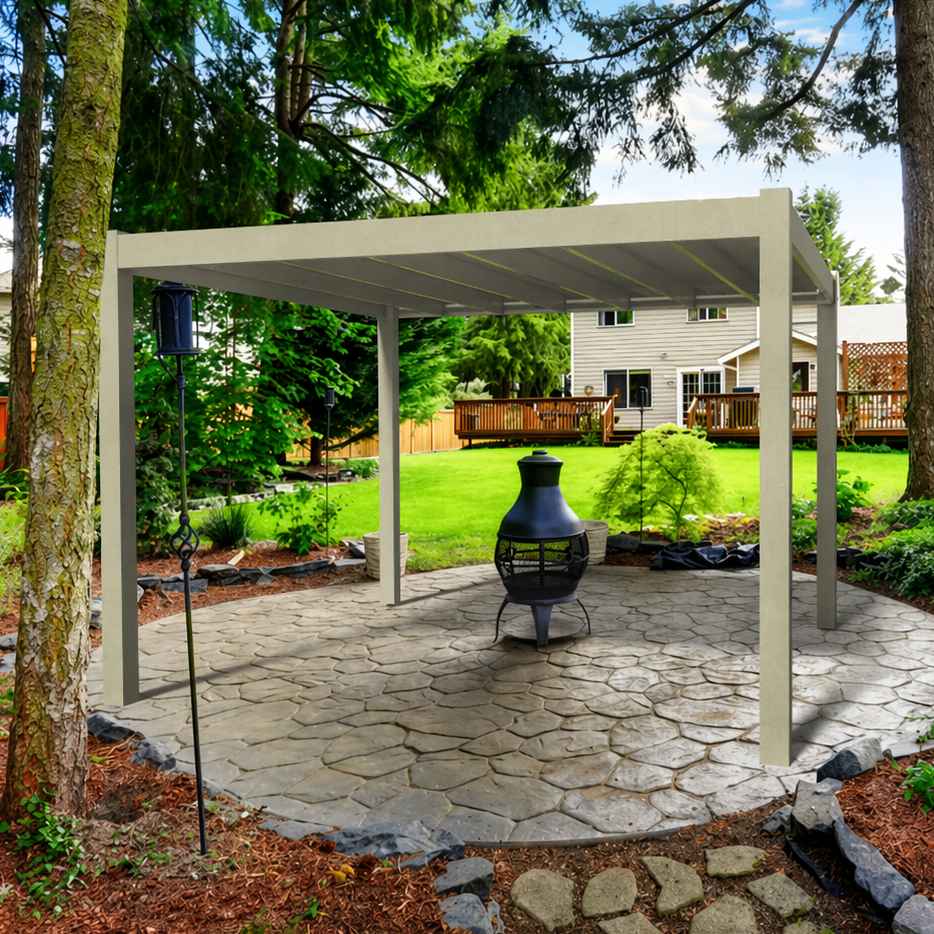
Permanent freestanding pergolas also provide flexibility in architectural design. Sunset Pergola Kits offers both traditional pergolas with optional decorative overhangs and modern pergolas with clean, flush corners.
Both styles use aluminum-reinforced framing with premium vinyl exteriors and are intended for permanent installation.
A portable shelter is often the more practical choice when mobility itself provides meaningful value.
For instance, a homeowner who needs temporary shade for occasional backyard events may have little reason to commit to a permanent structure.
Similarly, someone who expects to relocate the shelter regularly should select a product specifically designed to accommodate that use.
In these situations, a permanent pergola's long-term construction may not justify the additional installation commitment.
Some homeowners know they want a lasting outdoor structure but have not yet decided which permanent design best fits their needs.
At that point, the decision shifts from permanent versus portable to selecting an appropriate permanent configuration.
For example, a traditional freestanding pergola may appeal to homeowners who prefer decorative architectural details, while a modern freestanding pergola may better complement contemporary outdoor spaces.
Homeowners who want to compare permanent options can explore the freestanding pergola collection and evaluate the available styles, dimensions, and configurations against their intended outdoor activities.
The choice between a permanent and portable pergola comes down to how you intend to use your outdoor space and whether the structure genuinely needs to move.
A portable shelter is a sensible solution when temporary use, seasonal removal, or relocation is essential. A permanently anchored freestanding pergola is generally better suited to homeowners creating an established outdoor living area they expect to enjoy for years.
Whichever category you choose, review the manufacturer's installation requirements, exposure limitations, and warranty terms rather than relying on labels or assumptions about durability.
If your goal is a lasting backyard retreat, explore Sunset Pergola Kits' permanent freestanding pergolas to compare designs intended for long-term outdoor use.
No. Portable shelters may still require anchoring or other securing measures during use. Some must also be removed under certain weather conditions. Always follow the manufacturer's installation, securing, and weather instructions rather than assuming portability eliminates these requirements.
Yes. A permanent pergola may be dismantled, but that does not mean it was designed for routine relocation. Disassembly can involve removing anchors and structural connections, and reinstallation may require additional hardware or manufacturer guidance. Portable products are specifically intended to accommodate temporary use or movement.
No. Weight alone does not establish wind resistance. Structural design, connections, anchoring, installation conditions, and documented exposure limits all matter. Compare manufacturer specifications and installation requirements rather than treating a heavier structure as automatically safer.
No. A lifetime warranty does not automatically cover all weather damage. Coverage depends on the manufacturer's terms, exclusions, installation requirements, and any applicable optional protection. Sunset Pergola Kits offers lifetime warranties on its traditional and modern pergolas, with additional wind damage warranty provisions available through optional hurricane brackets on eligible products.
Yes. If a portable pergola requires seasonal removal, consider where its components will be stored and how much effort assembly and disassembly will require. A permanent freestanding pergola avoids routine seasonal storage but requires a suitable fixed installation location.
No. A permanent pergola may improve the usefulness and appeal of an outdoor living area, but it does not guarantee a higher resale price. Any effect on property value depends on the local market, buyer preferences, installation quality, and how well the structure complements the property.


