

MADE IN THE USA
with American products
w/ American products


When comparing a freestanding pergola vs gazebo or pavilion, imagine using the same backyard space for an afternoon beside the pool, an outdoor dinner, or an evening with friends. All three structures can create an attractive destination away from the house, but they differ in how much protection they provide, how open they feel, and how prominently they shape the landscape. The best choice depends less on the structure's name than on the outdoor experience you want to create.
The biggest practical difference between a pergola, gazebo, and pavilion is usually the roof. Traditional freestanding pergolas commonly have open, slatted roofs that provide partial shade while allowing some sunlight and rain through. Gazebos and pavilions more commonly have solid roofs designed to shelter the space underneath.
However, these descriptions are conventions rather than universal definitions. Some pergolas have solid roofs, and not every structure marketed as a gazebo or pavilion offers the same level of weather protection.
| Feature | Freestanding Pergola | Gazebo | Pavilion |
|---|---|---|---|
| Typical roof | Open slats or shade purlins | Solid roof | Solid roof |
| Shade | Partial to substantial, depending on slat spacing and sun angle | Generally substantial beneath the roof | Generally substantial beneath the roof |
| Rain protection | Not with a standard slatted roof; solid-roof versions are available | Commonly provided by the roof, subject to design | Commonly provided by the roof, subject to design |
| Typical side design | Open | Open, partially enclosed, or screened | Usually open |
| Visual character | Open architectural framework | Distinct roofed garden structure | Substantial roofed outdoor shelter |
| Best general fit | Shaded outdoor living with an airy atmosphere | A defined, sheltered backyard destination | Covered dining and gathering areas |
Before comparing specific products, look beyond labels such as "covered pergola," "outdoor gazebo," or "garden pavilion." Verify three things:
For example, Sunset Pergola Kits offers freestanding traditional and modern pergolas with fixed angled shade purlins. Buyers can select configurations providing approximately 50%, 75%, or 90% shade coverage. These roofs are designed for shade, not rain protection.
A homeowner who wants dappled sunlight over an outdoor lounge may prefer this arrangement. Someone expecting to remain outside during a passing rain shower should consider a solid-roof structure instead.
Roof coverage and side enclosure are separate design decisions. A structure can provide complete overhead protection while remaining open on every side. Conversely, railings, screens, and decorative panels can make an otherwise open structure feel more enclosed.
This distinction matters because openness affects how easily people move through the space, how well they can see the surrounding landscape, and whether the structure feels like part of the backyard or a separate outdoor room.
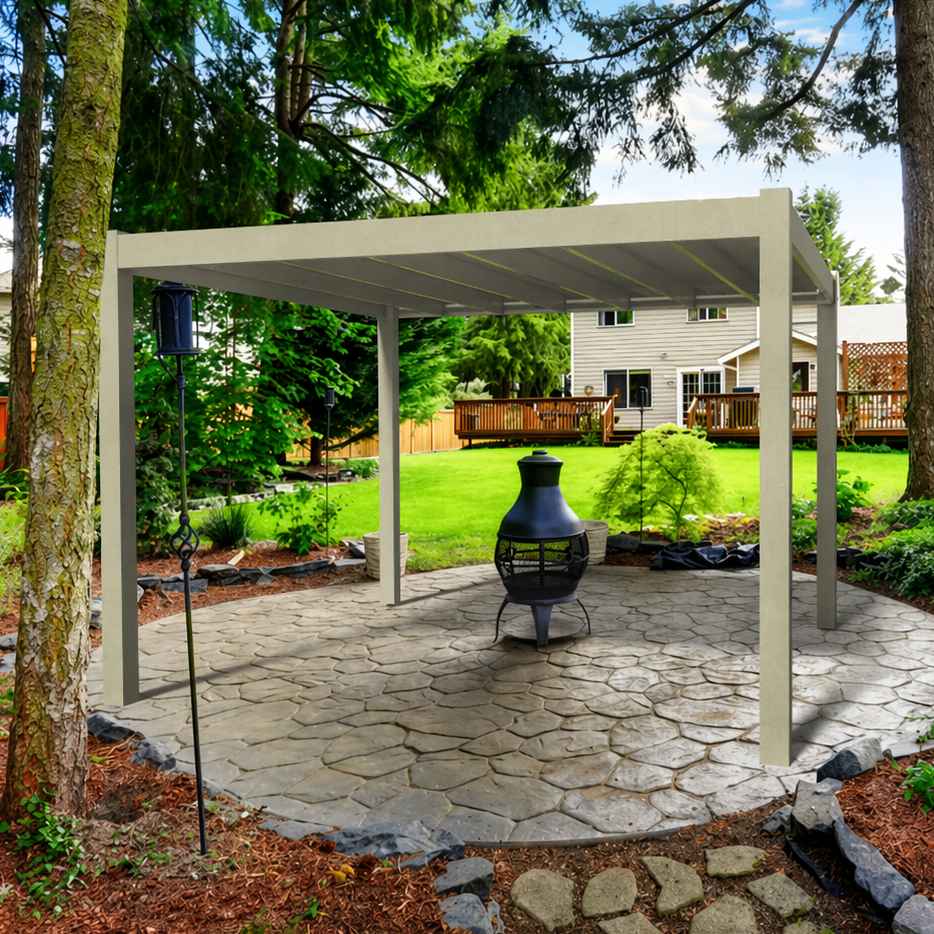 Imagine a lounge positioned beside a swimming pool, with views extending toward the water and landscaping. A freestanding pergola can establish a shaded seating area without visually separating it from the rest of the yard.
Its open sides preserve views in multiple directions. The slatted roof also allows some daylight to pass through, helping the space retain an outdoor character rather than feeling like a room beneath a conventional roof.
A pavilion can preserve similar sightlines if it has open sides. However, its solid roof creates a stronger sense of overhead shelter and may appear more visually substantial.
A gazebo with railings or screened sections may interrupt some views, depending on its design. That can be desirable when creating a more secluded destination, but less appealing when maintaining uninterrupted views is the priority.
A detached structure surrounded by gardens can serve a different purpose. Instead of blending into a larger patio, it may function as a destination where people gather away from the main house.
A gazebo can work particularly well when the homeowner wants that destination to feel distinct. A defined roofline, decorative details, and optional side features can reinforce the impression of a separate garden retreat.
A pavilion can create a similar destination on a larger architectural scale, especially when arranged around a dining table or gathering area.
A freestanding pergola offers another interpretation: a clearly defined outdoor space that remains visually connected to its surroundings.
One common misconception is that gazebos are necessarily enclosed while pergolas and pavilions are open.
In reality, many gazebos have completely open sides. Others include partial railings, decorative panels, or screens. Likewise, some pavilions incorporate side features that create additional shelter.
If privacy or enclosure matters, examine the actual side configuration. A structure's category name does not establish how much privacy it provides.
The difference between a pergola, gazebo, and pavilion is not purely functional. Each can change the visual balance of an outdoor space, particularly in a carefully landscaped backyard where the house, pool, patio, and gardens already have distinct architectural features.
To make a meaningful comparison, picture each structure occupying approximately the same footprint. Otherwise, differences in size can overshadow differences in design.
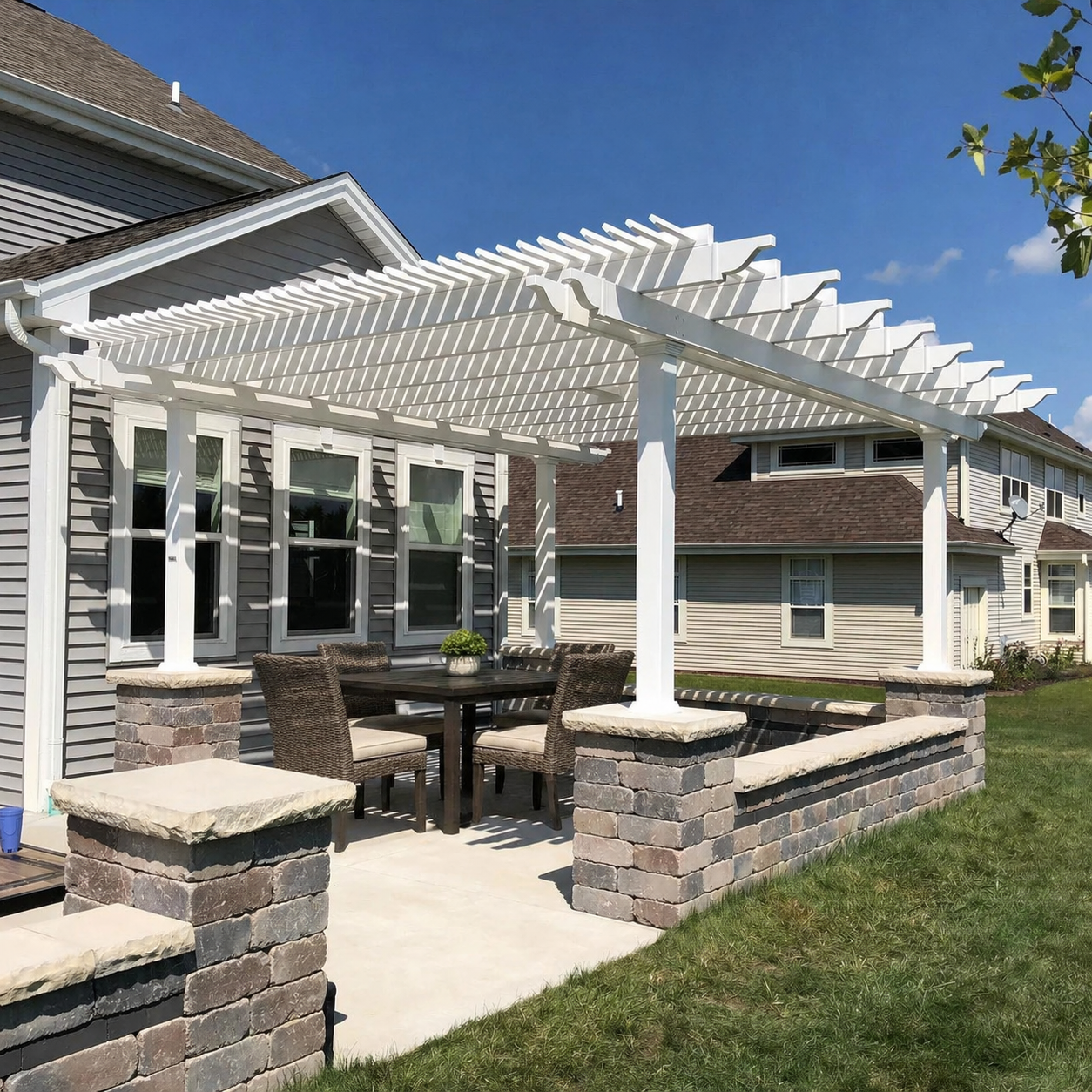 A freestanding pergola defines an outdoor living area through its posts, beams, rafters, and overhead shade elements. Because the roof remains visually open, the structure can establish a recognizable space without introducing the same continuous overhead surface as a conventional solid roof.
This can be particularly attractive when the homeowner wants the pool, garden, or surrounding architecture to remain the primary visual feature.
Design details also influence the impression. A traditional pergola with decorative rafter ends and optional overhangs can complement classic residential architecture. A modern pergola with flush corners and clean lines can suit contemporary homes.
Neither approach is inherently more attractive. The better fit depends on the architectural language already present in the yard.
Gazebos often have prominent roof shapes, including polygonal or other distinctive configurations. This can make them feel like independent garden buildings rather than extensions of the surrounding patio design.
That visual identity is an advantage when the goal is to create a focal point at the end of a garden path or within a landscaped area.
It can be less desirable when the homeowner wants a structure that recedes visually behind a pool, garden, or architectural feature of the house.
The actual effect depends on roof shape, height, materials, and detailing. A simple open-sided gazebo may look less imposing than an elaborately detailed pergola.
Pavilions typically emphasize the roof as a major architectural element. Their substantial overhead coverage can make them feel like purpose-built outdoor gathering spaces.
That character works well when the structure is intended to anchor an outdoor dining area, entertaining zone, or separate backyard destination.
However, a large solid roof can become a dominant visual element. In a backyard where the objective is to preserve an expansive, open appearance, that may be a tradeoff worth considering.
The practical design test: Decide whether you want the structure to frame the landscape, become a focal point within it, or establish a substantial roofed destination.
The most useful way to decide between a pergola, gazebo, and pavilion is to start with what you expect to do beneath it.
A structure that works beautifully for occasional afternoon lounging may be less suitable for regular outdoor dinners when rain is possible. Conversely, a substantial covered structure may provide more overhead protection than a homeowner needs for fair-weather relaxation.
| Primary Outdoor Activity | Best Starting Point | Why It Fits | Important Tradeoff |
|---|---|---|---|
| Fair-weather lounging beside a pool | Freestanding pergola | Provides shade while maintaining an open, airy connection to the surrounding yard | Slatted roofs do not protect against rain |
| Relaxing in a landscaped garden retreat | Gazebo or freestanding pergola | Either can create a distinct destination; choose based on desired shelter and architectural character | Gazebo designs vary widely in openness and enclosure |
| Regular outdoor dining during passing rain | Pavilion, suitable gazebo, or rainproof freestanding patio cover | A solid roof provides overhead rain protection | Open sides may still admit wind-driven rain |
| Large outdoor gatherings beneath a prominent roof | Pavilion | Often designed around substantial covered gathering areas | The roof may dominate the visual character of the space |
| Covered entertaining with open views | Freestanding rainproof patio cover or open-sided pavilion | Combines solid overhead coverage with an open-sided layout | Provides less side shelter than an enclosed structure |
| Shaded outdoor living with an understated appearance | Freestanding pergola | Defines a comfortable outdoor zone without a continuous solid roof | Shade changes with the sun's position and selected roof configuration |
Consider a freestanding pergola when your primary goal is to make an existing outdoor area more comfortable during pleasant weather without dramatically changing its open character.
For example, a homeowner might position a pergola over a seating arrangement near the pool. The structure creates a defined lounge, offers meaningful shade, and maintains visual continuity with the surrounding patio.
For this type of use, freestanding pergolas are worth exploring because they provide independent outdoor shade without requiring a solid roof.
If your goal is to create a more sheltered outdoor destination, a gazebo or pavilion may be preferable.
A gazebo can be particularly appealing for a garden retreat where the structure itself contributes to the setting. Depending on its design, it may offer a stronger sense of separation from the surrounding yard.
A pavilion is worth considering when the roofed gathering area is the central feature. Its open-sided design can accommodate outdoor dining and entertaining while preserving access to the surrounding landscape.
Neither label guarantees protection from wind-driven rain, nor does either guarantee that the structure is suitable for every season. Those characteristics depend on the specific design.
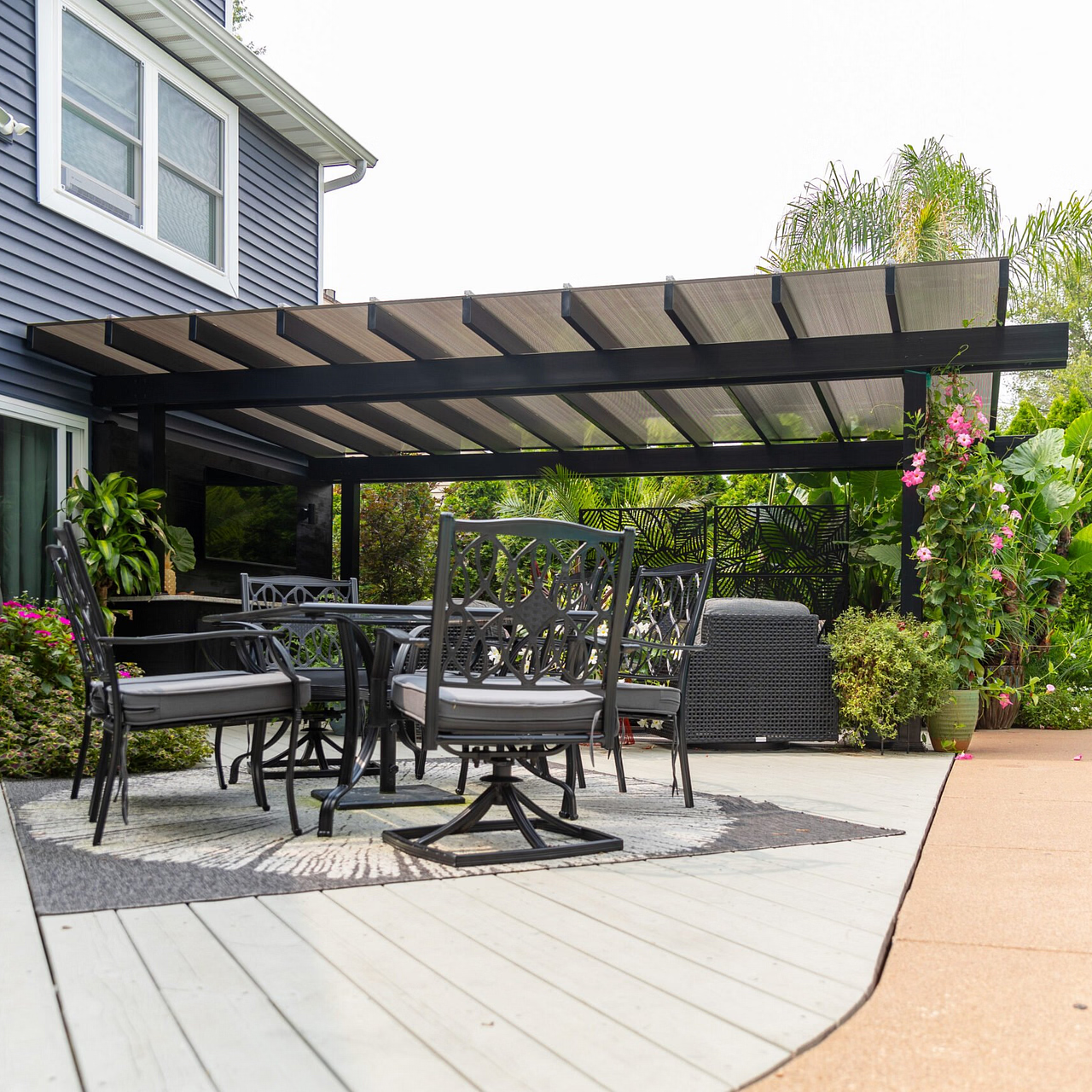 There is also an important alternative for homeowners who like the openness of a pergola but want overhead protection similar to a pavilion.
A freestanding rainproof patio cover combines an open-sided structure with a solid roof. It can therefore deliver much of the experience homeowners associate with a pavilion without necessarily adopting the same architectural appearance.
Sunset Pergola Kits offers freestanding patio covers with aluminum-reinforced structural components, premium extruded vinyl exteriors, and solid polycarbonate roofs available in white or bronze.
Unlike the company's slatted pergolas, these roofs are designed to provide rain protection. Their open sides preserve views and circulation, although wind-driven rain can still reach the occupied area from the sides.
For homeowners who regularly entertain outdoors and want to avoid moving inside whenever a shower passes through, this distinction can be decisive.
The rainproof patio cover collection provides examples of this approach, including freestanding configurations designed for permanent installation.
After comparing roof protection, openness, architectural presence, and intended use, the decision should become considerably easier.
Rather than asking which structure is universally best, identify the feature you are least willing to compromise.
Start with a freestanding pergola. It is especially well suited to homeowners who want shade and architectural definition while maintaining an airy outdoor environment.
A traditional or modern slatted pergola can create a comfortable destination without introducing a continuous solid roof. The principal compromise is that the space remains exposed to rain.
If you want to preserve views but require overhead rain protection, add an open-sided pavilion or freestanding rainproof patio cover to your shortlist.
Start with structures that have verified solid roofs. A suitable gazebo, pavilion, or freestanding rainproof patio cover may meet your needs.
Do not assume that every product bearing one of these names provides equivalent coverage. Check the actual roof construction and how the design manages rain.
Also consider whether overhead protection is sufficient. If you expect to use the space during windy rain, an open-sided roof may not provide the level of shelter you want.
Choose based on the role the structure should play in the landscape.
These are useful starting points, not rigid rules. A minimalist gazebo may feel more open than an elaborate pergola, and a carefully proportioned pavilion may blend beautifully into an existing landscape.
Before committing to a structure, compare specific examples using the same approximate footprint and intended location.
Look at the roof from both above and below, assess how much of the surrounding view remains visible, and imagine how the structure will look from the house as well as from beneath it.
Finally, confirm the manufacturer-specific details that matter to your intended use, especially roof coverage, side configuration, and any claims about weather protection.
This approach prevents a common buying mistake: choosing a structure because its category sounds right, only to discover that its actual design delivers a different outdoor experience.
The best choice in a freestanding pergola vs gazebo vs pavilion comparison depends on the experience you want beneath the structure. Choose a pergola when openness and shade are the priorities, a gazebo when you want a distinct sheltered destination, or a pavilion when substantial overhead coverage and a prominent gathering space matter most.
If an open, detached outdoor living area is your goal, explore freestanding pergola designs. If you want a similar open-sided experience with a solid roof, consider a rainproof patio cover instead. The right structure is the one whose protection, openness, and architectural presence match how you actually plan to enjoy your backyard.
No. Many gazebos have completely open sides, while others include railings, screens, or partially enclosed sections. A gazebo's name does not establish whether its sides are open or enclosed. Check the specific design before assuming it provides privacy or protection from wind-driven rain.
No. Although pavilions commonly have solid roofs, year-round suitability depends on the structure's design, materials, engineering, and local weather conditions. A roof alone does not guarantee protection from wind, snow, or severe weather. Verify the manufacturer's specifications for the intended installation location.
Yes. Although traditional pergolas commonly feature open slatted roofs, some freestanding pergolas have solid roofs. Sunset Pergola Kits offers rainproof patio covers with solid polycarbonate roofing that provides overhead rain protection while maintaining an open-sided design.
No. An open-sided gazebo may provide little more privacy than a freestanding pergola or pavilion. Privacy depends on the presence and positioning of screens, railings, panels, surrounding landscaping, and other visual barriers rather than the structure's name.
Yes. Comparing structures with similar footprints makes it easier to evaluate differences in roof coverage, visual proportions, openness, and usable space. Otherwise, a larger structure may appear more substantial simply because of its dimensions rather than its architectural style.
Yes. An open-sided pavilion and a freestanding pergola with a solid roof can provide similar overhead shelter and outdoor openness. Likewise, an open-sided gazebo may feel much like a small pavilion. Compare the actual roof, sides, and overall design rather than relying on product categories alone.


